On August 26, the elexcon 2025 Shenzhen International Electronics Exhibition and Electronic Enthusiasts Network jointly hosted the “Embedded AI, Edge Intelligence, and AIoT Ecosystem Conference” officially opened. The conference invited globally renowned companies and industry experts such as Volcano Engine, Ruixin Technology, Silergy Corp, NXP Semiconductors, Alibaba DAMO Academy, Huami Electronics, and Renesas Electronics to share their insights.
The application scenarios and implementation architecture of real-time audio and video calls in the Doubao APP
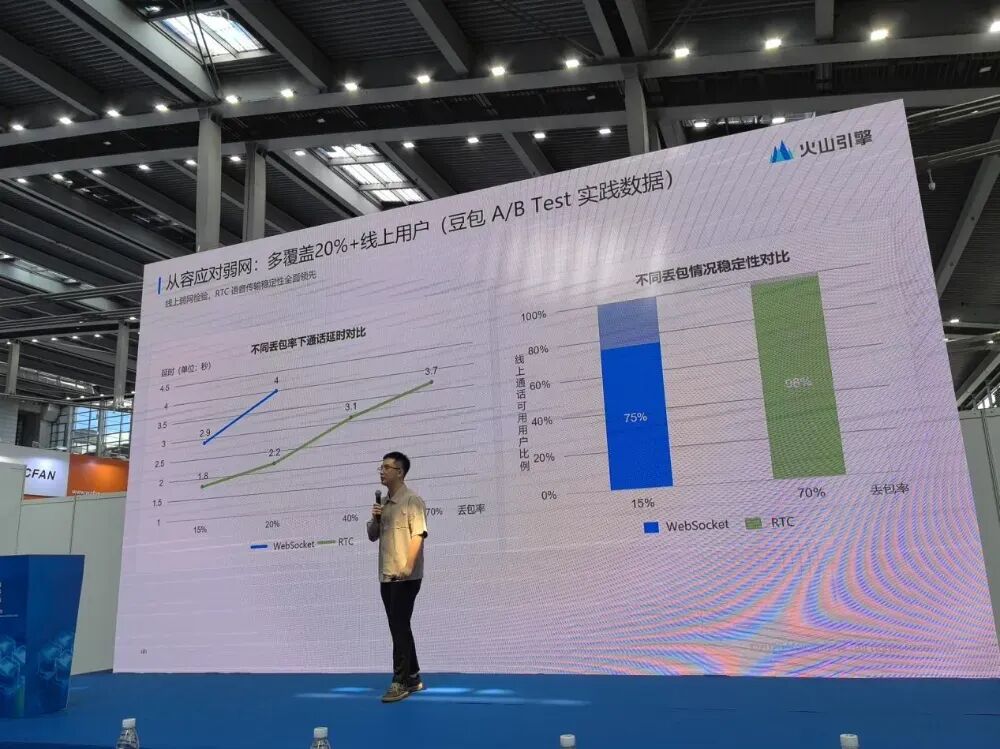
With the increasing demand for real-time dialogue, Volcano Engine has launched a hardware dialogue intelligent agent. Yi Da, the head of Volcano Engine’s RTC-AI hardware solution, introduced that the hardware dialogue intelligent agent integrates IoT device management capabilities, large model technology/speech intelligence technology, and intelligent agent orchestration capabilities, as well as large model gateway service capabilities, providing a lighter, more manageable, better experience, and more scalable solution.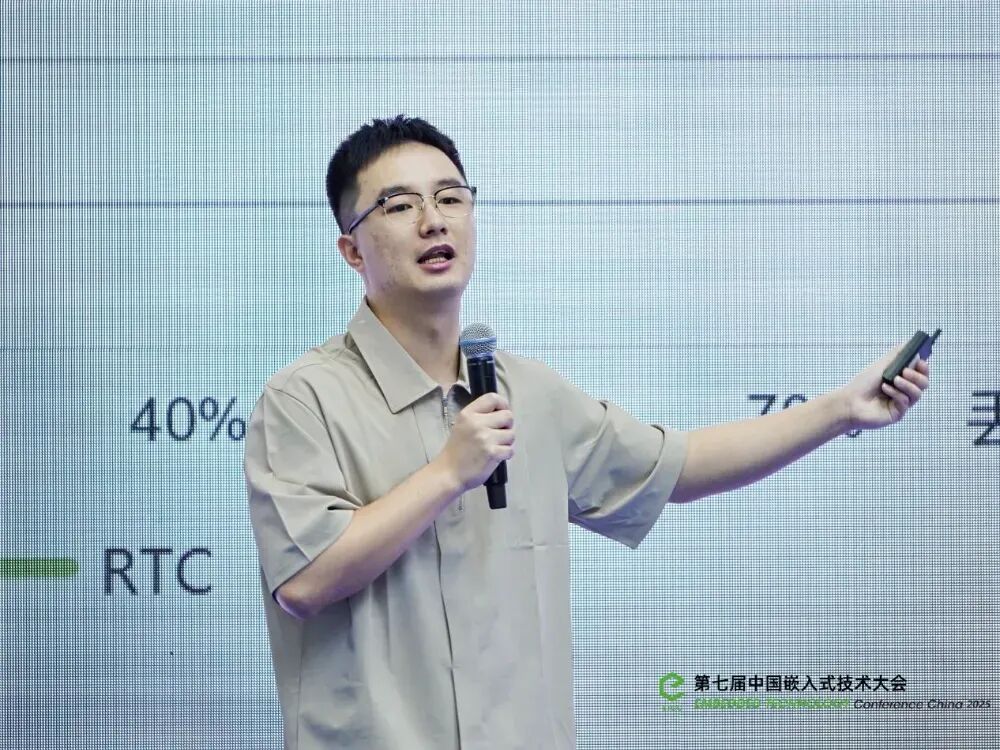 Image: Yi Da, head of Volcano Engine’s RTC-AI hardware solution The hardware dialogue intelligent agent has the following four major features: first, extremely low load, with a low power consumption solution; second, convenient access, with a single SDK for device access + intelligent agent invocation; third, better experience, with millisecond-level latency, semantic pause detection, and voiceprint noise reduction; fourth, multi-modal and rich expansion capabilities. The hardware dialogue intelligent agent supports access to third-party large models, ASR, and TTS, and can be completed in four steps: creating hardware, creating an intelligent agent, associating hardware and the intelligent agent, and integrating the device SDK. Yi Da mentioned that compared to other solutions on the market, Volcano Engine’s “hardware dialogue intelligent agent” has the following advantages: first, intelligent semantic pause detection, accurately perceiving expression rhythm, reducing misinterruptions by 90%. Second, focusing on user voices, filtering out 95% of interference noise, reducing misinterruptions by 15%-20%. Third, effectively coping with weak networks, covering over 20% more online users (based on Doubao A/B Test practical data).
 Volcano Engine RTC’s chips and modules are continuously deepening partnerships with new collaborators, including Espressif, Hengxuan, Jieli, Rockchip, Broadcom, and Quectel. For example, Broadcom’s BK7258 series products, through integration with Doubao’s large model and Volcano Engine RTC, significantly enhance the human-computer real-time interaction experience.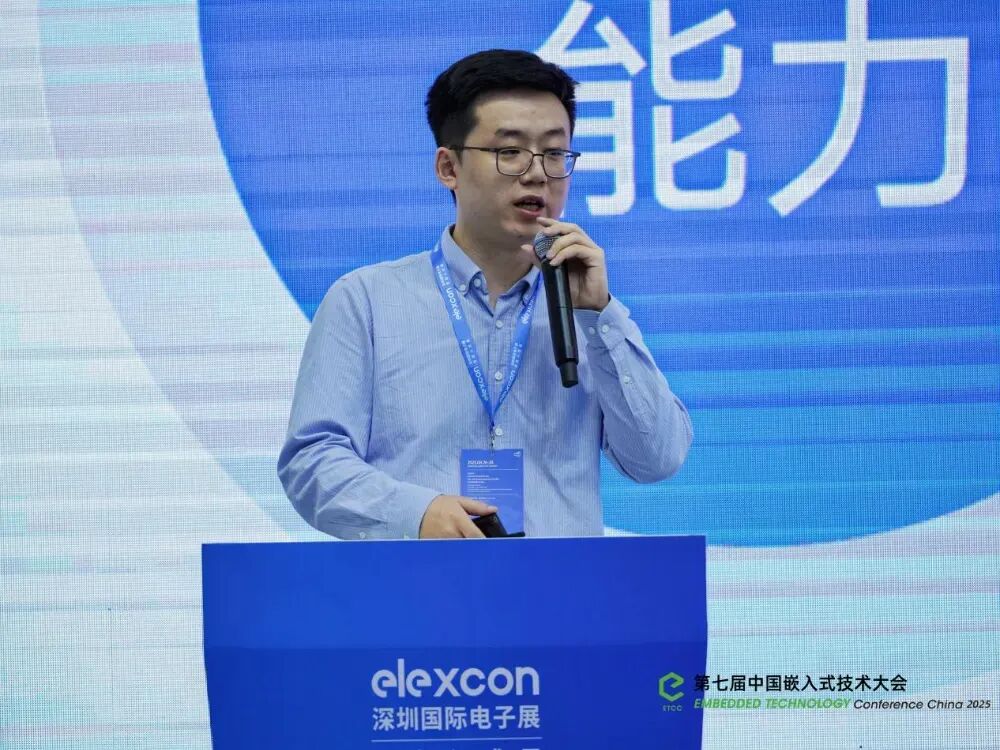
AI on Arm solutions: Ruixin Technology aids in building the embedded AI ecosystem
Ruixin Technology is a leading provider of comprehensive IoT edge AI solutions in China, focusing on embedded computer application systems and industrial IoT intelligent terminals. Xin Huaiyuan, product director of Ruixin Technology, introduced that Ruixin Technology has developed a series of Arm platforms based on TI, NXP, Rockchip, and MediaTek, including AM3352, i.MX 6, RK3399, etc. The company’s product series includes core boards, industrial control boards, capacitive touch all-in-one machines, industrial switches, and more.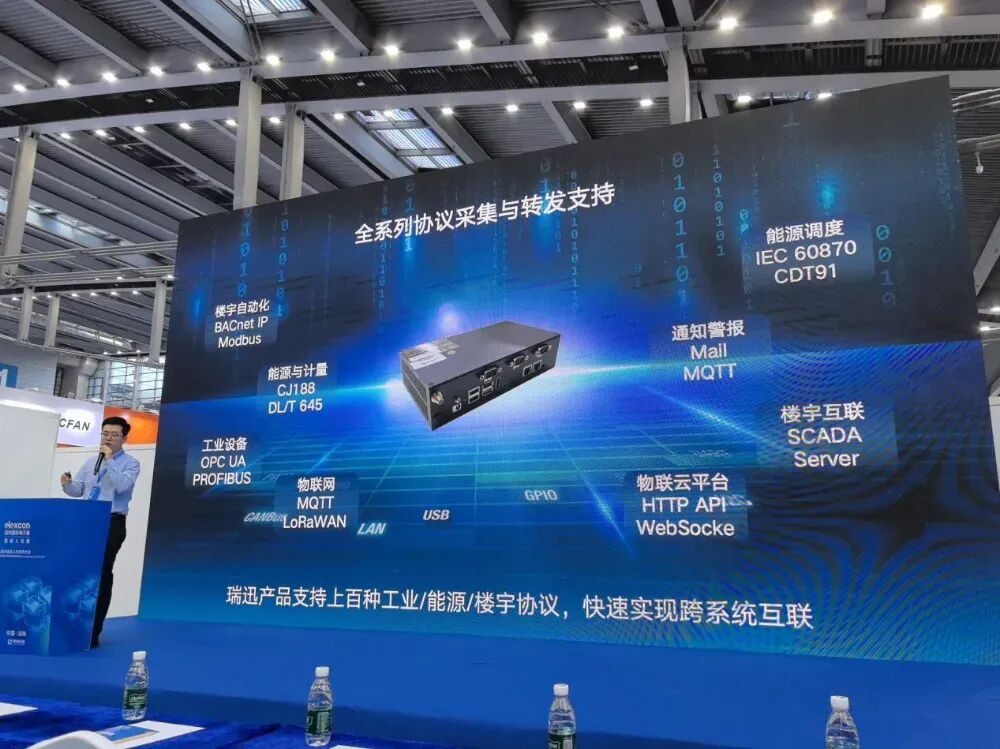 Ruixin Technology can provide core module design services and supports the collection and forwarding of a full range of protocols. Xin Huaiyuan mentioned that the company can help customers solve problems encountered in protocol conversion across different industries, which is one of the values the company can provide to customers. Ruixin Technology can also provide ODM design and delivery capabilities, with four major capabilities including hardware design, software systems, manufacturing delivery, and providing solutions for industries such as robotics/medical.Image: Xin Huaiyuan, product director of Ruixin Technology In terms of AI solutions, the company mainly provides solutions based on products from NXP, Rockchip, MediaTek, and Ascend, covering low to mid-range computing power from 1 to 20 TOPS. Xin Huaiyuan further introduced that Ruixin Technology can provide a one-stop AI Camera solution, fully empowering customers from hardware to algorithms, including camera driver adaptation, ISP image optimization, and AI inference acceleration.
Silergy Corp releases SA32D mass production version MCU
With the advent of the intelligent driving era for new energy vehicles, the demand for MCUs in domestic new energy vehicles has also ushered in new requirements, from high reliability, functional safety, to high performance, information security, and high cost-effectiveness, as well as domestic supply chains. Therefore, at this conference, Silergy Corp launched the automotive-grade SA32D mass production version MCU.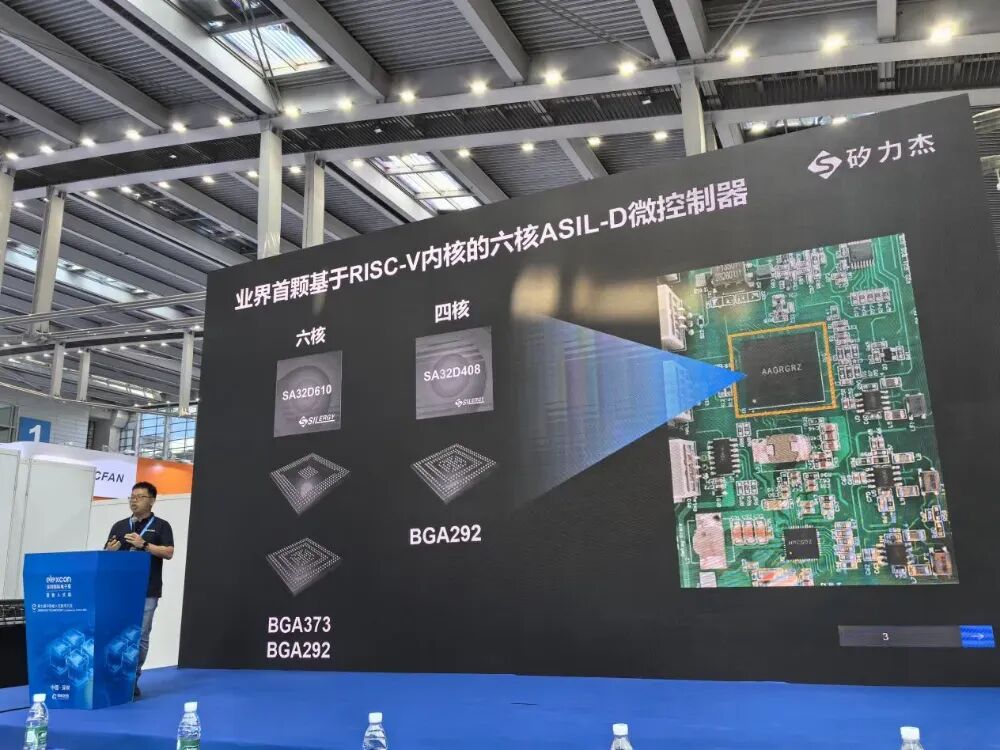 The SA32D mass production version MCU is the industry’s first six-core ASIL-D microcontroller based on the RISC-V core, with products including six-core BGA373, BGA292, and four-core BGA292. The products mainly target four major application scenarios: battery management systems (BMU), main drive motor control, zone control (ZCU), and chassis applications (ONE-BOX/ESC). The SA32D is based on a high-performance, high-reliability RISC-V core, using the NA900 IP from ChipRise as the main core, achieving 4.6K DMIPS @ 300 MHz. While the SA32D boasts high performance, it also offers high cost-effectiveness. Wu Hongjun, MCU market director of Silergy Corp, introduced that the SA32D adopts an innovative Xunlian architecture (MIU) and a high-performance mathematical engine (MAU). The MIU features flexible hardware interconnection event triggering/synchronization, programmable logic/timing, high-precision timestamps, and cross-clock domain signal processing. Wu Hongjun cited that compared to software interrupt handling methods, the MIU’s instantaneous response speed is improved by more than 10 times.
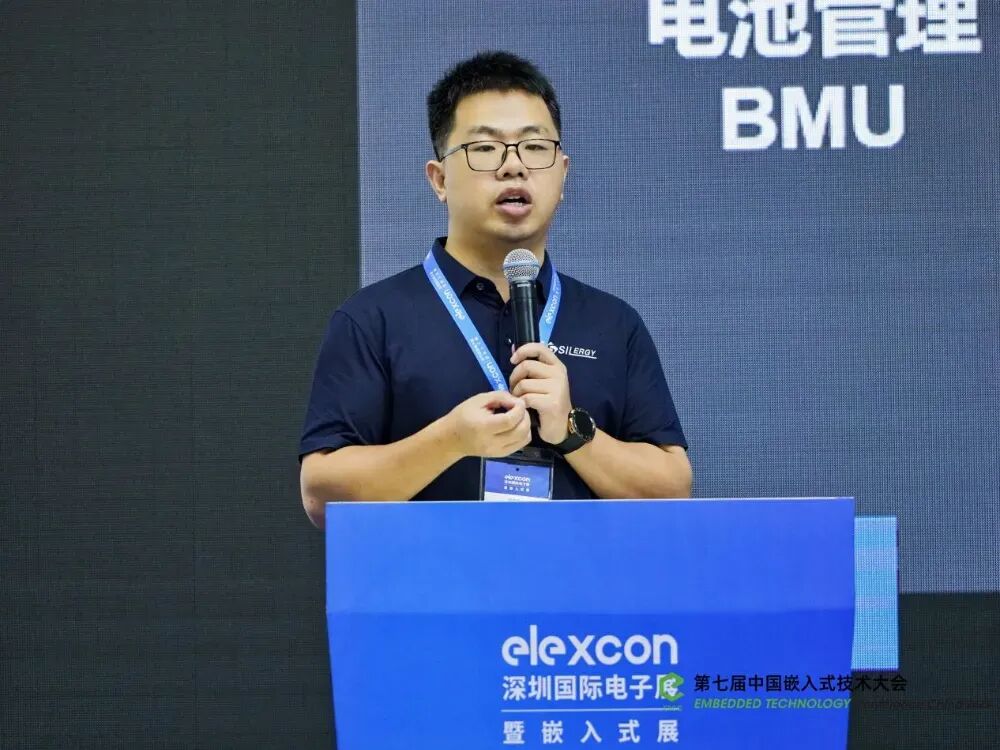 Wu Hongjun, MCU market director of Silergy Corp In terms of safety, the SA32D achieves the highest functional safety level ASIL-D, with an information security island (HSM). The HSM security island adopts an innovative architecture, improving the efficiency of secure boot by 62%. The SA32D targets electric drive applications, customizing efficient electric drive control for mass production of new energy vehicles, and adopts enhanced HRPWM and high-speed comparators to achieve precise dynamic control of DCDC.
NXP’s AI/ML ecosystem supports the edge AI revolution
The AI field can be divided into two major directions: artificial intelligence and machine learning. In the era of edge AI, NXP has launched a brand new solution to empower edge AI. Wei Lu, senior marketing manager of NXP Semiconductors Greater China, pointed out that for edge AI solutions, NXP provides scalable artificial intelligence processing, easy-to-use software, tools, and support resources, as well as comprehensive information security and connectivity, to support the edge AI revolution.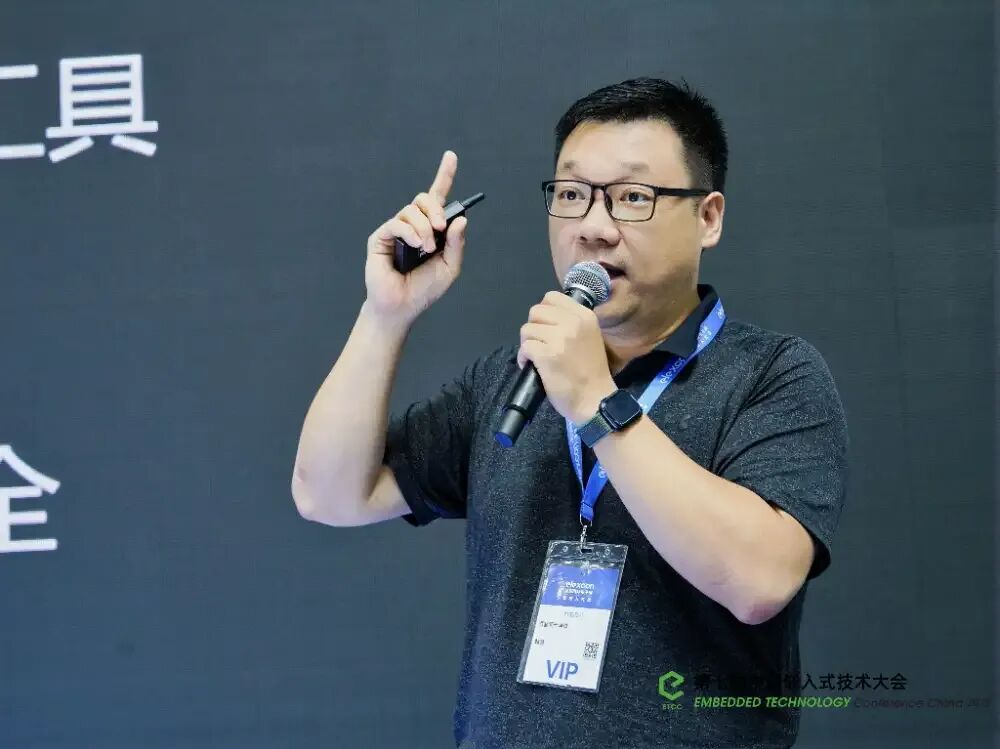 Wei Lu, senior marketing manager of NXP Semiconductors Greater China On the hardware and software front, NXP provides products ranging from LPC, Kinetis, MCX MCUs, to i.MX RT crossover MCUs. Specifically, for edge AI, NXP offers a series of microcontrollers and application processors, including MCX N and i.MX RT, which feature high performance and integrated machine learning capabilities. Application processors include i.MX 95, i.MX 93, and i.MX 91. The i.MX RT crossover MCU is NXP’s high-performance computing platform for industrial and IoT applications, offering ultra-high-speed performance, high integration, and low cost, supporting up to 1GHz multi-core processing. This includes the i.MX RT500, i.MX RT600, and i.MX RT700 series, with the i.MX RT700 featuring ultra-low power consumption and integrated multi-core and eIQ Neutron neural processing unit (NPU). Wei Lu introduced that NXP has launched the new generation application processor platform, the i.MX9 series application processors, which are designed for smart edge computing, industrial automation, IoT, and automotive electronics. In terms of technology, NXP provides 12 technology nodes, including information security, touch, connectivity, artificial intelligence/machine learning, etc. In terms of system-level solutions, NXP offers reference designs, concept validation, software packages, and more to customers.
Alibaba DAMO Academy’s Chen Jiangshan: New member of the Xuantie family, the smallest area RISC-V processor E901
At the exhibition, Chen Jiangshan, RISC-V product director of Alibaba DAMO Academy, presented a theme sharing titled “New member of the Xuantie family: the smallest area RISC-V processor E901.” It was introduced that the Xuantie E901 is an extremely simplified RISC-V processor IP launched by the Xuantie team under Alibaba DAMO Academy, featuring the industry’s smallest chip area and ultra-low power consumption, specifically designed for resource-constrained IoT terminals, wearable devices, smart sensors, etc., filling the gap in the Xuantie RISC-V family in the ultra-low cost and ultra-low power consumption field.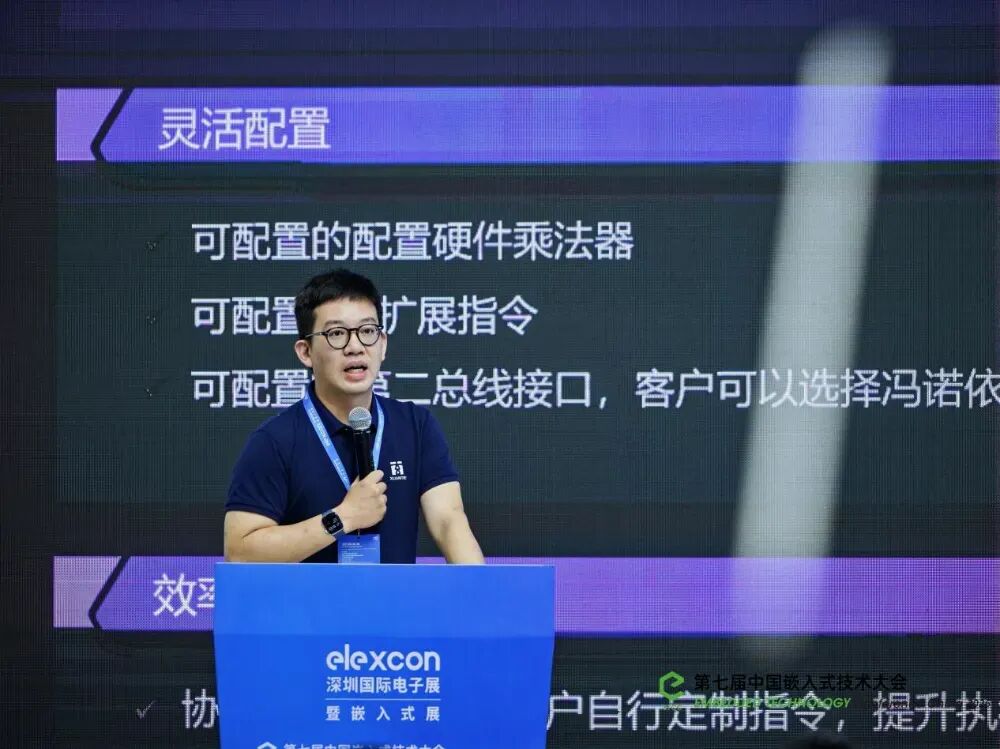 Chen Jiangshan, RISC-V product director of Alibaba DAMO Academy This chip is based on the open-source RISC-V instruction set, adopting a two-stage ultra-simplified pipeline design, and through deep optimization of core logic and bus interfaces, the E901 improves energy efficiency by 48% compared to the E902, optimizes dynamic power consumption by 48%, reduces the area of simplified configurations by 39%, and increases code density by 6%, significantly lowering chip manufacturing costs. It supports dynamic voltage frequency adjustment and deep sleep mode, providing customizable instruction cache, interrupt controller, and security module, meeting the needs of different scenarios. Ecologically, it supports mainstream IoT operating systems such as AliOS Things, FreeRTOS, RT-Thread, and is equipped with the Xuantie CDK development toolchain, compatible with JTAG/2-wire debugging interfaces. It is suitable for mini microcontrollers, connectivity chips, smart card chips, etc. Finally, Chen Jiangshan also revealed the new Xuantie E901+, which, compared to the E901, not only offers full compatibility but also has richer configurations.
Chengdu Huami Electronics: RISC-V low-power MCU creates a new experience for AI-enabled lightweight applications
Hu Can, director of the SoC R&D center at Chengdu Huami, presented a speech titled “RISC-V Low-Power MCU: Creating a New Experience for AI-Enabled Lightweight Applications,” introducing the specifications and application scenarios of Huami’s ultra-low-power MCU HWD01001.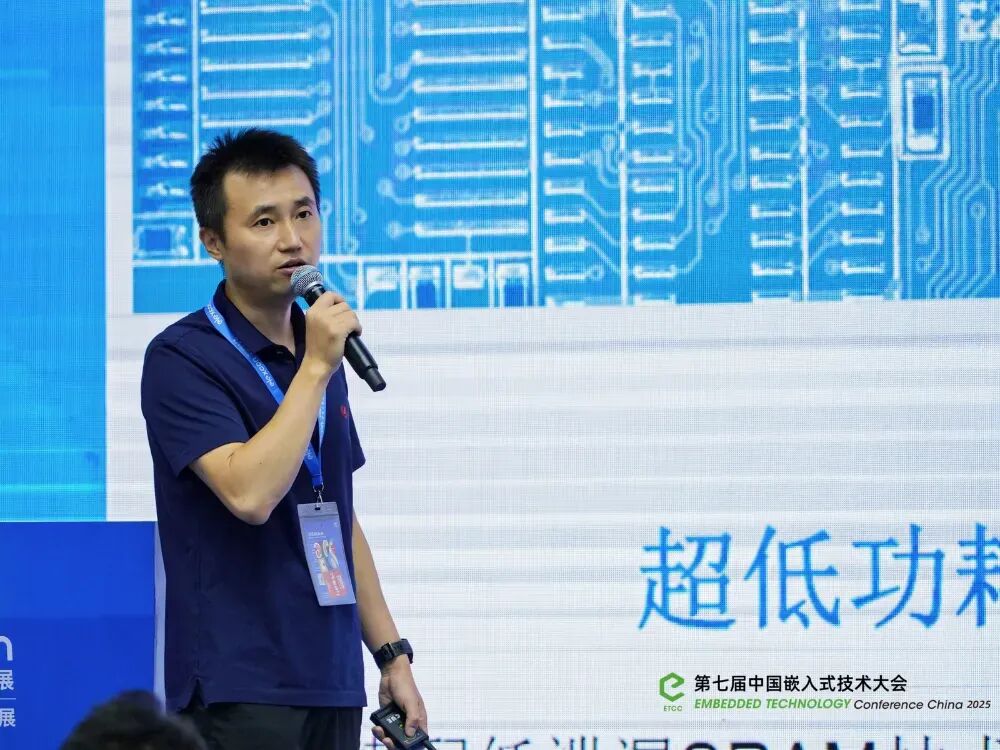 Hu Can, director of the SoC R&D center at Chengdu Huami The HWD01001 is a 32-bit RISC-V ultra-low-power MCU designed independently by Chengdu Huami, offering a main frequency of 20MHz, integrating various interfaces, CAN2.0, USART, SPI, and I2C, supporting complex system designs. It also features a high-reliability design, supporting a wide temperature range from -55 degrees Celsius to 125 degrees Celsius, with ESD support of 7000V. In terms of low-power design, the HWD01001 offers multiple low-power modes, with operating power consumption below 10mW and standby power consumption less than 200nA, effectively optimizing battery life and energy efficiency. The HWD01001 targets diverse scenarios such as wearable devices, consumer electronics, and medical devices, and in terms of packaging, this product also offers small package designs of QFN28 (4mm×4mm) and QNF20 (3mm×3mm). In terms of industry applications, it is positioned for IoT edge nodes, wearable medical devices, and industrial predictive maintenance. Notably, the HWD01001, leveraging Huami’s high-precision ADC technology, can also be applied in brain-computer interface applications, real-time collecting and processing user EEG signals and converting them into control commands. Additionally, the HWD01001 integrates lightweight AI algorithms, including model pruning and quantization compression, dedicated instruction set extensions, and mixed-precision computing architectures, enabling the execution of lightweight AI algorithms on RISC-V processors.
Renesas Electronics: High-Performance AI Microcontroller RA8P1 Born for AI Su Yong, senior expert of the embedded processor division at Renesas Electronics, presented a speech titled “High-Performance AI Microcontroller RA8P1: Born for AI,” introducing the powerful performance and wide application scenarios of the Renesas RA9P1.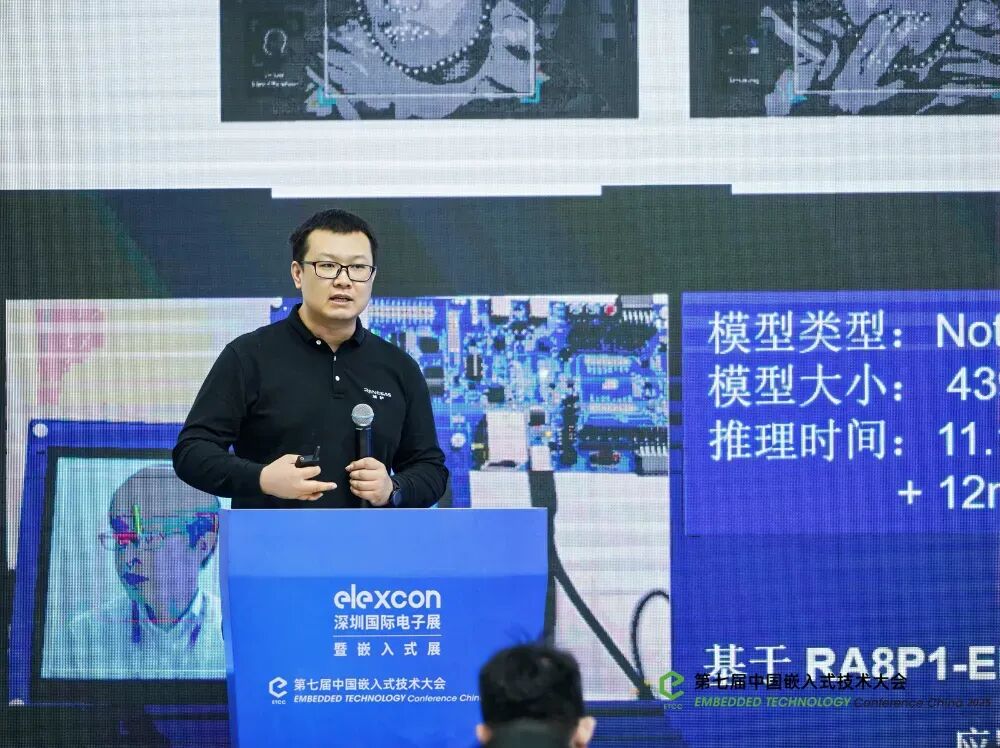 Su Yong, senior expert of the embedded processor division at Renesas Electronics The Renesas RA8P1 is a series of MCU products launched by Renesas Electronics for artificial intelligence, machine learning applications, and real-time analysis. This series adopts single-core and dual-core designs, combining Arm Cortex-M85 and M33 cores with Arm Ethos-U55 NPU. Among them, the Cortex-M85 core has a maximum frequency of 1GHz, the Cortex-M33 core has a frequency of 250MHz, and the Ethos-U55 NPU has a frequency of 500MHz. This combination achieves a maximum CPU performance of over 7300 CoreMark and an AI performance of 256 GOPS. Notably, the Ethos-U55 also supports fallback modes; for example, when encountering NN operators not supported by the Ethos-U55, it can fall back to the M85 core, achieving acceleration in software through CMSIS-NN. In terms of interfaces, the RA8P1 series also provides high-speed interfaces for AI applications, including a 16-bit camera interface (CEU) supporting image sensors up to 5 million pixels, and two channels of independent MIPI CSI-2 interfaces, each with a maximum rate of 720Mbps, enabling the connection of cameras and meeting the demanding computational requirements of visual AI applications. At the same time, in terms of functional safety, the RA8P1 also integrates a new Renesas security IP (RSIP-E50D), which includes numerous encryption accelerators, such as CHACHA20, Ed25519, the highest NIST ECC curve of 521 bits, enhanced RSA up to 4K, SHA2, and SHA3, etc. It also features a strong hardware root of trust and secure boot functionality, supporting real-time decryption (DOTF) via the XSPI interface, allowing encrypted code programs to be stored in external flash and decrypted in real-time during secure transmission to the MCU for execution. In terms of applications, the RA8P1 can achieve lightweight AI capabilities, including voice, vision, and real-time analysis, applied in scenarios such as smart speakers, smart homes, surveillance cameras, drones, industrial vibration analysis, and fault diagnosis.

Disclaimer: This article is original from Electronic Enthusiasts, please indicate the source above when reprinting. For group communication, please add WeChat elecfans999, for submission, interview requests, please send an email to [email protected].
More hot articles to read
-
SoftBank invests $2 billion to save Intel at a critical moment, with the Trump administration likely to become the largest shareholder
-
AI energy disruptor! SOFC will become the “new king of electricity” for data centers
-
Tencent: No need to continue purchasing Nvidia H20 chips
-
Explosion at Japan’s trifluoride factory: storage prices may rise, domestic manufacturers urgently fill the gap
-
So exciting! Humanoid robots compete in a 1500-meter race, with this company winning! Plus, robots run autonomously throughout the event
Click to follow and star us
Star us to not miss any updates!