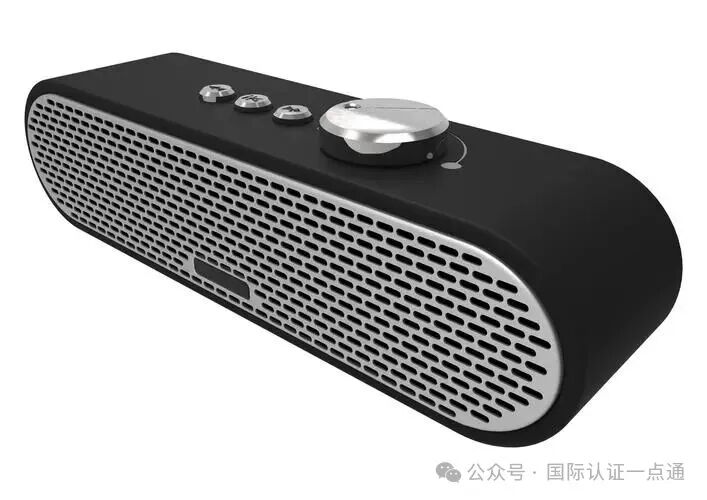
With the surge in smart home consumption in Europe and America, the export volume of domestic Bluetooth speakers supporting multi-device connectivity has increased by 42% annually. However, these electronic devices, which integrate wireless communication and audio amplification, face stringent tests in the European and American markets regarding “radio frequency compliance + electrical safety + energy efficiency and environmental protection.” In 2024, 3,000 Bluetooth speakers were recalled in the EU due to excessive radio frequency radiation, and in the U.S. market, companies faced compensation of up to $1.5 million due to California Proposition 65 compliance issues. Today, we will break down the core certification points for exporting Bluetooth speakers to Europe and America from the perspective of third-party testing.
1. European Market: CE RED is Key, with Dual Emphasis on Wireless and Energy Efficiency
All Bluetooth speakers sold in the EU must pass CE certification, and products with wireless functionality must particularly meet the RED directive (Radio Equipment Directive). The new ERP energy efficiency regulations, effective May 2025, further raise the entry barriers:
| EU Directive (Currently Effective) | Core Reference Standards | Key Requirements for Bluetooth Speakers | Typical Risk Cases |
|---|---|---|---|
| RED Directive (2014/53/EU) | EN 300328 V2.2.2 | Bluetooth frequency band 2402-2480MHz, transmission power ≤100mW, adjacent channel leakage ≤-20dBm | In 2024, a brand recalled 3,000 units in Germany due to excessive radio frequency |
| Low Voltage Directive (LVD) | EN 62368-1:2018 | Insulation resistance ≥10MΩ, dielectric strength 3000V without breakdown, charging interface temperature resistance ≥85℃ | German customs seized poorly insulated products, resulting in a loss of €280,000 |
| Electromagnetic Compatibility Directive (EMC) | EN 55032:2015 | Radiation ≤54dBμV/m from 30MHz-1GHz, withstand ±8kV electrostatic discharge without failure | Interference with smart home systems led to forced removal from a French e-commerce platform |
| ERP Energy Efficiency Directive | (EU)2023/826 | Standby power consumption ≤0.5W (mandatory by May 2025), network standby ≤2.0W | Products without registered EPREL labels were removed from Amazon Europe for 12 companies |
Special Requirements: Bluetooth speakers must pass the EN 62368-1 audio equipment safety standard, and those powered by lithium batteries must additionally comply with EN 62133 (no explosion after 24 hours of overcharging). Outdoor models with waterproof features must pass the IPX4 test (splash-proof), and if claiming “waterproof,” the testing standard must be separately indicated. The UK market will require the UKCA mark starting in 2025, with the testing standard being BS EN 300328. A company faced a port fee of £160,000 in London due to failure to timely convert certification for 500 products.
Products with plastic shells must comply with the RoHS directive, with lead, cadmium, and other heavy metals ≤0.1%. In 2024, Italian customs seized a brand of speakers due to excessive lead in the shell, resulting in the entire shipment being detained and destroyed.
2. U.S. Market: FCC + UL Dual Mandates, Zero Tolerance for Wireless and Material Compliance
The U.S. market implements dual control over Bluetooth speakers through “federal wireless standards + state-level environmental regulations,” with core certifications directly determining market access qualifications:
| Certification Name | Reference Standards/Institutions | Core Testing Items | Market Consequences |
|---|---|---|---|
| FCC Certification | Part 15C (Wireless) | Bluetooth frequency hopping test, radiation power ≤1mW, spurious emissions in the 2402MHz band ≤-41dBm | In 2024, a brand was fined $23,000 per unit for 800 affected products |
| UL Certification | UL 62368-1:2024 | 1-meter drop test with no shell cracking, surface temperature ≤60℃ after continuous operation for 4 hours | Non-certified products were directly removed from Amazon, and Best Buy refused to purchase |
| California Proposition 65 | OEHHA Agency | Plastic parts phthalates (6P) ≤1000mg/kg, lead ≤90mg/kg | A brand compensated California consumers $1.5 million due to DEHP exceeding limits |
| BQB Certification | Bluetooth Special Interest Group | Must obtain QDID/EPL listing, and use of the Bluetooth logo must be authorized | Non-certified products faced infringement lawsuits, with 3 companies banned from sales |
Risk Warning: Smart Bluetooth speakers (with WiFi/voice assistants) must additionally pass FCC-ID certification, which increases the testing cycle by 3-4 weeks. A company missed the BQB certification (Bluetooth qualification certification), resulting in 2,000 smart speakers being unable to be listed before Black Friday, missing out on 60% of seasonal sales. The U.S. has strict requirements for lithium battery transportation; built-in batteries must pass UN38.3 testing, or they will not pass air transport security checks.
The new UL 62368-1:2024 standard particularly strengthens fire testing for USB-C interfaces, requiring passing 1,000 insertion and removal tests without failure; non-compliant products will be classified as “high-risk devices.”
3. Certification Pitfall Guide: Key Compliance Points for Wireless Devices
-
RED and BQB Dual Assurance: The EU market requires passing EN 300328 radio frequency testing (focusing on the three frequency bands 2402MHz/2441MHz/2480MHz) before completing BQB certification (costs range from $2,500 to $8,000). Using certified Bluetooth modules can apply for EPL listing, shortening the cycle to 2-3 weeks.
-
Energy Efficiency Label Registration in Advance: The EU EPREL energy efficiency label must be registered before the product is launched, requiring submission of standby power consumption test reports (off state ≤0.5W). Products without labels will face a fine of 4% of annual turnover starting in 2025.
-
Design Changes Trigger Retesting: Changing the Bluetooth chip model, adjusting amplifier power, or adding wireless modules requires redoing RED and FCC testing. A manufacturer upgraded the Bluetooth 5.3 module without retesting, resulting in the loss of CE certification and a loss of 400,000 yuan in orders.
-
Testing Sample Strategy: Samples sent for testing must be consistent with mass production; it is recommended to prepare 3 units (1 for testing, 2 as backups). Products with batteries must provide separate battery specifications to avoid delays due to mismatched battery parameters.
-
Cycle Planning: Basic model certification takes 8-10 weeks, while smart models with WiFi + Bluetooth take 12-14 weeks. The laboratory schedule is tight during the European and American Christmas season (September to December), so it is recommended to start certification 5 months in advance.
Conclusion
The certification of Bluetooth speakers in Europe and America essentially serves as a quality endorsement of “wireless reliability + user safety.” Data shows that products that pass all certifications have a 58% lower user complaint rate and a 35% increase in Amazon search rankings. Have you encountered issues such as unstable radio frequency testing or difficulties in energy efficiency label registration when exporting? For example, how to balance Bluetooth transmission distance with radiation compliance, or the long certification cycle for smart models? Feel free to share your experiences in the comments section, and let’s discuss solutions together!