
Introduction
When a new energy vehicle suddenly ignites on the road or in an underground garage, flames can engulf the entire vehicle within 30 seconds, and toxic gases fill the enclosed space… Such scenes are occurring frequently across the country. Faced with the triple threats of lithium battery fires: “high temperature, high speed, and high toxicity”, traditional firefighting methods seem inadequate. However, the emergence of a new generation of intelligent firefighting robots is rewriting the outcome of this “silent technological crisis.” I will take you deeper into exploring: how this “second-level response” intelligent equipment can solve the dilemma of new energy vehicle fires? Why is it becoming a “required course” in firefighting training?
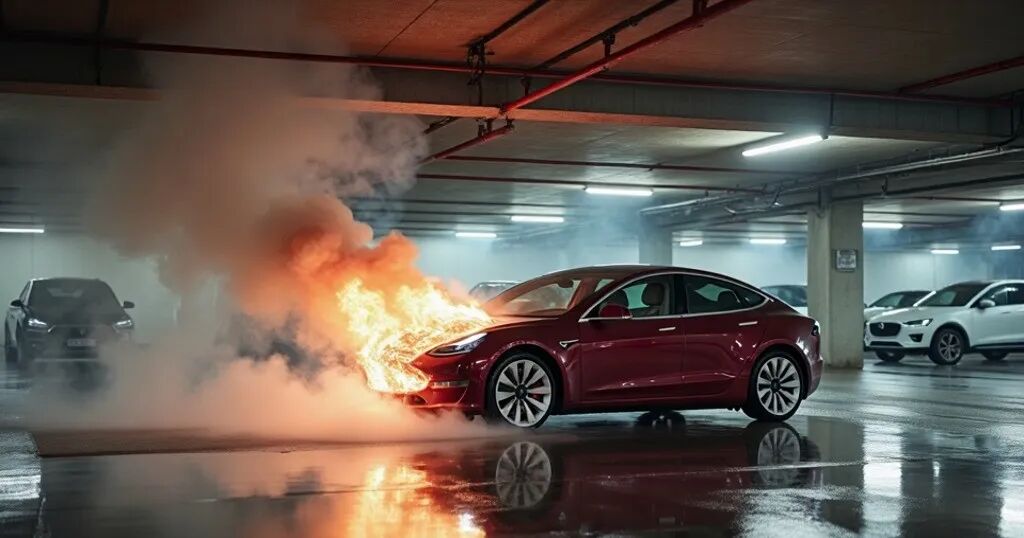
Image material generated by AI ▲
01
The “Grim Reaper’s Scythe” of New Energy Fires:
Why do traditional firefighting methods fail?
Guizhou Hangtong Technology
1) Explosion speed crushes response time
When lithium batteries experience thermal runaway, temperatures can soar above 1000°C within seconds, with flames spreading at a speed of 3 meters per second, three times faster than gasoline vehicles, leaving firefighters with less than one minute of golden rescue time. In a fire in an underground garage in Beijing, thick smoke blocked all escape routes within 30 seconds. Surveillance of an incident at a charging station in Jiangsu showed that it took only 22 seconds from smoke emergence to full vehicle explosion.
2) Toxic gases become invisible killers
The combustion releases hydrogen fluoride (HF) gas, which can cause permanent lung damage after just 5 minutes of exposure at a concentration of 5 ppm, and can be fatal at 10 ppm. A fire in a residential area in Shenzhen in 2023 led to the evacuation of an entire building, primarily due to the spread of toxic gas.
3) The curse of re-ignition is hard to break
Traditional water hoses require 8-10 tons of water for continuous cooling, but water supply is difficult in underground spaces. Data from Shanghai Fire Department shows that new energy fires require an average of three times longer to extinguish. Moreover, traditional firefighting requires continuous cooling of the battery pack for over 4 hours, while the latest robots use a “dry powder smothering + water mist cooling” dual-mode firefighting method, reducing the re-ignition rate to below 1%.
02
Analysis of the “Superpowers” of Intelligent Firefighting Robots
Guizhou Hangtong Technology
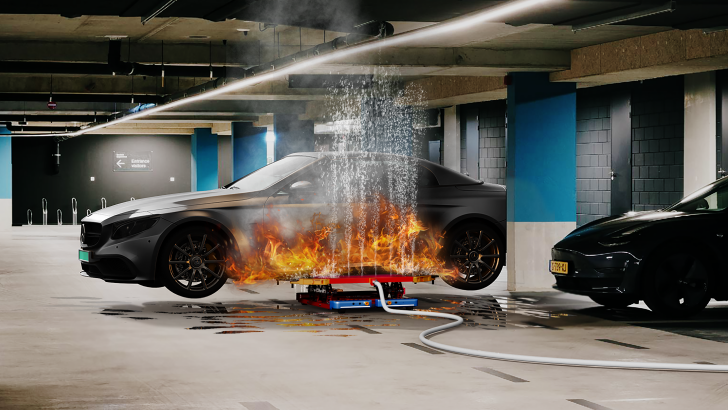
Image material sourced fromSichuan Qianli Firefighting Robot demonstration effect ▲
1
Core technology breakthroughs
/ GZHTKJ
-
UV light sensing + AI dual positioning: locks onto the fire source in 10 seconds, with an error of no more than the distance between charging piles
-
Dual-mode navigation system: combines pre-set garage maps with real-time mapping, covering 90% of parking structures in the country without dead angles
-
Multi-agent spraying technology: with a capacity of 140L of extinguishing agent, can automatically switch extinguishing media for different fire sources such as battery compartments and motors
2
Performance comparison in real combat
/ GZHTKJ
|
Indicator |
Traditional Firefighting Team |
Firefighting Robot |
Advantage Multiplication |
|
Response Speed |
5-8 minutes |
<60 seconds |
10 times |
|
Toxic Gas Environment Operation |
Requires heavy protective gear |
Direct entry |
100% safe |
|
Single Firefighting Water Usage |
8 tons |
0.3 tons |
96% savings |
|
Re-ignition Rate |
38% |
0.7% |
54 times reduction |
|
Personnel Risk |
High |
Zero contact |
100% safe |
3
Typical Cases
/ GZHTKJ
-
Intelligent garage in Shenzhen: Deployed 10 robots, successfully extinguished 3 new energy vehicle self-ignition incidents in 2024, with a response time of <1 minute.
-
Charging station in Nanjing, Jiangsu: Linked firefighting system, improved firefighting efficiency by 70%, certified by local firefighting department.
03
The “Digital Twin” on the Training Ground:
Why must firefighting simulation be included?
Guizhou Hangtong Technology
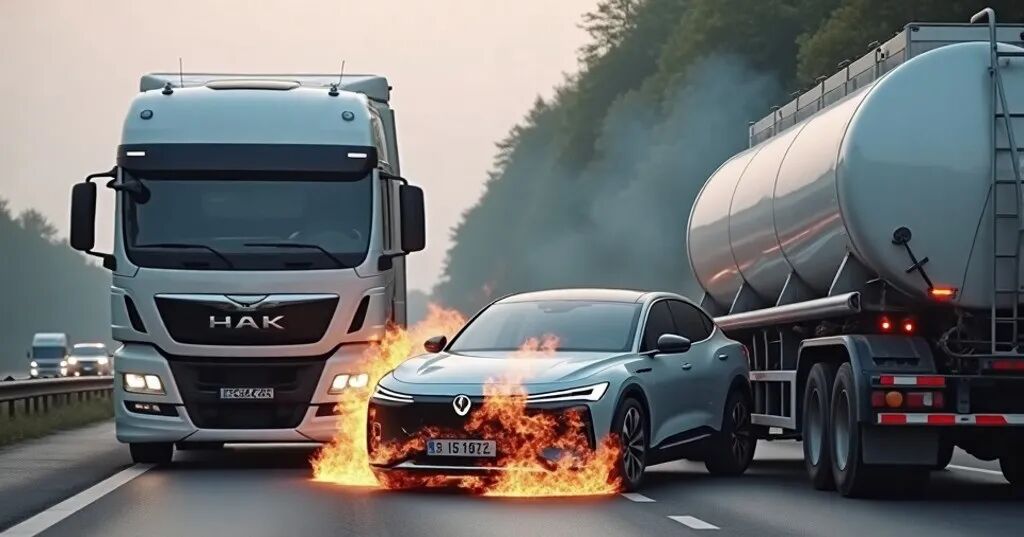
Image material generated by AI ▲
1) Solving the multi-vehicle coordination challenge
The combination of “sedan + tanker + truck” in road traffic accident training facilities is one of the scenarios for new energy vehicle fires. After adding robot training:
-
The rescue team can simultaneously establish a fire isolation zone while rescuing trapped individuals in the sedan;
-
The leak handling team can monitor combustible gas concentrations in real-time while dealing with tanker leaks;
-
Achieve millisecond-level coordination among multiple roles, improving overall efficiency by 40%.
2) Building a new paradigm of “human-machine collaboration”
By simulating the following scenarios, the rescue process is redefined:
-
Tunnel fire: Robots enter the fire scene to establish a water supply mainline, while firefighters remotely control mechanical arms for rescue;
-
Underground garage: Robot clusters network to create an integrated system of “detection-extinguishing-smoke removal”;
-
Battery factory explosion: Three-dimensional linkage of drones, robots, and fire trucks.
3) Constructing a three-dimensional training system
-
Tactical level: Robots control the fire in advance to create a safe working area for the rescue team;
-
Command level: Real-time data transmission via 4G/5G optimizes decision-making;
-
Support level: Automatic charging devices ensure 10 hours of continuous training.
4) Digital twin empowers real combat
After introducing this system at a firefighting training base in Nanjing:
-
Hazardous materials accident handling error rate decreased by 72%;
-
Rescue time in confined spaces reduced to one-third of the original;
-
Cross-departmental linkage response speed improved by 55%.
04
The Trillion-Yuan Blue Ocean:
The Future Landscape of Intelligent Firefighting
Guizhou Hangtong Technology
01
Explosive market growth
According to the “2025 China Emergency Industry White Paper”, the market size for firefighting equipment dedicated to new energy vehicles is expected to reach:
-
2025: 8.2 billion yuan
-
2030: 34 billion yuan
-
Annual compound growth rate: 32.7%
02
New trends in technology integration
-
Metaverse training: VR simulation of a million-level fire scene library
-
Blockchain traceability: Automatically generate rescue evidence chains that meet judicial requirements
-
Digital twin: Predict the thermal runaway path of batteries 30 minutes in advance
03
Strong policy drive
The newly revised “Fire Safety Standards for New Energy Vehicles” in 2024 clearly requires:
-
Charging stations must be equipped with automatic firefighting robots
-
Firefighting teams must allocate at least 30% of training time to new energy accident response
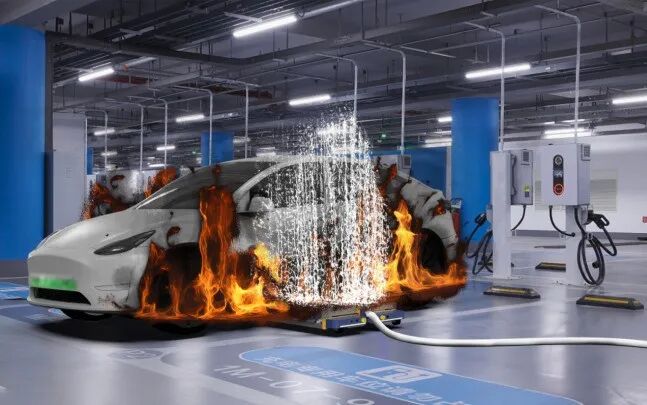
Image material sourced from Sichuan Qianli Firefighting Robot demonstration effect ▲
Conclusion
From the LNG tanker accident in Jiangsu to the underground garage fire in Shenzhen, the bloody lessons warn us: the revolution of new energy vehicles must be accompanied by a revolution in safety. Intelligent firefighting robots are not only a product of technological iteration but also a technological interpretation of the “life first” concept. When AI algorithms outpace the spread of flames, and steel bodies replace flesh and blood to rush into toxic smoke, we have truly built a firewall to protect the electric era. This is not just an upgrade of equipment, but the ultimate interpretation of the “life first” concept.
Data Sources:
[1] Baidu Baijiahao “New Energy Vehicle Fires: A Silent Technological Crisis”
[2] What is Worth Buying “Prevention and Handling of New Energy Vehicle Fires”
[3] NetEase News “How to Respond to New Energy Vehicle Fires? Analysis of Property Management Strategies and Challenges”
[4] China Energy Network “Discussion on Emergency Handling Procedures and Countermeasures for New Energy Vehicle Fires”
[5] Sohu News “Discussion on Prevention and Emergency Rescue Research for New Energy Electric Vehicle Fires”
[6] Sichuan Qianli Emergency Rescue Equipment Co., Ltd. “QLMR-MH-03ZN Intelligent Firefighting Robot Technical White Paper”
[7] Shenzhen Fire Rescue Team 2024 First Quarter Combat Case Compilation
· END ·
Disclaimer:
Content sourced from the internet is integrated and rewritten; we maintain neutrality regarding the viewpoints expressed in the text, for reference and communication purposes only. If there are any copyright infringements in the image materials, please contact us for removal!





#LithiumBatterySafetyBlackTechnology #ChineseIntelligentManufacturingBreakthrough #NewEnergyVehicleSelfIgnitionRecord #SmartCityConstruction #14thFiveYearFirePlanning #MustReadGuideForCarOwners #Firefighting #FireSafety #FireSimulationTraining #FirefightingRobot