Are you often troubled by English in semiconductor technical positions? Do you struggle with English equipment manuals, have difficulty communicating with foreign engineers, or find yourself at a loss for words when writing English reports? This comprehensive English guide compiled from internal technical department materials breaks down high-frequency terms in four core modules: equipment, processes, materials, and faults, along with practical collocations and example sentences. Newcomers can memorize and use them directly, mastering professional English with ease!
1. First, understand: Why is English important for technical positions?
The semiconductor industry is a globalized sector, and English is an “essential tool” with three core uses:
- Reading documentation: Equipment manuals (such as DISCO, ASM) and process specifications are all in English; without understanding the terminology, you cannot operate effectively;
- Cross-communication: When interfacing with foreign engineers about faults or participating in overseas technical training, relying on translation software can lead to errors;
- Professional presentation: Writing English reports and sending technical emails with precise terminology can reflect professionalism, giving you an advantage in promotions.
In short: Strong technical skills + proficient English make you a true “semiconductor technical expert”!
2. High-frequency terminology list for the four core modules (collectible, memorize directly)
Classified by “equipment components, process flows, material specifications, and fault descriptions,” each term is accompanied by a Chinese explanation and practical collocations, eliminating the need to look up each word in a dictionary!
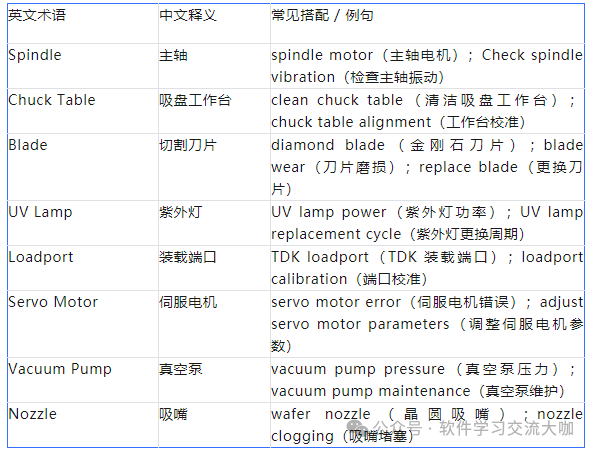
1. Equipment components (high-frequency 30+, focus on key terms)
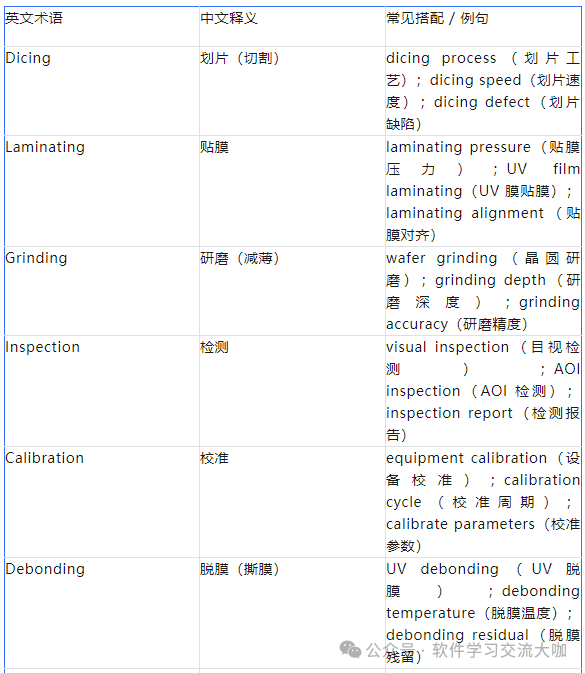
2. Process flows (covering the entire process of dicing, film application, and inspection)

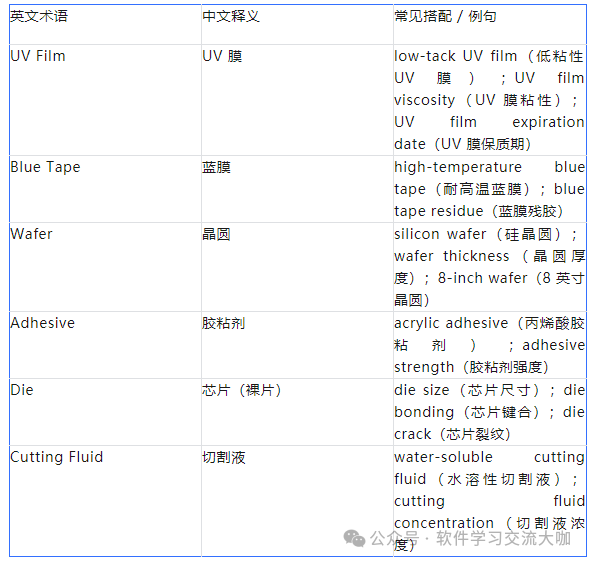
3. Material specifications (including film materials, blades, and auxiliary materials)
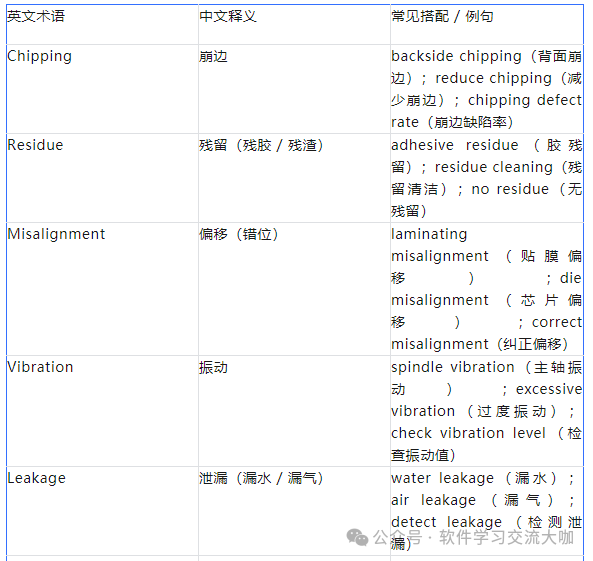
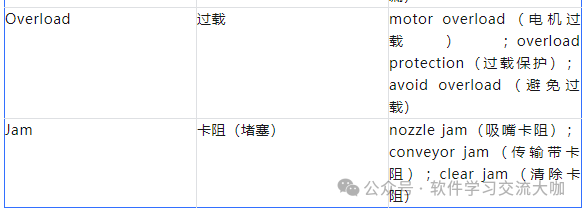
4. Fault descriptions (directly use when communicating with foreigners about faults)
3. Practical tips: 3 tricks to quickly memorize terminology
- Contextual memory method: For example, when learning “dicing,” associate it with “dicing blade” and “dicing speed”; memorizing in context is three times faster than memorizing individual words;
- Prioritize high-frequency terms: First memorize the terms highlighted in red in the table (such as spindle, dicing, UV film), as these appear most frequently in equipment manuals and communications, making them easier to remember;
- Use them in daily practice: When looking at equipment screens, say the English terms out loud, and when communicating with colleagues, try using phrases like “We need to check spindle vibration.” Don’t be afraid of making mistakes; the more you use them, the more natural it becomes.
4. Pitfall reminders: Avoid mistranslating these terms!
- Do not translate “Chuck Table” as “卡盘桌”; the correct term is “suction cup work table”;
- Do not translate “Debonding” as “去粘合”; in semiconductor contexts, it is fixed as “脱膜(撕膜)”;
- Do not translate “Residue” generically as “残留物”; for adhesive residue, add “adhesive,” i.e., “adhesive residue(胶残留)” for more precision.
Interactive time
What English terms do you find most challenging in your technical work? Is it equipment component names or fault descriptions? Share your “English pain points” in the comments, and I will help you supplement the corresponding terms and usages!
#SemiconductorTechnicalEnglish #WorkplaceEnglish #SemiconductorTerminology #EssentialForTechnicalPositions #EquipmentManualReading #ForeignCompanyCommunicationSkills #SemiconductorManufacturing