ABOUT ME
“Bachelor’s in Electronic Information, Master’s in Computer Science, both from top 985 universities. Years of R&D experience in major internet companies, two of the top three. Focused on the IT field, specializing in professional choices, career planning, and programming skill enhancement.”
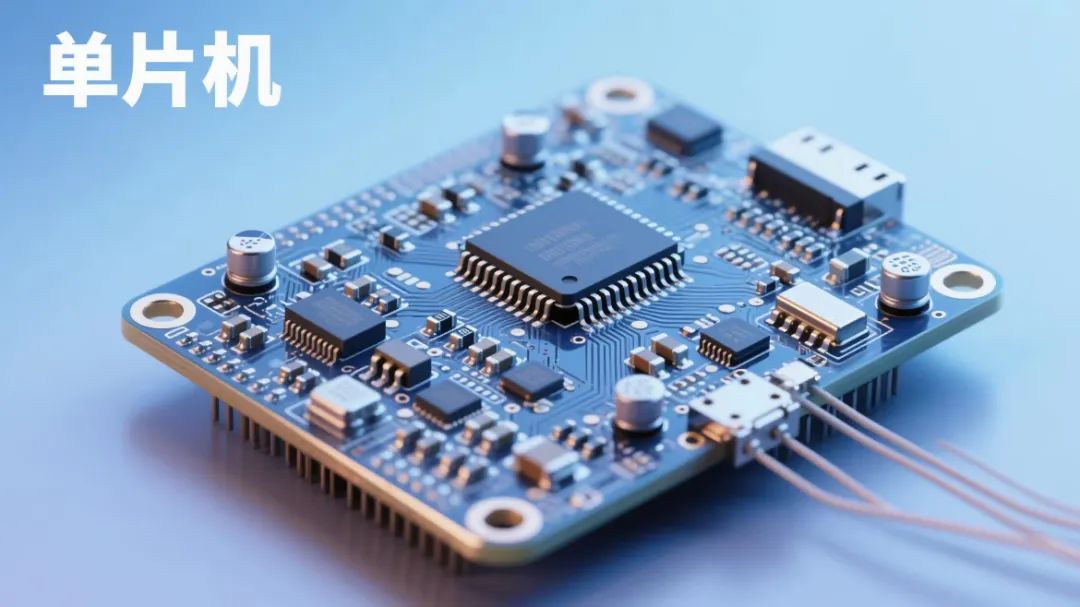
With the continuous development of artificial intelligence, the Internet of Things, and semiconductor chip technology, embedded development has become one of the important employment tracks in the fields of electronic information, automation, and computer science.From precise control of drones to real-time decision-making in smart robots, from reliable communication in automotive electronics to precise monitoring in medical devices, embedded systems are deeply empowering various industries.In the field of embedded development, the boundaries between microcontrollers (MCUs), RTOS (Real-Time Operating Systems), and Linux seem to be increasingly blurred.As developers or learners, how should we choose our learning path? Should we delve into microcontrollers + RTOS, or shift towards embedded Linux?Today, Newton will provide some candid advice for aspiring embedded developers based on industry trends. 01. The Current Status and Trends in Embedded Field1. Microcontrollers vs. LinuxMicrocontrollers have long been the cornerstone of embedded development, especially dominating scenarios sensitive to real-time performance and cost, such as industrial control and sensor networks.With the improvement of SoC performance (such as ARM Cortex-A series chips), the penetration of Linux in low-end fields is gradually increasing.Many smart appliances and consumer electronics are beginning to adopt Linux systems to achieve more complex interactive functions and network connectivity.However, microcontrollers are also “evolving.” Modern MCUs integrate more resources and even support lightweight RTOS or some Linux functionalities, blurring the lines between traditional microcontrollers and embedded Linux.2. The Rise of Edge Computing and AIThe rise of edge computing and embedded AI is reshaping the landscape of embedded development. Linux, with its rich software ecosystem and support for complex algorithms, has become the core platform for edge computing nodes.Chips running Linux are driving the deployment of AI models on local devices. In contrast, while microcontrollers still have advantages in low-power scenarios, they struggle with complex AI tasks.However, microcontrollers will not be eliminated; instead, they will complement Linux: microcontrollers handle low-level real-time control, while Linux manages higher-level data processing and AI inference, together building more efficient systems.02. Choosing a Learning Path: From Basics to Advanced1. Microcontroller + RTOS: The Foundation of Embedded SystemsIf you are a beginner, it is recommended to start with microcontrollers. Microcontroller development has a low barrier to entry, low hardware costs, and allows for quick hands-on practice. By learning about microcontrollers, you can gain a deep understanding of hardware principles (such as GPIO, timers, interrupts, etc.) and master the basic logic of bare-metal programming.
 As the complexity of microcontroller projects increases, RTOS is a natural progression. RTOS (such as FreeRTOS, uC/OS) can help you manage multitasking scheduling, resource allocation, and real-time requirements, laying a solid foundation for further learning of Linux.2. Embedded Linux: The Path to Advanced DevelopmentIf your goal is to participate in the development of smart home gateways, edge computing nodes, or AI terminals, embedded Linux is a necessary path. Linux provides a powerful software ecosystem (such as Yocto, Buildroot), rich driver support (such as USB, cameras, Wi-Fi), and flexible customization capabilities.Learning embedded Linux requires a certain foundation in C programming and familiarity with cross-compilation, kernel trimming, and driver development. For example, mastering Linux kernel module writing, device tree configuration, and file system construction is key to developing embedded Linux devices.3. Progressing from Microcontrollers to LinuxIn practical development, the boundaries between microcontrollers and Linux are not absolute.Many projects adopt a “microcontroller + Linux” dual-chip architecture: the microcontroller is responsible for real-time control (such as motor driving, sensor acquisition), while Linux handles complex computations (such as image processing, network communication).In drone control systems, the flight control unit may be based on STM32, while the image transmission and navigation units run Linux.⏰Newton’s suggested learning path: Microcontroller → RTOS → Embedded Linux. This step-by-step learning approach solidifies the foundation while gradually exposing you to complex scenarios.03. How to Choose a Direction Based on Career Planning?1. Hardware EngineerIf you wish to focus on hardware design or low-level driver development, microcontrollers are an indispensable field.In industrial control, automotive electronics, and other fields, the real-time performance and reliability of microcontrollers remain the first choice. Mastering microcontroller register operations and peripheral driver development can help you stand out in hardware positions.2. Software EngineerFor developers looking to enter the fields of AI, edge computing, or cloud computing, embedded Linux is a required course.The open-source nature of Linux makes it a fertile ground for technical exploration, such as porting Linux to custom hardware or developing AI model acceleration solutions (like TensorFlow Lite), allowing for rapid accumulation of project experience.3. Full-Stack EngineerIf you aspire to become a full-stack engineer, the combination of microcontrollers and Linux is an inevitable choice.In smart home projects, microcontrollers control appliances (such as lights, temperature and humidity sensors), while Linux builds servers and handles user interactions (such as voice control, app interfaces).Mastering both technology stacks will enable you to navigate cross-domain projects with ease.04. Future Technology Trends?1. Embedded AI and Edge ComputingWith the lightweighting of AI models (such as model pruning and quantization), embedded AI is moving from the cloud to edge devices. Learning how to deploy AI models on Linux embedded systems (such as using TensorFlow Lite or PyTorch Mobile) will become an important skill for the future.
 2. Low Power and Miniaturization DesignIn fields such as wearable devices and IoT sensors, low-power design is a core requirement. Learning how to optimize microcontroller power management (such as sleep modes, dynamic voltage adjustment) and Linux energy-saving strategies (such as CPU frequency adjustment, background process management) will help design more efficient devices.3. Cross-Platform Development CapabilitiesThe future of embedded development will increasingly rely on cross-platform toolchains (such as Arduino, Rust embedded development). Mastering general-purpose languages like C/C++ and Python, and being familiar with cross-compilation toolchains (like GCC, Clang), will allow for flexible switching between different platforms.Newton has something to say 💬The real-time and low-cost advantages of microcontrollers remain irreplaceable, while the flexibility and scalability of Linux provide endless possibilities for complex applications. For developers, the key to choosing a learning path lies in clarifying career goals and keeping up with industry demands.If you are a beginner, consider starting with microcontrollers, gradually transitioning to RTOS and Linux; if you aim to enter high-end fields, diving directly into embedded Linux development is also feasible.Like and follow + add “Newton” for communication!