
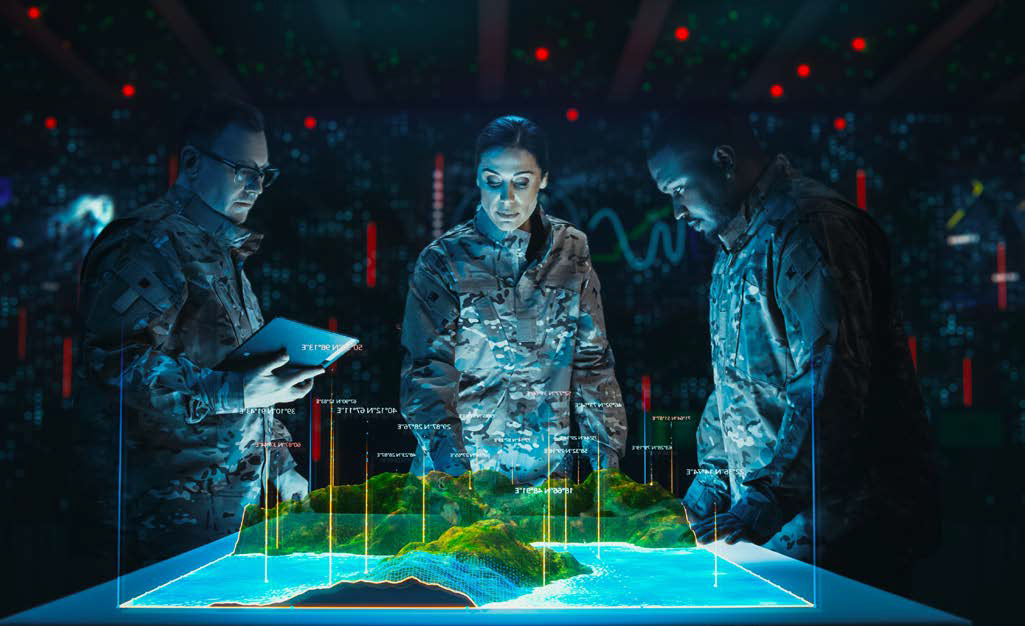
In the 2018 film “Avengers: Infinity War”, superheroes struggle against the villain Thanos to save the universe. As they rack their brains to find a way to defeat Thanos, Doctor Strange mentions his time travel: “I walked ahead in time and saw different futures, saw all the possible outcomes of the impending conflict.” He glimpsed 1,400,605 future scenarios and identified a winning path.
Doctor Strange’s ability to foresee the future is no longer just fiction. Embedded AI modeling simulations can do something similar: while they cannot “see” the future, they can “predict” it. Through AI-generated simulated battlefields, the U.S. Navy can engage in over a million battles with opponents, discovering the keys to victory. With vast amounts of data from various scenarios, the Navy can confidently counter any attempts to disrupt the traditionally rule-based maritime order.
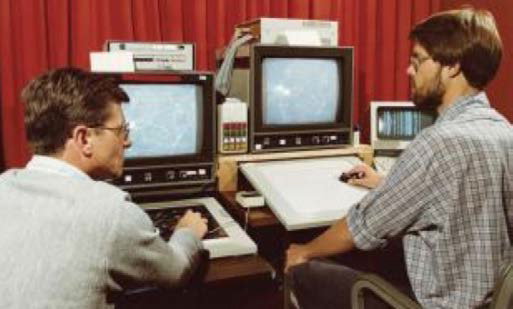
The U.S. Department of Defense adopted the Janus system in the 1980s, which is an interactive conflict simulation model and a tool for planning Operation Just Cause and Operation Desert Storm. After witnessing its effectiveness, the department expanded the use of computer simulations.(Source: Lawrence Livermore National Library Achieves)
◎ Computer Simulation/Wargaming
The U.S. Department of Defense has implemented traditional computer simulations and wargaming for many years. In the 1980s, it adopted the Janus conflict simulation model. Janus was used as a planning tool for Operation Just Cause (the code name for the invasion of Panama) in 1989 and for Operation Desert Storm a year later. After witnessing its effectiveness, the Department of Defense expanded the use of computer simulations, including today’s Lockheed Martin’s Warfighters’ Simulation (WarSim), the U.S. Army’s One Semi-Automated Forces (OneSAF), the U.S. Marine Corps’ MAGTF Tactical Warfare Simulation (MTWS), and the U.S. Air Force’s Advanced Framework for Simulation, Integration, and Modeling (AFSIM).
However, contemporary simulation operations have their limitations. They heavily rely on pre-set assumptions and require extensive exploratory decision-making and participation, both of which limit the simulation of various situations and assumptions. The advancements in artificial intelligence and significant improvements in computing power provide opportunities to reduce these limitations. Embedded AI simulations differ from traditional computer simulations in that they can simulate millions of battles in a short time. Through millions of self-play scenarios, they can automatically generate various examples, produce multiple action plans for specific assumptions, and provide decision-makers with various options. They can also evaluate or generate the best action plans for the Red Team and plan Blue Team actions to counter them.
◎ Implications of Simulation Technology and AI Advancements for the U.S. Navy
“AI Non-Player Characters”: Over the past few decades, the resolution of game graphics has significantly improved, allowing users to feel fully immersed in the game within seconds. Another aspect that makes games more interesting is non-player characters, which are “computer-controlled characters not controlled by players in computer games.” Even if players are alone, these virtual characters can make them feel like they are battling against real people.
However, in some games, non-player characters cannot simulate real people at a high level. They repeat the same actions in the same scenarios. These repetitive actions make it easy for players to predict what will happen next, quickly leading to boredom.
There are several ways to make non-player characters more human-like. In the past, developers used simple rule-based behavior algorithms. However, with the development of neural networks, non-player characters have become more dynamic and better able to adapt to opponents’ actions. In 2005, three computer scientists from the University of Texas at Austin demonstrated non-player characters embedded with neural networks that could train while users played the game. This allowed players to battle against opponents that were more human-like and intelligent. One of the greatest achievements in non-player character development is the collaboration between DeepMind and Atari, which produced various games. By combining deep neural networks with reinforcement learning (a branch of machine learning), non-player characters could outperform humans after 2,600 self-play repetitions. If non-player characters embedded with neural networks could be used for military training, they could assist personnel in executing complex task training.
Applying non-player characters in the military domain could enhance the U.S. Navy’s combat training and operational strategies across various domains—space, air, sea, underwater, and cyber.
For example, by designing non-player characters to execute various difficulty levels (expert, general, novice, etc.) in island defense, anti-surface warfare, and underwater combat tasks on detailed maps, ships could prepare for various critical scenarios and identify the best strategies to accomplish missions by engaging in virtual confrontations with non-player characters set at appropriate technical levels.
Research on these specialized non-player characters is ongoing, with several military-related institutions investing significant effort. The Naval Postgraduate School is currently researching cognitive AI non-player characters for handling military-specific matters (such as hierarchy, fog of war, or specific scenarios within the ATLATL platform). At the University of Southern California’s Institute of Creative Technology, researchers are also developing adaptive non-player characters within a Rapid Integration & Development Environment for military training purposes. The potential applications of the research conducted by these institutions include identifying strategic decision-making processes such as optimal action plans, far exceeding their initial scope. Furthermore, such research also creates future development conditions for unmanned vehicles with autonomous thinking and decision-making capabilities, which could change the landscape of future battlefields.
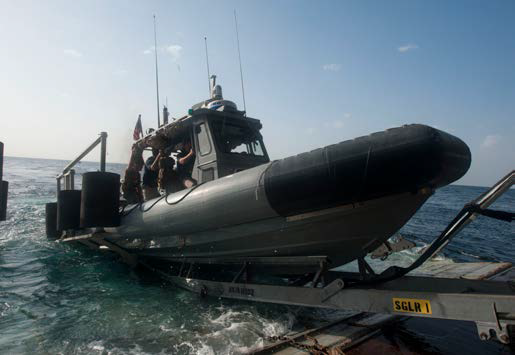
If the U.S. Navy can effectively utilize non-player characters, it can enhance combat training in maritime, underwater, and cyber domains.(Source: USN/Peter D. Blair)
“Generative AI for Simulation/Wargaming”: Generative AI specializes in combining what it has learned to create new content. This capability has been widely adopted across various industries and has become a part of our daily lives; ChatGPT is one example.
The main advantage of generative AI is its ability to address issues arising from insufficient combat experience or training data. In this regard, a noteworthy application is generating scenario examples. Generative AI can produce many realistic scenarios based on estimates of enemy naval size, ship types, and numbers. This allows operational planners to explore and experiment with various scenarios beyond human imagination.
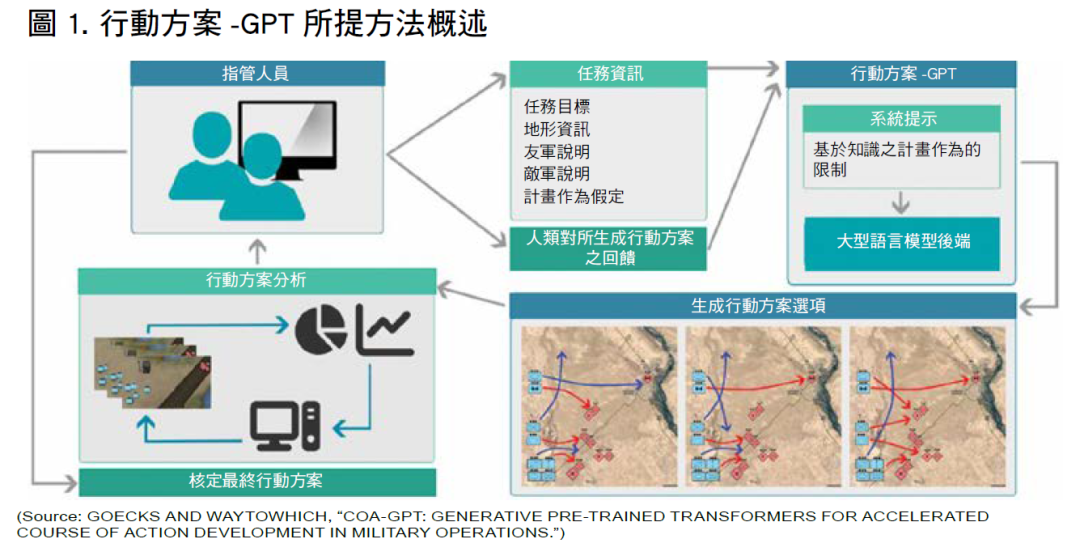
Generative AI developed by Vinicius Goecks and Nicholas Waytowich, such as Course of Action-GPT (COA-GPT), can also interact with command personnel to propose action plan suggestions to support decision-making (see Figure 1). The U.S. Navy can use this method to generate various action plans ranging from simple (such as identifying the most effective formations or deployment positions in the ocean) to complex (such as combat situations near coasts or islands).
Another aspect of using generative AI is scenario generation. Based on historical experiences and known enemy tactics, objectives, and tasks, generative AI can produce synthetic enemy behaviors based on scenario examples. This capability can prepare the U.S. Navy for unexpected situations by simulating various potential enemy actions, thereby enhancing its readiness against rapidly changing maritime threats.
“Digital Twin”: A digital twin can transform real situations into digital forms. Currently, the industry leader is “Industry 4.0”, which aims to integrate cloud computing, the Internet of Things, and technologies like digital twins to collect and analyze data generated during production processes, thereby enhancing decision-making. Imagine a smart factory where every machine in production has sensors that continuously collect data and share it with the entire system. Regardless of the type of data, AI analyzes it and proposes various methods to streamline the production process and improve efficiency.
The concept of a digital twin was proposed by NASA in 2010 as “a vehicle or system that integrates multi-physics, multi-scale, and probabilistic simulations, using optimal physical models, improved sensors, and fleet historical records to accurately reflect the life of its flying twin.” The advantage of a digital twin is that it can not only visualize the entire system during the design phase but also predict problems, optimize solutions, accelerate product prototyping, and speed up training before actual implementation.10 Such core technologies as simulation and AI, machine learning (which allows systems to learn from experience without explicit programming), and reinforcement learning (which enables systems to achieve the most favorable outcomes) can help us foresee future results.
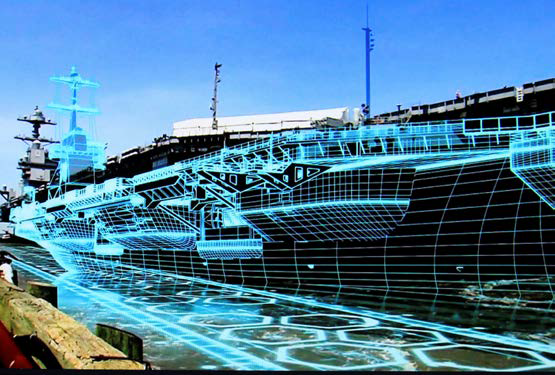
Digital twin technology uses software to simulate various design options, accelerating the weapon development process.(Source: USN/Gary Ell)
A digital twin allows decision-makers to see the outcomes of their decisions and modify their choices. It can predict desired behaviors, avoid undesirable predicted behaviors, and mitigate the impacts of unpredictable and unwanted behaviors. This dual-layer approach can not only predict the condition of ship equipment and manage the lifespan of that equipment but also significantly enhance strategic planning and real-time decision-making across various combat scenarios. By utilizing comprehensive data analysis and simulation, a digital twin can provide deeper insights into maintenance systems, enabling fleets to maximize vessel functionality, improve reliability, and conduct operations with greater confidence. Furthermore, a digital twin can provide a safe environment for testing various hypotheses and assessing potential intervening factors without making physical changes to actual systems, thus playing a crucial role in risk management. Therefore, digital twins are not only advantageous for today’s fast-paced and challenging maritime combat situations but are also vital for maintaining competitiveness and achieving operational superiority.
◎ Potential Platforms
Creating a visualized battlefield requires significant investment and effort. However, there are already several platforms that could be adapted for military use. The gaming industry has provided many military-themed games, some of which have realistic input data or allow users to modify input data to meet specific needs. Although these gaming platforms may not currently utilize AI or machine learning, they indeed have the potential to create a foundation for AI/machine learning environments. By leveraging the advanced simulation capabilities of these platforms’ physics engines or terrain generators, it is possible to develop sophisticated military training and strategic planning tools without starting from scratch. This approach not only saves resources but also accelerates the development and application of advanced virtual battlefield technologies. Examples of such games and simulation platforms include:
“Command: Modern Operations” (Command Operations, produced by Slitherine Ltd): This game provides multi-domain simulations of modern warfare, allowing for precise military operations across land, sea, and air. Its advantage lies in its complex and detailed scenario editor, enabling users to design various specific operational scenarios. By integrating machine learning algorithms, the military can enhance the predictive capabilities of these scenarios, thereby improving decision-making and strategic planning abilities in virtual exercises.
“Modern Naval Warfare” (produced by Slitherine Ltd): This platform focuses on high-fidelity naval combat simulations, including submarine operations, surface combat, and air defense. If used for machine learning, the U.S. Navy could develop algorithms to simulate and analyze naval strategies, providing unprecedented training opportunities and deeper insights into naval tactics and strategy optimization.
“Modern Air Combat Environment” (produced by BSI): This high-fidelity air combat simulation tool provides realistic models of various aircraft, missile systems, and radar tracking. Its ability to simulate complex aerial engagements makes it an optimal choice for machine learning; its algorithms can analyze engagements, providing deeper insights into tactics and strategy, potentially revolutionizing air combat training and planning.
“VR Forces” (developed by MAK): This platform can create detailed virtual environments for land, sea, and air operations. Its strength lies in simulating large-scale military maneuvers and combat capabilities. When integrated with machine learning, this platform can provide real-time tactical adjustments and predictions, enhancing the realism and effectiveness of training exercises.
◎ The Time is Now
The 2022 U.S. National Security Strategy states: “The post-Cold War era is entirely over, and great power competition is shaping the future.” This implies that the battlefield environment has shifted from predictable to unpredictable. Therefore, developing and utilizing cutting-edge technologies is imperative to effectively manage and reduce uncertainty.
Like Doctor Strange, U.S. Navy decision-makers can traverse countless scenarios with the assistance of AI to formulate tactics and strategies to defeat adversaries in uncertain battlefields. Doctor Strange’s superpower of foreseeing the future is concretely manifested in embedded AI simulation wargaming. The journey ahead may be fraught with challenges, but with clear and meticulous investment in innovation, the U.S. Navy can elevate itself to new heights.
Author Biography
Hyokwon Jung, a South Korean Navy Lieutenant Colonel and surface warfare officer, holds a Bachelor’s degree in Weapon Systems Engineering from the Republic of Korea Naval Academy and a Master’s degree in Modeling, Virtual Environments, and Simulation from the Naval Postgraduate School.
This article is sourced from: The Old Landlord Has Surplus Grain

Follow the public account for more information
Membership application: Please reply “individual member” or “unit member” in the public account
Welcome to follow the media matrix of the China Command and Control Society

CICC Official Douyin

CICC Toutiao Account

CICC Weibo Account

CICC Official Website

CICC Official WeChat Account

Journal of Command and Control Official Website

International Unmanned Systems Conference Official Website

China Command and Control Conference Official Website

National Wargaming Competition

National Aerial Intelligent Game Competition

Yidian Account