1. Feedback Control
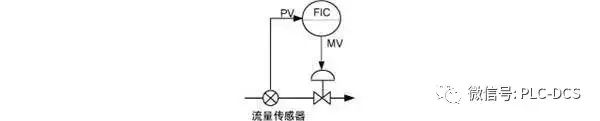
Feedback control, also known as closed-loop control, operates similarly to flow and pressure control. The changes in the control signal from the operating end are returned as measured values from the detection end through the system, which is termed feedback control. Feedback control is the most widely used in automatic control, with strong resistance to external disturbances, allowing for stable control. Typically, a simple PID controller or an artificial intelligence controller that adapts to various complex operating conditions is selected for feedback control.
2. Feedforward Control
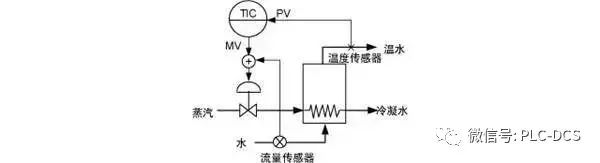
Used in processes with long response times and significant external disturbances, such as thermal processes or conveying devices. Feedforward control is used in conjunction with feedback control mentioned above. It detects external disturbances (such as changes in water flow) before temperature changes occur, correcting the control signal before feedback control, hence also called proactive action. Feedforward control usually consists of a single-loop regulator and a mathematical operator for addition and subtraction. Choosing the appropriate regulator, tuning the best PID parameters, and the coefficients of the mathematical operator are crucial for enhancing the effectiveness of the feedforward control system.
3. Sequence Control
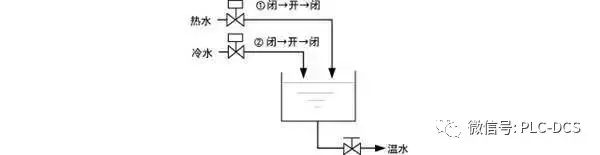
To obtain warm water in a tank, the hot water inlet valve is opened for a period and then closed, followed by opening the cold water inlet valve for a period and then closing it, although the temperature may not be precise. This series of ON/OFF operations is termed sequence control, which means “control performed in a predetermined sequence.” This control has neither a target value nor corrective actions and is unaffected by external disturbances.
4. Ratio Control System
When mixing multiple fluids in proportion, a ratio control system is used. For examples of ratio calculations, please refer to the flow ratio calculation example.

5. Cascade Control System
This system combines different loops of process variables using a master regulator and a slave regulator, connecting the output of the master regulator to the setpoint of the slave regulator. This control system is called cascade control. Cascade means a series of processes. As a basic condition, the response of the slave regulating loop is faster than that of the master regulating loop. It can correct external disturbances such as changes in fuel pressure early.
6. Override Control System
The override control system automatically selects the output signals of multiple regulators to control the process. As shown in the figure, while ensuring the minimum fuel pressure of the burner, it automatically selects the one with the larger control output from the pressure regulator and the flow regulator in the flow control loop to control the regulating valve. This control loop is also called automatic selector control.

7. Program Control System
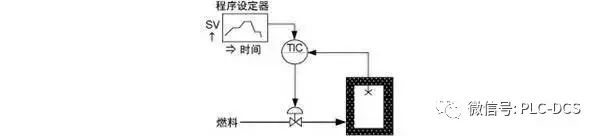
The program control system changes the setpoint according to a predetermined time schedule. It uses a program setter or a program regulator with setting change functions, mainly applicable in equipment such as rotary kilns.
8. Batch Control System
The batch control system is mainly used for loading equipment, such as loading gasoline or kerosene into tank trucks. Its main function is to automatically stop when the loading amount reaches a set value. High-performance batch regulators have functions such as initial speed setting and preset quantity setting. The batch control system is usually completed by a flow integrator with batch control, and related information is detailed on the flow integrator product page. ① Initial speed setting refers to the setting of a small flow injection function to avoid sparks caused by static electricity at the nozzle tip before the nozzle tip contacts the liquid. ② Preset quantity setting refers to the function setting to reduce the filling flow when a certain cumulative value is reached to prevent over-injection.

We welcome all machine friends to leave your wonderful comments below!
Link: How to Become an Industrial Robot Application Engineer?
Link: How to Become an Industrial Robot Application Engineer?
Link: How to Become an Industrial Robot Application Engineer?
We are not just the carriers of dry goods.

Only a step away from becoming an industrial robot master.
Guidance Vehicle Robot Academy, cradle of robotic craftsmen.