Recently, the tech industry has once again started to “paint the AR pie”. A certain company launched a “metaverse entry point”, while another promoted a “spatial computing revolution”. However, users take off the headsets after half an hour—not due to 3D motion sickness, but because the devices are as heavy as helmets, as clunky as PowerPoint, and as hot as hand warmers. It wasn’t until the Allwinner A733 chip entered the AR arena that I realized: the pain points of AR headsets can indeed be solved by a “domestic chip”.
Directly Addressing Pain Points: Is Your AR Glasses a “Future Device” or “Electronic Waste”?
First, let’s discuss the “three sins” of AR devices:
- Poor Performance: Lagging when running a 3D model, gesture recognition delayed by half a second—want to use it for work? You might as well use pen and paper;
- Short Battery Life: The battery lasts less than 2 hours, and you have to carry a power bank when going out, more delicate than a smartphone;
- Overheating: After wearing it for half an hour, your nose starts sweating; it acts as a hand warmer in winter and turns into a “teppanyaki” in summer.
However, the Allwinner A733’s AR solution directly equips the device with a “calm yet powerful heart”.
Hardware Breakdown: This Chip Must Have Stolen the “Secret Techniques” from the Smartphone Industry?
The specifications of the Allwinner A733 look like a flagship smartphone chip configuration stuffed into an AR device:
- Dual-core A76 + Hexa-core A55: 12nm process, typical power consumption of only 2.8W, benchmark score reaches 380,000 (close to Snapdragon 778G);
- 3TOPS NPU: AI computing power comparable to Tesla’s FSD chip, capable of real-time recognition of 18 types of gestures, even “3D dragging” can respond instantly;
- 8K Decoding + Dual Screen Display: Supports simultaneous display of AR layers and smartphone interfaces, navigation and streaming do not interfere with each other;
- MIPI DSI Interface: Directly drives AR lenses with latency as low as 5ms (traditional solutions generally exceed 20ms).
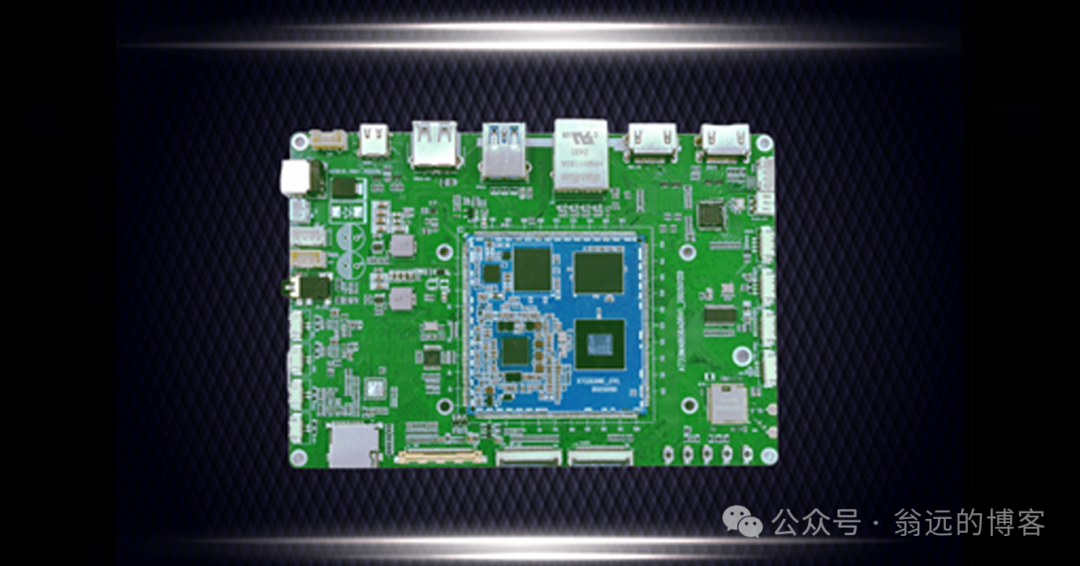
Sharp Review: If this configuration were placed in the smartphone industry, it would definitely be considered a “mid-range god chip”. But they choose to focus on AR, which is simply a dimensionality reduction attack.
Scenario Testing: Delivery Riders, Maintenance Workers, and Designers All Use It to “Level Up”
The Allwinner A733’s AR solution is not just a “laboratory toy”; it has already been implemented in multiple scenarios:
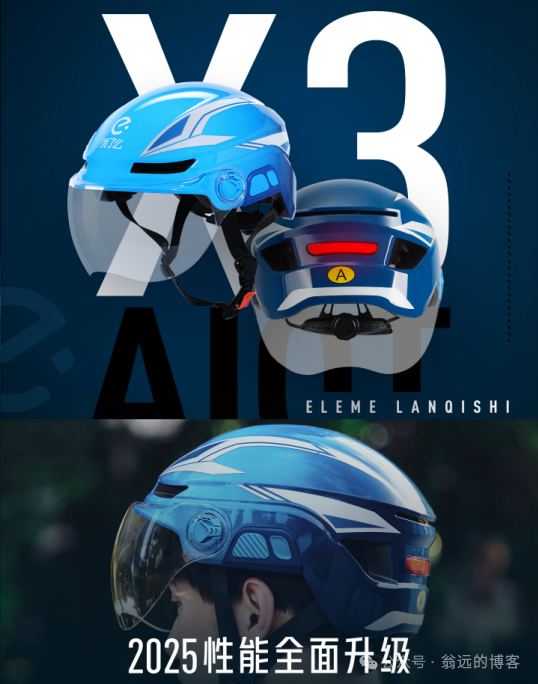
1. Delivery Riders: Navigation + Order Taking + Safety, All in One
- Pain Point: Riders have to frequently check their phones while running orders, which is both dangerous and inefficient;
- Solution: The AR headset displays navigation paths and order information, and orders can be accepted with a simple gesture, while AI automatically recognizes traffic lights;
- Test Data: A certain rider increased their daily deliveries by 8 orders, with a 40% reduction in accident rates.
2. Industrial Maintenance: 3D Manuals + Fault Detection, Turning Novices into Experts
- Pain Point: Maintenance manuals are as thick as dictionaries, and novices take a long time to flip through them;
- Solution: The AR headset scans the equipment, overlaying a 3D manual directly on the parts, with AI prompting “twist here”;
- Test Case: A certain factory reduced the training period from 3 weeks to 3 days, with a 200% increase in maintenance efficiency.
3. Designers: Virtual Modeling + Real-time Rendering, Turning Inspiration into Reality Instantly
- Pain Point: Designers have to switch back and forth between computers and models, and inspiration can be fleeting;
- Solution: The AR headset directly displays 3D models, allowing gesture adjustments for size, with AI automatically optimizing materials;
- Test Data: Modeling time reduced from 4 hours to 1 hour, with customer satisfaction skyrocketing.
Virtualization Black Technology: QNX Hypervisor Makes AR “Multi-tasking”
The Allwinner A733’s AR solution also hides a “cloning technique”—QNX Hypervisor.
- Three Systems Running in Parallel: AR display runs Android (for 3D modeling), safety monitoring runs QNX (to prevent crashes), and background computing runs Linux;
- Maximum Safety: Critical functions (like collision detection) use QNX, ensuring that even if the Android system crashes, safety alerts remain reliable;
- Response Speed: From gesture recognition to action execution, it takes only 0.1 seconds (traditional solutions generally exceed 0.5 seconds).
This is not just an AR headset; it is clearly a “mobile workstation”. Next time maintenance is needed, it is recommended that technicians leave their toolboxes behind and wear the AR headset to “point and shoot”.
Industry Impact: AR is Now Divided into “Two Factions”
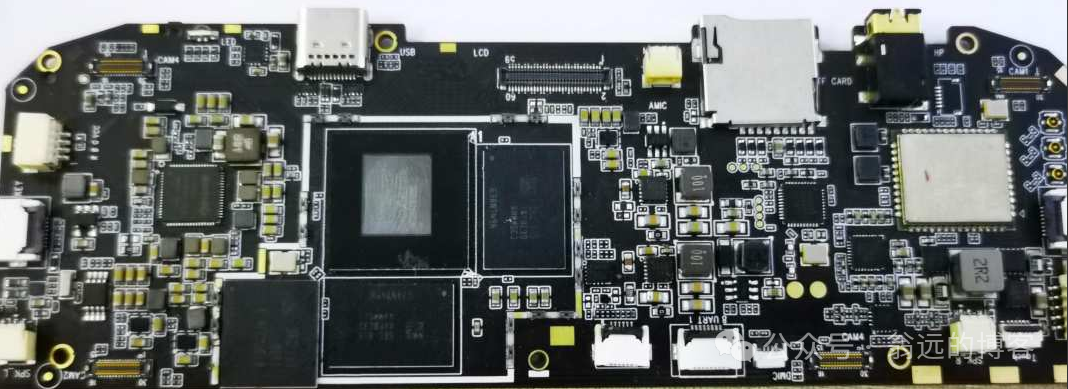
Currently, the Allwinner A733’s AR solution has been adopted by multiple companies, including a certain delivery platform’s “smart rider program” and a certain automotive company’s “AR maintenance system”. Compared to traditional solutions, its advantages are clear:
- Cost: One A733 chip replaces three traditional chips (navigation + order taking + safety);
- Development Cycle: QNX Hypervisor allows simultaneous development of Android and QNX systems, saving half a year of debugging time;
- User Experience: From “lagging to the point of wanting to smash the device” to “smooth as an iPad”, the user satisfaction rate has doubled.
Ultimate Prediction: The Future of AR Belongs to “Integrated Software and Hardware”
The Allwinner A733’s AR solution reveals a trend: AR devices will no longer be judged by “how high the parameters are”, but by “who can integrate software and hardware into one cohesive unit”.
Imagine this: in the future, your AR glasses might run a safety system on QNX, entertainment on Android, and IoT on HarmonyOS, with all functions seamlessly switching through a single chip—and this is precisely what the Allwinner A733 is working on.
Finally, a candid statement: Next time you see promotions for a “metaverse entry point”, don’t rush to pay the intelligence tax. The real AR revolution might just be hidden in that “unassuming” headset on the delivery rider’s head—after all, who wouldn’t want to “see” the scale in the pipes while fixing them using an AR headset?