Source: The World of Lithographers
Before we explain semiconductor chips, we should first understand two points. First, what is a semiconductor? Second, what is a chip?
Semiconductor
A semiconductor refers to materials whose electrical conductivity is between that of insulators and conductors at room temperature. Materials with poor conductivity, such as coal, artificial crystals, amber, and ceramics, are generally referred to as insulators. In contrast, metals with better conductivity, such as gold, silver, copper, iron, tin, and aluminum, are called conductors. Compared to conductors and insulators, the discovery of semiconductor materials was the latest, gaining industrial attention only in the 1930s after improvements in material purification technology. Common semiconductor materials include silicon, germanium, and gallium arsenide, with silicon being the most influential in commercial applications.
Chip
A chip, also known as a microchip or integrated circuit (IC), refers to a silicon wafer that contains integrated circuits and is very small in size. Generally, the term chip (IC) refers to all semiconductor components, which are circuit modules that combine various electronic components on a silicon wafer to achieve specific functions. It is the most crucial part of electronic devices, responsible for computation and storage. It is widely used in military, civilian, and almost all electronic devices. By this point, you should have a basic understanding of semiconductors and chips; let’s talk about semiconductor chips.
What is a Semiconductor Chip?
In general, semiconductors, integrated circuits, and chips can be considered synonymous because they refer to the same concept.
A semiconductor is a type of material categorized into four types in the table. Due to the high proportion of integrated circuits, which exceed 80%, the industry habitually refers to the semiconductor industry as the integrated circuit industry.
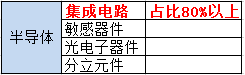
The chip is essentially the carrier of the integrated circuit, and broadly speaking, we equate the chip with the integrated circuit.
So for beginners, just remember that when you encounter the terms chip, integrated circuit, and semiconductor, don’t panic; they refer to the same thing.
Internal Structure of Semiconductor Chips
Although semiconductor chips are small, their internal structure is very complex, especially their core micro-units—thousands of transistors. We will provide a detailed explanation of the internal structure of semiconductor chip integrated circuits. Generally, we understand integrated circuits from a hierarchical structure from large to small, which makes it easier to comprehend.
(1) System Level
Taking a mobile phone as an example, the entire phone is a complex circuit system capable of gaming, calling, listening to music, and more. Its internal structure consists of multiple semiconductor chips connected with resistors, inductors, and capacitors, referred to as the system level. (Of course, with technological advancements, the technology to integrate an entire system onto a single chip—SoC technology—has been around for many years.)
(2) Module Level
The entire system is divided into many functional modules, each performing its specific role. Some manage power, some handle communication, some are responsible for display, some for sound, and others for overall computation, etc. This is referred to as the module level. Each module represents a vast field, gathering countless human intellectual achievements and supporting many companies.
(3) Register Transfer Level (RTL)
What constitutes each module? Taking the digital circuit module, which occupies a large proportion of the entire system (responsible for logical operations, processing discrete electrical signals of 0s and 1s), as an example, it consists of registers and combinational logic circuits.
Registers are circuit structures that can temporarily store logical values and require a clock signal to control the duration of logical value storage.
In practical applications, we need a clock to measure time; similarly, circuits require clock signals to organize their operations. A clock signal is a periodically stable rectangular wave. In reality, the movement of a second is a basic time scale for us, while the oscillation of a rectangular wave over a cycle is a time scale in their world. Circuit elements respond according to this time scale to perform their functions.
What is combinational logic? It is composed of multiple logic gates such as AND, OR, and NOT. For example, two series-connected light bulbs, each with a switch, will only light up if both switches are on; this is called AND logic.
A complex functional module is composed of many registers and combinational logic, and we refer to this level as the register transfer level.
(4) Gate Level
The registers in the register transfer level are also composed of AND, OR, and NOT logic. If we further subdivide it into AND, OR, and NOT logic, we reach the gate level (they act like doors, blocking or allowing the entry and exit of electrical signals, hence the name).
(5) Transistor Level
Whether in digital circuits or analog circuits, at the lowest level, we reach the transistor level. All logic gates (AND, OR, NOT, NAND, NOR, XOR, XNOR, etc.) are composed of individual transistors. Therefore, integrated circuits, from macro to micro, ultimately consist entirely of transistors and the wires connecting them.
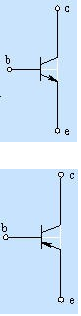
Bipolar junction transistors (BJTs) were commonly used in the early days, colloquially known as transistors. They can amplify signals when connected to resistors, power sources, and capacitors. Like stacking blocks, they can be used to create various circuits, such as switches, voltage/current source circuits, the aforementioned logic gate circuits, filters, comparators, adders, and even integrators. Circuits built with BJTs are referred to as TTL (Transistor-Transistor Logic) circuits. The circuit symbol for a BJT looks like this:
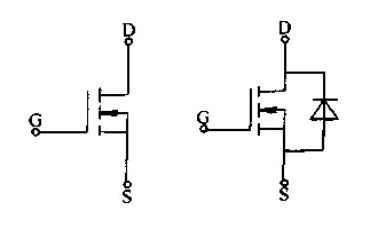
However, with the emergence of metal-oxide-semiconductor field-effect transistors (MOSFETs), which have excellent electrical characteristics and ultra-low power consumption, the IC field has been dominated. Besides BJTs appearing in analog circuits, most modern integrated circuits are composed of MOSFETs. Similarly, they can also be configured to form thousands of different circuits and can also serve as basic circuit elements like resistors and capacitors. The circuit symbol for a MOSFET is as follows:
In summary, in actual industrial production, the manufacturing of chips is essentially the process of producing thousands of transistors. However, in reality, the manufacturing sequence of chips is reversed, starting from the lowest level of transistors and building up layer by layer.
In other words, following the sequence of “transistor -> chip -> circuit board,” we can ultimately obtain the core component of electronic products—the circuit board.

Official Account ID: imecas_wx