Introduction
In scenarios such as emergency rescue, law enforcement, and field operations, while both individual video transmission devices and self-organizing network transmission devices serve the purpose of “on-site image transmission”, their positioning, technical logic, and applicable scenarios are fundamentally different. The former is a “personal-level high-definition video transmission tool”, focusing on the “visual link from the front line to the rear”; the latter is a “regional-level networked image transmission tool”, emphasizing “multi-device collaborative image transmission in environments without public networks”. Individual video transmission devices, with their deep adaptation to “personal operational needs”, demonstrate irreplaceable advantages in practical scenarios involving individuals or teams.

1. Core Differences: From “Positioning Logic” to “Practical Adaptation” Essential Distinctions
| Comparison Dimension | Individual Video Transmission Device | Self-Organizing Network Transmission Device |
| Core Positioning | “High-definition video exclusive transmission terminal” for individuals/teams, with the core goal of “enabling individuals to easily transmit good video” | “Multi-device collaborative image transmission network carrier” at the regional level, with the core goal of “establishing an image transmission network in areas without public networks” |
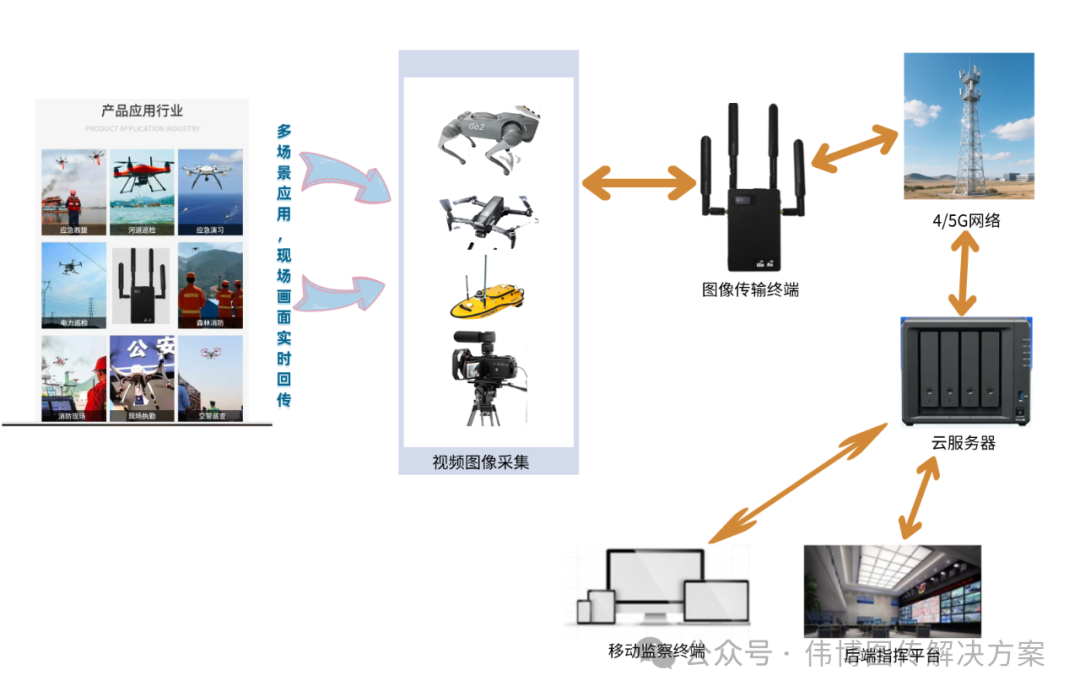
| Network Architecture | Relies on external networks (5G/4G public networks, private networks, satellites), has no networking capability, and serves only as a “data transmission terminal” | No central mesh distributed architecture, devices automatically form a network (at least 2 devices), itself is a “network node + image transmission terminal” |
| Deployment Difficulty | Single-person second-level deployment: weight usually < 1kg (e.g., Weibo Video 5G three-card transmission only 508g), handheld startup, can transmit video within 40 seconds of power on | Multi-device collaborative deployment: single device weight usually > 2kg, requires fixed brackets/positions, needs to configure networking parameters, and expansion requires adding “node devices” |
| Transmission Focus | Focus on “high-definition video”: supports 1080P low-bitrate transmission (1M bandwidth), also accommodates two-way voice and Beidou positioning, with video having the highest priority | Accommodates “multi-data image transmission”: can transmit video, sensor data (e.g., thermal imaging), control commands, with video clarity limited by network bandwidth |
| Applicable Scenarios | Individual mobile operations (police individual law enforcement, emergency personnel evidence collection in ruins, power inspectors field line checking, fire rescue, armed police duty, etc.) | Multi-team collaboration without public networks (multi-department linkage in earthquake disaster areas, multi-device image transmission in forest fire frontlines) |
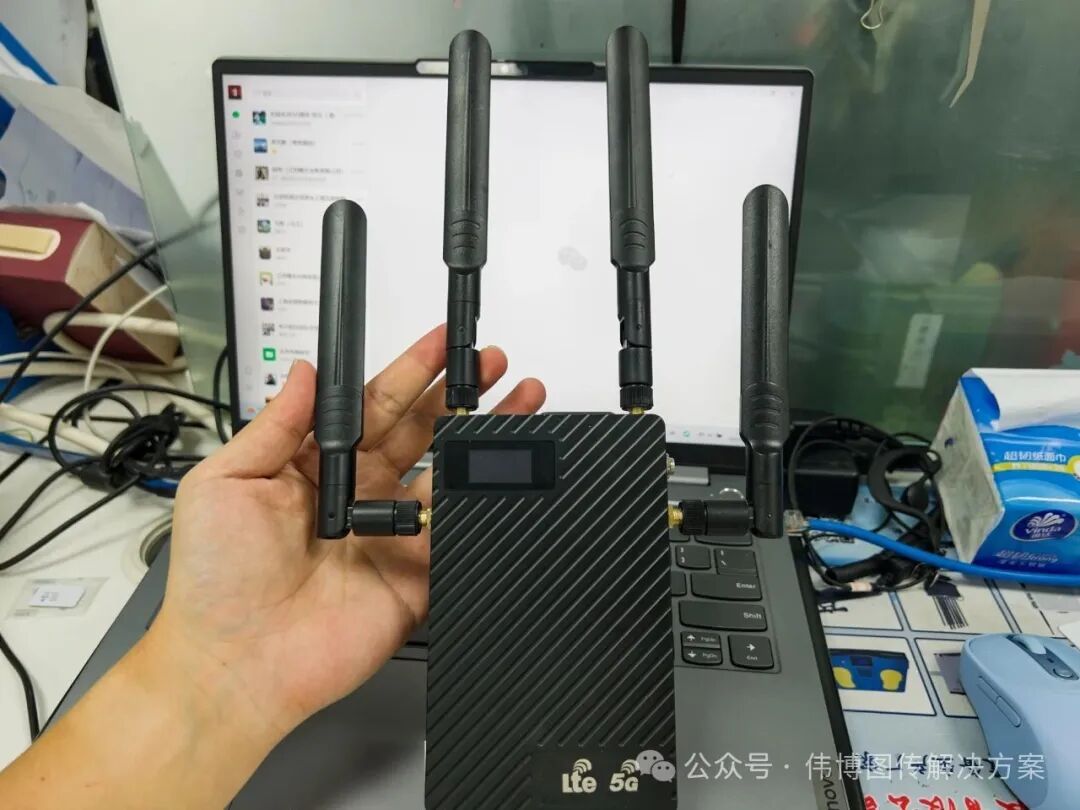
Model: WB7000MD
2. Core Advantages of Individual Video Transmission Devices: Precisely Addressing the Pain Points of Frontline Personal Image Transmission
The design of individual video transmission devices revolves around “how individuals can easily and stably transmit high-definition images back to the rear in complex environments”, with advantages directly addressing the core needs of frontline personnel, making them difficult to replace in practical operations:
1. Extreme Lightweight + Long-lasting Battery Life, No Burden for Personal Mobile Operations
Frontline personnel often face scenarios of “hiking, climbing, and working in narrow spaces”, where “weight” and “power failure” are two major concerns, which individual video transmission devices perfectly resolve:
-
Weight comparable to a mobile phone, zero pressure for carrying: mainstream devices weigh only around 500g (e.g., Weibo Video 5G three-card transmission terminal only 508g), can fit into tactical vest pockets or be held in one hand, without affecting running or climbing actions; compared to self-organizing network transmission devices (single unit 2-3kg, requires carrying or fixing), individual video transmission allows frontline personnel to shift from “carrying equipment” to “bringing equipment”, enhancing mobility by 80%.
-
9-10 hours of battery life, continuous image transmission without power failure: built-in 8000mAh high-capacity lithium battery supports continuous operation for 9-10 hours, paired with 12.6V wired charging, can also connect to outdoor mobile power sources (e.g., portable power banks) to extend working time. In remote mountainous areas during power inspections, there is no need to search for power sources, allowing continuous transmission of line fault images from dawn to dusk, avoiding disconnection of critical information due to “insufficient power”.
2. High Definition Low Consumption + Multi-Network Aggregation, Stable Transmission and Clear Viewing in Complex Environments
The network environment in frontline scenarios is often harsh (signal congestion in busy areas, weak 5G coverage in mountainous regions, electromagnetic interference at disaster sites), and individual video transmission devices ensure video transmission is “smooth and clear” through technical optimization:
-
1M bandwidth for 1080P, high definition even with low bandwidth: adopts H.265 ultra-low bitrate encoding technology, combined with FEC forward error correction and UDP rapid redundancy fault tolerance, even in areas with weak 4G signals, only 1M bandwidth is needed to stably transmit 1080P video — details such as cracks in power insulators, facial features of suspects, and gestures of trapped individuals in ruins can be clearly presented; compared to self-organizing network transmission (which usually requires 3-5M network bandwidth to transmit 1080P, and is prone to stuttering when multiple devices share bandwidth), individual video transmission has significant advantages in “low bandwidth high-definition image transmission”.
-
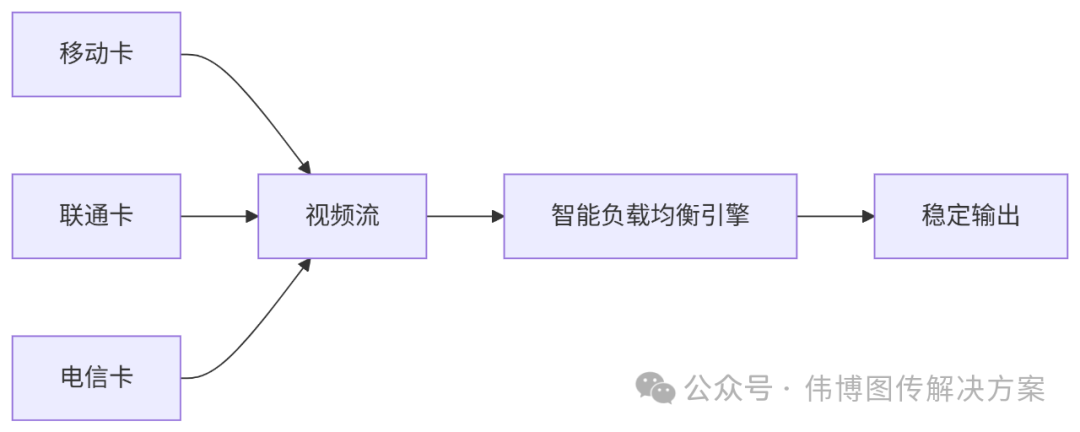
5G + dual 4G three-card bundling, near-zero risk of network disconnection: can simultaneously insert SIM data cards from mobile, Unicom, and telecom, dynamically allocating traffic through millisecond-level bandwidth monitoring — in densely built urban areas, when 5G signals are blocked, it automatically switches to 4G; in remote areas without public networks, it can also expand satellite interfaces through network ports, ensuring “no black screen for images, no disconnection of disaster information”. For example, during forest fire rescue, when thick smoke blocks 5G signals, individual video transmission automatically switches to dual 4G channels, still able to transmit high-definition images of the spreading fire back to the command center in real-time, providing critical information for helicopter dispatch.
3. Video Exclusive Optimization + Emergency Linkage, Adapting to Law Enforcement and Rescue Needs
Frontline image transmission not only needs to be “transmitted well”, but also “stored securely and linked quickly”. Individual video transmission devices are deeply designed to meet these urgent needs:
-
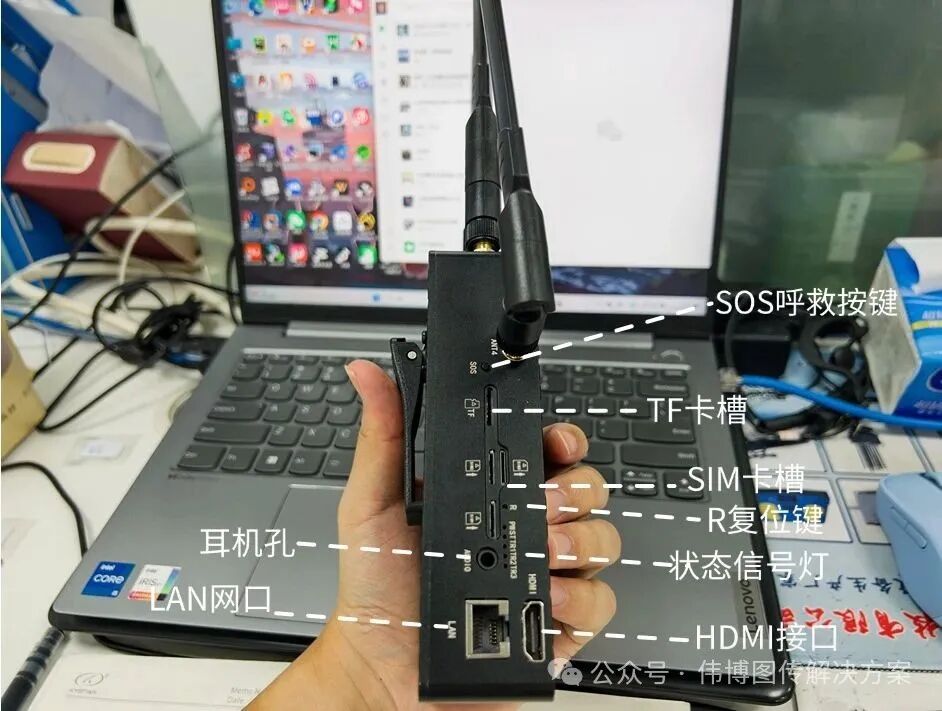
Encrypted storage to prevent tampering, ensuring a complete and reliable evidence chain: supports 256GB dual TF card local storage, video files use a special encryption mechanism that requires a dedicated platform player to decrypt for reading, preventing data leakage or tampering after device loss; dual-stream functionality allows for simultaneous “real-time stream (low bitrate for smoothness) + storage stream (high bitrate for detail)” — during police arrests, it can both transmit suspect images in real-time for command dispatch and retain high-definition video locally as court evidence, eliminating the risk of “evidence chain breakage”.
-
SOS one-click streaming + two-way voice for quick response in emergencies: in dangerous situations (e.g., aftershocks, violent resistance), pressing the SOS button forces the device to push the on-site image and Beidou positioning (within 10 meters accuracy) to the command screen, allowing the rear to instantly locate frontline personnel; the two-way voice function (supports Bluetooth, headset, or handheld microphone) enables frontline personnel to communicate directly with the command center, such as “two trapped elderly people found in the ruins, need small demolition tools”, reducing response time by 60% compared to traditional “phone description + paper dispatch” in life-and-death rescues, seizing “golden time”.
4. Multi-Device Adaptation + Zero Threshold Operation, Ready to Use Without Delay
Frontline scenarios emphasize “timeliness”, and “complex debugging” can delay decision-making. Individual video transmission devices enhance efficiency through “quick deployment + multi-device viewing”:
-
30 seconds to power on and use, no professional skills required: no wiring or configuration of network parameters needed, automatically connects to the network and recognizes video sources (e.g., law enforcement recorders, night vision cameras) after power on — when police set up checkpoints on the street, they can take out the device and connect to the camera to transmit real-time images of the driver’s face and license plate; emergency personnel arriving at the ruins can start transmitting internal images in seconds, saving 90% deployment time compared to self-organizing network transmission (which requires debugging network parameters and takes at least 5 minutes to transmit images).
-
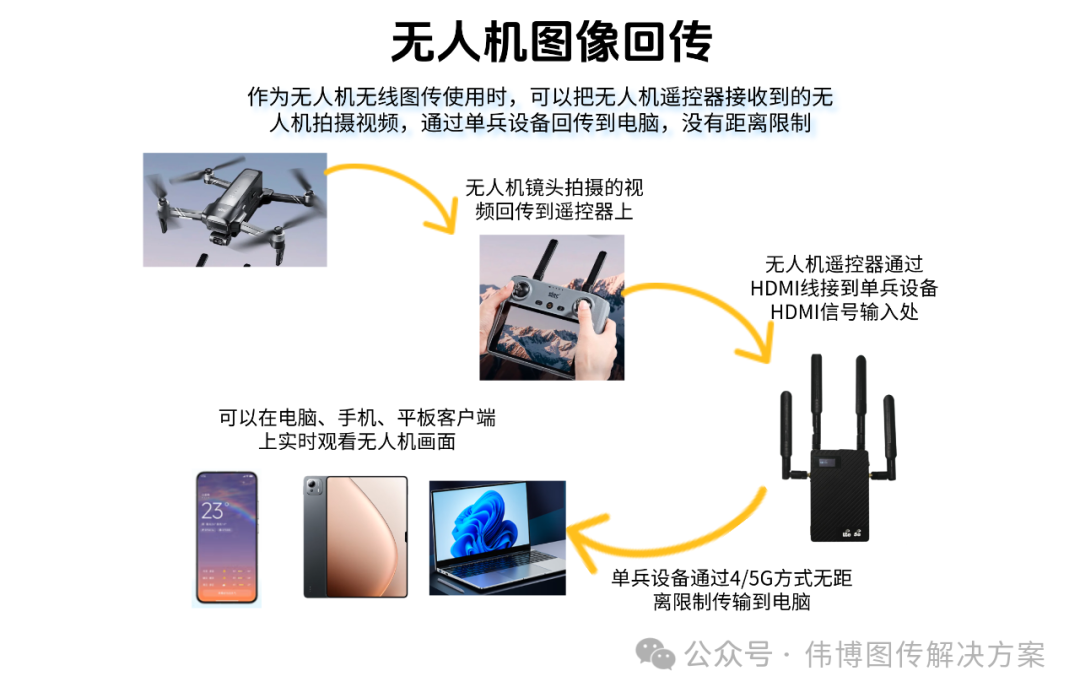
Can be viewed on mobile phones/computers/large screens, command is not limited: provides a computer client, Android mobile/tablet app, allowing rear command personnel to operate without being fixed at the command center — power dispatch experts in the office can enlarge the line fault images transmitted by inspection personnel via mobile, remotely judging “whether to replace the insulator”; police leaders on business trips can also view street law enforcement images in real-time via tablet, timely adjusting police deployment.
3. Advantages of Self-Organizing Network Transmission Devices: Focusing on Multi-Team Collaboration, Complementing Rather Than Replacing Individual Video Transmission
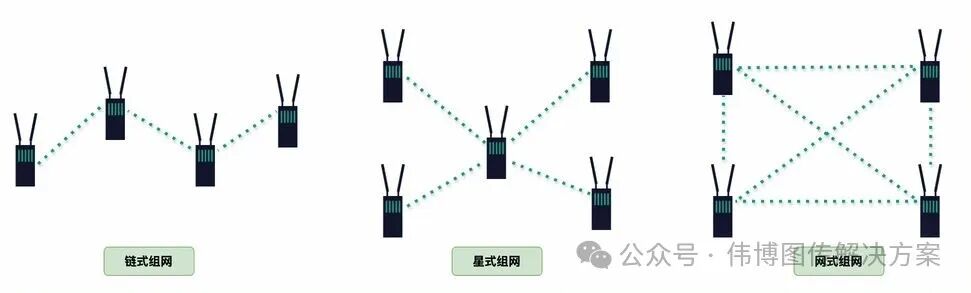
The core value of self-organizing network transmission devices lies in “multi-device collaborative image transmission in environments without public networks”, with advantages concentrated on “network autonomy”:
-
No central self-healing: does not require a base station, devices automatically relay, and when a certain node disconnects, it automatically switches links (e.g., if a device is damaged in an earthquake disaster area, other devices can still form a network for image transmission); its transmission capability in the absence of public networks is beyond what individual video transmission can reach.
- Flexible regional coverage: by adding “node devices”, the transmission range can be expanded (e.g., 10 devices can cover 2 kilometers of fire line), supporting multiple teams to share images.
However, self-organizing network transmission cannot replace individual video transmission: it requires multiple deployments, is heavy, and is not suitable for personal mobile operations; and when multiple devices share bandwidth, video clarity is easily affected (e.g., in a network of 10 devices, a single video may drop to 720P), which may not meet the demand for “individual high-definition image transmission”.
4. Conclusion: Individual Video Transmission is the “Essential Equipment for Personal Frontline Operations”
- If the need is for “individual/team unit mobile operations requiring stable transmission of high-definition video to the rear” (e.g., police individual law enforcement, emergency personnel evidence collection in ruins, power inspections, fire rescue),individual video transmission devices are a good choice — their lightweight, long battery life, and high-definition stability perfectly adapt to personal usage scenarios, allowing frontline personnel to “easily transmit images and enable clear decision-making at the rear”;
- If the need is for “multi-team collaborative image transmission without public networks” (e.g., multi-department linkage in earthquake disaster areas), they can be used in conjunction: allowing individual video transmission devices to connect to self-organizing network networks, meeting both personal high-definition image transmission and achieving multi-team collaboration.
In short, individual video transmission devices are the “visual nerve endings for frontline individuals”, designed with “personal needs” as the core design point, and their advantages in individual operational scenarios are irreplaceable, always being a reliable partner for frontline personnel to “transmit good images, connect well, and store good evidence”. The two are not in opposition but can be used collaboratively: for example, in earthquake disaster areas, first deploy self-organizing network transmission to build a temporary network, then allow individual video transmission devices to connect to that network, meeting both individual high-definition image transmission and achieving multi-team collaboration, maximizing rescue efficiency.
 Previous RecommendationsHow to connect individual video transmission devices to command center platforms? What does the 20-digit ID of the national standard GB/T28181 protocol mean? How to configure it?Beijing Weibo Video — Equipment platform access (partial) case display5G three-card transmission terminal: the “visual command core” of emergency rescue managementDetailed explanation of 5G video terminals, drone transmission, wireless transmission, portable 5G individual video transmission5G high-definition deployment ball: the high-definition visual hub for emergency deployment scenarios — Weibo