

Click the blue text above to follow us



1 Overview
Existing energy systems are often planned and operated separately, leading to low energy utilization and high pollution. Nowadays, more research is focused on how to synergistically optimize various independent energy supply systems to reduce environmental pollution while increasing energy utilization and economic performance. The large-scale integration of various energy sources often results in energy systems that cannot balance economic and environmental considerations, leading to insufficient optimization capabilities. Therefore, optimizing integrated energy systems to balance economic and environmental performance has become a pressing issue. Pei Wei et al. utilized linear models for optimal capacity configuration of electricity, natural gas, and thermal systems to improve energy utilization efficiency. Literature has proposed a new hybrid power flow calculation method considering carbon emissions and renewable energy absorption to ensure the stable economic operation of constructed combined heat and power microgrids.

 1.1 Objective Function for Synergistic Optimization of Integrated Energy Systems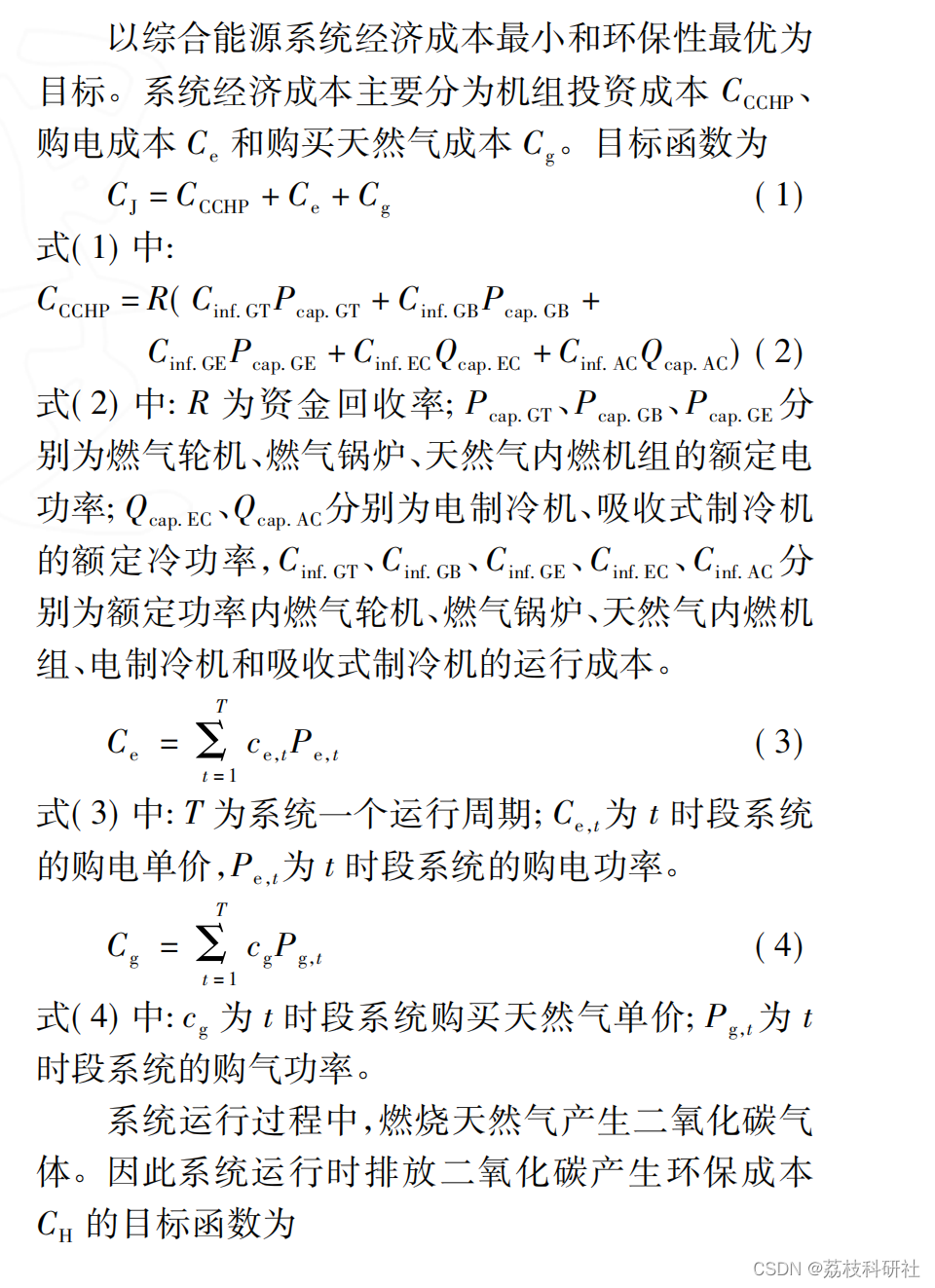
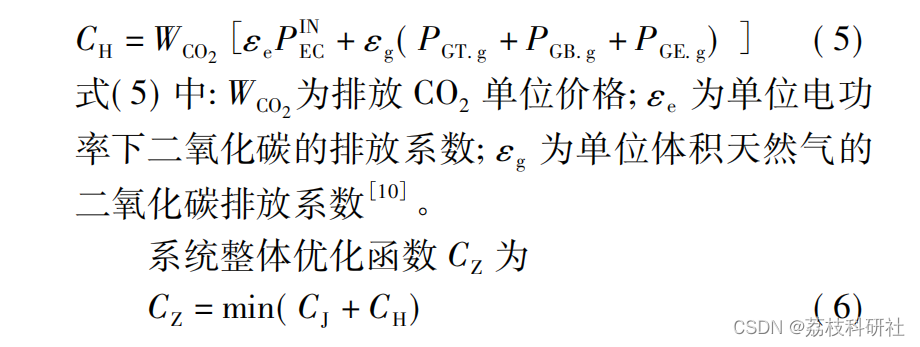
 1.2 Modeling and Constraints of Integrated Energy Systems
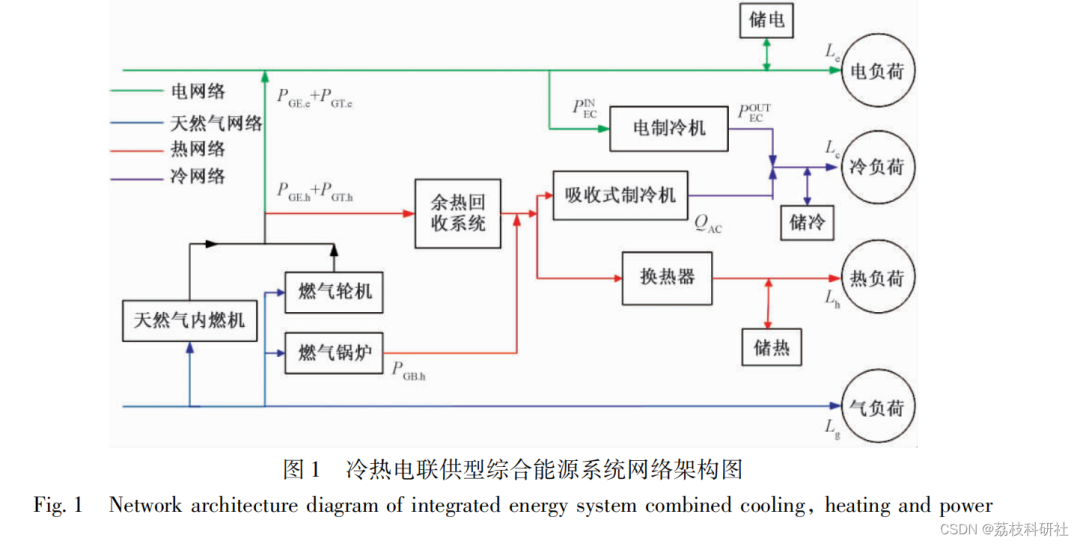
The combined cooling, heating, and power (CCHP) integrated energy system is the most commonly used regional integrated energy system, as shown in Figure 1. The CCHP system can utilize natural gas internal combustion engines and gas turbines to generate electricity from the combustion of natural gas, and it can also use the heat generated by these devices and gas boilers for heating and cooling, thereby integrating electricity, heating, cooling, and gas supply, enhancing the coupling of various functional systems and improving energy utilization efficiency.


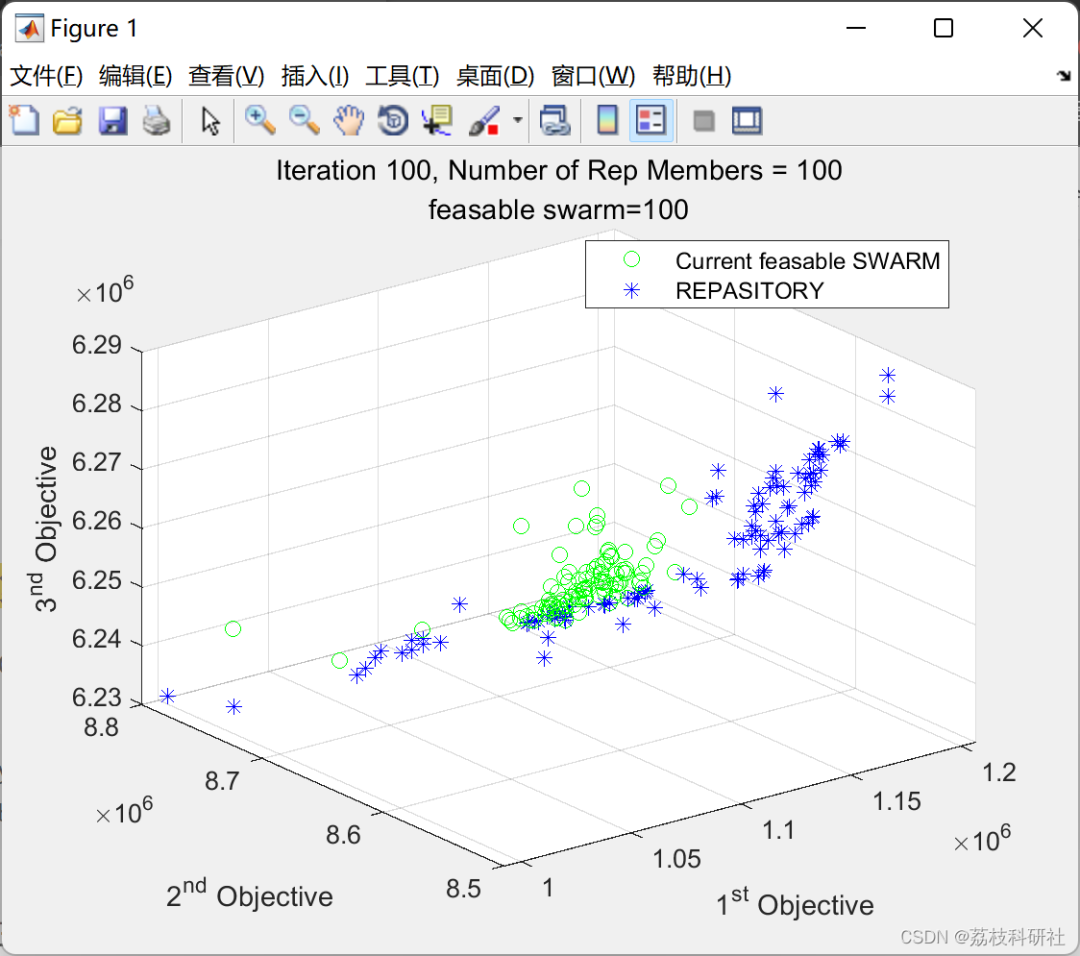
2 Operating Results
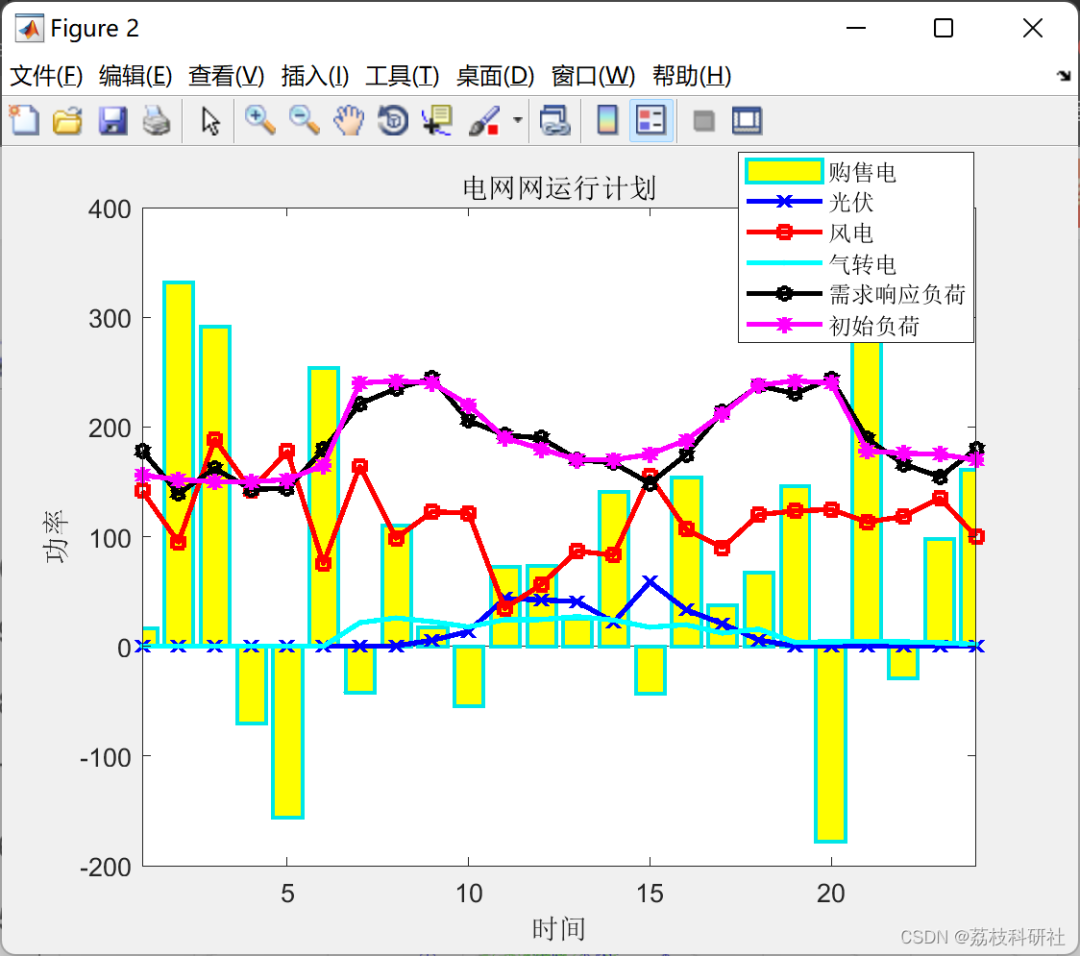
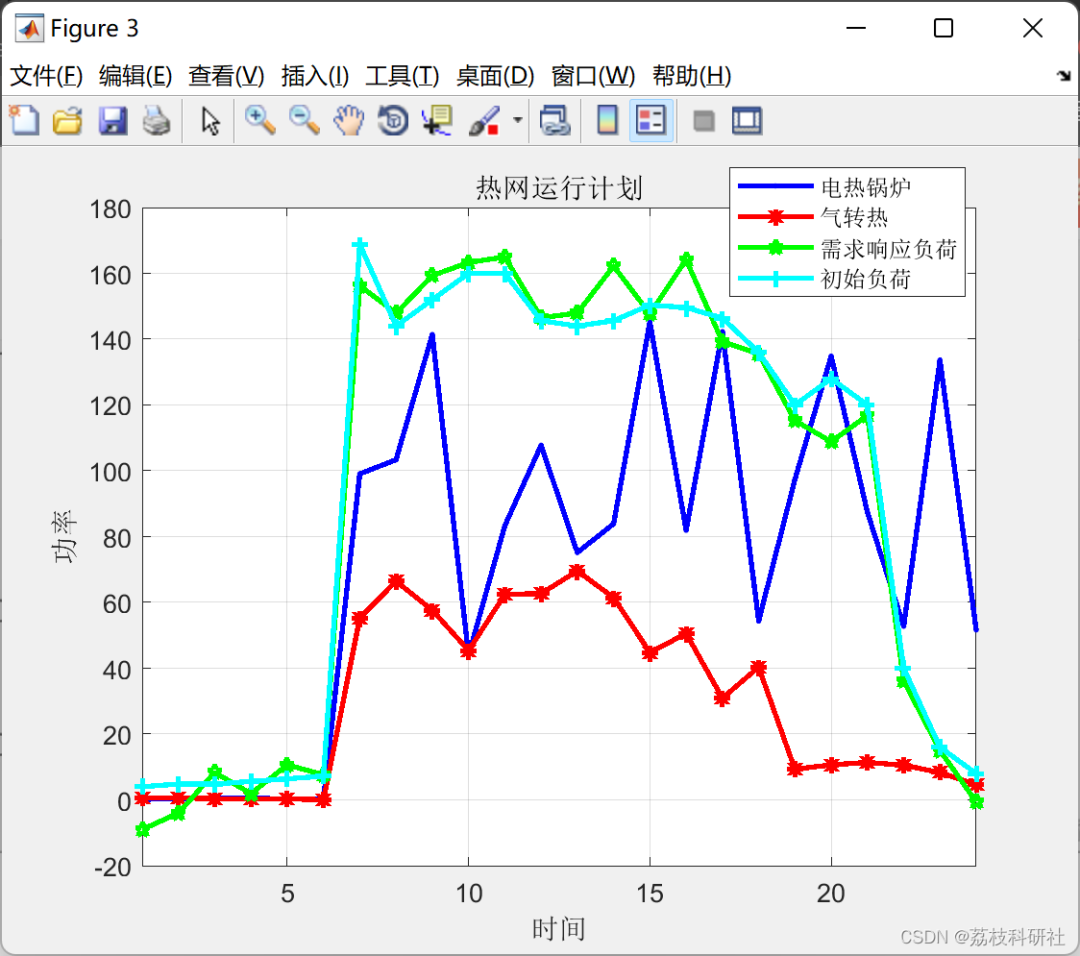
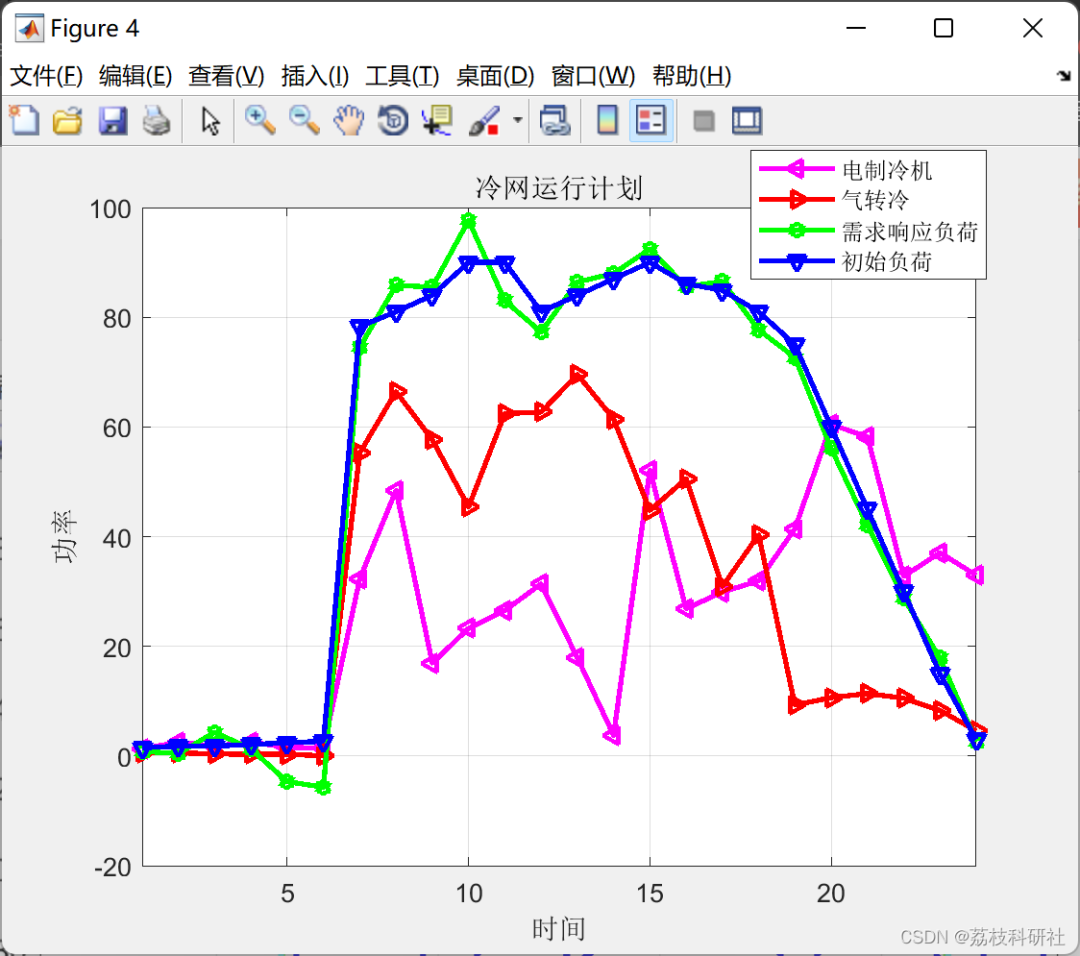
% Part of the code:
function result=fitness(x,k)
global PV;
global WT;
global P_load;
global R_load;
global L_load;
global G_price;
global C_grid_sell;
% Selling electricity price
gas_price=0.175;  % Gas price
nGT_e=0.29; % Gas turbine conversion efficiency
nGT_h=0.61;
nGB_h=0.85; % Thermal boiler efficiency
nGE_e=0.35; % Natural gas internal combustion engine conversion efficiency
nGE_h=0.7;
COP_EC=5; % Electric chiller efficiency
COP_AC=1.2; % Absorption chiller efficiency
n_hs=0.9;    % Waste heat recovery system efficiency
n_hr=0.85;   % Heat exchanger efficiency
for j=1:120
    if j<25
        PGT(j)=x(j);
    elseif j>24&&j<49
        PGB(j-24)=x(j);
    elseif j>48&&j<73
        PGE(j-48)=x(j);
    elseif j>72&&j<97
        PEC(j-72)=x(j);
    elseif j>96
        Grid(j-96)=x(j);
    end
end
PGTe=PGT*nGT_e;   % Gas turbine conversion
PGTh=PGT*nGT_h;
PGBh=PGB*nGB_h;   % Thermal boiler conversion
PGEe=PGE*nGE_e;   % Natural gas internal combustion engine conversion
PGEh=PGE*nGE_h;
PE= PV'+WT'+ Grid+PGTe+PGEe-PEC;  % Total output of the grid
P_hs=(PGEh+PGTh)*n_hs+PGBh;  % Heat recovered from the system
P_hr=P_hs*n_hr;  % Heat increased through the heat exchanger
% Total heat
Q_AC=P_hs*COP_AC;   % Cooling from absorption chiller
Q_EC=PEC*COP_EC;    % Cooling from electric chiller
Q_all=Q_AC+Q_EC;  % Total cooling
sum_delt_P=0;
sum_delt_R=0;
sum_delt_L=0;
delt_P=(P_load-PE);
delt_R=(R_load-P_hr);
delt_L=(L_load-Q_all);
sum_delt_P=sum(delt_P);
sum_delt_R=sum(delt_R);
sum_delt_L=sum(delt_L);
BT1=delt_P;
BT2=delt_R;
BT3=delt_L;
SOC=0;
dsoc=0;
for i=1:24
    SOC=SOC+BT1(i);
    if SOC>1000
        dsoc=dsoc+(SOC-1000);
    end
    if SOC<-1000
        dsoc=dsoc+abs((SOC+1000));
    end
end

r1=0;r2=0;r3=0;
if(sum_delt_P<2000)
   r1=1.0;
elseif(sum_delt_P>2000&&sum_delt_P<=3000)
   r1=5;
elseif(sum_delt_P>3000&&sum_delt_P<=4000)
   r1=10;
elseif(sum_delt_P>4000&&sum_delt_P<=6000)
   r1=100;
else
   r1=1000;
end
if(sum_delt_R<1000)
   r2=1.0;
elseif(sum_delt_R>1000&&sum_delt_R<=2000)
   r2=5;
elseif(sum_delt_R>2000&&sum_delt_R<=3000)
   r2=10;
elseif(sum_delt_R>3000&&sum_delt_R<=4000)
   r2=20;
else
   r2=1000;
end
if(sum_delt_L<3000)
   r3=1.0;
elseif(sum_delt_L>3000&&sum_delt_L<=4000)
   r3=5;
elseif(sum_delt_L>4000&&sum_delt_L<=8000)
   r3=10;
elseif(sum_delt_L>8000&&sum_delt_L<=10000)
   r3=50;
else
   r3=2000;
end
C_all=0;
for i=1:24
    C_PEC(i)= G_price(i)*PEC(i);  % Cost of electricity for electric chiller
    if  Grid(i)>0
       C_grid(i)= G_price(i)*Grid(i); % Cost of purchasing electricity from the grid
    else
       C_grid(i)= C_grid_sell*Grid(i);% Revenue from selling electricity to the grid
    end
end
C_all=gas_price*(sum( PGT)+sum( PGB)+sum( PGE))+sum( C_grid)+sum( C_PEC)+0.8*sum(abs(BT1)+abs(BT2)+abs(BT3));%  result=C_all+r1*sum_delt_P+r2*sum_delt_R+r3*sum_delt_L;
result=C_all+10*dsoc;
3 References
Some theoretical sources are from the internet; if there is any infringement, please contact for removal.

[1] Tao Jing, Xu Wu, Li Yilin, Huo Yiwen, Zhang Enmu. Optimization of Operation of Combined Cooling, Heating, and Power Integrated Energy Systems Based on Multi-Objective Algorithm. Science and Technology and Engineering, 2019, 19(33): 200-205.


4 Matlab Code + Data