Source: “Military Eagle News” WeChat Official Account

The Russian military website “Military Observer” published an article by military commentator Maxim Klimov titled “Countermeasures: The Struggle Between Drones and Air Defense Systems.” The article introduces the historical confrontations between drones and air defense systems in Vietnam, the Middle East, Iraq, Nagorno-Karabakh, and Libya. It discusses and analyzes the current status and development of anti-drone equipment and suggests developing efficient and mobile air defense detection equipment, using small air defense missiles in conjunction with longer-range air defense missiles, equipping troops with remote-detonating shells, integrating electronic warfare equipment into battalion-level formations, and enhancing combat training, among other measures. The full text is translated as follows:
The article “Drone ‘Swarm’ Ready for Battle” has drawn great interest. However, it only raises some questions. Analyzing the confrontation between air defense systems and drones, as well as organizing scientific research and experimental design work, requires a comprehensive study of this topic.
This article mainly discusses the confrontation between air defense systems and drones (without elaborating on the development history of military drones). Given the openness of the article and the sharpness of the issues, we will only discuss a few key points.
Western countries initially (in the 1930s and 1940s) actively developed unmanned aerial vehicles (drones) not because of the need for “battlefield” missions, but to find high-quality training methods for air defense forces. It is worth recalling the situation in the UK regarding such drills. Just before World War II, the inspected air defense equipment (which had previously successfully “perforated holes” in cone-shaped targets towed behind aircraft) was unable to shoot down remotely controlled targets because their target characteristics were quite indistinct. This situation occurred in the presence of Winston Churchill, and the UK immediately took significant measures to strengthen combat training for air defense forces, with very strict measures. The British were prepared before the war arrived.
Vietnam
In the summer of 1965, the Soviet Union delivered the first batch of S-75 air defense missile systems to North Vietnam. From that point on, the peaceful existence of American aircraft in North Vietnamese airspace came to an end.
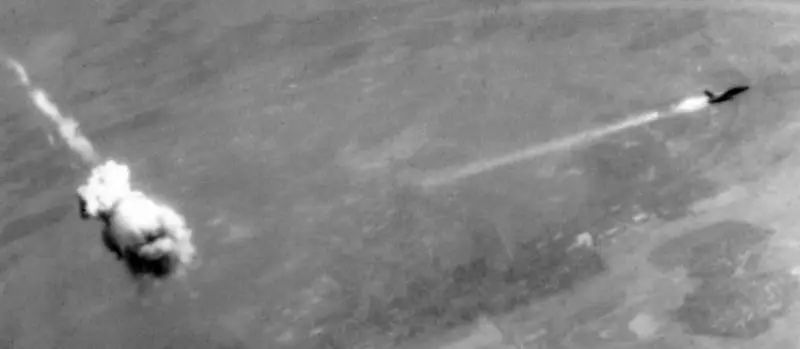
An F-105 aircraft burning after being hit by an S-75 air defense missile in Vietnam.
Due to the technical proficiency of the Soviet and North Vietnamese air defense crews, they often did not follow conventional tactics, and the Americans’ attempts to “force their way through” with large formations resulted in heavy losses. There was a need for “alternative solutions,” one of which was to adopt electronic countermeasures that had been actively used since World War II.
However, there were serious issues in obtaining the necessary intelligence on North Vietnam’s air defense missile systems (to suppress them using electronic warfare methods). The radar of the air defense missile weapon systems operated on different frequency bands and had a very short power-on time. In this case, using traditional radio technical reconnaissance (RTR) aircraft was ineffective. It was necessary to record high-quality signals from the air defense missile weapon systems’ radar and missile fuses directly during engagement with the target (and throughout the entire operation cycle of the air defense missile weapon systems). Only drones could accomplish this.
The Air Force and Navy had been using them since the late 1930s to practice air defense methods. However, minimizing the onboard radio technical reconnaissance equipment installed on drones and ensuring high-speed transmission of reconnaissance data to specialized aircraft was an extremely challenging technical problem.
Through the hard work of researchers, the weight of the radio technical reconnaissance station was reduced to one-tenth of its original weight. Despite some difficulties, it was successfully installed on the Ryan Aeronautical 147 drone.
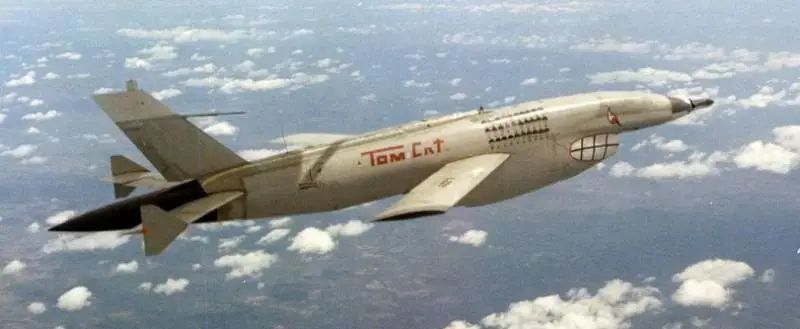
Ryan Aeronautical 147 drone
Due to the high complexity of the entire system, this drone often failed. But on February 13, 1966, everything changed. The Ryan Aeronautical 147 drone, which was shot down by an S-75 air defense missile system, successfully received and transmitted all necessary information.
The Americans immediately began improving drones to adapt to the experimental prototype of an active jamming station (the Ryan Aeronautical 147F drone variant). Although it was challenging, it was still installed on small drones. Starting in July 1966, the Ryan Aeronautical 147F drone flew multiple missions over North Vietnam, and despite being attacked by over ten S-75 air defense missiles, it was not shot down.
In a very short time, the Americans produced the AN/APR-26 jamming station based on the active jamming station for drones and equipped it on a large scale to aircraft. The effectiveness of this work was very evident: in 1965, it took four air defense missiles to shoot down one American aircraft, but by 1967, it took about fifty.
Note: This “obsolescence” effect of the S-75 air defense missile weapon system immediately prompted a response from the Soviet Union, which underwent necessary modifications (including direct modifications in the jungles of Vietnam), and the effectiveness of the S-75 system was correspondingly improved. The contest between the “shield and the spear” continued.
Speaking of the Vietnam War, it should be noted that as early as 1971, the United States used the BGM-34 “Firebee” drone to carry out the world’s first air-to-ground missile launch. However, this was very complex at the time and did not yield good results. The era of such drones would not arrive until thirty years later.
The Middle East
During the 1973 “Yom Kippur War” (the fourth Middle East war), Israel had 25 MQM-74 “Chukar” drones (target drones) and actively used these drones in combat operations to lure Arab countries’ air defense equipment into “idle” or “ineffective” operations, determining their positions and destroying them when necessary. All of these drones were destroyed in combat operations, but they accomplished their missions.
Their use strongly promoted Israel’s development of its own drones, and Israel’s drones varied widely, inventing many methods of use. Considering that the country is often in a state of war, the combat capability of drones was prioritized.
It is worth noting that the world’s first ground-launched anti-radiation missile systems were developed to ensure maximum concealment and surprise in using anti-radiation missiles against the radio radiation equipment of air defense systems. Formally, these are all missiles, which means “they don’t seem to be drones.” However, it should be considered that the legal distinction between missiles and drones remains controversial. For example, the U.S. long-range attack drones are considered by Russian domestic experts to violate the “Intermediate-Range Nuclear Forces Treaty” concerning “missiles.”
Based on the experience of the first batch of ground-based “ground-to-ground” systems equipped with anti-radiation missiles, Israel Aerospace Industries eventually developed the first mass-produced suicide drone, the “Harpy,” but that was already in the 21st century.
The climax of the confrontation between air defense systems and aircraft (including manned and unmanned) occurred on June 9, 1982, when Israel launched Operation “Mole” in the Bekaa Valley, destroying the Syrian air defense system, with 19 out of 24 air defense missile battalions deployed in an area 30 kilometers from the front line and 28 kilometers deep being destroyed.
Unmanned aerial vehicles played a decisive role in the operation, accomplishing the following tasks:
– Reconnaissance and surveillance, including using the stealth “Maverick” drone made of fiberglass to conduct reconnaissance and surveillance from a close distance to the air defense missile systems;
– Radio technical reconnaissance;
– Electronic suppression of air defense systems;
– Mimicking false targets.
The Keres ground launcher ensured that AGM-78 anti-radiation missiles could be used to destroy enemy air defense systems’ radio radiation equipment with maximum concealment and surprise.
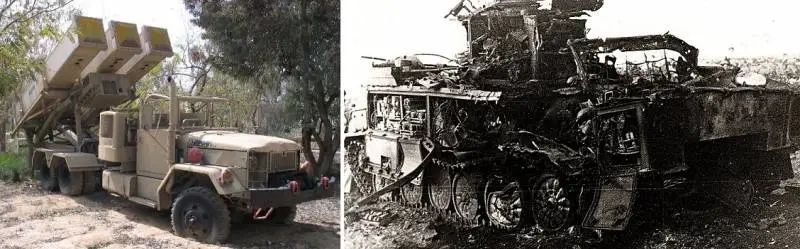
Keres launcher for AGM-78 anti-radiation missiles and destroyed air defense system vehicles
After mastering complete information about the air defense missile systems (including camouflaged air defense missile systems), the Israelis used jamming and decoys to confuse them, suddenly taking out the on-duty air defense missile weapon systems with AGM-78 anti-radiation missiles, and then spent an entire day destroying other air defense missile systems through air strikes (which was actually the densest air defense cluster in the world at that time).
Although the Syrian air defense cluster performed well in previous wars, this time the defeat was thorough, with profound military and political implications.
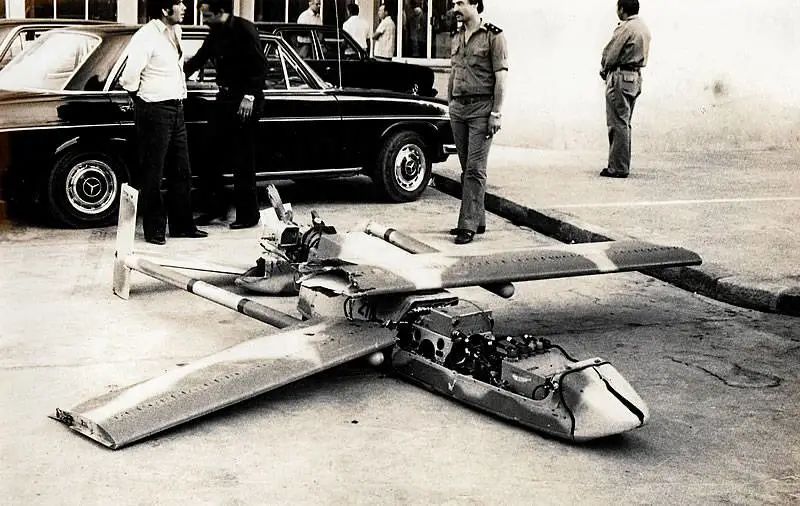
An “Maverick” drone shot down by Syrian fire.
Even after the emergence of new air defense missile weapon systems, reconnaissance tactics to lure them into “action” against drones continued to play a role. On December 6, 1983, three Israeli BQM-74 drones were shot down by the S-200 system air defense missiles over Lebanon.
“Desert Storm”
During the Gulf War in 1991, the United States used 44 BQM-74C drones to conduct reconnaissance on air defense equipment. The BQM-74 “Chukar” is the standard air target for the U.S. armed forces (80% of the shots are aimed at it). Unfortunately, Russia does not have a similar product, so our latest shipborne air defense weapons can only use “Saman” (or “mud bricks”) and RM-15 targets that do not match actual targets even in national tests, and sometimes even have to use parachute targets, as was the case when the “Oktyabr” small missile ship conducted national tests not long ago.
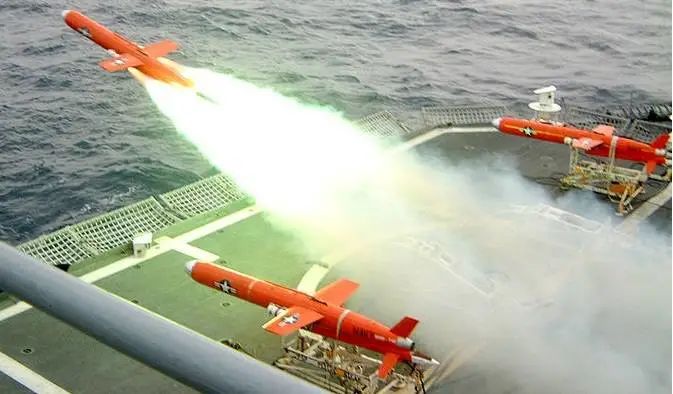
BQM-74 “Chukar” target drone launching for shipborne air defense system drills. Source: Wikimedia Commons
Syria and the War Against ISIS
The characteristics of the operations of the Russian and American armed forces against ISIS were that both sides widely and effectively used their respective drones, and the enemy also actively used a large number of “homemade” drones.
Note: Despite their very primitive “external configurations,” the terrorists’ drone designs have received high praise from experts.
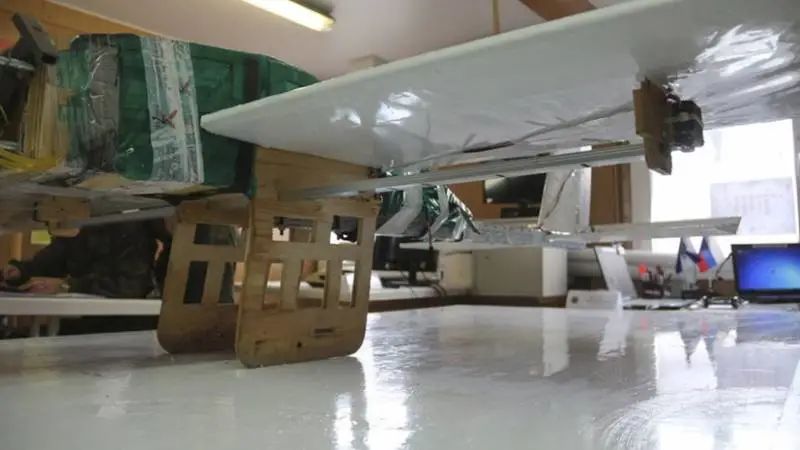
A drone forced to land by electronic warfare equipment.
Initially, our air defense weapons and electronic warfare equipment performed very well.
Results of the Russian Aerospace Forces’ operations of air defense missile units stationed in Syria
|
Serial Number |
Date |
Position |
Destroyed |
Target Type |
Air Defense Missile Consumption |
||
|
Distance (km) |
Height (km) |
Speed (km/h) |
|||||
|
2017 |
|||||||
|
1 |
March 23 |
Mayaf |
5 |
2 |
360 |
Jet Balloon |
1 |
|
2 |
March 27 |
Khemimim |
4 |
2 |
1080 |
Rocket |
1 |
|
3 |
March 27 |
Khemimim |
3 |
1.5 |
980 |
Rocket |
1 |
|
4 |
March 29 |
Khemimim |
5 |
4 |
1320 |
Rocket |
1 |
|
5 |
April 9 |
Tartus |
13.7 |
6.4 |
120 |
“Heron” Drone |
1 |
|
6 |
May 4 |
Mayaf |
3.5 |
1.5 |
60 |
Small Drone |
1 |
|
7 |
May 11 |
Tartus |
3.2 |
2.5 |
110 |
Bayraktar Drone |
1 |
|
8 |
May 20 |
Tartus |
8.8 |
7.3 |
147 |
“Heron” Drone |
1 |
|
9 |
May 27 |
Tartus |
5 |
9.1 |
110 |
RQ-21A “Integrator” Drone |
3 |
|
10 |
June 17 |
Khemimim |
15.1 |
11.7 |
90 |
Floating Balloon |
2 |
|
11 |
June 21 |
Tartus |
19 |
7.3 |
100 |
Small Balloon |
1 |
|
12 |
July 6 |
Mayaf |
16.1 |
4.1 |
75 |
“Heron” Drone |
1 |
However, there were “problems” when repelling subsequent attacks, especially with the “Pantsir” combined air defense system.
It can be clearly confirmed that the manufacturers of these drones had very knowledgeable advisors. Furthermore, the characteristics of their operations against the Khemimim air base clearly indicate that “relevant agencies” conducted specialized reconnaissance operations against Russian air defense equipment: the drones were not flown to strike targets (if done correctly, the consequences of the first wave of attacks could have been much more severe for us), but to induce air defense weapons and electronic warfare equipment to operate for analysis.
The scandal regarding the sharp decline in the effectiveness of some Russian air defense equipment is closely related to this. There were a series of problems during operations (which were later eliminated through improvements), and the chief designer of the “Pantsir” system eventually admitted this. The enemy (more accurately referred to as “so-called partners”) actively studied the strengths and weaknesses of Russian air defense systems during the use of drones by ISIS.
2016 Nagorno-Karabakh Conflict
During the brief military operations in the Nagorno-Karabakh region, the Azerbaijani armed forces also used the “Harop” unmanned attack aircraft produced by Israel Aerospace Industries (IAI) and several other drones for the first time. Their use had the characteristics of troop testing and destroyed various targets (hidden armored vehicles, moving buses, etc.).
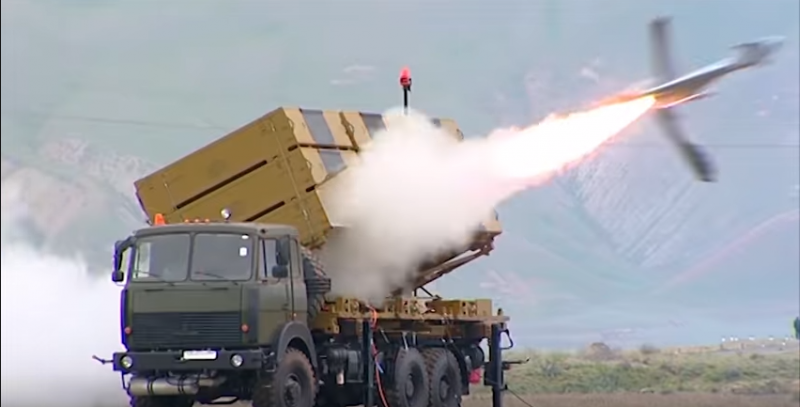
Launch of the “Harop” drone
In 2017, news that representatives of the Orbiter1K drone development organization participated directly in these tests was disclosed by the media, causing a stir internationally, as the drone strikes resulted in the deaths of Armenians.
The Armenians possessed a large number of “Wasps”-AK air defense missile systems, which, if modernized in a timely manner, could have detected and destroyed the relatively large “Harop” drones. However, the Armenian side did not draw any conclusions from the Azerbaijani strikes on Karabakh in 2016.
Yemen
The manner in which the Houthi armed forces countered the Saudi-led coalition and successfully resisted a disproportionately powerful enemy war machine is a striking example. Here, we not only see the courage and self-sacrifice of the Houthi fighters but also their (and their Iranian partners’) sophisticated, unconventional, and effective use of various high-tech weapons, from the long-outdated “Elbrus” (NATO code name “Scud”) ballistic missiles and R-27T air-to-air missiles (launched from ground facilities) to drones, which the Houthis used to not only successfully accomplish tactical tasks but also effectively execute strategic campaigns, conducting long-range strikes against critical infrastructure in Saudi Arabia.
Of course, some of the Houthi drones were also shot down by Saudi air defense systems.
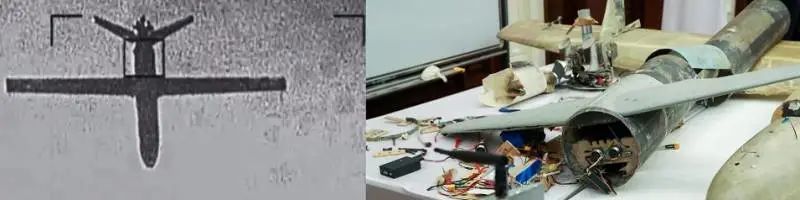
A Samad-3 unmanned attack aircraft intercepted by an F-15S fighter jet and its wreckage
However, most of them reached their targets, causing Saudi Arabia extremely painful consequences.
In fact, in this war, drones have become a strategic tool for the Houthi armed forces to counter the powerful and wealthy Saudi Arabia without air power.
Libya 2019

The Bayraktar TB2 medium unmanned attack aircraft was successfully used for the first time to combat air defense systems, deploying MAM-L aerial guided bombs with a range of up to 8 kilometers and MAM-C aerial guided bombs with a range of 14 kilometers, equipped with inertial guidance systems and satellite correction systems.
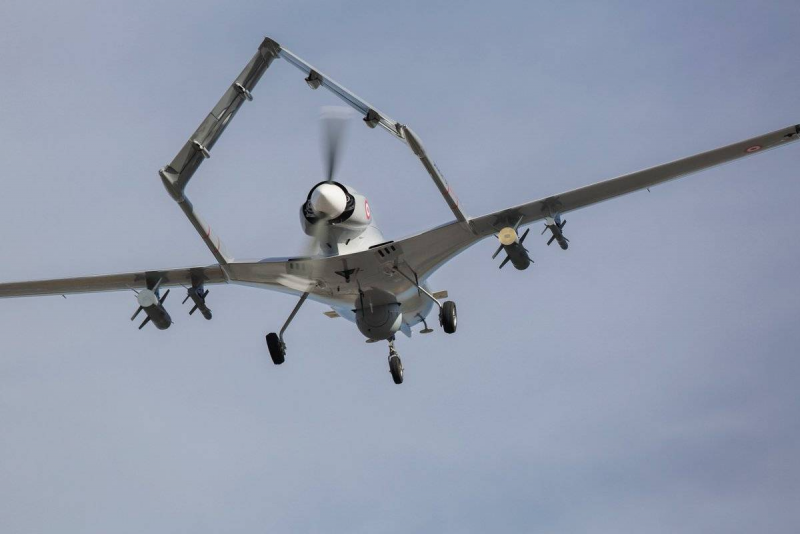
It should be noted that for modernized air defense systems, detecting and destroying drones like the Bayraktar TB2 is by no means a technical problem. The heavy losses of the “Pantsir” systems in Libya were due to organizational reasons. Once they began to organize and form an integrated air defense system, Bayraktar drones started to suffer heavy losses.
Another iconic event in the Libyan operations was the first successful application of laser air defense systems, which destroyed a medium unmanned attack aircraft (made in China) from the UAE.
Karabakh 2020
According to Azerbaijan’s preliminary statements, during the recent Nagorno-Karabakh conflict, the Azerbaijani armed forces destroyed 15 air defense missile system vehicles (3 sets of ‘Arrow’-10, 11 sets of ‘Wasps’-AK/AKM, 1 ‘Cube’ air defense missile system radar vehicle), 1 ZSU-23-4 self-propelled artillery, several S-300PS air defense missile system launchers, and 8 radars (4 ST-68U/UM radars, 1 each of P-18, 5N63S, 1S32, and 1S91 radars). The Armenian tank and artillery forces in Karabakh were almost completely annihilated. The reconnaissance and attack drones played a decisive role, and the extensive use of unmanned attack aircraft was a major feature of this conflict.
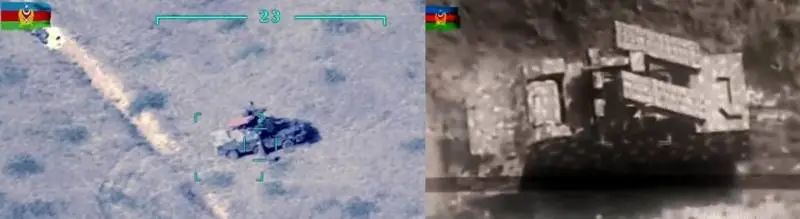
Karabakh, the “Wasps”-AK air defense missile system in the lens of the Azerbaijani unmanned attack aircraft
(the target on the right is a decoy)
The Military Technical Revolution is Coming
It is evident that the use of drones (including large drone swarms) will only increase.
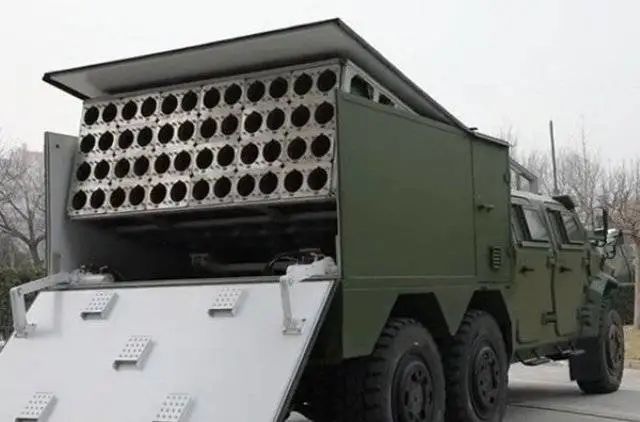
China’s multi-unit drone launcher
Poland has deployed about 1000 Warmate unmanned attack drones in its western direction. Their range is short, 12 kilometers, and both the “Tor” and “Pantsir” systems can detect and shoot them down. However, their widespread use in combat operations poses a very serious problem for Russian air defense systems. While it is impossible not to shoot them down, it is practically impossible to shoot them all down due to the insufficient munitions stockpiles of air defense missile weapon systems.
The situation is similar for unmanned reconnaissance aircraft. Even the simplest ones, when included in reconnaissance-strike integrated systems (equipped with long-range cannon and rocket artillery), are similar. The “foam plastic monstrosity” (referring to crude homemade drones) can hover at one or two kilometers, and rifle weapons cannot hit them. But if not shot down, artillery shells will arrive in a few minutes, with a relatively high accuracy of strikes.
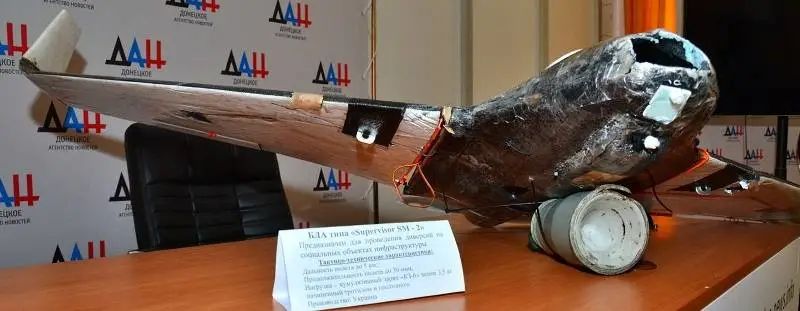
A drone made of foam plastic, but capable of being equipped with a warhead or camera.
At the same time, for drones, the situation is not as simple as it seems, even their fervent supporters say so, as they sometimes use some obviously dubious arguments. Below is a widely circulated text on the internet (with highlights) along with related comments:
Military experts conducted hundreds of simulation tests to study how the enhanced “Aegis” air defense missile systems with six large-caliber machine guns and two “Phalanx” close-in weapon systems would respond to 5-10 drones attacking a naval vessel from different directions. Due to the small size of the drones, even in good visibility conditions, radar can only detect them at very short distances (less than two kilometers). With drones traveling at about 250 kilometers per hour, the maximum time for the drones to attack after being detected by the radar is 15 seconds. Due to the close distance, “Aegis” cannot attack detected targets with interceptors or 127mm cannons. It can only destroy drones at close range using machine guns and the “Phalanx” systems. Calculations show that on average, 2.8 out of every 8 drones completely “cross” the most “advanced” defense systems.
The results of the simulation tests were published in 2012. American experts saw how helpless naval vessels were in the face of future “swarming” drone attacks, which became one of the main motivations for the development of the mass-produced LOCUST drones (LOCUST: Low-Cost UAV Swarming Technology).
It should be emphasized that “simulation tests” refer to tests conducted on computers, not in reality. In reality, it would soon be discovered that the radar of “Aegis” could detect these drones at distances not “less than two kilometers” but rather in a range roughly an order of magnitude higher, and there would still be various opportunities to use air defense weapons and electronic countermeasures. And whether this was just a “coincidental oversight” by the people conducting the above “simulation tests” is highly questionable.
However, there is another issue. The problem is not with the recognition capabilities of modernized radars against small drones, but that some special radar models can identify drones against backgrounds such as flocks of birds.
For example, the cost of such radar can be illustrated:
Contract batch No. 10201-2018-01961. Manufacturing and delivery of phased array radar module GIEF.411711.011, code name “Pantsir”-SM-SV. Contract price: 400,000,000.00 (Russian Rubles). Date of commencement of contract execution: July 13, 2018.
From the operational stability of air defense missile systems and radars near the front line (now the U.S. is practicing tasks to destroy Russian air defense systems with long-range artillery), it is extremely important to ensure the operational stability of their radars and the ability to launch air defense missiles while moving. The “Tor” air defense missile system successfully solved this problem (the experience of launching missiles from ships in rough seas was applied).
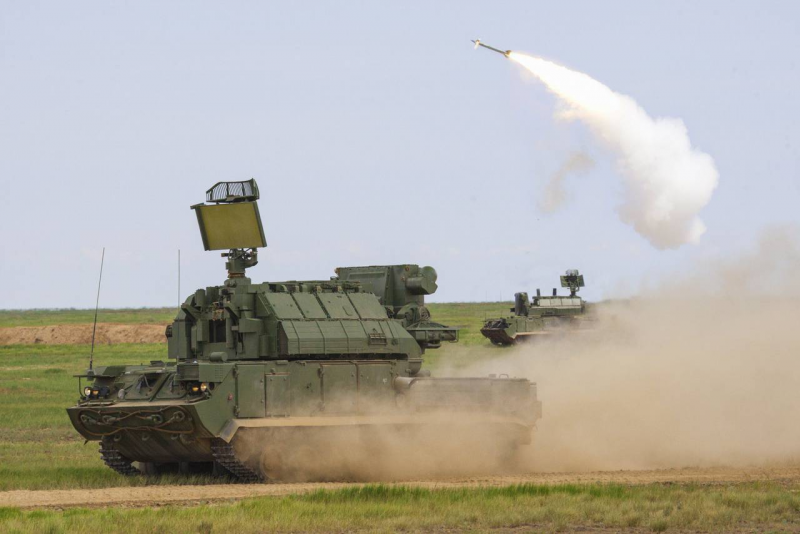
Missile launch from the “Tor”-M2 system.
“Using three million dollars’ worth of air defense missiles against a three hundred dollar drone.”
The difficulty for air defense systems in dealing with small drones lies in destroying them, as it requires using million-dollar air defense missiles against drones worth hundreds of dollars. The above sentence comes from a comment by an American general on a battle report regarding the successful engagement of targets by air defense missile weapon systems.
Of course, this is an exaggerated example. The drones used by Houthi fighters are much more complex and effective than the “homemade products” that ISIS “purchased from AliExpress” (which the Americans had to face in Iraq and Syria). The three million dollar price tag for one air defense missile is the exclusive price set by the U.S. for wealthy oil dollar countries.
The price of small drones manufactured according to “military standards” (10,000 to 20,000 dollars) is close to that of Russian “Kornet” and “Ataka” anti-tank missiles. The “Kornet”-D anti-tank missile should ensure the destruction of targets, including small drones.
Has the task of “low-cost” destruction of small drone “swarms” been solved? No, it has not been solved. And there are many reasons for this (not all of which should be listed in a public article). One obvious example is the Ijevsk “Dome” electrical mechanical plant and the instrument manufacturing design bureau (the latter is the developer of the “Kornet” anti-tank missile) developing a special “Nail”—a small air defense missile designed to destroy drones.
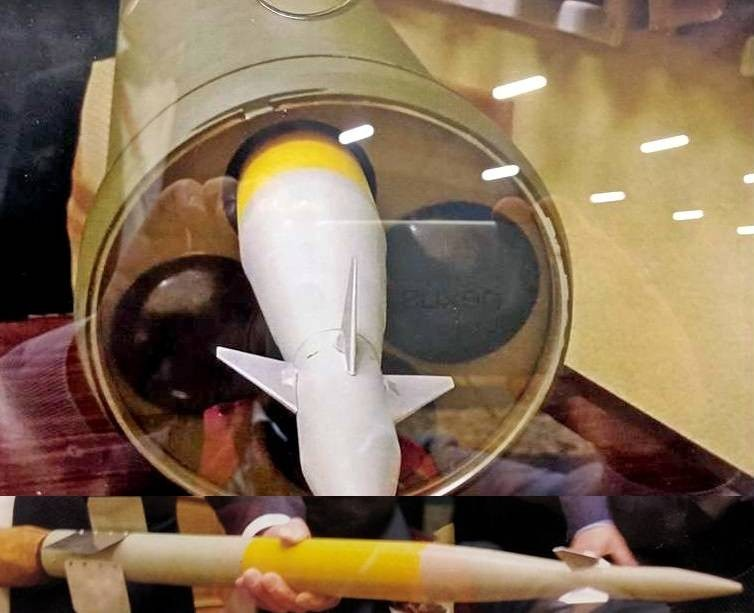
Model of the “Nail” short-range air defense missile, capable of being placed in a standard “Pantsir”-SM air defense system transport launch tube.
News about the development of this air defense missile appeared three years ago. However, in January 2020, when interviewed by TASS, the chief designer of the “Pantsir” system admitted that it had not even reached the prototype design and manufacturing stage:
– There are reports that small-size missiles are being developed for the “Pantsir.” What is the current status of this work?
– Currently, it is just scientific research work, and there are no fundamental issues, unlike hypersonic missiles that need to penetrate dense atmospheric layers at hypersonic speeds, where the control surfaces may burn up in the atmosphere. Small missiles do not require high speed; their main goal is to be cheap. These targets can be hit at distances of 5-7 kilometers, the so-called near field. Manufacturing small missiles is economically feasible. Moreover, we can load more than four times the number of missiles on the “Pantsir.”
– Will these small missiles be installed in the standard launchers of the “Pantsir” system?
– It is planned to do so, using the same control system. The length of the small missiles will be the same as standard missiles, but the diameter will be smaller, allowing them to fit into a box containing four missiles instead of one standard missile. The vehicle itself will only need to replace the smart system.
– When will these missiles appear in the “Pantsir” system’s ammunition depot?
– I cannot answer this question yet, but I believe that the research, production, and testing cycle for new missiles will take about 3 to 4 years.
It is clear that problems have arisen. But where did the problem lie? Can radars see small drones? Yes, they can. The destruction task is fundamentally solved (using standard air defense missiles). The crux of the matter is clearly the price of these new air defense missiles, which has suddenly become very “exorbitant,” much higher than the price of anti-tank missiles. However, this issue (specifically targeting this issue and the entire scientific research and experimental design work system) should be considered separately.
That is to say, the mass production of small drones and their “swarms” presents a key issue for modern air defense systems: how to destroy them at an acceptable cost-effectiveness ratio. We can also add a logistics issue: whether the ammunition stockpiles have the required number of air defense missiles (which need to be significantly increased), and whether air defense missiles can be delivered and reloaded quickly (in short, whether the armed forces have the necessary stockpiles of air defense missiles).
Of course, there is also an organizational issue for air defense systems: enemy drones should not be allowed to strike our “short-range” air defense systems from safe distances and altitudes. Although the Bayraktar drones are relatively “fat” targets for the “Buk” air defense missile weapon system, the issue of expanding the kill zone of short-range air defense missiles remains very realistic. These air defense missiles should not be mass-produced (because the main operational area of this air defense system is less than 10-20 kilometers), only a small number of such missiles are needed in the ammunition stockpile, in case of targets like Bayraktar. For the “Pantsir,” such air defense missiles will appear in the near future. The solution for the “Tor” may be the 9M96 air defense missile, ensuring that it can be launched from the transport vehicle of the air defense missile system.
The issue of subordinate air defense systems (the entire air defense system) is that “there are simply not enough resources”: the battle contact line is too long, and there are too many objects needing reliable protection (including in the rear). In this case, it is extremely important to equip a separate platoon capable of effectively countering drones for joint operation commanders (at the company level).
An effective technical solution is to use remote-detonating shells for artillery.
We studied a promising solution—the 57mm “Deflector” air defense system, and experts gave it high evaluations regarding its effectiveness.
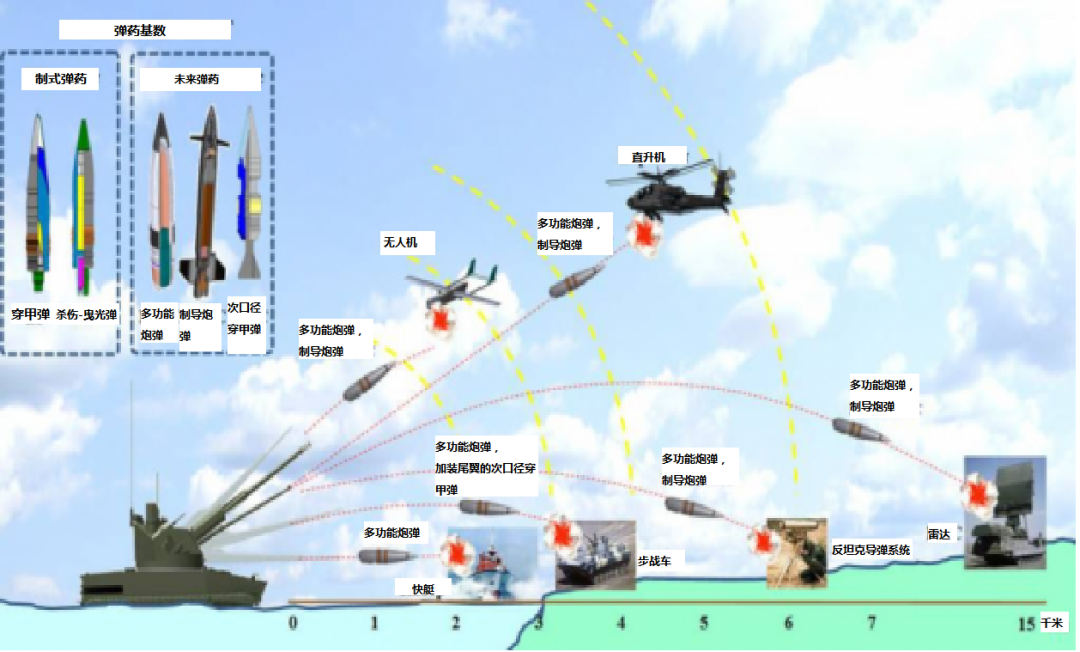
At the same time, regarding the “Deflector” system, it must now be pointed out that there is a serious problem that may greatly limit its use in combat. Actively using remote-detonating shells over one’s own troops (especially when drones are densely attacking across a wide front) will inevitably result in friendly shell fragments hitting friendly personnel and equipment. Integrating the “Deflector” system into tactical command automation systems to “know where our troops are at all times” may theoretically be absolutely necessary, but in practice, it may be difficult due to the width of the kill zone, as the tactical command automation system itself cannot reliably know the location of each soldier (let alone under conditions of fire and electronic countermeasures).
Considering this factor, people have begun to have a different understanding of the capabilities of smaller caliber remote-detonating shells, and on the surface, they seem to be much less effective and economical than 57mm shells. The Americans have followed this path: enabling the Bushmaster cannon to use new effective ammunition (including for dealing with small drones).
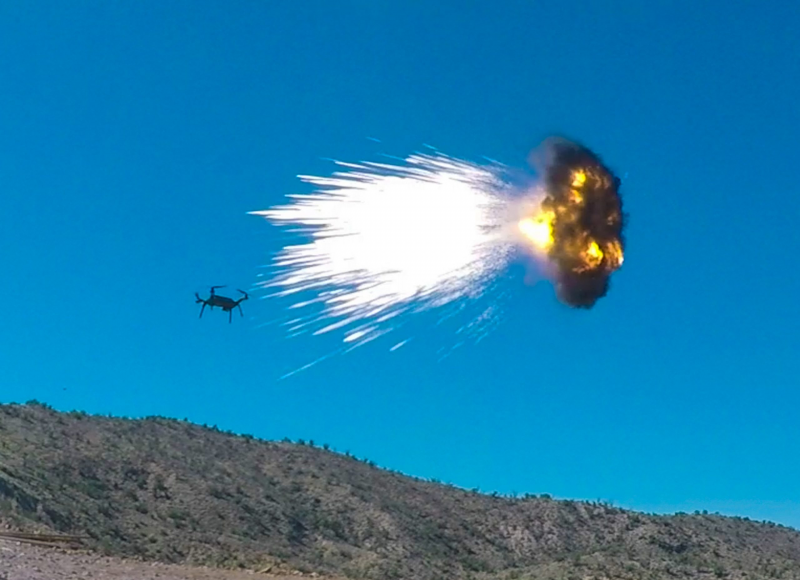
The Bushmaster cannon using remote-detonating shells to destroy drones.
The application range of this type of shell from the 2A42 cannon is within the responsibility and concern area of the squad leader on the BMP-2 infantry fighting vehicle (in the area of coordination with neighboring units). Considering that these shells can be used not only against aerial targets but also against many ground targets, more importantly, equipping infantry fighting vehicles (or armored personnel carriers) with 30mm cannons capable of using remote-detonating shells would significantly enhance the capabilities of the troops. Such shells have been around for a long time but have not been used in the troops:
TASS reported on May 20, 2019: The Ministry of Defense has ordered the first batch of remotely detonating 30mm shells. As Alexander Kochkin, deputy general manager of the “Mechanical Engineering” company, pointed out, this batch is being ordered for national testing, “I believe this work will be completed next year.”
This is absolutely good news, but it carries a “decaying” odor. Because the shells urgently needed by these troops will take too long to reach them. The corporate newspaper of the Rostov “Lens” optical-mechanical plant reported on October 16, 2014, that:
A few weeks ago, successful field tests of the prototype of a combined universal sight TKN-4GA-02 were conducted, equipped with an auxiliary channel for the shell detonation time remote control system: this is the main difference between this device and its mass-produced prototype TKN-4GA-01.
The shell is equipped with a built-in timed fuse that receives a set of code pulses generated by the sight’s radiators after exiting the barrel and detonates within a time interval corresponding to the distance to the selected target. Research and development work on this topic began several years ago. A prototype was produced, passed preliminary independent testing in the testing workshop, and was sent in August 2014 to the engineering lead organization “Instruments” Scientific Production Association located in the outskirts of Moscow, where the first batch of full-scale tests was conducted in actual operating conditions on a simulated test bench, installed on armored tanks and vehicles such as armored personnel carriers, infantry fighting vehicles, and light multi-purpose armored transport vehicles. The first shooting tests of the TKN-4GA-02 sight were conducted under various weather conditions at the specified shell detonation distance.
The preliminary results of the tests were considered very successful, as the detonation efficiency reached nearly 75%, which is quite high for the first batch of prototypes of the sight and shell.
In August to September 2014, the development of another instrument by the Rostov “Lens” optical-mechanical plant successfully concluded, which adopted the principle and function of the shell detonation time remote control system, namely the “Fosays”-O laser programming radiation device. After preliminary tests on tank support vehicles in Dagestan, our product’s design documents were marked with the letter “O,” confirming the high technological level of the prototype’s development and manufacturing, as well as the correctness of the chosen path to gradually improve the operational effectiveness of modern armored tank technology by equipping various structural forms of shells with remote detonation time control systems.
People have thought of the concrete walls and other protective measures at the Khemimim air base, which have been mentioned many times both in reports and on the internet as extremely necessary. However, our aircraft in the operational area are still parked wing to wing without facing real danger.
In this special case, there is a bad premonition that our people have not yet awakened, while foreign customers of the tank support vehicles in Algeria are eagerly hoping that these shells will pass acceptance tests and national tests.
Electronic Warfare Factors
Drones sold for 300 dollars on AliExpress cannot have any anti-jamming communication systems or electromagnetic pulse-resistant devices, while suppressing the communication channels of “standard military” drones is a rather unusual task.
Currently, the minimum price for military drones in Western countries (equipped with communication and electronic devices that meet operational requirements) is around 15,000 to 20,000 dollars (attempts have been made to reduce it to 10,000 dollars). This is for tactical drones with ranges of less than 20 kilometers.
However, even real military equipment sometimes experiences issues withstanding strong electromagnetic fields. Excerpt from the historical account of Colonel V.K. Pechatnikov regarding the test history of the M-22 “Hurricane” (NATO code name SA-N-7) air defense missile weapon system:
To complete the shooting against the jamming aircraft, the ship should have moved from Northern Morsk to Northern Devon… A helicopter specially flown from the Belarusian air defense zone was stationed at Poduzhimiye… During the test, the combat capability was lost… When two radar searchlights (i.e., directional radio transmitters) were turned on at full power to track the helicopter, the receiver of the reconnaissance equipment burned out, and a short circuit led to the helicopter catching fire. It barely made it to the airport.
It is appropriate to quote an article titled “Electromagnetic Stability of Weapons” from the Russian Ministry of Defense magazine “Army Collection” (2018, Issue 4):
Stability refers to the characteristic of technical equipment to perform its functions and maintain specified parameters within the norm range during and after the influence of external factors.
Currently, a new type of weapon has emerged—electromagnetic weapons. Its main damaging element is a powerful flow of radio-frequency electromagnetic radiation pulses, the sources of which can be divided into two categories.
The first category includes directional radiation sources (DIR)—traditional vacuum electronic devices (magnetrons, virtual cathode oscillators).
The second category of radiators includes direct energy converters that convert conventional explosive energy directly into electromagnetic energy.
Our country has begun intensive research on the stability of technical equipment against electromagnetic influences, unfortunately, only since 1970. The main efforts and financial expenditures have been dedicated to creating nuclear explosion electromagnetic pulse simulators. As for the experimental assessment methods for the stability against the electromagnetic pulse effects of nuclear explosions, there has been little progress to date.
New national regulatory documents require ensuring stability against about 30 types of electromagnetic effects and determining the quantitative values of stability indicators set in probabilistic parameters. This is a very large and costly workload in the weapon development stage.
There are some claims regarding the effectiveness (or inefficiency) of Russian electronic countermeasures, including from those who have indeed had direct contact with real information:
“Satellite” TV reported on November 19 from Yerevan: During the Karabakh war, the Armenian side temporarily restricted the enemy’s drones in the air. Former Chief of Staff of the Armenian Armed Forces Movses Hakobyan said this at a press conference in response to a question from the Armenian “Satellite” TV reporter.
According to Hakobyan, this was possible because the “Pole-21” electronic warfare equipment was deployed in Karabakh. This gave Armenia four days to limit (Azerbaijani) drone flights, including allegedly causing the most significant losses to the Armenian armed forces from Turkish Bayraktar drones. But unfortunately, the enemy later managed to modify the control systems and “bypass” these electronic warfare devices.
However, even against drones manufactured to military standards, the effectiveness of electronic countermeasures remains an extremely important element, capable of effectively suppressing homemade drones, thereby greatly reducing the consumption of expensive destruction weapons against attacking drones.
In fact, this is how we responded to drone strikes at Khemimim: air defense fire primarily targeted those aircraft that successfully “broke through” electronic countermeasures.
Conclusion
If a brigade equipped with standard weapons of the Russian armed forces were fighting in Karabakh against Azerbaijan, even with enhanced air defense equipment, it would inevitably suffer significant losses: the reason is simple—”there are too many drones.” Yes, their losses would be substantial, and the military and technical advantages and resources are certainly not on our side.
In this regard, the issue of urgently modifying subordinate air defense equipment to effectively respond to the new threats posed by drones becomes extremely urgent.
As mentioned above, the key to reliably detecting drones is to have efficient mobile radars. In addition to purchasing these radars and at least installing them on “Tiger” armored chassis, it is evident that there is also a need for urgent modernization of the existing “Tor” and “Tunguska” air defense systems, and if possible, improvements to the “Wasps”-AKM air defense system.
Accelerating the development of small air defense missiles for use against drones and longer-range air defense missiles (about 40 kilometers), to serve as auxiliary munitions to the 10-20 kilometer range air defense missiles, is critically important.
The task of prioritizing the mass equipping of troops with 30mm caliber remote-detonating shells should be considered (first through upgrading infantry fighting vehicles). At the same time, organizational issues related to coordinating and communicating with the radars responsible for detecting drones must be resolved; these radars may be independent or integrated within the air defense missile weapon systems.
Electronic countermeasure devices (including those for suppressing drone radio lines and radio technical reconnaissance devices) should be integrated into battalion-level formations (which can be “split” when forming various tactical groups at the company level).
Moreover, combat training must be conducted to prepare for actual large-scale drone attacks (starting with research exercises). The Army understands this, but when the Navy uses parachute targets to conduct national tests on naval vessels, it is “a mistake worse than a crime.”
Of course, these are by no means all conclusions, but they are the main points.
Reply to the following keywords to view a series of articles:
|
Hot Topics:ABMS|Alpha Dogfight|Joint All-Domain Command|Urban Warfare |
|
Strategic Planning:Development Planning|Regulations|Think Tank Reports |
|
Operational Concepts:Mosaic Warfare|Multi-Domain Operations|Distributed Lethality |
|
Emerging Technologies:Artificial Intelligence|Cloud Computing|Big Data|Internet of Things|Blockchain|5G |
|
System Equipment:Army|Navy|Air Force|Space Force|Cyber Space|NC3|Air Defense and Missile Defense|Logistics Support |
|
Aerial Traffic:NextGen|SESAR|Drones |



For more information, long press the QR code to follow