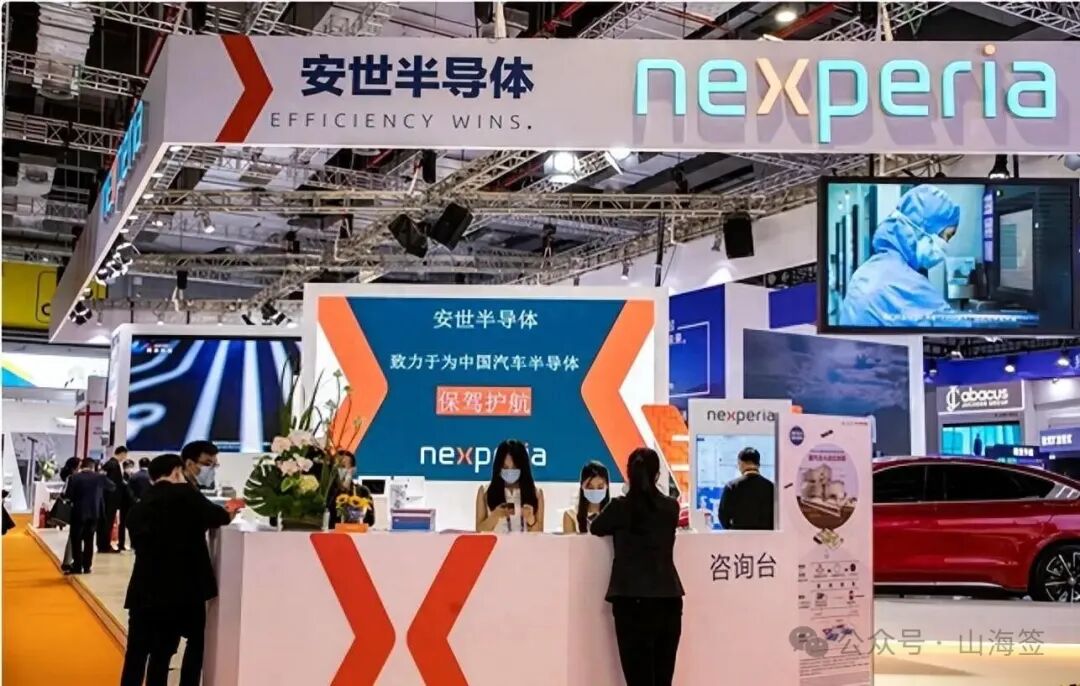
Waking up, the automotive industry is in an uproar again! In October, the Dutch government forcibly took over Nexperia, a subsidiary of our Chinese company Wingtech Technology, and unexpectedly, it has severely impacted global automakers. I find this situation quite interesting because Nexperia, while not a high-end chip company, produces basic chips that are indispensable to global car manufacturers. Now, with the Dutch government’s actions, major manufacturers like Volkswagen, BMW, and Honda are panicking, with inventory only lasting a few weeks. Isn’t this digging their own grave?
To be honest, Nexperia was originally a department of NXP Semiconductors, acquired by Wingtech for 34 billion yuan in 2019. At that time, the West thought it was no big deal to sell, as they were producing basic chips like MOSFETs and diodes, which seemed very ordinary. But now it turns out that these seemingly insignificant small chips are the “industrial food” of the entire automotive industry. If any $0.5 power management chip is missing, a $50,000 luxury car has to stop production. The Dutch government has really shot itself in the foot this time.
The importance of Nexperia has been severely underestimated.
I must say, Nexperia holds over 30% of the automotive-grade power semiconductor market, which is quite alarming. Although the technical threshold for the chips it produces is not high, its market position is enough to affect the entire industry. The modern automotive industry emphasizes lean production, and manufacturers generally do not stockpile large inventories. As a result, when Nexperia cuts off supply, global automakers cannot hold out for more than a few weeks.
More critically, 80% of Nexperia’s shipments come from China, with the Dongguan factory accounting for 70% of global capacity, which is equivalent to having the “kitchen” here. The Dutch government thought that by taking over the Dutch headquarters, they could control Nexperia, only to find that the core production capacity is all in China, making it like seizing an “empty coat”—it’s quite funny.
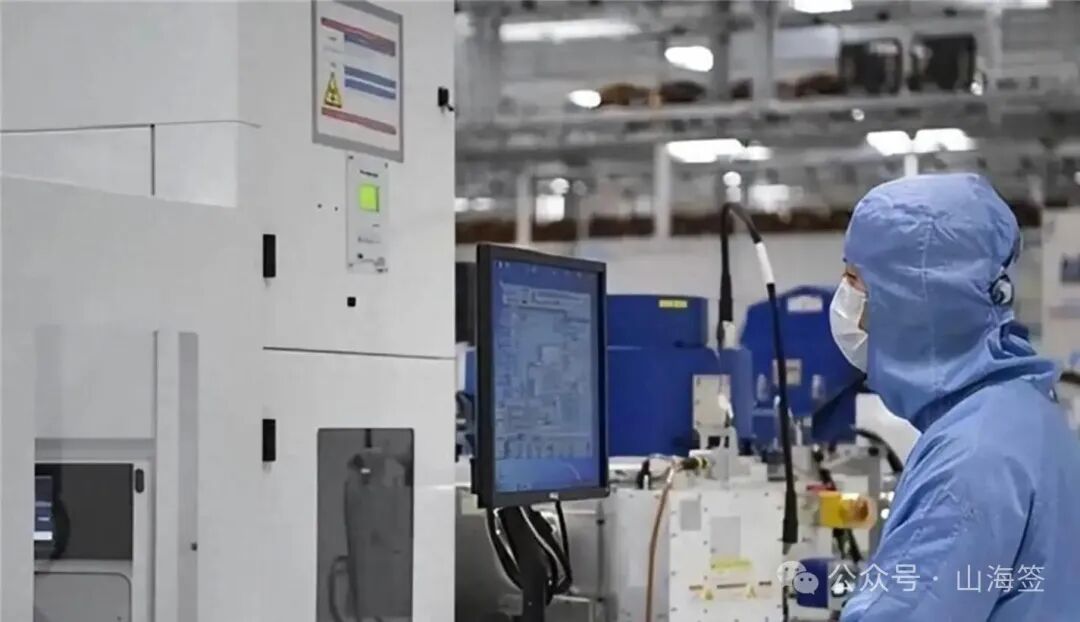
It must be said that our countermeasures are indeed precise, directly prohibiting Nexperia China from exporting specific finished components produced in China. This move is like “hitting the snake at its seven inches,” betting that European automakers cannot withstand the short-term pain. As expected, Volkswagen reported its first quarterly loss in five years in Q3, Honda’s factory in Mexico has directly stopped production, and Nissan’s chip inventory can only last until the first week of November.
Global automakers have started a chip scramble.
Now the situation has become quite interesting, as major automakers have immediately begun a chip purchasing frenzy. The CEO of Mercedes-Benz directly stated, “It goes without saying that we are scouring the globe for alternatives,” while Ford also stated that they are doing their utmost to procure these components from other sources, but alternative solutions cannot keep up with the rate of inventory consumption.
I find it most awkward that to procure from existing component manufacturers, they now face two major issues. First is the short-term demand surge; Nexperia holds about 40% of the market share in key automotive discrete components like diodes and discrete transistors, and such a large gap cannot be filled by Infineon or ON Semiconductor in the short term. Secondly, there is the price issue; Nexperia has a cost advantage due to its scale, and replacing it with other manufacturers is expected to increase procurement costs by 20% to 30%.
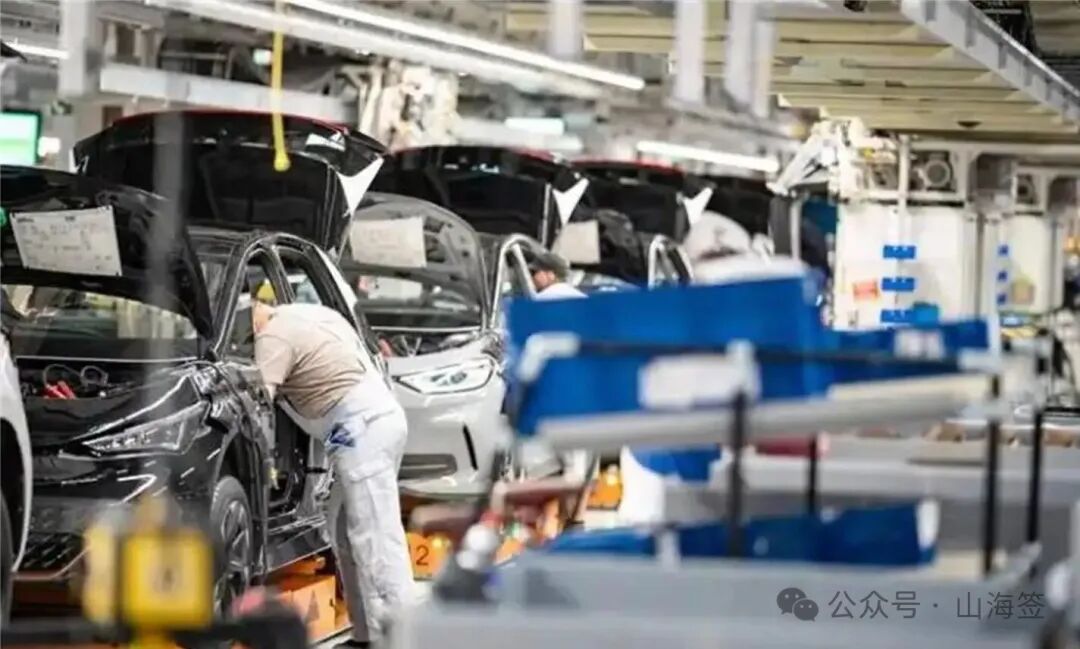
Moreover, automotive-grade chips have extremely high safety requirements. Component suppliers often need to go through an 18 to 24-month certification period to enter the supplier list of automakers. Now, who has the time to wait? European automakers have only a few weeks of inventory left, and switching suppliers will require several months for certification. If supply is cut off, Volkswagen could lose tens of millions of euros in a single day—who can withstand that?
China has begun conditional exemptions.
The good news is that on November 1, the Ministry of Commerce stated that it welcomes companies facing actual difficulties to contact them promptly, and will grant exemptions for eligible exports. This move is indeed clever, showcasing a sense of responsibility while taking the initiative. It is said that German company Omnivision was the first to receive an exemption for Nexperia China, primarily supplying Volkswagen, BMW, and Stellantis Group, while giants like ZF Friedrichshafen and Honda are also actively discussing with China.
Nexperia China announced on November 2 that the Dutch Nexperia owes 1 billion yuan to the Dongguan packaging and testing factory, and has established sufficient inventory to meet customer demand steadily until the end of the year and even longer. More importantly, Nexperia China is launching a “domestic substitution” plan, with several wafer manufacturers like Silan Microelectronics, Nanjing Chengzhi, and Yangjie Technology already under review.
To be honest, once Nexperia China’s “wafer domestic substitution” is successful, it will completely break free from dependence on the Dutch headquarters. By then, the Dutch government will have no chance for negotiation. I think the Netherlands is quite anxious now, urgently visiting China to discuss solutions, which is essentially a desire to surrender gracefully.
This situation brings insights to the industry.
However, this round of game has also sounded an alarm for all multinational companies, as we are no longer in an era of “global family”; legal ownership can be overturned by an administrative order. In the future, supply chains will likely need to adopt a “regional packaging” approach, establishing separate systems in China, Europe, and North America, which, although costly, can ensure survival.
For domestic chip manufacturers, this is also an opportunity. In the long run, the independent research and development of chips from mature processes to advanced processes will accelerate, and there are also candidates like New Japan Radio and Silan Microelectronics for basic components like power semiconductors and logic devices. The localization of automotive electronic chips in China will definitely speed up..
Moreover, in the face of the “politicization” tendency in Europe and the United States, domestic manufacturers must also be prepared for risk prevention. First, they need to accelerate access to the RMB cross-border payment system to avoid dollar settlement risks; second, they should expedite the return of overseas packaging capacity to China to reduce the risk of physical supply chain disruptions.
This incident with Nexperia Semiconductor has taught me a lesson: what was once considered precious is high-end, but now I realize that the “basic models” that can choke the supply chain are the real big players! The Dutch government originally intended to help the U.S. “do a favor,” but ended up digging its own grave. Wingtech is merely a “collateral damage” in this situation, but it has also come to understand the intricacies of the global supply chain game.
What do you think about this? Feel free to share and discuss, and follow me for daily automotive news.