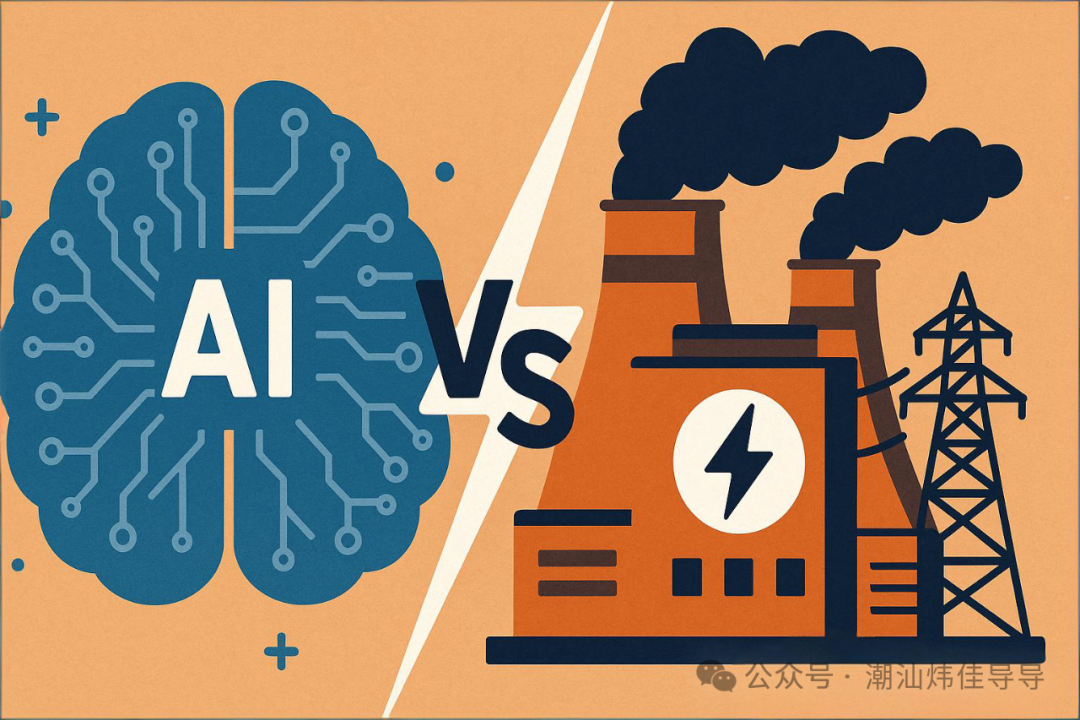
As more people view “computing power” as the “steel and grain” of the new era, we have already stepped onto a broader timeline: from the ancient connection between civilization and energy to a new game between artificial intelligence and power supply. This thread not only concerns technology but also points to the fundamental question of the survival of civilization.
Reflecting on the “Civilization-Energy” Theme from “The Three-Body Problem”
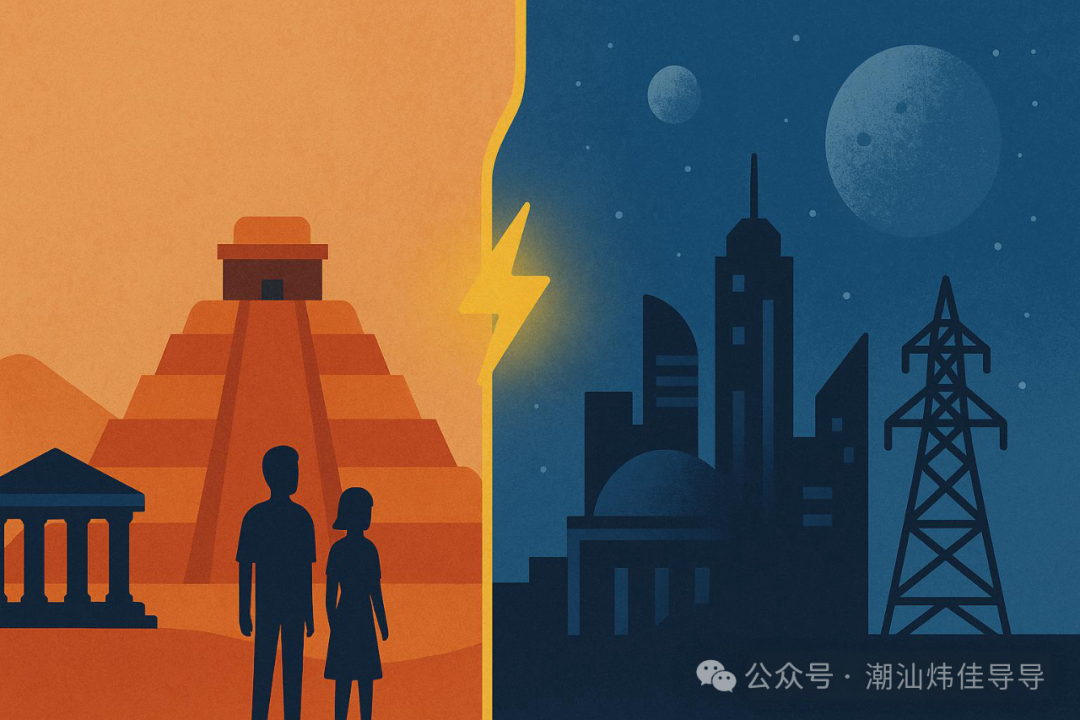
In “The Three-Body Problem,” Liu Cixin repeatedly questions a core proposition: the survival and expansion of civilization ultimately hinge on energy issues. Humanity’s vulnerability in the dark forest stems not only from information opacity and chains of suspicion but also from the deeper reason of technological and security disadvantages caused by energy scarcity; while those powerful civilizations invariably possess higher-order and more stable energy sources.
This theme has a clear scientific footnote in the real world: the Kardashev Scale — which classifies civilizations based on their “disposable energy scale” into Type I (harnessing all the stellar radiation energy received by a planet), Type II (harnessing the output of an entire star), and Type III (harnessing the luminosity of an entire galaxy). Essentially, this projects the “civilization process” onto a coordinate system of “energy utilization capability.”
If we delve deeper into the hard connection between “information and energy,” the Landauer principle reveals that computation is not without cost. Even the irreversible operation of “erasing a bit” consumes at least the minimum energy proportional to temperature (kT\ln 2). This means that information processing inevitably accompanies energy dissipation; the larger the scale of computation and the more irreversible operations, the higher the energy demand. AI is pushing this physical limit from textbooks into the reality of data centers and urban power grids.
Looking further afield: if human civilization one day advances to a “Type II civilization,” we may need to achieve engineering fantasies like the Dyson Sphere — capturing and utilizing as much radiation energy from an entire star as possible. This concept was systematically proposed by Freeman Dyson in 1960 and has since become a common symbol in astronomy and science fiction. Although it remains a distant idea, it serves as a “philosophical compass,” pointing to a clear conclusion: higher intelligence must be predicated on higher-order energy acquisition and scheduling capabilities.
By overlapping the narratives of civilization in “The Three-Body Problem,” the Kardashev Scale, and the Landauer principle, we arrive at a simple yet unavoidable conclusion:The upper limit of intelligence is constrained by the lower limit of energy. This is not only common sense on a cosmic scale but also the underlying logic of corporate and national strategies in the AI era.
The Reality Challenge: GPU Does Not Equal Computing Power; Computing Power First Requires “Electricity”

Since 2025, discussions around the “AI computing power shortage” have quietly shifted from “chip supply” to “electricity supply.” Microsoft CEO Satya Nadella has repeatedly stated in interviews that many GPU clusters are currently idle due to insufficient power, and the core issue is no longer the chips themselves but rather the “lack of available electricity.” This statement is particularly striking coming from a top global cloud service provider — even the players with the most chip reserves face the challenge of “powering on.”
Related frontline reports further confirm Nadella’s judgment that “electricity has become the true bottleneck for AI expansion”: without stable power supply, GPUs can only “sunbathe.” The International Energy Agency (IEA) provides a more systematic outlook on electricity consumption in data centers: by 2030, the demand for global electricity driven by data centers (with AI as the core driver) will be significant, and about 20% of ongoing data center projects face delays due to insufficient grid capacity and infrastructure.
In other words, the entire link of “electricity — grid — site — cooling — environmental protection — grid connection” is pulling the ideal of “buying GPUs and lighting up models” back to reality. This also explains why there have been news reports in Europe and the United States over the past year about “grid companies being overwhelmed by applications from tech giants for grid connection” and “new parks unable to obtain sufficient capacity”; and why more and more companies are signing large-scale renewable power purchase agreements (PPAs) and even relocating data centers to regions with richer clean power and cooling sources.
All of this provides us with a clear judgment coordinate:Whoever has a more abundant, dispatchable, and sustainable power base will have more capital to continuously scale up model size and load density..
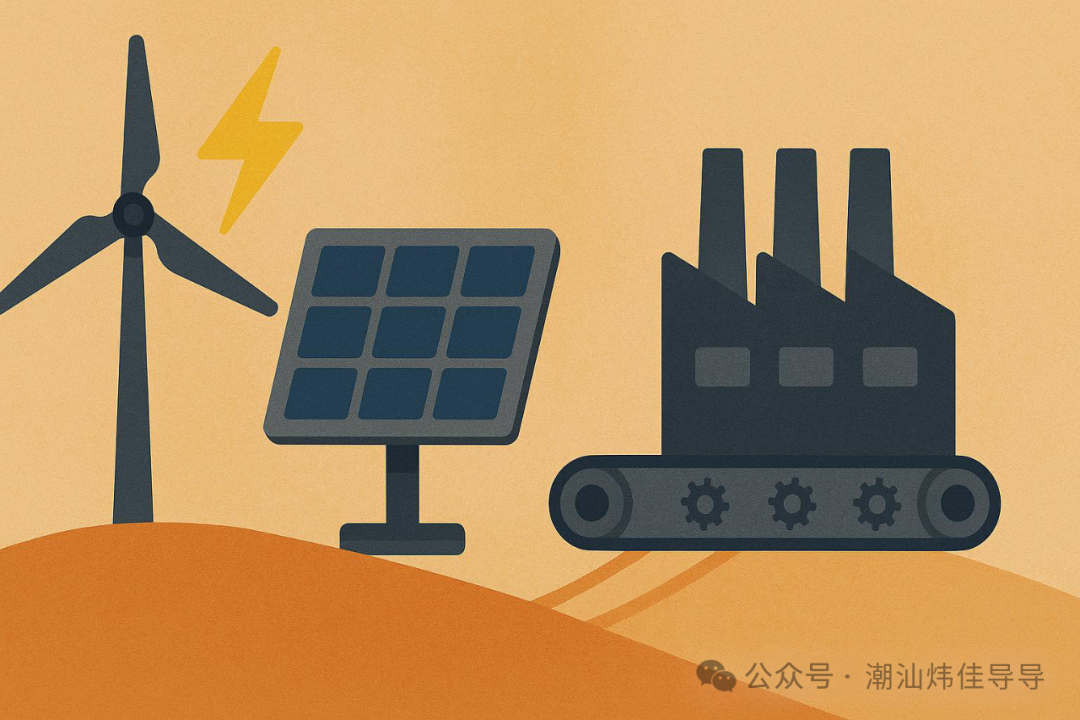
China’s Key Advantage (1): “Clean Power” Has Become a Super Industrial Chain
-
The Yangtze River “Clean Energy Corridor” — A World-Class Hydropower HighwayLooking at the map of China, one can see a “clean energy dragon” running through the main stream of the Yangtze River: from Wudongde, Baihetan, Xiluodu, Xiangjiaba, to the Three Gorges and Gezhouba, six giant hydropower stations are arranged in a cascade, forming the “world’s largest clean energy corridor” with a total installed capacity of over 71.695 million kilowatts, stretching over 1800 kilometers, and a total drop of over 900 meters. In the summer of 2024, this corridor achieved multiple daily power generation records of over 1-1.5 billion kilowatt-hours, becoming a stable cornerstone for “peak shaving in summer” and “west-to-east power transmission.”
From a more everyday perspective: when the peak electricity demand in the east arrives, this “hydropower highway” can act like a “green electricity symphony orchestra” that is scheduled down to the second, using the large reservoirs for regulation and ultra-high voltage transmission to convert upstream water energy into electricity for every light and server in eastern cities; during dry seasons, it supports irrigation, shipping, and ecology in the middle and lower reaches through water replenishment scheduling.
Looking closely at any of these “giants,” they are all world-class projects:
-
Baihetan: Total installed capacity of 16GW, equipped with million-kilowatt units, its clean electricity is transmitted directly to Jiangsu and Zhejiang through ±800kV ultra-high voltage direct current, with a single-line transmission capacity of 8GW, over a distance of more than 2080 kilometers, becoming a super artery for “west-to-east power transmission.”
-
Wudongde: Total installed capacity of 10.2GW, with an average annual power generation of 38.9 billion kilowatt-hours, fully operational in 2021, it is a model of global giant arch dam projects.
-
Shuangjiangkou (under construction): Planned dam height of 315 meters, which will set the record for the “world’s highest dam,” with water storage starting in 2025, and the first unit expected to be put into operation ahead of schedule, not only a hydropower giant but also a key node for peak regulation and watershed management.
This is not an isolated power station but a power ecosystem laid out along the river, linking east and west, backed by the cross-regional scheduling systems of the Three Gorges Group, State Grid, and Southern Power Grid, as well as the supply chain built by tens of thousands of engineering equipment and power electronics companies. This “hydropower — transmission — electricity” link has transformed the “scalable supply capacity of clean energy” into a “bulk commodity” that the AI industry can directly consume.
-
Ultra-High Voltage (UHV): Achieving “Long-Distance, Low-Loss, High-Stability” Transmission of Clean ElectricityAfter ensuring “sufficient power generation,” the key becomes “transmitting out and receiving in.” China’s long-term investment in UHV technology is addressing this issue: ±800kV direct current and 1000kV alternating current cross-regional backbone channels act like “energy fibers,” tightly connecting hydropower, wind power, and photovoltaics from the southwest and northwest to load centers in East, Central, and South China.
Taking the Baihetan — Jiangsu/Zhejiang two 8GW-level direct current projects as an example, they bring the power significance of the Sichuan and Yunnan mountains closer to the Yangtze River Delta to the “millisecond level,” significantly reducing line losses. Industry statistics show that China has the largest number of UHV projects built, under construction, and in operation globally, forming a backbone network for “west-to-east power transmission and north-to-south supply.”
Technical details are particularly crucial: the combination of flexible direct current and UHV direct current makes controllable power flow, fault isolation, and large-scale renewable energy grid connection possible. This “power electronics capability of the grid” is precisely the ideal partner for AI parks — AI load curves are steep and change rapidly, and the demand for grid peak regulation, frequency stability, and reactive power support is surging, while “UHV backbone + regional side energy storage and flexible power sources” is the practical solution to stably support GPU clusters.
-
Energy Storage: Providing Power Buffer for AI as a “Time Mover”Globally, pumped storage remains the most mature grid-level energy storage method. China is also a “major player” in this field: the Fengning pumped storage power station in Hebei has a total installed capacity of 3.6GW, and all units are expected to be operational by 2024, making it the world’s largest pumped storage power station; industry organizations and media such as Reuters estimate that by 2030, China’s pumped storage capacity is expected to reach 120-130GW.
This means that the mismatch of electricity during “sunny days with abundant wind and high load peaks at night” is effectively smoothed out by this “giant hydropower battery.” Meanwhile, lithium-based “new energy storage” is also rapidly expanding, further enriching the power regulation capability from 15 minutes to 4 hours. The IEA analysis points out that pumped storage remains the most critical “ballast” for global power systems, and China is expected to account for nearly 40% of the global increase in hydropower and pumped storage from 2024 to 2030.
This accumulation of “system-level flexibility” is crucial for the stable power supply of AI parks: computing power relies on stable electricity; and the stability of electricity depends on system flexibility.
-
“East Data West Computing”: Bringing Computing Power Closer to Green EnergyA higher level of synergy lies in the coupling of computing power, green electricity, and network systems. The “East Data West Computing” project, officially launched in 2022, aims to match data centers and other computing infrastructure with the advantages of clean electricity, land, and cooling sources in the west — the National Development and Reform Commission and other departments have approved the overall layout of “4+4” national hub nodes and 10 data center clusters, with subsequent documents and progress reports emphasizing “the collaborative construction of computing power and green electricity, cross-regional scheduling, and network capability enhancement.”
This can be understood as optimizing the geographical space of “AI electricity demand” rather than crowding all parks around the power-tight first-tier cities. It can be seen as “prioritizing the layout of large model training backend parks near clean energy sources,” and then transmitting data back through ultra-high voltage transmission and backbone networks — this idea has been summarized by institutions such as MERICS and USCC as “a key pivot in China’s AI infrastructure path.”
-
Technical Side Profile: From UHV to the Art of Energy Scheduling in “Electromagnetic Catapult”When observing the electromagnetic catapult system (EMALS) on the Fujian aircraft carrier launching J-35, J-15T, KJ-600, and other aircraft in sequence, behind it is a system engineering of “high-power electronics + energy buffering — precise release”: first storing energy in flywheels or supercapacitors, then releasing huge power along a predetermined curve within seconds. The Fujian aircraft carrier is expected to undergo multiple sea trials and electromagnetic catapult tests between 2024 and 2025, and has officially entered service. Although this is not a direct application of UHV, it shares the engineering philosophy of “energy time compression and precise scheduling” with the power system.
China’s Key Advantage (2): Tackling Controlled Nuclear Fusion, Moving Towards “Energy Finality”
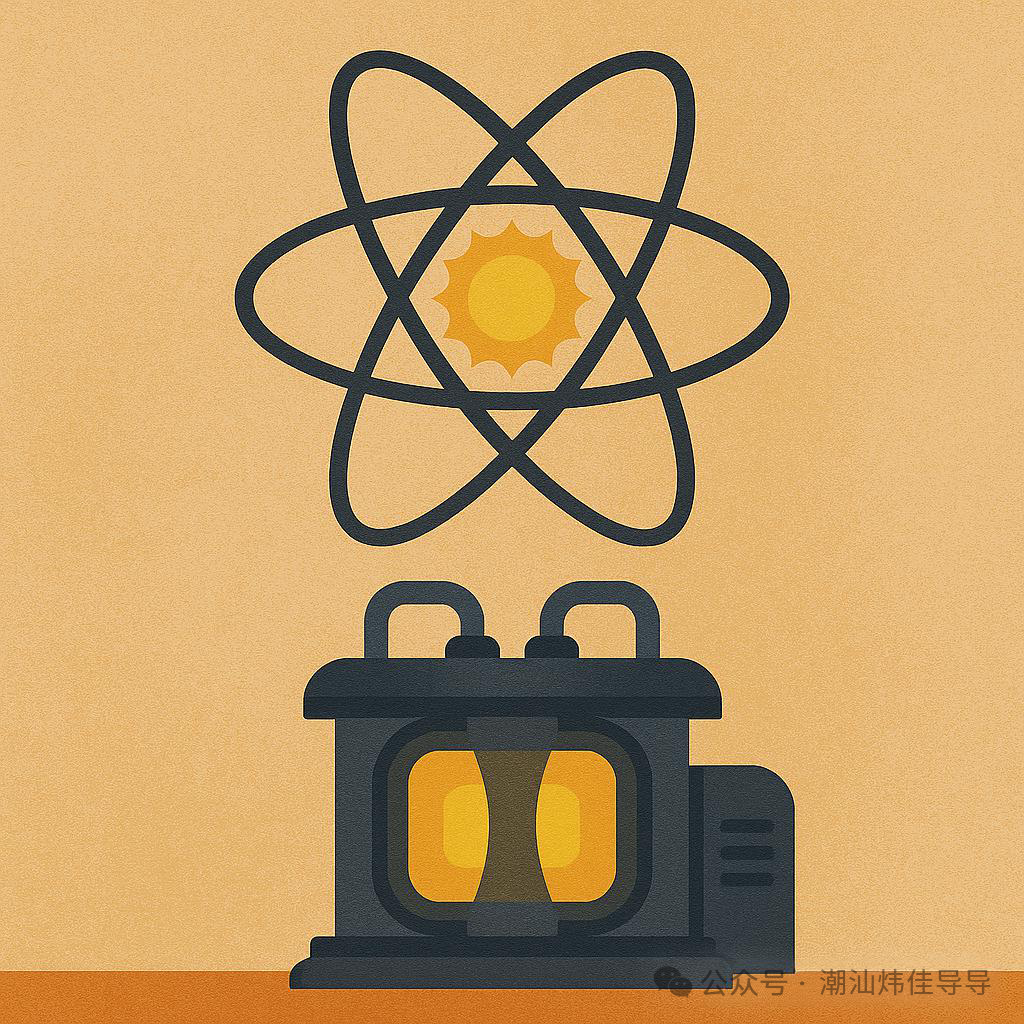
While maximizing the development of existing clean energy, China is also firmly laying out its strategy for the “next generation ultimate energy” — controlled nuclear fusion.
-
EAST: The Record Breaker of the “Artificial Sun”The EAST (Experimental Advanced Superconducting Tokamak) in Hefei continues to break world records: achieving a 1056-second long pulse of high-parameter plasma operation in December 2021; reaching a steady-state H-mode of 403 seconds in April 2023; and further extending the steady-state high-confinement plasma duration to 1066 seconds in January 2025. Although this does not directly generate electricity, it is continuously approaching the operational window required for future engineering reactors in terms of “steady-state and high-parameter combinations.”
-
ITER and CFETR: From “International Collaboration” to “Independent Engineering”In the international large-scale scientific project ITER, China is one of the main suppliers of key components such as the magnet feeder system and first wall enhanced heat flow panels: 31 sets of feeder systems and first wall panels have been delivered in bulk or are nearing completion. This is essentially “honing supply chain and engineering organization capabilities on the largest tokamak platform.” Domestically, CFETR (China Fusion Engineering Test Reactor) is tasked with the engineering transition from ITER to commercial demonstration reactors, with steady progress in the development of key superconducting magnets and CRAFT (Comprehensive Research Facility for Fusion Technology).
Connecting this route, we can see: verifying physics and steady-state operation on EAST, honing large-scale integration and key component capabilities on ITER, and advancing engineering and domestic technology stacks on CRAFT/CFETR. The road ahead is still long, but it tightly integrates the underlying industrial chain of “fusion — materials — superconductors — power electronics — thermal management — fuel cycle,” allowing “future energy” and “future computing power” to enter the same growth trajectory.
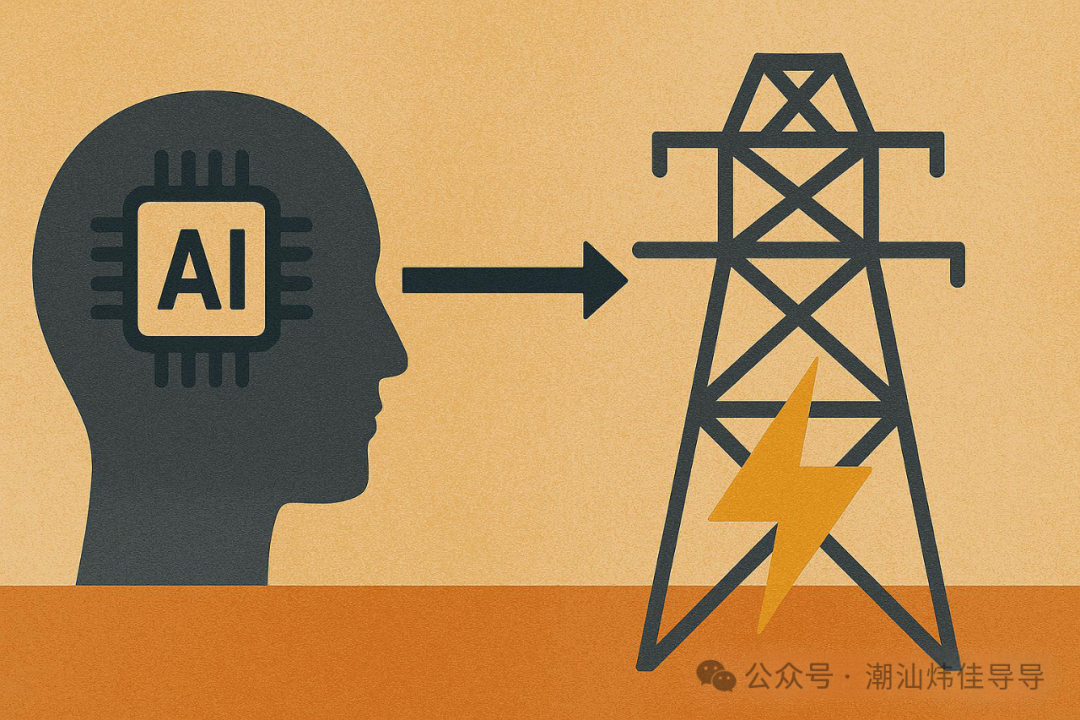
Logical Loop: Why “The Ultimate Competition in AI = Energy Competition”
-
Physical Level: The Landauer principle and the reality of data center energy consumption indicate that even with improved algorithm efficiency, AI’s “unit intelligence/unit energy consumption” still relies on a massive absolute energy consumption foundation — stronger models, denser reasoning, and lower latency all require “energy hogs.”
-
Engineering Level: Companies can purchase GPUs, but may not be able to make them “fully operational.” Power capacity, grid connection progress, distribution cooling, carbon constraints, and energy assessments become the first shackles of expansion. Nadella’s statement that “the root cause of idle GPUs is insufficient power” is the most straightforward confirmation.
-
System Level: From hydropower and pumped storage providing “stable dispatchable baseload and peak regulation” to UHV achieving “cross-regional low-loss transmission,” and then to “East Data West Computing” optimizing the coupling of computing power — green electricity — network, China has built a complete loop from source to load in “transforming the energy system into an industry that AI can directly consume.”
-
Future Level: The scaling of nuclear power, third-generation units (such as “Hualong One”) and small modular reactors (SMR, such as “Linglong One”) demonstration promotion provide a replicable power base for “zero carbon, high capacity factor” data centers and computing parks; while the engineering challenges of fusion represent the ultimate vision of the “super computing power era.”
By 2025, China will lead the world in the number and installed capacity of nuclear power units under construction, with multiple “Hualong One” units in operation, Zhangzhou Nuclear Power Unit 1 expected to be operational in January 2025, and the SMR “Linglong One” completing cold tests, while the innovative HTR-PM (High-Temperature Gas-Cooled Reactor Demonstration Project) is also expected to be operational by the end of 2023 — this means that the supply of “safe, stable, low-carbon, and dispatchable” high-quality electricity is accelerating to take shape.
Revisiting Nuclear Energy: From Fission to Fusion, Why It Naturally Aligns with AI

The two key words of nuclear power are “high capacity factor” and “zero carbon.” For large model inference clusters, 24×7 stable power supply can significantly reduce redundancy backup and load migration costs at the architecture level; for local areas, the “nuclear power + park” model can form a stable traction between load and power source, achieving better system economics in conjunction with pumped storage/storage.
China leads the world in the number of nuclear power units under construction and continues to build a replicable engineering system in the fields of third-generation machines, SMRs, and high-temperature gas-cooled reactors: Zhangzhou Nuclear Power Unit 1 (Hualong One) is expected to officially start operation in January 2025; Linglong One (ACP100) is expected to complete cold tests by 2025; and the High-Temperature Gas-Cooled Reactor Demonstration Project is expected to be operational by the end of 2023. All of these provide stable power sources that can be directly connected to the AI industry.
Fusion corresponds to AI’s “hypothesis of infinite growth”: if the engineering challenges of fusion can be overcome in the 2030s to 2040s, AI expansion will finally “break free from carbon emissions and seasonal limitations,” entering a new era of extremely high energy density and virtually limitless fuel. The “thousand-second steady state” of EAST and the engineering progress of ITER/CFETR are the road signs continuously lighting up on this track.
Conclusion: As the “Chip War” Turns into the “Power War,” What is China’s Confidence?
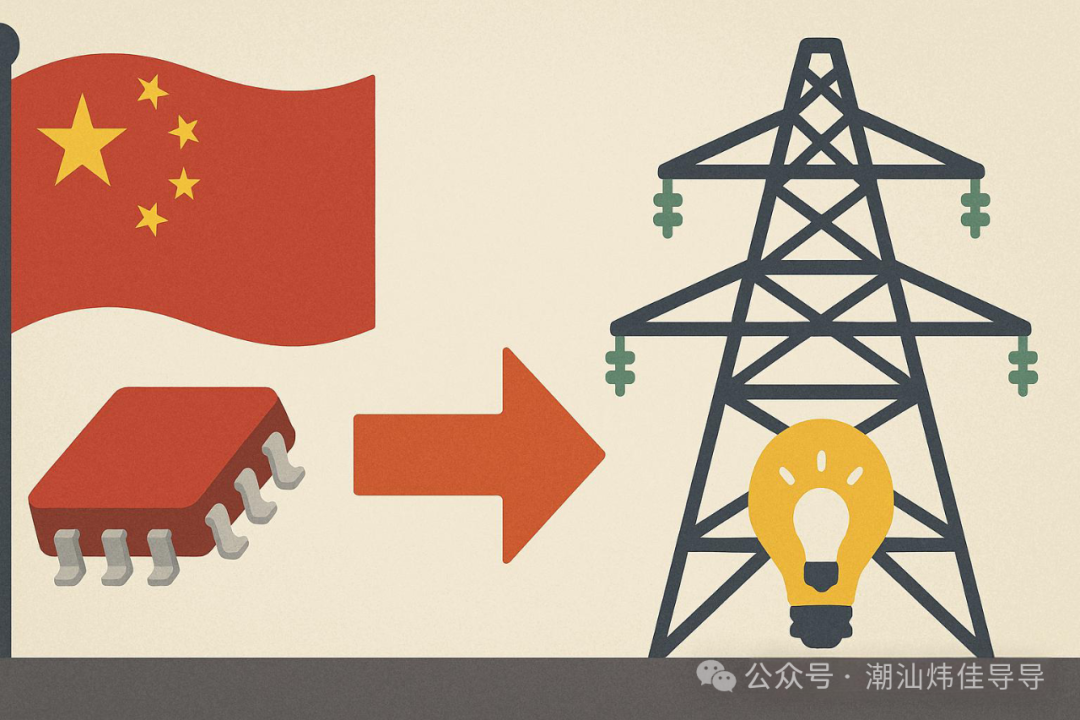
Summarizing the entire thread in one sentence:The ultimate competition in AI is energy competition; the essence of energy competition is system competition..
-
On the supply side, China has linked hydropower, nuclear power, wind and solar, pumped storage/new energy storage, and ultra-high voltage into an “AI directly consumable” industrial chain, and achieved spatial optimization matching of clean electricity and computing power demand through “East Data West Computing.”
-
On the engineering side, from the electromagnetic catapult on the Fujian aircraft carrier to the UHV interconnection, this country has demonstrated world-class organizational and manufacturing capabilities in “precise scheduling of energy in time and space.”
-
On the frontier side, with parallel tracks of fission and fusion: the iteration acceleration of third-generation machines and SMRs, the demonstration of HTR-PM, and the combination of EAST—ITER—CFETR—CRAFT are jointly reserving “next-generation electricity” for “next-generation computing power.”
Indeed, China has faced phase challenges in the GPU supply chain; however, in the next round of competition involving “electricity — grid — storage — transmission — computing,” China’s “energy base + power electronics + engineering organization capability” constitutes a strong structural advantage. As the true bottleneck of global AI shifts from “unable to purchase GPUs” to “unable to connect to electricity, stabilize electricity, and green electricity,” the value of this system will increasingly manifest as a “fundamental trump card.”
In summary:Chips determine the starting line, energy determines the finish line. In the ultimate competition of AI, China, with its solid foundation of “energy-computing power” integration, has great potential to occupy a favorable position and play a decisive role in the future landscape.