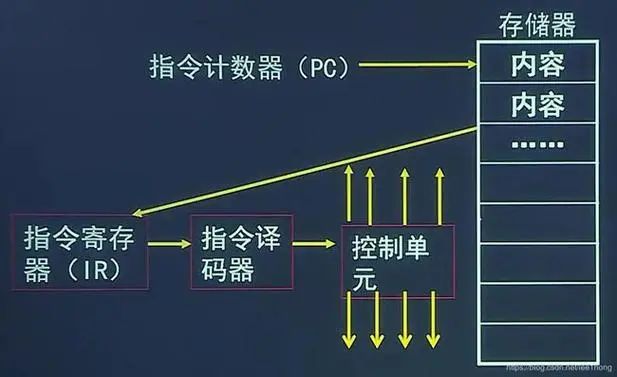
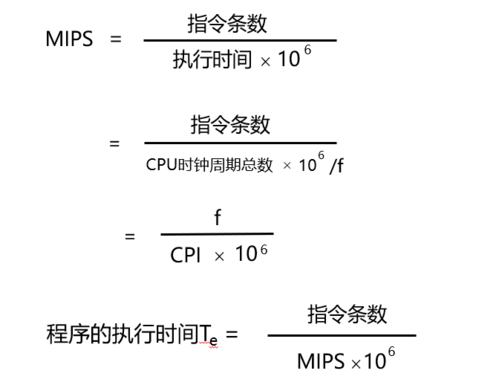
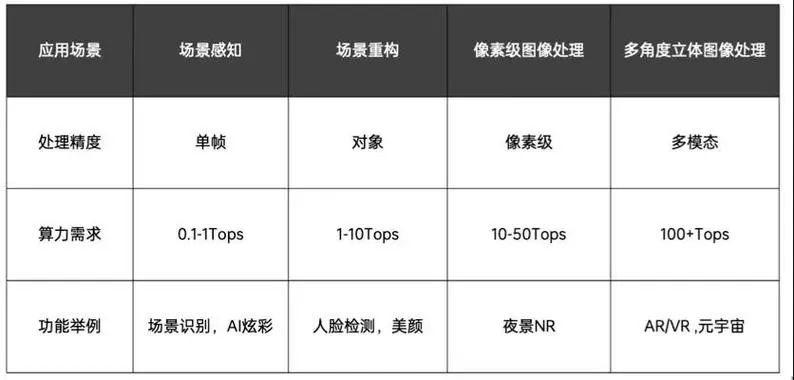
Click the above“Mechanical and Electronic Engineering Technology” to follow usIn today’s age of information explosion, evaluating chip performance has become increasingly important. Whether it’s smartphones, computers, or various smart devices, their performance largely depends on the chip’s performance. When discussing chip performance, we must mention two important metrics: MIPS and TOPS. These two metrics are like the “height and weight” of the chip world, helping us understand the chip’s “physical fitness”.First, let’s talk about MIPS, which stands for Millions of Instructions Per Second. Simply put, it measures how many machine language instructions a computer or processor can execute per second. Imagine if you are a chef, MIPS is like the speed at which you can chop carrots per second. The calculation formula is straightforward: the number of instructions divided by the execution time. For example, if a program executes 12 million instructions in 1 second, then the processor’s MIPS value is 12. The higher the MIPS value, the more instructions the processor can execute in a given time, resulting in faster processing speed.However, MIPS also has its limitations. It’s like only focusing on the speed of chopping carrots without considering whether the carrots are chopped finely and evenly enough. MIPS does not take into account other factors, such as I/O speed, cache size, and the complexity of the instruction set. This is like, even if you chop carrots quickly, if they are not chopped well, or if they oxidize and discolor quickly after being cut, then that speed has little practical significance. Moreover, different instruction sets have different requirements for the number of instructions, so MIPS values may not be directly comparable between different processors. It’s like different chefs have different methods for chopping carrots; some can chop several at once, while others can only chop one. Therefore, simply comparing the speed of chopping carrots does not fully indicate who is the better chef.With the development of technology, the TOPS metric has emerged. TOPS stands for Tera Operations Per Second, and it indicates how many trillion operations a processor or computing system can perform per second. Here, “operations” typically refer to integer operations or basic calculations. TOPS is like the speed at which an athlete can jump rope per second; the faster this speed, the stronger the athlete’s explosiveness and endurance. TOPS is commonly used to assess the performance of AI and machine learning processors, especially in the inference speed of neural networks and deep learning models. For example, in image recognition tasks, the processor needs to quickly perform a large number of basic calculations to analyze image data, and TOPS can effectively reflect the processor’s performance in this context. Additionally, TOPS is widely used in fields such as autonomous driving and high-performance computing to measure a device’s processing capability in complex tasks.Calculating TOPS involves several key parameters, such as clock frequency, the number of Multiply-Accumulate Units (MAUs), and the number of operations per MAU. The specific formula is: TOPS = Clock Frequency × Number of MAUs × Operations per MAU. To illustrate with a specific example, suppose a processor has a clock frequency of 1GHz (i.e., 1 billion clock cycles per second), has 100 Multiply-Accumulate Units (MAUs), and each MAU can perform one multiplication and one addition operation per clock cycle. Then, the TOPS value of that processor would be: TOPS = 1 billion × 100 × 2 = 200 trillion. This formula is like a math problem; by calculating the clock frequency, the number of MAUs, and the number of operations per MAU, we can derive the processor’s TOPS value.Although TOPS is very useful in assessing the performance of AI and machine learning processors, it is not a panacea. TOPS is different from the floating-point operation-related unit TFLOPS (Tera Floating Point Operations Per Second), which is specifically used to measure floating-point operation performance. It’s like TOPS focuses on the speed of an athlete jumping rope, while TFLOPS focuses on how many high-difficulty moves the athlete can complete during each jump. Therefore, TOPS is more often used to evaluate integer operation capabilities, while TFLOPS is used to evaluate floating-point operation capabilities.In practical applications, relying solely on MIPS or TOPS values cannot comprehensively assess chip performance. It’s like you cannot judge a person’s health condition just by their height and weight. Other performance metrics, such as Floating Point Operations (FLOPS), clock speed, cache size, etc., also need to be combined for a comprehensive evaluation. FLOPS is a metric for measuring floating-point operation performance and is crucial for applications that require a large number of floating-point calculations, such as scientific computing and graphics processing. Clock speed reflects the processor’s clock frequency, affecting the processor’s calculation speed. Cache size affects data access speed, playing an important role in improving program running efficiency.In addition, TOPS/W is an important performance metric that indicates how many trillion operations a processor can perform under 1W of power consumption, used to measure the processor’s energy efficiency ratio. This is like considering not only the athlete’s speed but also the energy consumed during the run. In today’s world of rising energy costs, a processor with a higher TOPS/W value means it can provide stronger computing power under the same power consumption, offering higher economic and environmental benefits.