BUAA_OJ Pitfall Record – C Language Exam Notes by Fauci
Thoughts & Introduction
This note was actually written three months ago while relearning C language, in preparation for the software college entrance practical exam. I studied data structures and algorithms, and solved some problems on LeetCode.
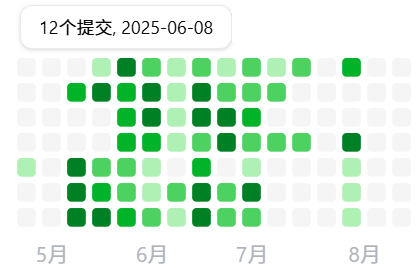
Welcome to visit my C/C++ repository, where I wrote 10,000 lines of C code from May to July:<span>https://github.com/SteveFauci/Learn_c_again</span> (but after July, I just relaxed during the summer vacation, lying around every day).
The practical exam went smoothly, and I ranked second (actually, there were only seven people 🤪). I successfully entered the software college, where I will systematically study core courses such as discrete mathematics, computer organization, and data structures and algorithms.
Actually, relearning C language is a multi-benefit endeavor. In the short term, it means college admission, participating in the summer programming competition, and working as a programming assistant after school starts to earn some money; in the long term, it prepares for various coding interviews and competitions, where coding skills are a hard currency. I consider this as laying a foundation, and I might need to relearn it again later.
Below are my organized notes, and you can download the markdown files from my repository.
Common WA (Wrong Answers)
- 1. Make global arrays larger
- 2. Ten years of competitive programming for nothing, do not open
<span>long long</span>to see ancestors (but I am not a competitive programmer) - 3.
<span>getchar()</span><span> consumes empty characters</span>
For example:
<span>scanf("%d",&n)</span>reads a single line of numbers, and if you then use<span>fgets()</span>/<span>gets()</span><span>, there will be a</span><code><span>'\n'</span>at the end of the number that needs to be consumed with<span>getchar()</span><span>, otherwise the next string read will be</span><code><span>'\n'</span><span>, and if you try to remove</span><code><span>'\n'</span><span>, you will only get an empty string.</span>
- 4. Pay attention to initializing with appropriate values
For example, to find the maximum value in an array, it is not advisable to initialize
<span>int max = 0</span>, it should be<span>int max = arr[0]</span>. If the array consists of all negative numbers, the former max will become 0.
C Language Programming Section
Basic Debugging (Linux Environment)
EOF – <span>ctrl+d</span>
Redirection – <span>./main < in.txt > out.txt</span>
Redirection: Input Sample & Output Sample Debugging Steps
Problem solved: In direct terminal debugging, pressing enter gives one output, making it difficult to compare answers.
- 1. Compile the code to get the executable file and name it
<span>main</span> - 2. Create
<span>in.txt</span>file, paste the input sample, and save it - 3. In the terminal, input
<span>./main < in.txt > out.txt</span>(using relative path) - 4. Directly compare
<span>out.txt</span>with the output sample
EOF
EOF on Windows is<span>Ctrl+Z Enter</span>, while on Linux it is<span>Ctrl + D</span>
(In text files) Windows carriage return equals<span>\r\n</span>, while Linux carriage return is<span>\n</span>
Using gets() in My Compiler
You can modify the compilation options, for example, using
<span>C89</span>, but it is unnecessary as the new standard has abolished<span>gets()</span>, and some competitions also use the new standard. Here, we follow the new standard.
To compare strings for equality, use<span>strcmp(str1,str2) == 0</span>
#include<string.h>
#include<stdio.h>
void my_gets(char*s,int limit){
    fgets(s,limit,stdin);
    s[strcspn(s,"\n")] = '\0';
}
// int main(){
//     char str[100];
//     my_gets(str,100);
//     puts(str);
// }
For multi-line reading, I had to write it manually, using the following.
#include<string.h>
#include<stdio.h>
char str[1005];
int main(){
    while(fgets(str, 1005, stdin)!=NULL){
        str[strcspn(str, "\n")] = '\0';
        ...
    }
}
Basic Mathematical Functions
int gcd(int a,int b) {
    return b?gcd(b,a%b):a;
}
int lcm(int a,int b) {
return((a/gcd(a,b))*b);
}int isPrime(int num) {
if (num <= 1) return 0;
if (num == 2) return 1;
if (num % 2 == 0) return 0;
for (int i = 3; i * i <= num; i += 2) {
if (num % i == 0) return 0;
}
return 1;
}Prime factorization:
void primeFactors(int n)// Prime factorization, can introduce an array for further calculations
{
    while (n % 2 == 0)
    {
        printf("%d ", 2);
        n = n / 2;
    }
    for (int i = 3; i*i<=(n); i = i + 2)
        while (n % i == 0)
        {
            printf("%d ", i);
            n = n / i;
        }
    if (n > 2) // Cannot delete
        printf("%d ", n);
}
int max(int a, int b) {
return a >= b ? a : b;
}int min(int a, int b) {
return a <= b ? a : b;
}Reverse Integer (without considering overflow)
If you want to try reversing
<span>2147483647</span>, you either need to use<span>long long</span>or string manipulation.
int reserve(int num) {
    int ret = 0;
    while(num) {
        ret = ret * 10 + num % 10;
        num /= 10;
    }
    return ret;
}
Fast Input
Note: f represents the sign, x is the sum.
Core Algorithm: For each (valid) character read,<span>x = x * 10 + (ch - '0');</span>
int fastReadInt() {
    int x = 0, f = 1;
    char ch = getchar(); // consume newline
    // Check for negative sign
    if (ch == '-') {
        f = -1;
        ch = getchar();
    }
    // Read digit characters and convert to integer
    while (ch >= '0' && ch <= '9') {
        x = x * 10 + (ch - '0');
        ch = getchar();
    }
    return x * f;
}
Dynamic Memory Allocation for Strings
Example: Read and store<span>10,000</span> strings, each with a length not exceeding<span>1,000</span>. But the total character count does not exceed<span>200,000</span> (i.e., 200KB of memory)
Dynamic allocation:
char  buffer[1005];
char* ptr[10005]; // This is a pointer array

for (int i = 0; i < 10000; i++) {
    fgets(buffer, 1005, stdin);
    buffer[strcspn(buffer, "\n")] = '\0';
    // The first two lines are just reading, can use gets on buaaOJ
    ptr[i] = (char*)malloc(sizeof(char) * (strlen(buffer) + 1));
    // Allocate as much as needed
    strcpy(ptr[i], buffer);
}

// ......

for (int i = 0; i < 10000; i++) {
    free(ptr[i]); // Return what was borrowed
}
Float Comparison
If you really forget, just copy the following…
#define eps 1e-8
int XGreaterThanY(double x,double y){
    return x-y>eps; // Positive enough → x > y
}
int XLessThanY(double x,double y){
    return x-y<-eps; // Negative enough → x < y
}
int XEqualToY(double x,double y){
    return fabs(x-y)<eps; // Close to 0 → equal
}
Usage example:
if(XGreaterThanY(a,b)){
    //do something
}
if(!XEqualToY(c,d)){
    //do something
}
Output Unique Elements After Sorting
Example: For an already sorted array, remove duplicate elements and output.
For example, <span>arr[] = {1,1,2,2,2,3,3,4,5};</span>
Output<span>1 2 3 4 5</span>
Solution 1: Conventional
// First handle the beginning, then print all different ones.
#include <stdio.h>
int arr[] = {1, 1, 2, 2, 2, 3, 3, 4, 5};
int main() {
    int n = sizeof(arr) / sizeof(arr[0]);
    printf("%d", arr[0]);
    for (int i = 1; i < n; i++) {
        if (arr[i] != arr[i - 1]) {
            printf(" %d", arr[i]);
        }
    }
    puts("");
}
Solution 2: Two Pointers
// The left and right pointers in the code always print left, and left moves with right.
// Special handling for the last one
#include <stdio.h>
int arr[] = {1,1,2,2,2,3,3,4,5};
int main() {
    int left = 0;
    int n = sizeof(arr) / sizeof(arr[0]);
    for (int right = 0; right < n; right++) {
        if (arr[left] != arr[right]) {
            printf("%d ", arr[left]);
            left = right;
        }
    }
    printf("%d\n", arr[n - 1]);
}
Date Handling
// Return value is 0-6, 0 means Sunday, 1 means Monday
int getWeekday(int y,int m,int d) {
    int c,w;
    if(m<3) {
        y++;
        m+=12;
    }
    c=y/100;
    y%=100;
    w=(y+y/4+c/4-2*c+(26*(m+1))/10+d-1)%7;
    if(w<0) {
        w+=7;
    }
    return w;
}
int isLeap(int y) {
return(y%4==0)&&(y%100!=0)||(y%400==0);
}int getDaysOfMonth(int y,int m) {
int days=0;
switch(m) {
case1:case3:case5:case7:case8:case10:case12:
days=31;
break;
case4:case6:case9:case11:
days=30;
break;
case2:
days=isLeap(y)?29:28;
break;
}
return days;
}Binary Search
Directly search for key
int binary_search(int arr[], int key, int l, int r) {
    while (l <= r) {
        int mid = (l + r) / 2;
        if (arr[mid] == key) return mid;
        else if (arr[mid] < key) l = mid + 1;
        else r = mid - 1;
    }
    return -1;
}
The first number smaller than key
int binary_search_floor(int arr[], int key, int l, int r) {
    int ans = -1;
    while (l <= r) {
        int mid = (l + r) / 2;
        if (arr[mid] < key) {
            ans = mid;          // First record the current candidate answer
            l = mid + 1;        // Continue to find a larger value that meets the condition
        } else {
            r = mid - 1;        // Does not meet the condition, shrink the range to the left
        }
    }
    return ans;
}
Guide to qsort() cmp() Function
Basic Syntax
typedef ... My_type;
int cmp(const void*p1,const void*p2){
    My_type* pp1 = (My_type*)p1; // pp1 pp2 are intermediate variables for easy access
    My_type* pp2 = (My_type*)p2; // Otherwise, each pointer would have to be written as ((My_type*)p1)

    // Later use pp1 and pp2 to write comparison rules, supporting multi-field sorting.
}
Principle & Notes
<span>cmp()</span> returns an<span>int</span>. Mainly look at the sign; if a negative value is returned,<span>*p1</span> is placed before<span>*p2</span>.
Lazy writing <span>return pp1->a - pp2->a;</span> just puts the smaller one in front, but be careful with this:
1. Subtracting two extreme numbers may exceed the range
2. Subtracting two floating-point numbers can yield unpredictable results; converting to int may lead to errors because the return value is int, not double.
Generally, it is<span>if(pp1->a < pp2->a) return -1;</span> (if it is a floating-point comparison, modify according to the rules, or directly call the previously written floating-point comparison function).
Data Structures Section
I rely heavily on the C++ STL library for self-learning data structures and problem-solving, always using ready-made
<span>#include<stack></span><span>#include<queue></span>, as well as<span>vector</span>and<span>unordered_map</span>. To adapt to the BUAA style of online judging, I have listed the basic operations of stacks and queues here.
Stack
Just maintain an array and a top pointer.
<span>my_stack[]</span>is the stack array, and<span>top</span>is the top pointer, initially set to<span>-1</span>, while<span>Max_size</span>is the maximum capacity of the stack.
| Operation | Code Implementation |
| push | <span>my_stack[++top]</span> |
| pop | <span>top--</span> |
| top | <span>my_stack[top]</span> |
| is_empty | <span>top == -1</span> |
| is_full | <span>top == Max_size-1</span> |
Queue
Use an array to maintain the queue, with two pointers:
<span>front</span>and<span>rear</span>.Initially,
<span>front = 0</span>,<span>rear = -1</span>, and<span>my_queue[]</span>is the queue array, while<span>Max_size</span>is the maximum capacity.Breadth-first search can be directly used with
<span>while(rear >= front){...}</span>
| Operation | Code Implementation |
| enqueue | <span>my_queue[++rear] = x;</span> |
| dequeue | <span>front++</span> |
| front_elem | <span>my_queue[front]</span> |
| is_empty | <span>front > rear</span> |
| is_full | <span>rear == Max_size - 1</span> |