If you don’t pay attention to me, you won’t know what you’ve missed!
Everything starts with connection. The Internet of Things (IoT) is accelerating into our daily lives and various industries, with increasingly intelligent and convenient connections between people and things, and between things and things. Wireless communication has become an invisible bridge in IoT connections, with mainstream communication technologies like Bluetooth, WiFi, and ZigBee each having their unique strengths, providing robust support for the implementation of IoT.
Choosing a Bluetooth Module: Three Considerations
When selecting a Bluetooth or other RF module for IoT devices or certain other projects, you may find that there are far more viable options on the market than you imagined. Typically, module manufacturers or suppliers classify thousands of modules based on transmission rate, transmission distance, frequency band, certification, packaging size, and more.
While considering all aspects is certainly important, certain factors are more critical. By focusing primarily on transmission rate, transmission distance (or coverage), and power consumption, you can effectively narrow down your choices. Making trade-offs on these factors allows you to select a module that helps you make decisions that directly affect the end-user experience. We will quickly examine these parameters and how they affect your device’s performance.
1) Transmission Rate
The transmission rate or data rate is often the first thing that designers and developers consider, as it forces them to think about the type of information that needs to be transmitted between devices. For example, the data rate required to transmit high-quality music to headphones is significantly different from that needed for a basic heart rate monitor.
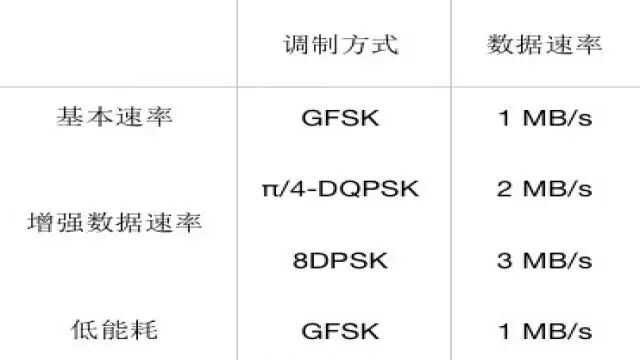
Theoretically, Bluetooth Low Energy’s transmission rate does not support its maximum bandwidth (1 MHz) because the focus of Bluetooth Low Energy is on simple information transmission. If data is transmitted at a high speed, Bluetooth Low Energy will consume more power, which contradicts its original design concept. If high-speed transmission is required, then higher-rate EDR Bluetooth or Wi-Fi should be considered. Any increase in speed will almost inevitably consume more power.
2) Power Class and Transmission Distance Coverage
On manufacturer and distributor websites, Bluetooth modules are categorized by power class. The higher the power class, the farther the transmission can reach. Like any other wireless technology, Bluetooth networks have limited distance. The transmission distance varies with different versions. Even within the same version, the supported transmission distance will vary with different power classes.
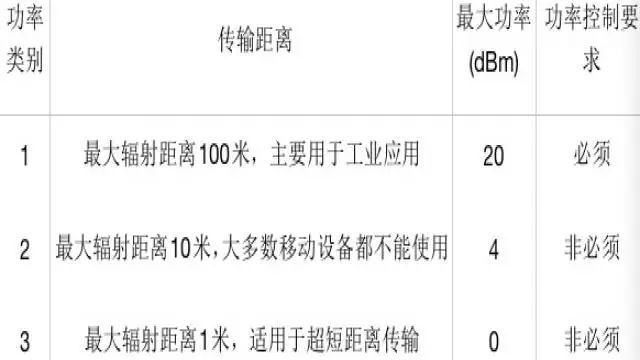
The actual signal transmission distance varies with specific environmental conditions, such as transmission conditions, materials, manufacturing deviations, antennas, and batteries. In addition to the requirements specified in the Bluetooth standards, devices must also meet the power requirements set by local government spectrum regulatory agencies.
3) Power Consumption
Power consumption is primarily related to transmission rate and distance. Since Bluetooth devices are generally powered by batteries, the operating current/voltage of the device is an important consideration, as it directly determines charging time and battery life.
By further categorizing modules into different versions, Bluetooth SIG simplifies this initial decision-making process. Bluetooth technology versions are divided into classic versions and low-energy (LE) versions. The economical Bluetooth versions 1, 2, and 3 are optimized for data transmission rates. In the classic versions, they are divided into Basic Rate (BR), Enhanced Data Rate (EDR), and High Speed. Bluetooth Low Energy focuses more on simple information transmission while extending the battery life of electronic devices as much as possible.
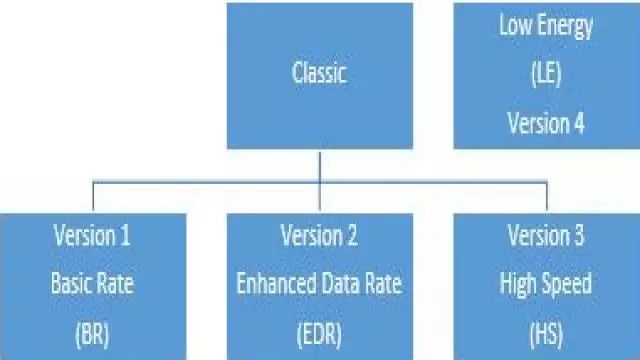
In addition to these classifications, manufacturers will list the send and receive currents and/or power, mainly for module selection. If you can test the expected end device use, you can more easily evaluate the modules and balance various factors in specific applications.
Finding the right Bluetooth module first requires balancing transmission rate, transmission distance, and power consumption. Once you narrow down the choices, you can further refine based on cost, space, and compatibility. Finally, you can use test equipment to evaluate the modules. Download the application guide on how to choose a Bluetooth module for a more detailed understanding of this testing.
Ensuring Bluetooth Design Passes EMI Compliance Testing
Before any new device supporting Bluetooth hits the market, whether a sophisticated communication device or a simple USB dongle, it must meet the strict EMI radiation requirements set by the FCC.
In the past, designers typically had to wait until the end of the design cycle to send the product to testing agencies for formal compliance testing. Unfortunately, in many cases, many Bluetooth designs do not pass on the first try. The cost of multiple trips to testing agencies can be very high, and depending on the root cause, it can easily lead to project delays and missed deadlines.
A much better approach is to perform pre-compliance checks early on, allowing any EMI issues to be identified and corrected. Intuitively, many designers believe they do not have the equipment or expertise to adequately perform pre-compliance testing.
Pre-compliance testing is crucial to ensure you pass EMI/EMC compliance testing at the testing agency. By using the appropriate equipment, Bluetooth wireless testing can also be performed easily.
This article discusses the selection of Bluetooth modules and EMI pre-compliance testing, which are common issues engineers face when designing Bluetooth modules and can often be a headache. The available options are far more numerous than one might imagine, and the focus should be on transmission rate, transmission distance (or coverage), and power consumption to effectively narrow the choices. EMI pre-compliance testing can effectively reduce design and development time and costs.
Source: IoT China
Recommended Reading
1. Summary of Common EMC Rectification Methods;
2. Common RFID Tag Types and Their Application Scenarios;
3. Wireless Charging Moving Towards Medium Power: Coil Material Selection Determines Success or Failure;
4. iPhone and Magnetic Materials Are Inseparable;
5. Electromagnetic Compatibility Terminology in English and Chinese;
6. Sharing Several Strategies to Improve Electromagnetic Compatibility!
7. NFC Mobile Payment vs. WeChat Pay and Alipay!
8. What Role Do Magnetic Shields Play in Wireless Chargers?
9. How to Conduct EMC Rectification for LED Driver Power Supplies?
10. ZTE New Energy Vehicle Vice President: Wireless Charging Will Disrupt User Habits Within Ten Years;
11. RFID Industry: This Is the Best of Times, and the Worst of Times;
12. What Are the Reasons for Excessive EMC Radiation Emissions in Products?
13. More Than 20 Certifications for Electronic Products; If You Don’t Believe It, You Know!
Directly reply with the serial number in the WeChat public account (follow first) to view, such as “1”.
Our Mission
To be the most serious public account
Welcome to Follow Us
Long press the QR code below to identify and follow for free

Disclaimer: Some materials are sourced from the internet, and the purpose of reprinting is to convey more information and share, which does not mean that we agree with its views or verify its authenticity, nor does it constitute other advice, only providing a communication platform and not responsible for its copyright. If there is any infringement, please contact us to modify or delete in a timely manner. Email:[email protected]