
Click
on the blue text above
to follow us~
In the context of modern industrial and intelligent development, automatic control technology has widely penetrated various fields such as production, transportation, energy, and communication, becoming an important means to improve efficiency, reduce energy consumption, and ensure safety. Among many automatic control components, the Photo Relay has gradually played an increasingly important role in automatic control systems due to its unique photoelectric isolation principle, fast response characteristics, and high reliability. This article will conduct an in-depth analysis of the working principle, core features, main application scenarios in the field of automatic control, and future development trends of photo relays, helping readers to comprehensively understand their technical value and application prospects.
NO.1
A photo relay is a relay device that uses light signals to achieve isolation between input and output. It uses a light-emitting diode (LED) and a photosensitive element (such as a phototransistor, phototransistor, or phototriac) for photoelectric coupling, enabling signal transmission and control. Compared to traditional electromagnetic relays, photo relays eliminate mechanical contact structures, thus offering advantages such as contactless operation, no sparks, and low noise.
Its basic structure includes three core components:
Input terminal (LED drive)
When a control signal is applied to the input terminal, the LED is driven to emit light, with the light intensity proportional to the input current.
Optical coupling channel
The light emitted by the LED directly illuminates the photosensitive element through the lens inside the package, achieving signal coupling without electrical contact.
Output terminal (switch control)
The photosensitive element conducts or cuts off based on the changes in received light intensity, thereby controlling the on/off state of the external circuit.
Through photoelectric isolation, photo relays effectively avoid electrical interference between high and low voltage circuits, enhancing the safety and stability of the system. This feature is particularly suitable for high-precision and strong anti-interference application scenarios in the field of automatic control.
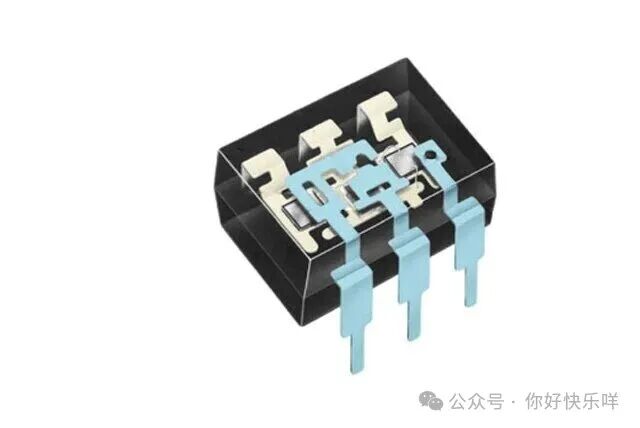
Photo relays are widely used in automatic control systems, mainly due to their following technical advantages:
1. High-speed response
Due to the absence of mechanical moving parts, the response speed of photo relays is typically in the microsecond to millisecond range, which is dozens of times faster than traditional electromagnetic relays, making them suitable for high-speed switching and precise control in automation systems.
2. Electrical isolation
Input and output are completely isolated by light signals, achieving insulation voltages of up to several thousand volts, effectively preventing high voltage interference on control circuits and ensuring system safety.
3. Long lifespan and high reliability
Photo relays have no mechanical wear, with a theoretical lifespan of several million to even hundreds of millions of cycles, significantly reducing maintenance costs and suitable for continuous operation in automated production lines.
4. Low power consumption and low noise
Since the internal switching devices are semiconductor components, the driving power is low, and there is no noise generated from mechanical contact closure, meeting the requirements for quiet control environments.
5. Strong anti-interference capability
The photoelectric isolation design effectively reduces electromagnetic interference (EMI) and radio frequency interference (RFI), ensuring stable operation of automatic control systems in complex industrial environments.
NO.2
The application of photo relays in the field of automatic control is very extensive, covering multiple industries from factory production lines to smart homes, from power systems to medical devices. Here are several typical application scenarios:
1. Industrial automation production lines
In automated production lines, data collection and control signal transmission between devices are crucial. Photo relays are commonly used in the following control processes:
Device start-stop control: Photo relays control motor drivers to achieve fast, interference-free start-stop operations.
Signal isolation and collection: Isolating sensor signals to prevent high voltage noise from affecting the accuracy of PLCs and other controllers.
High-speed counting and sorting: On high-speed conveyor belts, photo relays can achieve rapid signal response, assisting automatic sorting systems.
For example, in semiconductor packaging equipment, photo relays are used to control high-precision stepper motors, ensuring chip positioning accuracy at the micron level.
2. Power automation and energy management
In the automatic control of power systems, photo relays have excellent high-voltage and insulation characteristics, widely used in:
Grid monitoring and protection: Isolating high-voltage sampling signals to protect low-voltage control systems.
Distributed energy control: In photovoltaic inverters and energy storage systems, photo relays achieve high-speed switching to reduce energy consumption.
Fault isolation: In the event of a short circuit or overload, photo relays can achieve rapid disconnection to prevent chain accidents.
For example, in new energy power plants, photo relays undertake signal isolation and remote control tasks, ensuring the timeliness and safety of energy dispatch.
3. Smart buildings and smart homes
With the development of smart home technology, photo relays have gradually become one of the core components of smart control systems:
Lighting system control: Achieving independent control of multiple lighting circuits through photo relays, with fast response and avoiding electromagnetic noise.
Environmental automatic adjustment: Automating the control of devices such as air conditioners, curtains, and humidifiers to enhance living comfort.
Security and access control systems: In door locks, monitoring, and sensor systems, photo relays achieve low-power isolation and signal transmission.
For example, in smart buildings, photo relays can connect temperature and humidity sensors with the central control system to achieve automatic adjustment of environmental conditions.
4. Rail transportation and automotive electronics
In rail transportation systems, automatic control requires high real-time and safety standards, and photo relays are widely used due to their contactless operation, vibration resistance, and anti-interference characteristics:
Train signal control: Used for high-speed signal isolation between track circuits and onboard control systems.
Onboard electronic control systems: In new energy vehicles, photo relays are used to isolate high-voltage battery packs from low-voltage control circuits, ensuring driving safety.
5. Medical devices and precision instruments
In high-precision fields such as medical devices and laboratory instruments, the low noise and high reliability of photo relays are particularly important:
Ultrasonic instruments: Controlling high-frequency probe drive signals to avoid interference.
Imaging devices: In CT, MRI, and other imaging systems, photo relays isolate high-voltage and low-voltage modules to ensure clean signals.
Automatic detection equipment: In high-precision detection devices such as blood analyzers and DNA sequencers, photo relays ensure stable data transmission.
Performance indicatorsPhoto RelayElectromagnetic RelaySolid State Relay (SSR)
Response speedMicrosecond to millisecond levelMillisecond to tens of millisecondsMillisecond level
LifespanExtremely long (no mechanical wear)Limited (contact wear)Long
Electrical isolationOptical isolation, safe and reliableRelies on mechanical contactsOptical coupling isolation
Driving power consumptionLowHigherLower
Anti-interference capabilityExtremely strongGeneralStrong
CostMediumLowerHigher
It can be seen that photo relays combine the high speed and safety of solid-state relays while having advantages in low power consumption and long lifespan, thus having broad application space in automatic control systems.
NO.3
With the continuous development of automatic control technology, photo relays will also present the following trends in the future:
Miniaturization and high integration
In the future, photo relays will develop towards smaller packages and higher integration to meet the needs of high-density control modules.
High speed and low latency
With the popularity of industrial automation and the Internet of Things, high-speed and low-latency control has become a core demand, and the switching speed of photo relays will be further improved.
High power and high voltage applications
To meet the needs of new energy, electric vehicles, and power electronics, high-power photo relays will become a key focus of research and development.
Intelligent and networked
With the rise of intelligent control systems, future photo relays are expected to integrate with microcontrollers and communication interfaces to form intelligent devices with self-diagnosis and remote monitoring capabilities.
With their advantages of high-speed response, photoelectric isolation, long lifespan, and low power consumption, photo relays demonstrate strong application potential in the field of automatic control. From industrial automation and power systems to smart homes and medical devices, photo relays are continuously expanding their application boundaries. In the future, with the development of technologies such as Industry 4.0, smart manufacturing, and the Internet of Things, photo relays will deeply integrate with advanced technologies like AI and big data, becoming one of the indispensable core components in automatic control systems.
This concludes the content of this article. If you find this article helpful, please continue to follow our website https://www.a-semi.com and the “Advanced Optical Semiconductors” WeChat public account, where we will bring you more news and knowledge dissemination!