 Bluetooth positioning is an important function of the BLE Bluetooth module, which can compensate for the inability of GPS to cover indoor positioning scenarios. This article will introduce the positioning function of the BLE Bluetooth module from the overview of iBeacon, the principles of positioning technology, and industry applications.
 Overview of iBeaconiBeacon is a communication protocol based on low-energy Bluetooth released by Apple in September 2013. It is a low-energy Bluetooth beacon. It works in broadcast mode, periodically sending advertising frames using BLE’s broadcast frames, which can be received by BLE-compatible devices. The broadcast transmission power can be adjusted, continuously broadcasting the MAC address, UUID, and other fixed byte string information of the Bluetooth device. iBeacon Bluetooth positioning technology features low power consumption, low cost, and easy deployment.
ZLG52810 is a low-power, low-cost, and small-sized BLE transparent transmission module launched by Guangzhou Zhiyuan Electronics Co., Ltd. It comes preloaded with a rich set of AT commands, supports adjusting transmission power, switching working modes, resetting the module, etc., and also supports custom iBeacon advertising packets, enabling applications such as indoor positioning.
 Principles of Positioning TechnologyThe positioning principle based on RSSI: The transmitting device serves as the positioning node, and the receiving device receives the signal from the transmitting device and converts the signal strength into the distance between the nodes, then determines the location of the receiving device based on its geometric relationship.
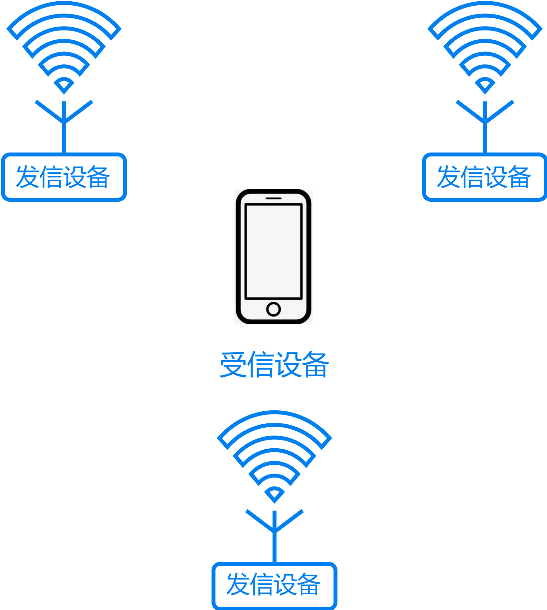
Figure1RSSI Positioning DiagramThe above positioning method estimates distance based on signal strength, with an accuracy generally ranging from 1 to 10 meters, which does not meet market requirements. To address this issue, Bluetooth 5.1 introduced AOA and AOD directional algorithms to achieve centimeter-level positioning.
AOA refers to Angle of Arrival positioning, where the transmitter has a single antenna and the receiver has multiple antennas. After the continuous wave signal from the transmitter reaches the receiver, due to the distance differences between each antenna of the receiver and the transmitter, the arrival times differ, causing phase differences in the electromagnetic waves. At this time, each antenna receives different phase information, and using the phase differences between antennas, the angle of arrival can be calculated.
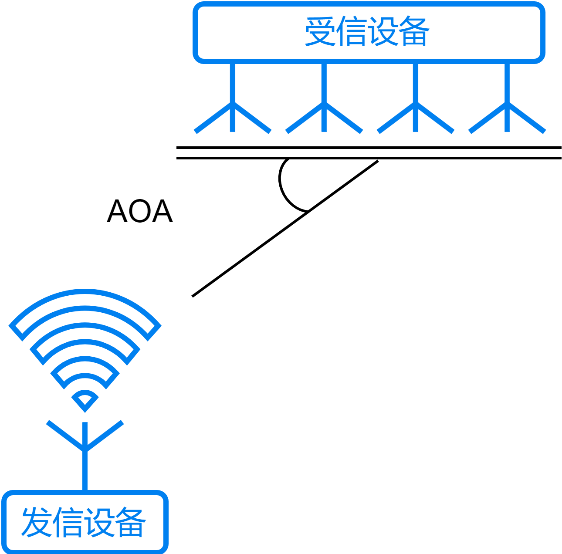
Figure2 AOA Directional ModelAOD refers to Angle of Departure positioning, where the transmitter has multiple antennas. The same continuous wave signal is sent at different times. Due to the different distances between each transmitting antenna and the receiving antenna, phase differences are formed when the signal reaches the receiver, and the angle of departure can be calculated using these phase differences.
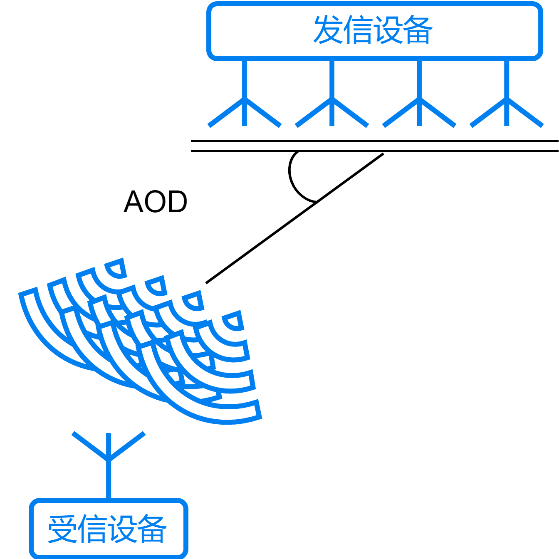
Figure3 AOD Directional Model
Industry ApplicationsThe iBeacon positioning technology that integrates AOA and AOD allows for higher accuracy in Bluetooth positioning, meeting market demands more effectively.1. Tracking Management
Used for tracking valuable assets and personnel, such as real-time positioning of valuable medical equipment and patients in hospitals, achieving safer and more convenient management through a backend server.

Figure4
2. Indoor Navigation
Used for navigation in large buildings or indoor venues such as shopping malls and parking lots, where people can obtain precise positioning calculated by the Bluetooth positioning system through an app or mini-program, and receive optimal navigation guidance to quickly reach their destination.

Figure5
3. Indoor Navigation
Used for constructing electronic fences, for example, deploying Bluetooth beacons in designated parking areas for shared bicycles. It detects shared bicycles that meet specific requirements (particular names and UUIDs) within the area, allowing managers to monitor the dynamics of related vehicles in real-time and respond promptly to reduce the phenomenon of shared bicycles being parked improperly.

Figure6
ConclusionIt can be seen that the positioning function of the BLE Bluetooth module can be applied in various scenarios and industries, especially after the introduction of AOA and AOD directional technology in Bluetooth 5.1, the accuracy of Bluetooth positioning is increasing, and its applications are becoming more widespread. It can solve the shortcomings of GPS indoor positioning, promote industry development, and improve user experience. Technical Exchange GroupLong press to recognize the QR code below to join the “Wireless Communication Technology Exchange Group” to communicate with like-minded friends, and have professional technicians answer your questions. If you have any questions, you can contactLittle Zhi WeChat:zlgmcu-888.
For more past articles, please click ” Read the Original “.