Click the blue text above to follow us

📋📋📋 The contents of this article are as follows: 🎁🎁🎁
Contents
💥1 Overview
📚2 Results
🎉3 References
🌈4 MATLAB Code Implementation



1 Overview
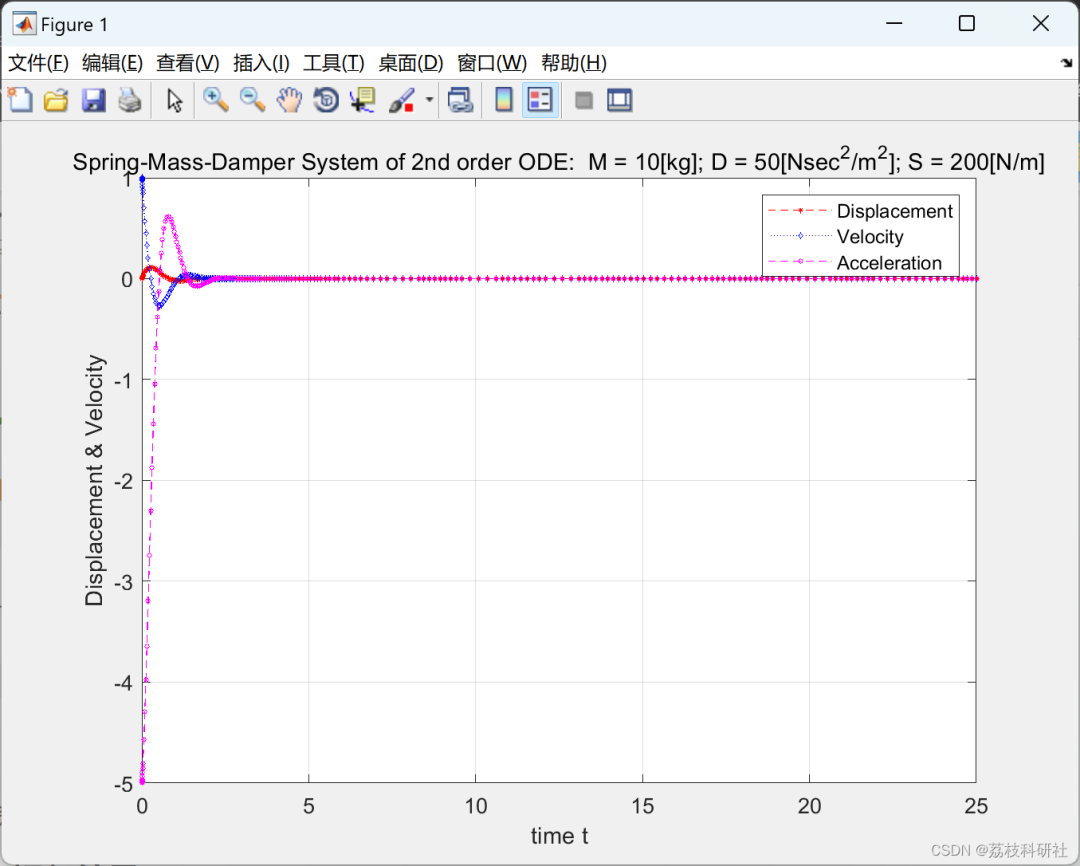
Analysis of the behavior of a spring-mass-damper system with given mass, damping, and stiffness values. The spring-mass-damper system is a common mechanical vibration system used in engineering and physics to analyze and describe the vibration behavior of objects. This system consists of a mass, a spring, and a damper. When the system is subjected to external forces, the mass is displaced due to the applied force. The spring connects the mass to a support, pulling the mass back to its equilibrium position through elastic force. The damper slows down the mass’s vibration through damping force. The behavior of the system can be described using Newton’s second law. According to Newton’s second law, the acceleration of the system is proportional to the net force acting on the mass. For the spring-mass-damper system, the net force can be decomposed into three forces: the weight of the mass, the elastic force of the spring, and the damping force of the damper. When the system is at equilibrium, the net force acting on the mass is zero, meaning the weight of the mass equals the elastic force of the spring. When the system is displaced, the spring generates an elastic force proportional to the displacement, attempting to pull the mass back to the equilibrium position. Simultaneously, the damper generates a damping force proportional to the velocity, attempting to slow down the mass’s vibration. The behavior of the system depends on the stiffness of the spring and the damping coefficient of the damper. When the spring’s stiffness is high, the system’s vibration frequency is higher, and the amplitude is smaller. When the damping coefficient of the damper is high, the system’s vibration gradually diminishes and eventually stops. When the damping coefficient is low, the system may experience overdamped or underdamped vibrations. By analyzing the behavior of the spring-mass-damper system, one can predict the system’s vibration frequency, amplitude, and decay rate, thus evaluating and optimizing the system’s performance.

2 Results
3References
Some theories are sourced from the internet; please contact us for removal if there is any infringement.

[1] Zhou Yu, Li Jinghao. Research on the Low-Frequency Resonance Control Method of Variable Frequency Condensing Pump Based on Adaptive Spring Damper [J]. Science and Technology Wind, 2023(07):58-61. DOI:10.19392/j.cnki.1671-7341.202307019.

4 MATLAB Code Implementation
[Identification of LTI Systems with Nonlinear Feedback] A nonlinear identification scheme for LTI systems with feedback nonlinearity (Simulink & MATLAB code implementation)
2023-08-31
MATLAB|[Image Denoising] Research on Image Denoising Based on Evolutionary Algorithm – Self-Organizing Migration Algorithm (SOMA)
2023-08-31
MATLAB|[EI Reproduction] Optimization Scheduling of Virtual Power Plant with P2G-CCS Coupling and Hydrogen Blending Based on Stair-Step Carbon Trading
2023-08-27
MATLAB|[Island Identification] Method for Partitioning and Island Identification of Intelligent Distribution Networks Based on Reachability Matrix
2023-08-25
MATLAB|[EI Reproduction] Configuration Scheme and Economic Analysis of Energy Storage Systems Participating in Peak Shaving
2023-08-25
MATLAB|Research on Reconstruction and Island Partitioning Unified Model for Fault Recovery in Active Distribution Networks [Upgrade]
2023-08-25
MATLAB|Research on Reliability Assessment of Distribution Networks with Distributed Generation
2023-08-25
MATLAB|Wireless Sensor Network Simulation
2023-08-21
MATLAB|[Distributed Energy Siting and Sizing] Research on the Dual-Layer Optimization Configuration of Photovoltaic and Energy Storage Connected to Distribution Networks
2023-08-21
Python|Energy-Efficient Trajectory Planning for Multirotor Logistics Drones
2023-08-20
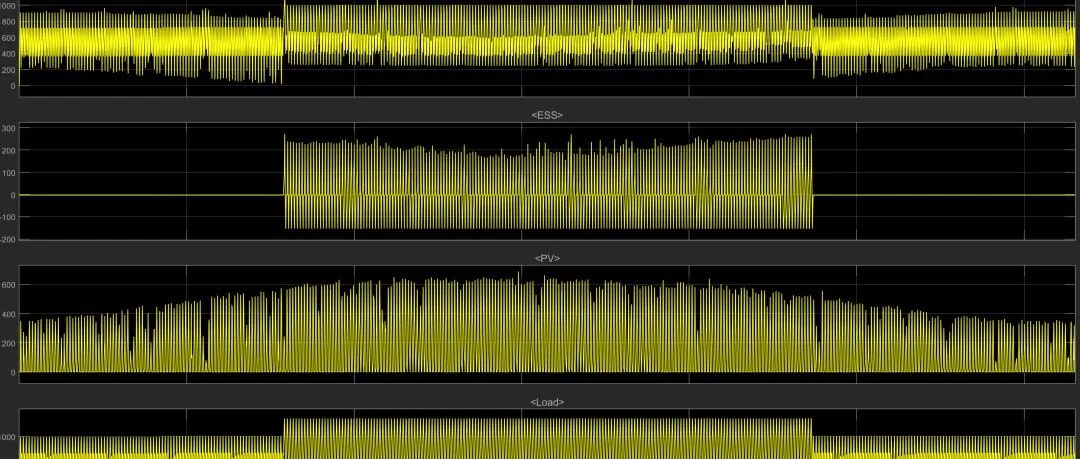
Simulink|Simulation Study of Energy Storage Systems Used in Power Grids
2023-08-20
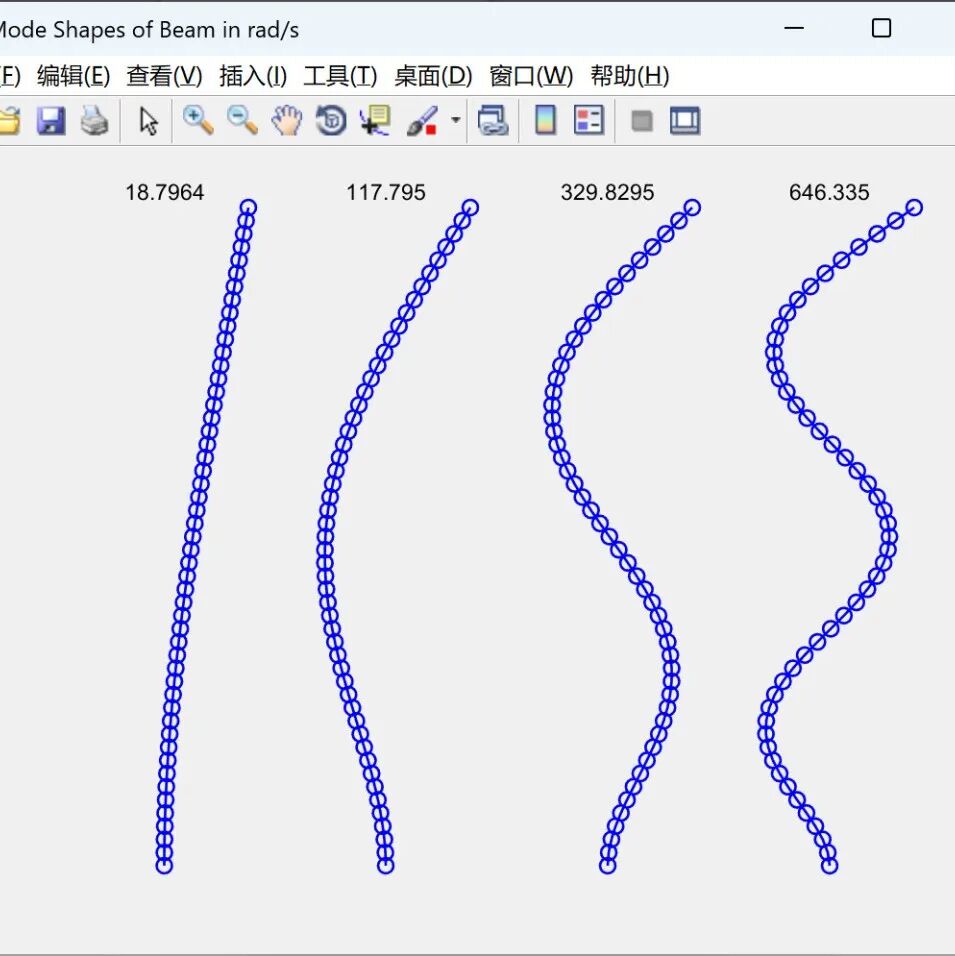
MATLAB|[Calculating Natural Frequencies and Euler Buckling Loads Using Finite Element Method] Natural Frequencies and Buckling Loads of Columns Using Finite Element Method
2023-08-20
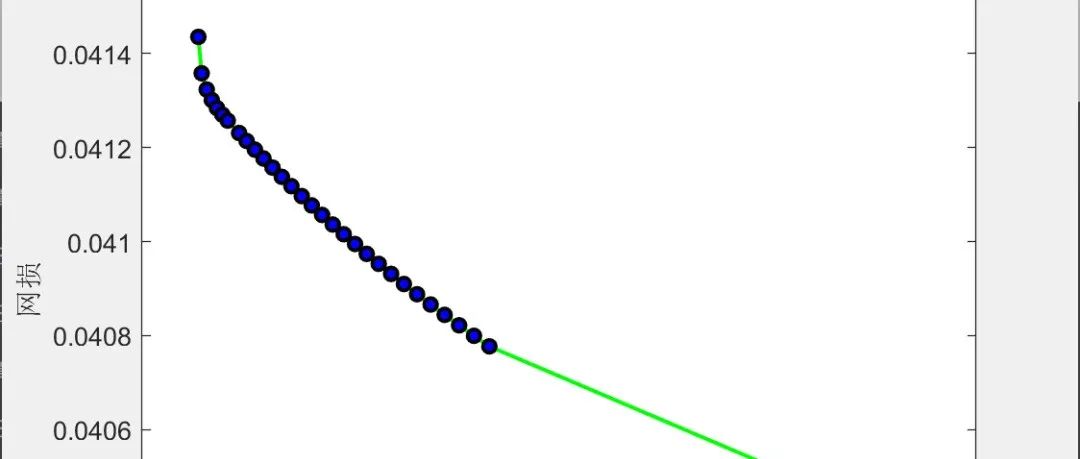
MATLAB|Research on Reactive Power Optimization of Power Systems Based on Particle Swarm Algorithm (IEEE 14 Nodes)
2023-08-19
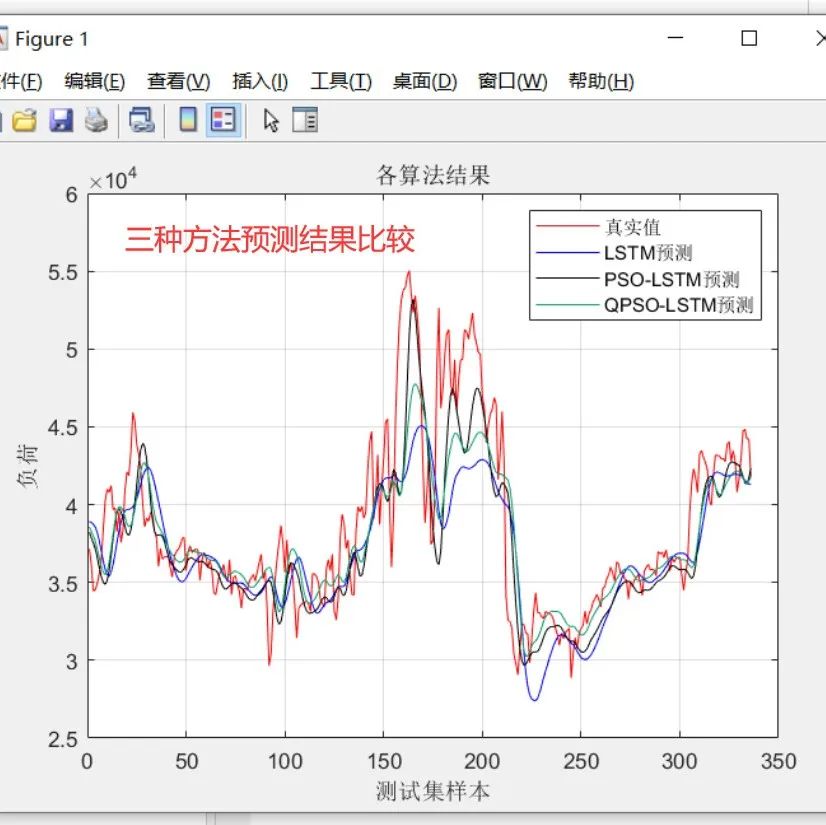
MATLAB|[Wind Power and Load Forecasting] Time Series Forecasting Algorithms for Wind Power and Load Based on Quantum Particle Swarm Optimization (QPSO) Optimizing LSTM
2023-08-19
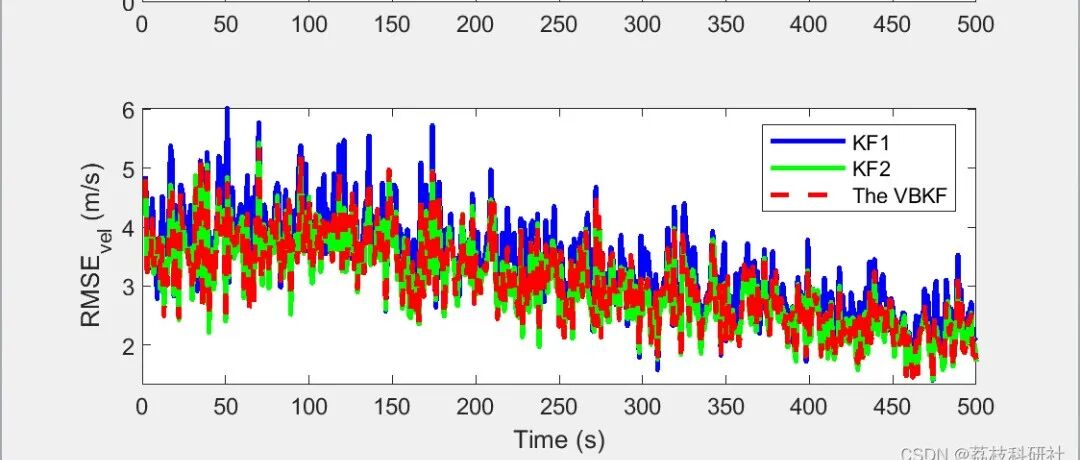
MATLAB|[State Estimation] Recursive Noise Adaptive Kalman Filtering with Variational Bayesian Approximation
2023-08-17
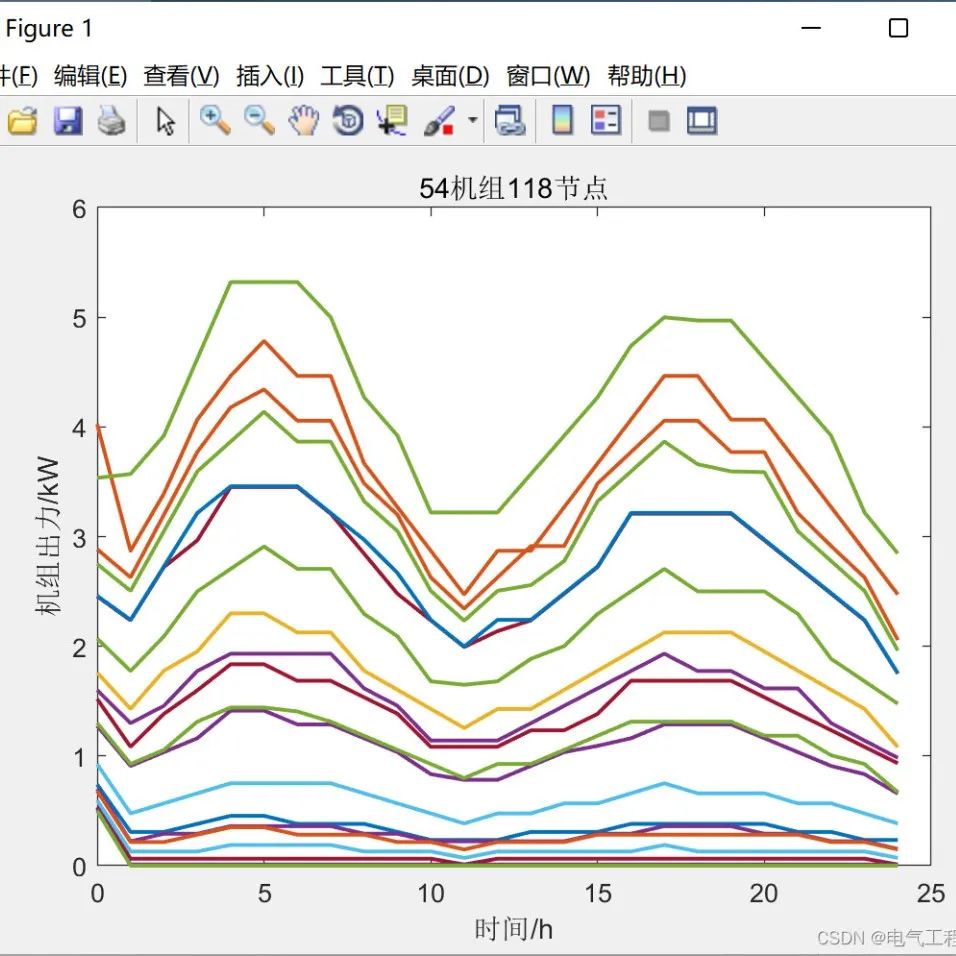
MATLAB|Unit Commitment Optimization Scheduling for Power Systems (IEEE 14 Nodes, IEEE 30 Nodes, IEEE 118 Nodes)
2023-08-17
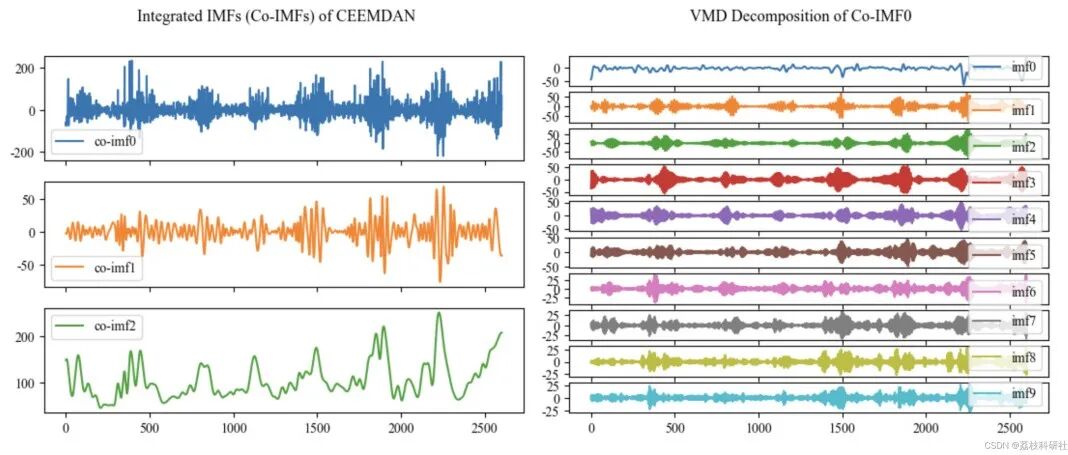
Python|[CEEMDAN-VMD-GRU] Research on Complete Ensemble Empirical Mode Decomposition – Variational Mode Decomposition – Gated Recurrent Unit Prediction
2023-08-16
MATLAB|[EI Reproduction] Research on Electricity Users’ Choice of Electricity Retailers in the Electricity Market Environment
2023-08-18
Method for Short-Term Power Forecasting of Wind Farms Based on Gaussian Mixture Model Clustering (Python & MATLAB Code Implementation)
2023-08-15
MATLAB|Research on CNN-LSTM (GTO-CNN-LSTM) Multivariate Time Series Forecasting Based on Artificial Gorilla Troops Optimization
2023-08-14
Autonomous Navigation of Mobile Robots and UGVs (MATLAB Code & Simulink)
2023-08-14
MATLAB|[EI Reproduction] Joint Demand Response Model Considering Collaborative Optimization of Regional Multi-Energy System Clusters
2023-08-13
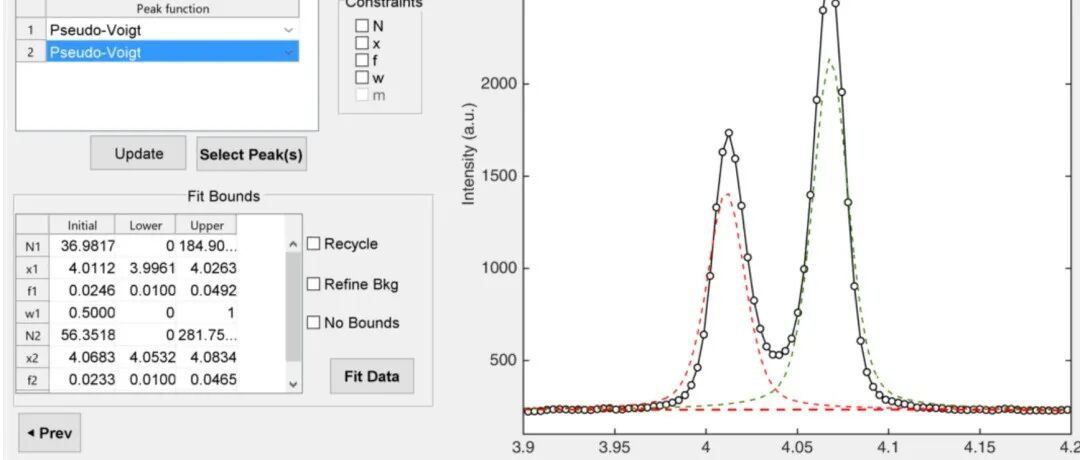
MATLAB|[Line Profile Analysis GUI] Peak Fitting GUI for Diffraction Data
2023-08-12
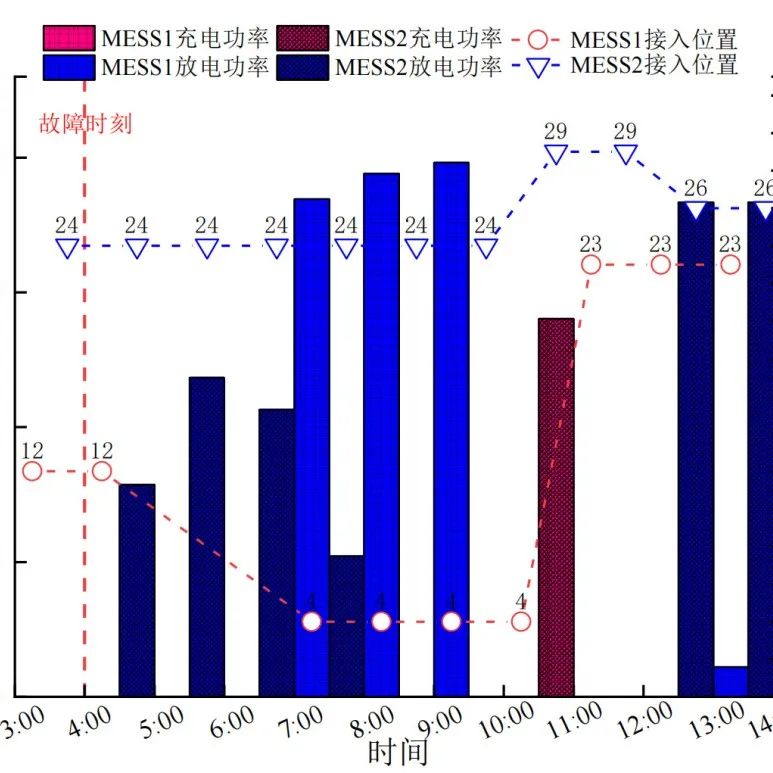
MATLAB|[EI Perfect Reproduction] Pre-Layout and Dynamic Scheduling Strategy of Mobile Energy Storage for Enhancing Resilience of Distribution Networks [IEEE 33 Nodes]
2023-08-12
Simulink|Simulation Study of PID Control System for DC Motors
2023-08-11