According to reports from Electronic Enthusiast Network (Written by Wu Zipeng), motors play a core role in modern industry, serving as a key device for converting electrical energy into mechanical energy. They are widely used in various machinery, household appliances, transportation, and industrial automation. The precision and flexibility of motors directly influence the intelligence and performance of equipment, and efficient motors are also an important part of a low-carbon society. Multiple information sources indicate that approximately half of the global electricity is consumed by motor drivers, with industrial applications accounting for one-third of global power generation.In motor solutions, the motor driver circuit is responsible for providing power, control signals, and other necessary signals to the motor, converting electrical energy from the power supply into mechanical energy to drive the motor’s normal operation. Generally, the motor driver circuit includes PMIC, controllers, power devices, gate drivers, and protection circuits. To promote better development of motor technology, what development trends will motor driver ICs have in 2025?
High Efficiency Trend of Motor Driver ICs
With the demand for low carbon, high efficiency is one of the core development goals for motor driver ICs, aiming to achieve high performance and low power consumption in motor systems, thereby achieving high power density for the entire motor system. However, improving efficiency is not easy. From the performance of manufacturers’ products, two to three years ago, the efficiency indicators for motor drivers already exceeded 99%. For example, Power Integrations’ BridgeSwitch series has achieved an efficiency of 99.2%. Thus, when the BridgeSwitch-2 series was released last year, its efficiency was marked as above 99%.The BridgeSwitch-2 series has achieved further improvements in power by integrating a half-bridge (IHB), expanding the available output to 1 horsepower (746W), improving inverter efficiency to 99%, and reducing power consumption in sleep mode to below 10mW.Given that efficiency is already so high, what paths do manufacturers have to further enhance motor drive efficiency? There are actually many means, such as upgrading the core of the product controller from a general-purpose MCU core to a high real-time core. In this regard, cores like Cortex-M4, Cortex-M7, and Cortex-M52 optimize vector computation performance for higher real-time capability, which can help improve efficiency. Improvements can also be made in the driver circuit by using higher real-time detection circuits or by solidifying some software-implemented functions into the chip to enhance the efficiency of the control loop. Integration remains an effective approach; by integrating the controller, pre-driver, and power devices together, integrated solutions will inherently have higher efficiency compared to discrete solutions. Duty cycle and power efficiency are closely related and can also affect motor efficiency. A high duty cycle helps maintain stable output voltage and current, reducing adjustment frequency and energy loss. By integrating charge pump power supplies, a maximum duty cycle of 100% can be achieved. Furthermore, replacing traditional Si devices with third-generation semiconductor devices can also help improve efficiency.Regarding duty cycle, the MPQ6547-AEC1 three-phase brushless DC (BLDC) motor driver pre-released by MPS supports 100% duty cycle operation through its internal charge pump. In terms of power device selection, Texas Instruments’ GaN IPM is a representative technology in motor driving, with these power stage modules achieving >99% efficiency without requiring cooling components like heat sinks, thus helping to improve the efficiency and power density of motor driver circuits.
High Integration Development Trend of Motor Driver ICs
Just as high efficiency has been achieved, high integration will remain an unchanged development trend for motor driver ICs in 2025. Previously, STMicroelectronics launched the STSPIN32G0 series of motor drivers, which is a representative of high-integration motor driver ICs.The STSPIN32 motor driver from STMicroelectronics integrates an STM32 general-purpose microcontroller (MCU) and a feature-rich three-phase gate driver, including gate drivers rated for 45V, 250V, and 600V for driving motors of different power levels. The new product also integrates other functions, including a 12-bit ADC, internal reference voltage, advanced motor control timers, and digital interfaces like I2C, USART, and SPI. Up to 32 general-purpose I/O pins (GPIO), 64KB flash memory, and 8KB SRAM allow developers to flexibly run complex applications and innovative value-added functions.High-integration products, along with rich supporting resources, enable engineers to quickly build their own electrolytic solutions based on these devices, with smaller PCB area and simpler peripheral device combinations, achieving higher power density. In addition to integrating the controller, pre-driver, power devices, protection circuits, and interface resources, the high integration development of motor driver ICs also shows some obvious trends, such as integrating bus modules according to demand, integrating sensors, and integrating sensorless control algorithms.In the aspect of integrating bus modules according to demand, the NSUC1602 and NSUC1610 series from Naxin Microelectronics are very representative, as these ICs integrate LIN PHY, with the NSUC1610 supporting a 4-wire LIN bus, meeting the ±40V over-voltage resistance requirements. Additionally, the NSUC1610 can support high-voltage (12V) GPIO, facilitating customers to use high-voltage PWM IO directly for motor control.In motor drive systems, various sensors are applied, including position sensors, torque sensors, current sensors, etc. These sensors are also targets for integration, especially as the demand for high-end motors becomes increasingly widespread. For example, position sensors can help facilitate high-speed and flexible motor commutation.
Intelligent Development Trend of Motor Driver ICs
In addition to high efficiency and high integration, intelligence will be more prominent in new motor driver ICs in 2025. Previously, we mentioned that the upgrade of intelligence mainly manifests in two aspects: firstly, motor control algorithms are becoming increasingly intelligent, making motor systems smarter and more efficient; secondly, the elements integrated into motor systems are becoming more diverse, especially the integration of motors with sensors and machine learning technologies, forming a closed loop of control and feedback, making the control process more flexible.In motor control algorithms, there is a type of algorithm known as neural network control algorithms. Neural network control is a motor control algorithm based on artificial neural networks. It predicts the motor’s output by training a neural network model and adjusts the weights and thresholds of the neural network to control the motor.How can these intelligent algorithms be better supported? Motor driver ICs need to achieve higher performance and have dedicated AI algorithm computation units. We have frequently introduced Renesas Electronics’ RA8T1, which is based on a high-performance Arm Cortex-M85 core, equipped with Helium and TrustZone, where the Helium vector processing technology provides higher computational capability for terminal applications planning to introduce intelligence and computational processing capabilities.Of course, there will also be motor driver and control ICs that choose NPU, such as Texas Instruments’ C2000 series, which has already integrated NPU. Previously, Texas Instruments’ China Technical Support Director Shi Ying stated that NPU can be applied in arc detection in solar and power supply systems and predictive maintenance of motor drives. Currently, these two applications are the main battlefields for C2000.In 2025, there will be more motor applications hoping to incorporate features such as predictive maintenance and intelligent control. These intelligent algorithms will lead to a broad demand for intelligent motor driver ICs, and how manufacturers choose their intelligent route will be a major highlight in 2025.
Conclusion
According to statistics from Research And Markets, the global motor driver chip market size was $3.88 billion in 2021, and it is expected to grow to $5.59 billion by 2028, with a compound annual growth rate (CAGR) of 5.3%. In the steadily growing motor drive market, high efficiency and high integration will be ongoing development trends, along with other trends such as miniaturization, cost-effectiveness, high power density, and ease of use. Additionally, intelligence will be an important upgrade direction for motor drives.

Disclaimer: This article is originally from Electronic Enthusiast. Please cite the source above when reprinting. For group communication, please add WeChat elecfans999, for submission of interview requests, please send an email to [email protected].
More Hot Articles to Read
-
In the “chaotic world” of the automotive industry: over 20 brands announced layoffs/salary cuts in a year, and the supply chain faces cost-cutting struggles.
-
Beyond humanoids, the diverse future of AI robots.
-
Cambricon’s 300 billion market value and the concentrated IPO of GPU manufacturers, AI chips are at a crucial time.
-
Foundry 2.0 advantages are emerging! TSMC’s 2024 revenue is expected to hit a record high, optimistic about AI and HPC growth in 2025.
-
L3-level autonomous driving is about to be fully commercialized, and car companies are gearing up.
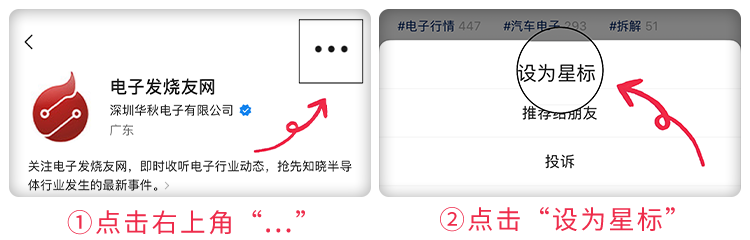
Click to Follow and Star Us
Set us as a star to not miss any updates!