Commonly occurs in childhood. Patients observing an object for a long time may suddenly experience a change in perception, similar to Alice in Wonderland, where surrounding objects appear to suddenly grow larger or smaller. The Alice in Wonderland syndrome and micropsia occur under conditions where the patient’s sense of time, space, and bodily influence are distorted, leading to depersonalization, body image disorder, altered perception of the passage of time, and other delusions or hallucinations. This condition is also known as “Lilliputian vision” or “Lilliputian hallucinations.” It is associated with schizophrenia, epilepsy, migraines, parietal lobe disorders, hypnotic states, or the use of hallucinogenic drugs.Alice in Wonderland syndrome (AIWS), also known as Todd’s syndrome or visual distortion, is a neuropsychological disorder that leads to perceptual distortions. Individuals may experience visual distortions of objects, such as appearing smaller (micropsia) or larger (macropsia), or appearing to be closer (hyperopia) or farther away (myopia) than they actually are. Distortions can also occur in non-visual sensations.The exact cause of Alice in Wonderland syndrome remains unclear, but it is often associated with migraines caused by Epstein-Barr virus infections, head trauma, or viral encephalitis. Theoretically, it may be caused by abnormal amounts of electrical activity leading to abnormal blood flow in the parts of the brain that process visual perception and texture.Although there are cases of Alice in Wonderland syndrome in adolescents and adults, it is most commonly found in children.
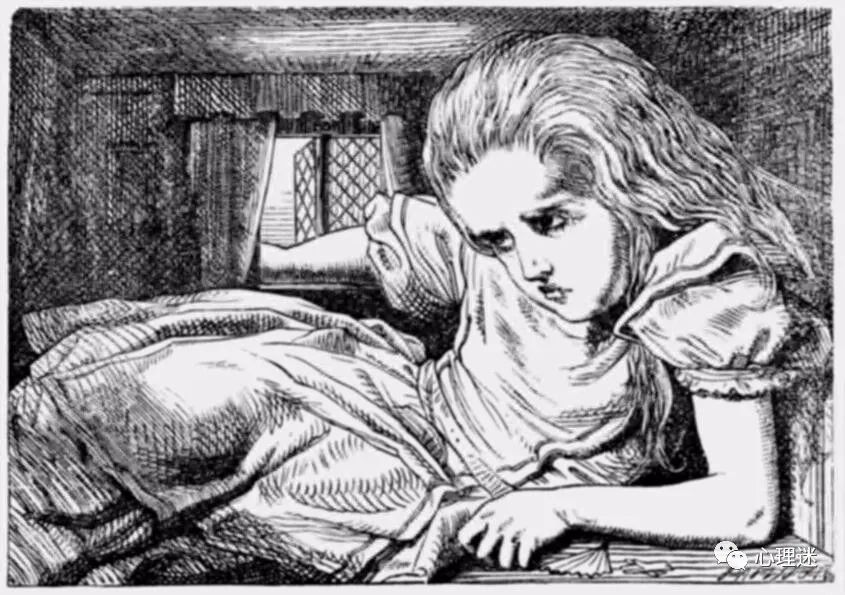
A person may experience perceptual distortions due to micropsia, a potential visual impairment symptom. From Lewis Carroll’s 1865 novel, Alice in Wonderland.ClassificationAlthough there is no consensus in the literature, some authors classify symptoms involving changes in personal body image perception as true Alice in Wonderland syndrome, while using the term “Alice in Wonderland-like syndrome” to categorize any symptoms involving perceptual changes in vision, time, hearing, touch, or other non-personal perceptions.Signs and SymptomsAlice in Wonderland syndrome has over 60 associated symptoms that can affect visual, sensory, tactile, and auditory perception, as well as the perception of one’s own body image. Common symptoms of Alice in Wonderland syndrome include migraines, nausea, dizziness, and agitation. Less common symptoms may include loss of limb control and coordination, memory loss, persistent tactile and auditory sensations, and emotional instability. Alice in Wonderland syndrome is typically associated with distortions of sensory perception, including visual, somatic, and non-visual symptoms. A characteristic feature of Alice in Wonderland syndrome is that individuals can recognize the distortions in their body perception, and these episodes are inherently episodic. The duration of episodes varies from person to person, typically lasting from a few minutes to an hour, with each experience potentially differing.Visual DistortionIndividuals with Alice in Wonderland syndrome may experience illusions of their body image expanding, shrinking, or distorting, such as micropsia (feeling that one’s body or body parts are shrinking) or macropsia (feeling that one’s body or body parts are growing larger). These perceptual changes are collectively referred to as metamorphopsia or Lilliputian hallucinations, which refer to objects appearing smaller or larger than reality. Individuals with certain neurological conditions have also experienced similar visual hallucinations.Within the category of Lilliputian hallucinations, individuals may experience micropsia or macropsia. Micropsia is an abnormal visual condition, often occurring in the context of visual hallucinations, where the affected individual perceives objects as smaller than they are in reality. Macropsia is the condition where everything an individual sees appears larger than it actually is. These visual distortions are sometimes classified as “Alice in Wonderland syndrome” rather than true Alice in Wonderland syndrome, but healthcare professionals and researchers often still classify them as Alice in Wonderland syndrome because this distinction is not official.According to Lanska and Lanska (2013), “Approximately 85% of patients experience perceptual distortions in a single sensory modality, such as only visual or only essentially somatic. Additionally, most patients only experience one type of distortion, such as only micropsia or only macropsia.”HallucinationsZoopsia is an additional hallucination sometimes associated with Alice in Wonderland syndrome. Zoopsias involve hallucinations of swarms of small animals (such as ants and mice) or isolated large groups of animals (such as dogs and elephants). This animal hallucination experience is a common symptom of various diseases, such as tremor delirium.Additionally, some individuals may experience more intense and vivid hallucinations with high fever, seeing things that do not exist, and misinterpreting events and situations.Depersonalization/Reality DistortionIn addition to these size, quality, and shape distortions of the body, individuals with Alice in Wonderland syndrome often experience feelings of disconnection from their body, sensations, thoughts, and environment.Auditory and Temporal DistortionIndividuals experiencing Alice in Wonderland syndrome may also frequently exhibit paranoia due to auditory perception disturbances. These disturbances may include amplifying soft sounds or misinterpreting ordinary sounds. Other auditory changes include pitch and tone distortion, as well as hearing indistinguishable and strange sounds, noises, or music.Individuals affected by Alice in Wonderland syndrome may also lose their sense of time, a problem similar to the spatial perspective loss caused by visual distortions. Time may seem to pass very slowly, akin to an LSD experience, where the lack of perspective in time and space can lead to a distorted sense of speed. For example, an object’s movement speed in reality may be very slow, but for someone experiencing temporal distortion, it may seem to be uncontrollably rushing along an automatic sidewalk, leading to severe and overwhelming disorientation. Symptoms of temporal distortion are associated with various potential diseases, such as substance use, migraines, epilepsy, head trauma, and encephalitis. Regardless of an individual’s disease diagnosis, temporal distortion is often listed as a symptom associated with Alice in Wonderland syndrome because it is classified as perceptual distortion. Therefore, a person can be described as having Alice in Wonderland syndrome even if that individual is experiencing temporal distortion due to an underlying disease.CausesDue to the infrequent diagnosis and documentation of Alice in Wonderland syndrome, it is challenging to estimate what the primary causes are (if any). The causes of more than half of Alice in Wonderland syndrome cases remain unclear. Both complete and partial forms of Alice in Wonderland syndrome exist within a range of other diseases, including epilepsy, intoxication, infectious states, fever, and brain injuries. Additionally, this syndrome is often associated with migraines and the use of psychotropic medications. It may also be an initial symptom of Epstein-Barr virus infection (see mononucleosis), and a relationship between this syndrome and mononucleosis has been proposed. In this suggested relationship, the Epstein-Barr virus appears to be the most common cause in children, while in adults, it is more commonly associated with migraines.Infectious DiseasesA 2021 review found that infectious diseases are the most common cause of Alice in Wonderland syndrome, particularly in pediatrics. Some of these pathogens include Epstein-Barr virus, varicella-zoster virus, influenza, Zika virus, coxsackie virus, malignant plasmodium protozoa, and Mycoplasma pneumoniae/pyogenic streptococcus bacteria. The association of Alice in Wonderland syndrome is most commonly found with Epstein-Barr virus. However, beyond these reviews, the pathogenesis has not been well understood. In some cases, Alice in Wonderland syndrome has been reported to be associated with influenza A infection, and there may be other unexamined causes.Brain HypothesisAlice in Wonderland syndrome may be caused by abnormal amounts of electrical activity leading to abnormal blood flow in the parts of the brain that process visual perception and texture. Nuclear medicine techniques using technetium performed on individuals during episodes of Alice in Wonderland syndrome indicate that it is associated with reduced brain perfusion in different cortical areas (frontal, parietal, temporal, and occipital) either collectively or individually. One hypothesis is that any condition leading to reduced perfusion in the brain’s visual pathways or visual control centers may lead to this syndrome. For example, a study using single-photon emission computed tomography demonstrated reduced brain perfusion in the temporal lobe of patients with Alice in Wonderland syndrome.Other theories suggest that the syndrome results from non-specific cortical dysfunction (such as encephalitis, epilepsy, or reduced cerebral blood flow) or reduced blood flow to other regions of the brain. Other theories propose that distorted body image perception originates in the parietal lobe. This has been demonstrated by body image disturbances produced by electrical stimulation of the posterior parietal cortex. Other researchers believe that distortions or visual distortions may result from reduced perfusion in the non-dominant posterior parietal lobe during migraine attacks.Among all neuroimaging studies, several cortical areas (including the temporo-parietal-occipital junction and visual pathways, especially the occipital lobe) are associated with the development of symptoms of Alice in Wonderland syndrome.Role of MigrainesThe role of migraines in Alice in Wonderland syndrome remains unclear, but both vascular and electrical theories have been proposed. For example, visual distortions may result from transient local ischemia in the visual pathway areas during migraine attacks. Additionally, the spread of depolarization waves in cortical cells (especially glial cells) during migraine attacks can ultimately activate the trigeminal nerve’s modulation of the vascular system. Severe cranial pain during migraines is due to the connection between the trigeminal nerve and the thalamus and the thalamus’s projection to the sensory cortex. Symptoms of Alice in Wonderland syndrome can precede, accompany, or replace typical migraine symptoms. Typical migraine symptoms (aura, visual disturbances, headache, nausea, and vomiting) are both a cause of Alice in Wonderland syndrome and related symptoms. Alice in Wonderland syndrome is associated with macropsia, which is primarily experienced during migraine auras.Genetic and Environmental InfluencesWhile there are currently no identified genetic loci/genes associated with Alice in Wonderland syndrome, observations suggest that there may be a genetic component; however, the evidence so far is inconclusive. Migraines have a definite genetic component, which may be considered a potential cause and influence of hereditary Alice in Wonderland syndrome. Although most common in children and adolescents, observational studies have found that many parents of children with Alice in Wonderland syndrome also experienced similar symptoms, often unrecognized. A family history may be a potential risk factor for Alice in Wonderland syndrome.Environmental influences on the incidence of Alice in Wonderland syndrome include the use of the medication topiramate and toxicity. Other reports regarding the use of tyramine and its association with Alice in Wonderland syndrome have also been noted, but current evidence is inconclusive. Further research is needed to determine the genetic and environmental influences on Alice in Wonderland syndrome.The neuronal effects of cortical spreading depression (CSD) on TPO-C may prove the connection between migraines and Alice in Wonderland syndrome. Given that children experience Alice in Wonderland syndrome more than adults, it is hypothesized that structural differences in the brains of children and adults may play a role in the development of this syndrome.DiagnosisAlice in Wonderland syndrome does not fall under any major classifications, such as ICD-10 and DSM-5. Due to the lack of established diagnostic criteria for Alice in Wonderland syndrome and because it is a perceptual disorder rather than a specific physiological condition, there may be significant variability in the diagnostic process, leading to potential misdiagnosis. Typically, a diagnosis can be inferred when other causes are excluded. Additionally, if a patient exhibits migraine symptoms and complains of episodes during the day (although they may also occur at night), it can be inferred as Alice in Wonderland syndrome. Ideally, a clear diagnosis requires a thorough physical examination, appropriate history collection of episodes and events, and specific understanding of the signs and symptoms of Alice in Wonderland syndrome for differential diagnosis. Individuals experiencing Alice in Wonderland syndrome may be reluctant to describe their symptoms for fear of being labeled with a mental illness, which may complicate the diagnosis of Alice in Wonderland syndrome. Additionally, young individuals may find it difficult to describe their unusual symptoms, so a recommended approach is to encourage children to draw their visual illusions during episodes. Suspected cases should undergo examinations and tests, such as blood tests, electrocardiograms, brain MRIs, and other antibody tests used for viral antibody detection. Differential diagnosis requires conceptualization at three levels. Symptoms need to be distinguished from other diseases involving hallucinations and illusions. It is generally easy to rule out psychosis because individuals with Alice in Wonderland syndrome typically recognize that their hallucinations and distorted perceptions are not “real.” Once these symptoms are distinguished and identified, the most likely cause needs to be determined. Finally, the diagnosed condition needs to be assessed to see if it relates to the symptoms presented by the individual. Given the variety of distortions and other distortions, Alice in Wonderland syndrome is often misdiagnosed or confused with other causes.Anatomical RelationshipsImportant brain regions for the development of Alice in Wonderland syndrome include the temporo-parieto-occipital junction (TPO-C), where the TPO-C region is the intersection of the temporal, occipital, and parietal lobes in the brain. The TPO-C region is also crucial because it is the location in the brain that interprets somatic and visual information to produce any internal or external representation. Therefore, modifications to these brain regions may simultaneously trigger both Alice in Wonderland syndrome and body schema disorders.Depending on which part of the brain is damaged, the symptoms of Alice in Wonderland syndrome may vary. For example, damage to the anterior part of the brain is more likely to be associated with more complex and widespread symptoms, while damage to the occipital region is primarily related to simple visual disturbances.PrognosisThe symptoms of Alice in Wonderland syndrome itself are not harmful and typically do not cause fear for those experiencing them. Due to the lack of established treatments for Alice in Wonderland syndrome, the prognosis varies by patient and depends on whether an underlying cause has been identified.In cases of Alice in Wonderland syndrome caused by underlying diseases, symptoms typically occur during the course of the underlying disease and can last from days to months. In most cases, the symptoms of Alice in Wonderland syndrome will spontaneously resolve after treating the underlying cause or after confirming that the symptoms are temporary and harmless. Some individuals may not experience symptoms again after the first occurrence, while others may have repeated episodes before the symptoms disappear. Others may continue to experience episodes years after the initial occurrence, sometimes with new visual disturbances or migraines.TreatmentAs of 2017, there is no standardized treatment protocol for Alice in Wonderland syndrome. Since the symptoms of Alice in Wonderland syndrome often resolve on their own or disappear with the treatment of underlying conditions, most clinical and non-clinical cases of Alice in Wonderland syndrome are considered benign. However, in cases of Alice in Wonderland syndrome caused by underlying chronic diseases, symptoms often reoccur during the active phase of the underlying cause (such as migraines or epilepsy). If it is determined that treating Alice in Wonderland syndrome is necessary and beneficial, the focus should be on treating the suspected underlying condition. Treatment for these underlying diseases primarily involves prescription medications, such as anticonvulsants, migraine prophylactic medications, antiviral drugs, or antibiotics. Antipsychotics are rarely used to treat symptoms of Alice in Wonderland syndrome due to their minimal effect.Migraine PreventionApproaches to migraine prevention include medication and low-tyramine diets. Medications available for migraine prevention include anticonvulsants, antidepressants, calcium channel blockers, and beta-blockers. Other explored migraine treatments include repetitive transcranial magnetic stimulation (rTMS). However, further research is needed to determine the effectiveness of this treatment protocol.EpidemiologyThe lack of established diagnostic criteria or large-scale epidemiological studies, along with low awareness of the syndrome, means that the exact prevalence of Alice in Wonderland syndrome is currently unclear. A study of 3,224 Japanese adolescents indicated that the incidence of macropsia and micropsia was 6.5% in boys and 7.3% in girls, suggesting that symptoms of Alice in Wonderland syndrome may not be particularly rare. This also seems to indicate that there is a gender difference in the prevalence of Alice in Wonderland syndrome. However, according to other studies, the male-to-female ratio appears to depend on the age range observed. Studies have shown that young males (ages 5 to 14) are 2.69 times more likely to have Alice in Wonderland syndrome than their female peers, while no significant differences were observed among students aged 13 to 15. Conversely, the prevalence among female students (ages 16 to 18) is significantly higher.Alice in Wonderland syndrome is more common in children and young people. The average age of onset for Alice in Wonderland syndrome is 6 years; however, it is typical for some individuals to experience this syndrome from childhood into their late 20s. Because many parents of children with Alice in Wonderland syndrome report that their children also have the condition, it is believed that this syndrome may be hereditary. Some parents have reported that they only realized they had experienced symptoms of Alice in Wonderland syndrome after their children were diagnosed, further indicating that many cases of Alice in Wonderland syndrome may go unrecognized and underreported.Research about this syndrome continues to expand and develop in various fields and regions. Future research efforts should encourage global collaborative efforts that may help increase understanding of Alice in Wonderland syndrome and its epidemiology.HistoryThis syndrome is sometimes referred to as Todd’s syndrome, referencing the influential description of the condition by Dr. John Todd (1914-1987), a British psychiatrist at the High Royds Hospital in Menston, West Yorkshire, in 1955. Dr. Todd found that several of his patients experienced severe headaches that led to a significantly distorted way of seeing and perceiving objects. Additionally, they altered their sense of time and touch, as well as distorted their perception of their own bodies. Despite having migraines, none of these patients had brain tumors, visual impairments, or mental illnesses, which could have caused these symptoms. They were all able to think clearly and distinguish between hallucinations and reality, but their perceptions were distorted.Dr. Todd speculated that the writer Lewis Carroll drew inspiration from his experiences with migraines for his famous 1865 novel, Alice in Wonderland. Carroll’s diaries show that in 1856, he consulted the renowned ophthalmologist William Bowman about the visual manifestations of migraines he frequently experienced. In Carroll’s diaries, he often wrote about “bilious headaches” accompanied by severe nausea and vomiting. In 1885, he wrote that he “experienced that strange visual sensation again while seeing moving fortifications, followed by a headache.” Carroll wrote two books about Alice, after whom the syndrome is named. In the story, Alice experiences several strange sensations that overlap with the characteristics of the syndrome, such as slowed perception of time. In the second chapter of Alice in Wonderland (1865), Alice’s body shrinks after drinking from a bottle labeled “DRINK ME,” and then she eats a cake that makes her grow so large that she nearly touches the ceiling. These story elements describe the characteristic macropsia and micropsia of this disease.These symptoms had previously been reported in scientific literature, including soldiers with occipital lesions from World War I and World War II, so Todd understood that he was not the first to discover this phenomenon. Additionally, as early as 1933, other researchers such as Coleman and Lippman compared these symptoms with the story of Alice in Wonderland. Caro Lippman was the first to hypothesize that the bodily changes encountered by Alice mimicked the migraine symptoms experienced by Lewis Carroll. Others believed that Carroll may have been familiar with these distorted perceptions through his knowledge of hallucinogenic mushrooms. It is believed that Carroll should have known the mycologist Mordecai Cubitt Cooke from his works, The Seven Sisters of Sleep and A Plain Account of the Common British Fungi.Society and CultureGulliver’s TravelsThe symptoms of Alice in Wonderland syndrome are also related to Jonathan Swift’s novel, Gulliver’s Travels. It is referred to as “Lilliputian hallucinations” and “Lilliputian vision,” a term created by British physician Raoul Leroy in 1909.Alice in WonderlandAlice in Wonderland syndrome is named after Lewis Carroll’s famous 19th-century novel, Alice in Wonderland. In the story, the titular character Alice experiences many situations similar to micropsia and macropsia. The novel provides a thorough description of distortions, which was the first of its kind to describe bodily distortions associated with this condition. It is speculated that Carroll may have written this story based on his direct experiences with numerous migraine-induced microdeformations.HouseThis condition was diagnosed in the Season 8 episode “Business as Usual.”DoctorsIn April 2020, an episode of the BBC daytime soap opera Doctors featured a case of Alice in Wonderland syndrome, where the patient Hazel Gilmore (played by Alex Jarrett) experienced this condition.References: Longmore M, Wilkinson I, Turmezei T, Cheung CK (2007). Oxford Handbook of Clinical Medicine. Oxford. p. 686. ISBN 978-0-19-856837-7. Lanska, Douglas J.; Lanska, John R. (2018), Bogousslavsky, J. (ed.), “The Alice-in-Wonderland Syndrome”, Frontiers of Neurology and Neuroscience, S. Karger AG, 42: 142–150, doi:10.1159/000475722, ISBN 978-3-318-06088-1, PMID 29151098, retrieved 2021-07-27 Goad, Kimberly. “Signs of a Migraine That Aren’t Headache”. WebMD. “Alice in Wonderland Syndrome | Symptoms & Treatment”. Share.upmc.com. 2016-10-25. Retrieved 2019-08-30. Cinbis M, Aysun S (1992). “Alice in Wonderland syndrome as an initial manifestation of Epstein-Barr virus infection”. Br J Ophthalmol. 76 (5): 314. doi:10.1136/bjo.76.5.316. PMC 504267. PMID 1390519. Feldman, Caroline (2008). “A Not So Pleasant Fairy Tale: Investigating Alice in Wonderland Syndrome”. Serendip. Serendip Studio, Bryn Mawr College. Archived from the original on November 9, 2008. Retrieved 25 November 2011. Podoll, K.; Ebel, H.; Robinson, D.; Nicola, U. (2002). “[Obligatory and facultative symptoms of the Alice in wonderland syndrome]”. Minerva Medica. 93 (4): 287–293. ISSN 0026-4806. PMID 12207198. Stapinski H (2014). “I Had Alice in Wonderland Syndrome”. The New York Times. Archived from the original on 6 September 2015. Perez-Garcia, Luis; Pacheco, Oriana; Delgado-Noguera, Lourdes; Motezuma, Jean Pilade M.; Sordillo, Emilia M.; Paniz Mondolfi, Alberto E (2021). “Infectious causes of Alice in Wonderland syndrome”. Journal of NeuroVirology. 27 (4): 550–556. doi:10.1007/s13365-021-00988-8. ISSN 1355-0284. PMID 34101086. S2CID 235369619. O’Toole P, Modestino EJ (2017). “Alice in Wonderland Syndrome: A real life version of Lewis Carroll’s novel”. Brain & Development. 39 (6): 470–474. doi:10.1016/j.braindev.2017.01.004. PMID 28189272. S2CID 3624078. Farooq O, Fine EJ (2017). “Alice in Wonderland Syndrome: A Historical and Medical Review”. Pediatric Neurology. 77: 5–11. doi:10.1016/j.pediatrneurol.2017.08.008. PMID 29074056. Blom, Jan Dirk (2016). “Alice in Wonderland syndrome”. Neurology: Clinical Practice. 6 (3): 259–270. doi:10.1212/CPJ.0000000000000251. ISSN 2163-0402. PMC 4909520. PMID 27347442. Weissenstein, Anne; Luchter, Elisabeth; Bittmann, M.A. Stefan (2014). “Alice in Wonderland syndrome: A rare neurological manifestation with microscopy in a 6-year-old child”. Journal of Pediatric Neurosciences. 9 (3): 303–304. doi:10.4103/1817-1745.147612. ISSN 1817-1745. PMC 4302569. PMID 25624952. Palacios-Sánchez, Leonardo; Botero-Meneses, Juan Sebastián; Mora-Muñoz, Laura; Guerrero-Naranjo, Alejandro; Moreno-Matson, María Carolina; Pachón, Natalia; Charry-Sánchez, Jesús David (2018). “Alice in Wonderland Syndrome (AIWS). A reflection”. Colombian Journal of Anesthesiology. 46 (2): 143–147. doi:10.1097/CJ9.0000000000000026. ISSN 2256-2087. S2CID 194848505. Craighead WE, Nemeroff CB, eds. (2004). “Hallucinations”. The Concise Corsini Encyclopedia of Psychology and Behavioral Science. Hoboken: Wiley. ISBN 978-0-471-22036-7. “Alice in Wonderland syndrome”. Mosby’s Dictionary of Medicine, Nursing & Health Professions. Philadelphia: Elsevier Health Sciences. 2009. ISBN 978-0-323-22205-1. “Micropsia”. Mosby’s Emergency Dictionary. Philadelphia: Elsevier Health Sciences. 1998. “Macropsia”. Collins English Dictionary. London: Collins. 2000. ISBN 978-0-00-752274-3. Archived from the original on 2018-01-07. Naarden, Tirza; ter Meulen, Bastiaan C.; van der Weele, Sarah I.; Blom, Jan Dirk (November 10, 2019). “Alice in Wonderland Syndrome as a Presenting Manifestation of Creutzfeldt-Jakob Disease”. Frontiers in Neurology. 10: 473. doi:10.3389/fneur.2019.00473. PMC 6521793. PMID 31143156. Ffytche DH (2007). “Visual hallucinatory syndromes: past, present, and future”. Dialogues in Clinical Neuroscience. 9 (2): 173–89. doi:10.31887/DCNS.2007.9.2/dffytche. PMC 3181850. PMID 17726916. Platz WE, Oberlaender FA, Seidel ML (1995). “The phenomenology of perceptual hallucinations in alcohol-induced delirium tremens”. Psychopathology. 28 (5): 247–55. doi:10.1159/000284935. PMID 8559948. “What Is Alice in Wonderland Syndrome?”. WebMD. Retrieved 2018-09-06. Hemsley R (2017). “Alice in Wonderland Syndrome”. aiws.info. Archived from the original on 2017-09-14. Retrieved 2017-09-13. “The Alice In Wonderland Syndrome (AIWS) – frontida”. SUPPORTS A HEALTHY LIFE. 2020. Archived from the original on 2020-09-22. Retrieved 2021-07-30. Blom, Jan Dirk; Nanuashvili, Nutsa; Waters, Flavie (2021). “Time Distortions: A Systematic Review of Cases Characteristic of Alice in Wonderland Syndrome”. Frontiers in Psychiatry. 12: 668633. doi:10.3389/fpsyt.2021.668633. ISSN 1664-0640. PMC 8138562. PMID 34025485. Liu, Alessandra M.; Liu, Jonathan G.; Liu, Geraldine W.; Liu, Grant T. (2014). “Alice in Wonderland Syndrome: Presenting and Follow-Up Characteristics”. Pediatric Neurology. 51 (3): 317–320. doi:10.1016/j.pediatrneurol.2014.04.007. ISSN 0887-8994. PMID 25160537. Brooks, Joseph Bruno Bidin; Prosdocimi, Fabio César; Rosa, Pedro Banho da; Fragoso, Yara Dadalti (2019). “Alice in Wonderland syndrome: “Who in the world am I?””. Arquivos de Neuro-Psiquiatria. 77 (9): 672–674. doi:10.1590/0004-282×20190094. ISSN 1678-4227. PMID 31553398. S2CID 202760880. Eshel, Lahat (1991). “Alice in Wonderland syndrome: a manifestation of infectious mononucleosis in children”. Behavioural Neurology. 4 (3): 163–166. doi:10.3233/BEN-1991-4304. PMID 24487499. “Alice in Wonderland syndrome”. Taber’s Cyclopedic Medical Dictionary. Philadelphia: F. A. Davis Company. 2009. ISBN 978-0-8036-2325-5. Mastria G, Mancini V, Viganò A, Di Piero V (2016). “Alice in Wonderland Syndrome: A Clinical and Pathophysiological Review”. BioMed Research International. 2016: 8243145. doi:10.1155/2016/8243145. PMC 5223006. PMID 28116304. Paniz-Mondolfi, Alberto E.; Giraldo, José; Rodríguez-Morales, Alfonso J.; Pacheco, Oriana; Lombó-Lucero, Germán Y.; Plaza, Juan D.; Adami-Teppa, Fabio J.; Carrillo, Alejandra; Hernandez-Pereira, Carlos E.; Blohm, Gabriela M. (2018). “Alice in Wonderland syndrome: a novel neurological presentation of Zika virus infection”. Journal of NeuroVirology. 24 (5): 660–663. doi:10.1007/s13365-018-0645-1. ISSN 1355-0284. PMID 30105501. S2CID 51971475. Kuo, Shin-Chang; Yeh, Yi-Wei; Chen, Chun-Yen; Weng, Ju-Ping; Tzeng, Nian-Sheng (2012). “Possible Association Between Alice In Wonderland Syndrome And Influenza A Infection”. The Journal of Neuropsychiatry and Clinical Neurosciences. 24 (3): E7–E8. doi:10.1176/appi.neuropsych.11080177. ISSN 0895-0172. PMID 23037657. Kubota, Kazuo; Shikano, Hiroaki; Fujii, Hidehiko; Nakashima, Yoshiki; Ohnishi, Hidenori (2020). “Alice in Wonderland syndrome associated with influenza virus infection”. Pediatrics International. 62 (12): 1391–1393. doi:10.1111/ped.14341. ISSN 1328-8067. PMID 33145932. S2CID 226250633. Kuo YT, Chiu NC, Shen EY, Ho CS, Wu MC (1998). “Cerebral perfusion in children with Alice in Wonderland syndrome”. Pediatric Neurology. 19 (2): 105–8. doi:10.1016/s0887-8994(98)00037-x. PMID 9744628. Dieguez, Sebastian; Lopez, Christophe (2017). “The bodily self: Insights from clinical and experimental research”. Annals of Physical and Rehabilitation Medicine. 60 (3): 198–207. doi:10.1016/j.rehab.2016.04.007. ISSN 1877-0657. PMID 27318928. S2CID 26966204. Jürgens, T. P.; Ihle, K.; Stork, J.-H.; May, A. (2011). “Alice in Wonderland syndrome” associated with topiramate for migraine prevention”. Journal of Neurology, Neurosurgery & Psychiatry. 82 (2): 228–229. doi:10.1136/jnnp.2009.187245. ISSN 0022-3050. PMID 20571045. S2CID 29359144. Valença, Marcelo Hugo; de Oliveira, Daniella; André, de L. Martins (2015). “Alice in Wonderland Syndrome, Burning Mouth Syndrome, Cold Stimulus Headache, and HaNDL: Narrative Review”. The Journal of Head and Face Pain. 55 (9): 1233–1248. doi:10.1111/head.12688. PMID 26422755. S2CID 23693209. Whitfield, William (1993). “Book Reviews : The ICD-10 Classification of Mental and Behavioural Disorders: Clinical Descriptions and Diagnostic Guidelines by World Health Organization. Published by WHO, 1992, 362pp, paperback. ISBN: 92-4-154422-8”. Journal of the Royal Society of Health. 113 (2): 103. doi:10.1177/146642409311300216. ISSN 0264-0325. S2CID 221056866. “American Psychiatric Association Diagnostic and Statistical Manual of Mental Disorders (DSM-IV)”, SpringerReference, Berlin/Heidelberg: Springer-Verlag, 2011, doi:10.1007/springerreference_179660, retrieved 2021-08-03