
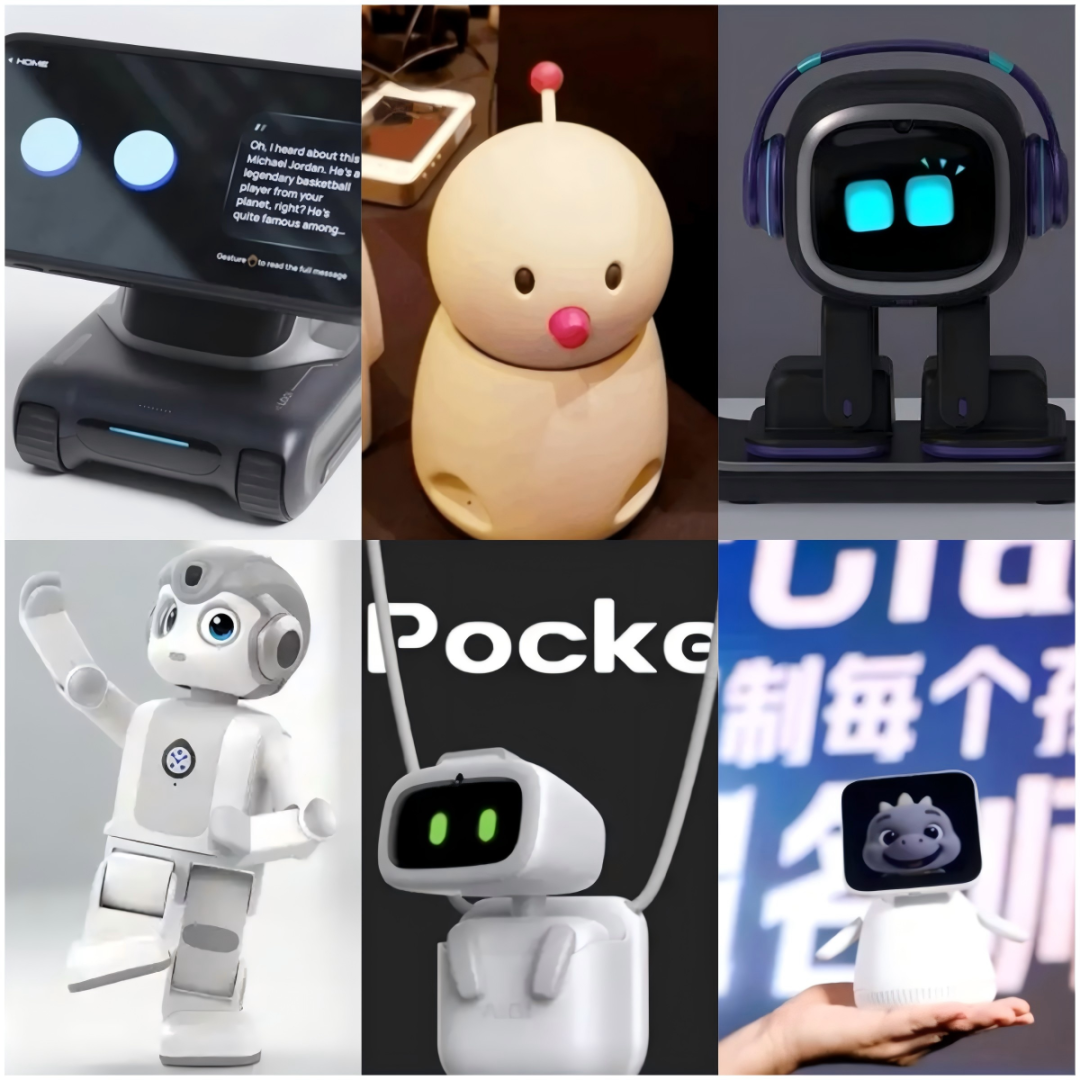
AI desktop robots are breaking boundaries.
Source|Duozhi
Author| Wang Shang
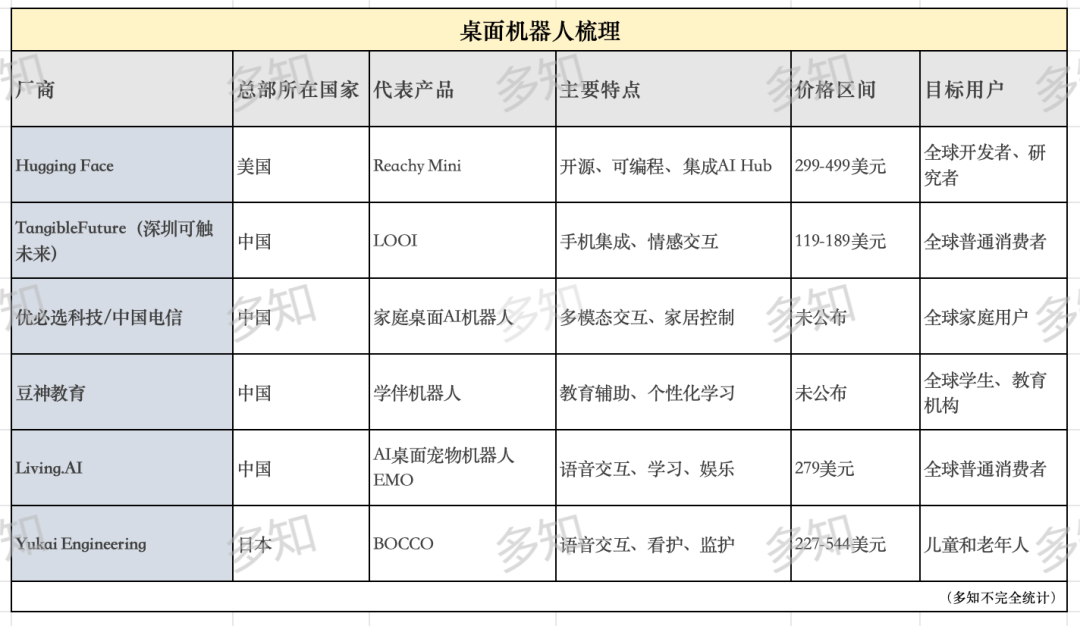
Recently, Thomas Wolf, co-founder of the American AI company Hugging Face, announced that the AI desktop robot Reachy Mini achieved over $1 million in sales within just 5 days of its launch, receiving $50,000 in orders daily.

This is not an isolated case; the popularity of AI desktop robots can be traced back. In February 2024, the AI desktop robot Looi Robot from Shenzhen’s Kecuchu Future completed overseas crowdfunding with a total of $648,000 and even received praise from Elon Musk.
In addition to the aforementioned products, an increasing number of desktop robots are emerging in the market, such as Japan’s BOCCO, the family AI robot jointly launched by China Telecom and UBTECH, and the learning companion robot from Dou Shen Education…
It can be seen that AI desktop robots are becoming a popular category in AI hardware, reshaping human-computer interaction and addressing practical scenarios and emotional needs of users. They not only understand commands but can also accompany humans like “partners”.
This technology-driven lifestyle transformation has just begun.
01 Desktop robots are becoming a popular new hardware category
With the development of AI technology and embodied intelligence, desktop robots are becoming a trend as an independent hardware category.
As an automated device that combines AI technology, desktop robots are typically designed to be placed on a desk, compact in form, capable of performing specific tasks, interacting with users, and providing diverse services. Their functionality is evolving from simple tools to executing specific or more complex tasks.
According to a report released by QYResearch on September 11, 2024, titled “Global and China Desktop Robot Market Status and Future Development Trends 2024-2030”, the global desktop robot market size reached several million dollars in 2023, and is expected to achieve significant growth by 2030, with a stable upward trend in the compound annual growth rate (CAGR).
The robust development of this market is driven by multiple factors: rapid advancements in AI technology, continuous reduction in hardware costs, the maturation of the open-source ecosystem, and a strong demand for emotional companionship and remote interaction.
In terms of product types, current desktop robots are mainly divided into two categories: functional and pet-type. Functional robots emphasize practical value, such as educational assistance, smart home control, and office automation; while pet-type robots focus on emotional companionship, establishing emotional connections with users through anthropomorphic design and behavior patterns.
It is noteworthy that the boundaries between these two types of products are becoming increasingly blurred, with many new robots beginning to combine functional practicality and emotional value.
Geographically, Duozhi has found that the global desktop robot market exhibits a diverse development pattern. The US market occupies a significant share due to its technological innovation capabilities and mature consumer base; China, relying on a complete supply chain system and rapidly growing AI application scenarios, is becoming one of the most vibrant markets globally; while Europe and Japan excel in precision manufacturing and human-centered design, occupying a place in the high-end niche market. This also reflects the diversity of user needs across different cultural backgrounds.
From an industry chain perspective, the desktop robot industry has formed a complete ecosystem from core components, operating systems, AI algorithms to application services. Notably, some Chinese companies are beginning to delve into vertical fields, such as UBTECH and Dou Shen, which are focusing on education and home service scenarios.
It can be seen that AI desktop robots are breaking boundaries.
02 Emotional companionship or proprietary functions?
Initially, the market saw the emergence of desktop robots primarily focused on emotional companionship, but now, an increasing number of functional robots, such as Reachy Mini, are specifically aimed at developers and researchers.
Looi Robot is one of the representatives of desktop robots aimed at emotional companionship, setting itself up as a partner from a distant galaxy, integrating the attributes of both a companion and a pet, and achieving two-way emotional communication through a “bionic behavior system” and large model technology. In interactions with users, Looi Robot can respond richly, such as approaching users for communication, recommending relevant activities or chat content based on users’ emotional changes, providing thoughtful companionship.
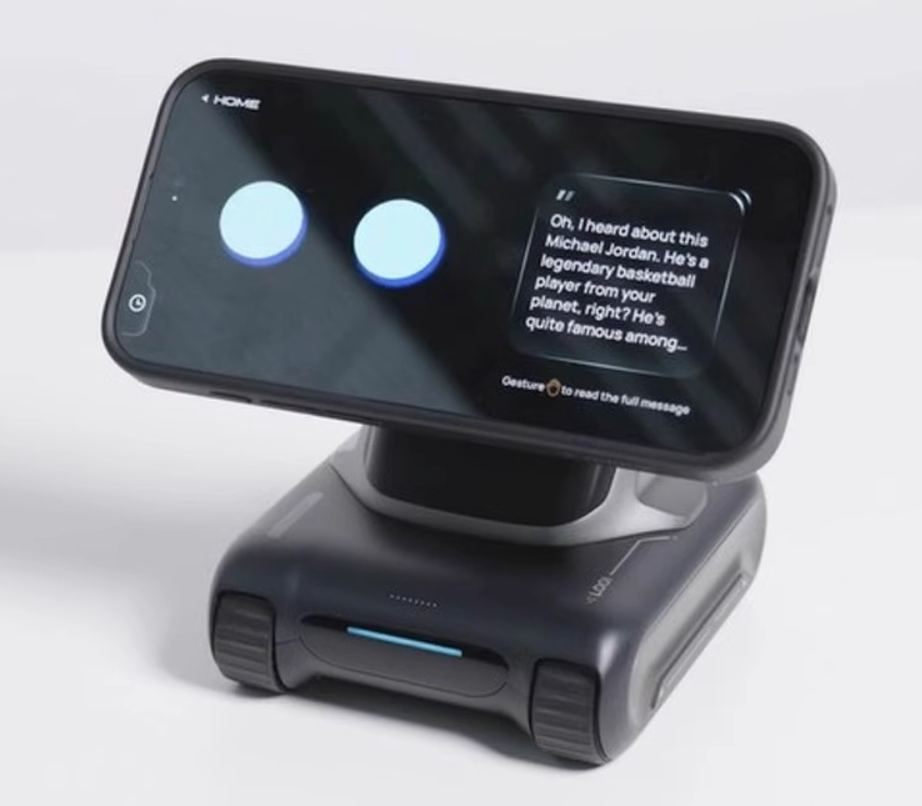
Looi Robot can understand users’ expressions, the surrounding environment, and creatively express emotions through simple yet rich expressions, allowing for diverse interactions with users, such as displaying happiness, curiosity, frustration, anger, sadness, etc.
More notably, LOOI has been endowed with the ability to “dream”—it records what it dreams about in the form of images and logs, which users can retrieve at any time. The team is also developing a feature that allows users’ daily interactions to become part of LOOI’s dreams, enabling each LOOI to generate unique memory content. This design creates a nurturing experience similar to the game “Traveling Frog”, enhancing users’ emotional investment and long-term engagement through unpredictability and personalized content.
Looi Robot also has some practical functions, such as meeting notes, automatic photography, playing games, and flashlight features…
It can be seen that the emotional value provided by Looi Robot is maximized, serving as an “emotional buddy” or “stress-relief companion”, and can also act as a “emotional sounding board” with natural dialogue and empathetic responses…
It is worth noting that Looi Robot is actually a rolling base with magnetic attraction, which can turn any smartphone into a cute electronic creature. Currently, no AI terminal is more suitable for interaction than a smartphone, and Looi Robot cleverly connects to this medium, allowing even old phones to be used, aligning with the mainstream values of promoting environmental protection.
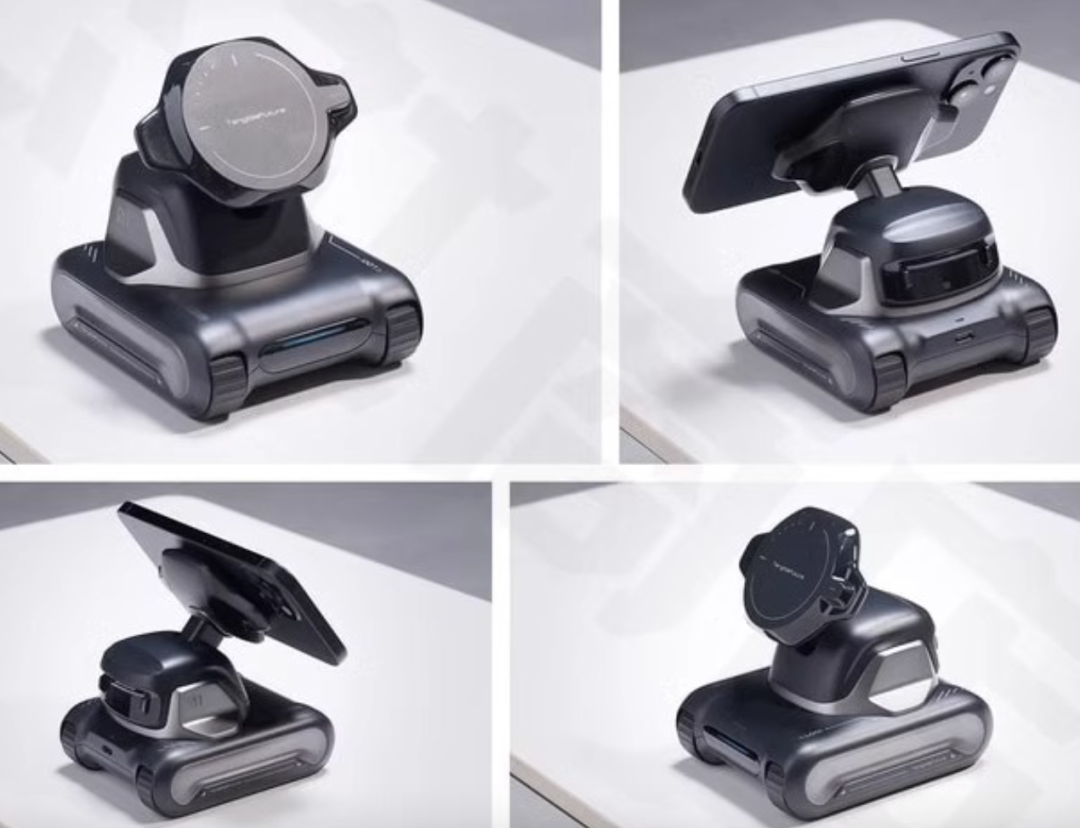
In February 2024, Looi Robot officially launched on overseas crowdfunding platforms, receiving praise from Elon Musk after its launch.
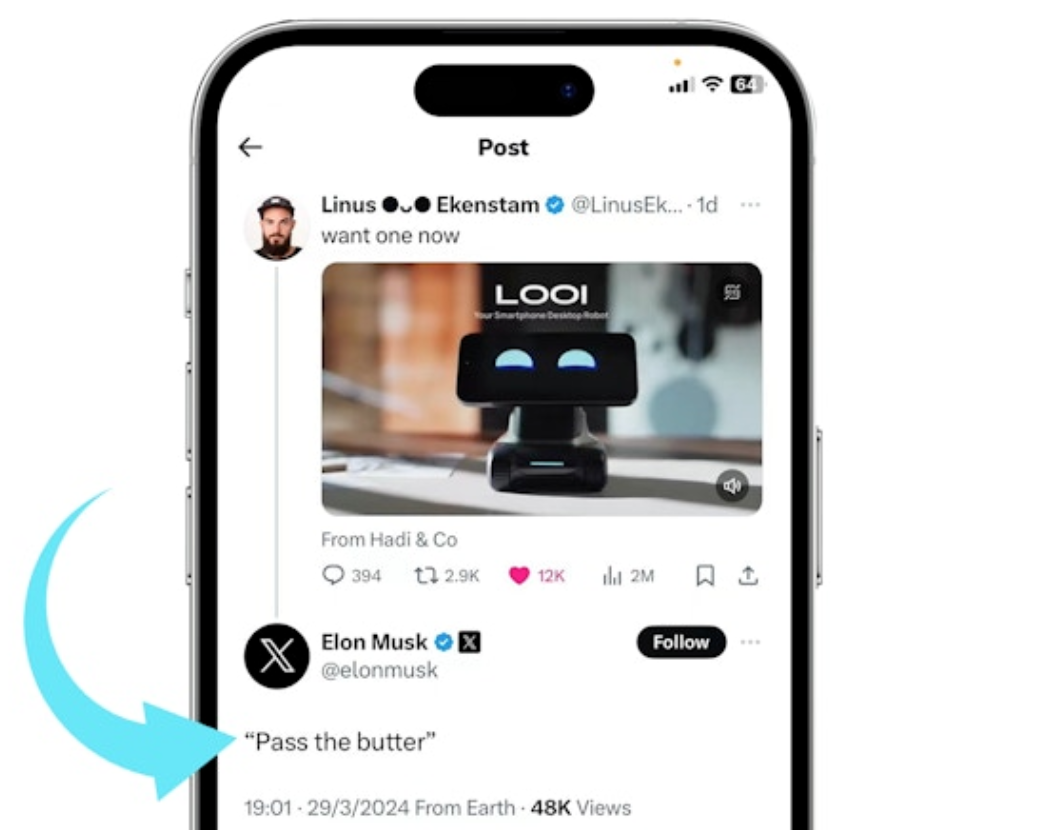
As of December 2024, Looi Robot raised over 4,000 units on Kickstarter and Indiegogo at a price of $129 each, totaling $648,000 (approximately 4.72 million RMB), setting a record for similar products.
By the end of 2024, Kecuchu Future received investments from XBOTPARK Fund, Qiji Chuangtan, and FutureX Capital.
It can be seen that AI desktop robots like LOOI provide a low-pressure, highly controllable emotional connection method. As Zhang Xiaohui, founder of TangibleFuture, stated in an interview with Interface News: “LOOI is essentially an emotional trigger. We first need to construct a character that users can empathize with, and then create an interactive experience based on that character.”
Similar emotional companionship robots include BOCCO Emo. If you are not familiar with this product, you should know about the recent popular wallet elf, the blowing cat, and the companion pillow… All these products come from Japan’s Yukai Engineering.
When the Bocco Emo robot receives positive information, its cheeks glow green, and it nods enthusiastically, emitting happy chirps. When it receives negative information containing words like “tired”, its cheeks light up red, and it lowers its head, emitting sad whimpers. This robot can also respond to users’ presence and voice, and interpret information based on emojis.
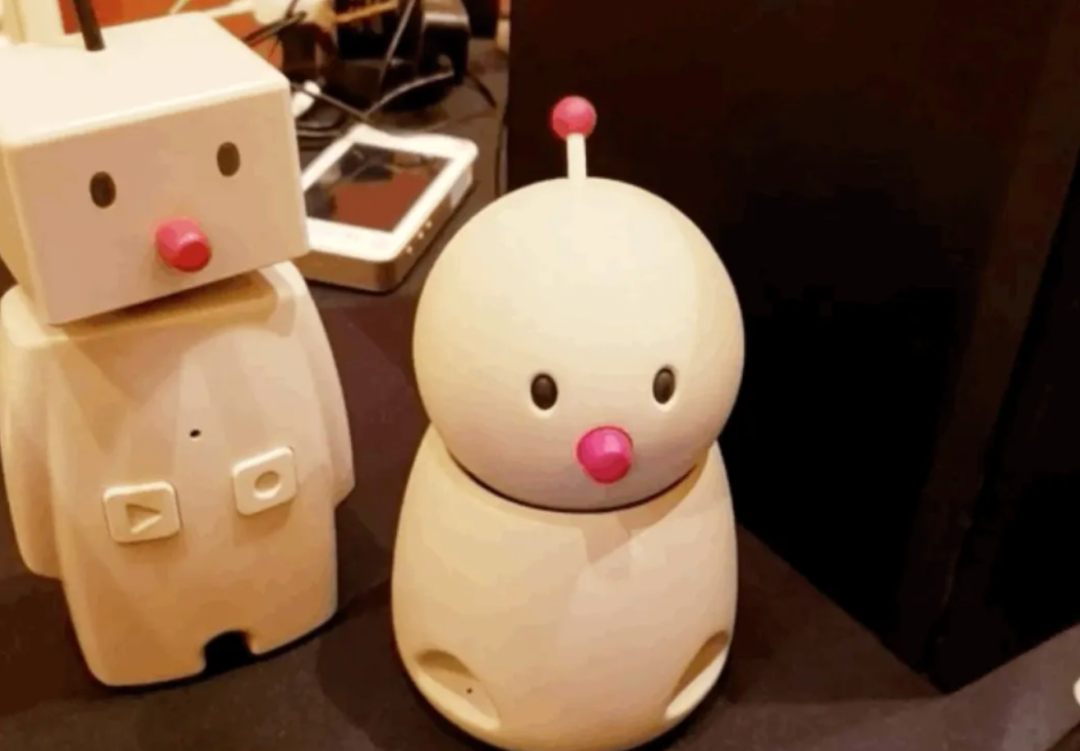
This robot mainly helps parents track young children or elderly relatives, especially when they do not have smartphones. Users can set their phones to receive notifications from sensors connected to Bocco Emo, allowing them to stay informed about the situation at home.
It is worth noting that BOCCO was launched in 2015 and can be considered the ancestor of desktop robots. This product is still on sale and has been continuously iterated over the past decade, mainly focusing on appearance and functionality.
With the arrival of large models, BOCCO’s updates have focused on software expansion, such as the launch of “Programming Emo-chan”, a visual programming environment that allows users to control the actions and voice of “BOCCO emo” using a computer or tablet. By detecting voice commands and other input events, users can make “BOCCO emo” change its head direction or cheek color, or even say anything the user wants it to say. Users can learn programming while controlling the robot’s actions.
Living.AI’s AI desktop pet robot EMO also focuses on emotional companionship, featuring a cool design with a detachable headset (which makes its head look a bit thin without it, but more high-tech with it) and two legs.
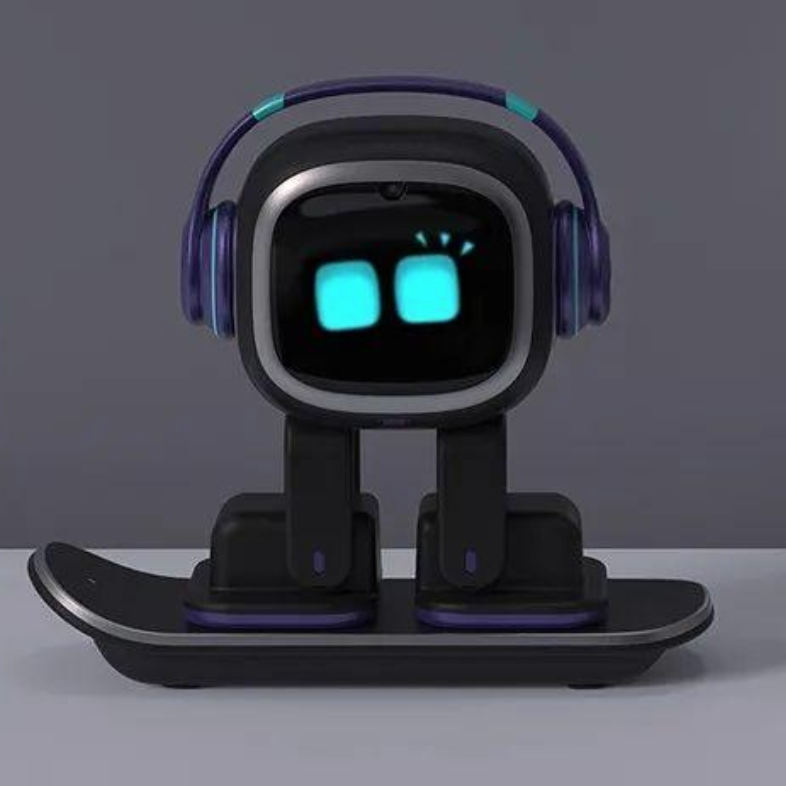
EMO can automatically explore and perceive its surroundings, and with simple commands, it can perform various actions. If there is no input for a long time, EMO will “do its own thing”, such as displaying some mini-games on the screen, like a flying bird.
Additionally, EMO’s legs are not just for show; it can walk and even dance.
In July of this year, the launch of the Reachy Mini desktop robot was a landmark event:
First, Reachy Mini is the first consumer-grade hardware product independently developed by the software technology company Hugging Face, representing the maturity of AI technology from software to hardware.
Second, Reachy Mini is clearly aimed at the developer community and research institutions, continuing Hugging Face’s consistent open-source philosophy. It can be seen that Reachy Mini is not an all-purpose desktop robot, but a product with proprietary functions.
Third, Reachy Mini is sold as a kit, allowing users to DIY. This differs from most closed-system consumer robots on the market, and this DIY approach lowers the entry barrier while providing ample customization space for advanced users.
Hugging Face CEO Clément Delangue emphasized that the design of Reachy Mini stemmed from close collaboration with early users, aiming to meet developers’ needs for a programmable, modular robot platform.
The product offers two versions to meet different user needs: Reachy Mini Wireless (wireless version) priced at $449, equipped with a Raspberry Pi 5 microcomputer for standalone operation; and Reachy Mini Lite (simplified version) priced at $299, requiring an external computing source but at a more affordable price. This differentiated pricing strategy caters to budget-conscious students and enthusiasts while providing professional developers with a more powerful option.
It is noteworthy that Reachy Mini signifies Hugging Face’s extension from AI technology into the physical world, reflecting Hugging Face’s layout and ambition in embodied intelligence. As early as April 2025, Hugging Face acquired the humanoid robot startup PollenRobotics (which previously launched the wheeled robot Reachy2) and launched the large humanoid robot HopeJR at the end of the following month. On the software side, Hugging Face also launched the LeRobot project in April this year, aiming to lower the barriers to robot development through open-source robot models, datasets, and tools.
03 Boundaries are being broken, and extensibility is widening?
It is noteworthy that the boundaries between pet-type (focused on emotional companionship) and functional AI desktop robots are becoming increasingly blurred, and the extensibility of their forms is opening up imaginative possibilities.
In May 2025, China Telecom Shaanxi Company collaborated with leading humanoid robot company UBTECH to jointly launch the first “family desktop AI robot”.
From its appearance and name, this “family desktop AI robot” continues the portable smart robot “Wukong” developed by UBTECH in collaboration with Tencent Dingdang back in 2018.
In 2018, before the emergence of large models, “Wukong” had functions including dance, yoga, and other actions, equipped with voice interaction, facial recognition, object recognition, and graphical programming capabilities, all of which could only respond passively; whereas now, the Wukong developed in collaboration with China Telecom Shaanxi Company can engage in multi-turn dialogue and has achieved “proactive service”. For example, when a child is feeling down, it will proactively comfort them; when a child asks a question, it can guide their thinking and extend explanations while answering.
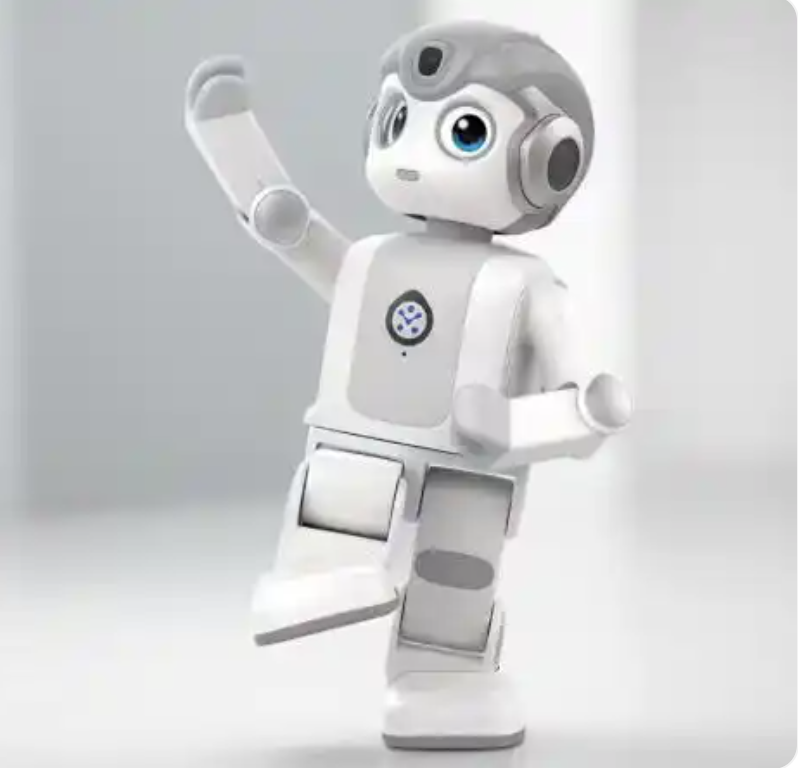
Unlike LOOI, which focuses on emotional companionship, this family desktop AI robot emphasizes multifunctional integration. It combines UBTECH’s robot development technology with China Telecom’s cloud network integration and large model capabilities, achieving human-like companionship, story/encyclopedia interactive Q&A, logical thinking guidance, home control, and other diversified services. This “all-in-one” positioning allows it to meet the needs of different family members, such as providing educational entertainment for children, smart assistant functions for adults, and companionship and care for the elderly.
In July 2025, Dou Shen Education announced at its “AI-Class” new species launch conference that it will launch the “learning companion robot”, which is co-developed with Beijing Yingzhi Technology Co., Ltd., defined as an embodied AI terminal capable of multimodal interaction.
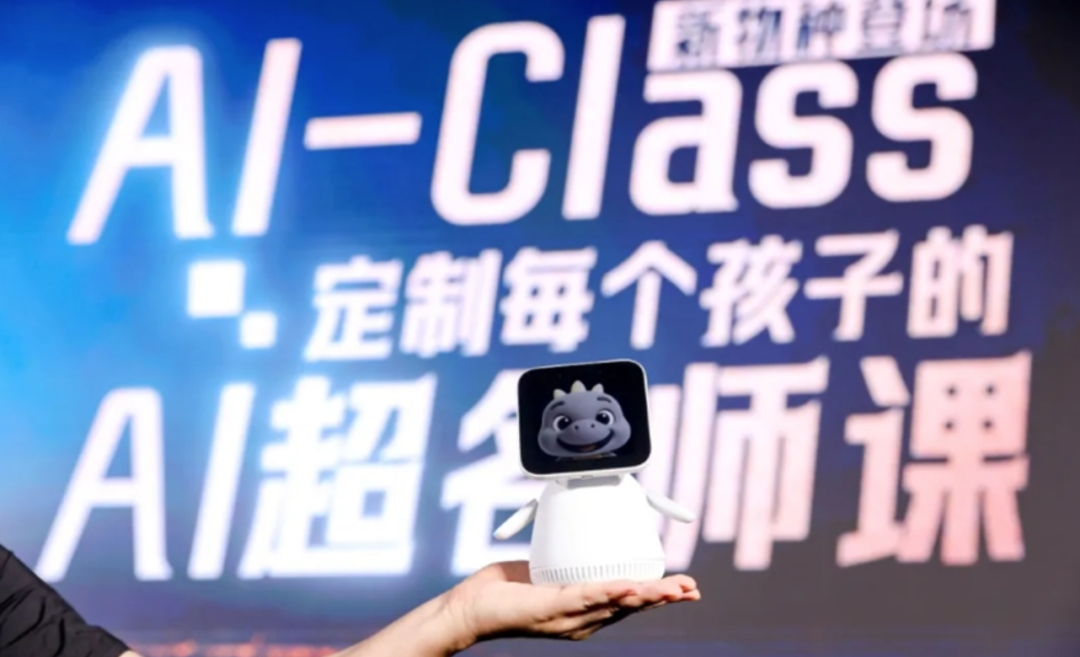
From an appearance perspective, Dou Shen’s “learning companion robot” has certain innovations, featuring a split design that can be used in desktop scenarios, such as for learning, previewing, and reviewing; when split, the screen can become a small square device, convenient for outdoor use. This product is expected to be officially released in the fall of 2025.
It can be seen that the forms of AI desktop robots are being broken; they can be placed on desks or be portable.
It is worth noting that Living.AI previously had a separate portable AI robot focused on emotional companionship, designed in a mini format the size of a Bluetooth headset case for easy carrying. Later, they launched EMO, which, while being an AI desktop robot, does not seem to conflict with portability.
Unlike emotional companionship robots like Reachy Mini or LOOI, Dou Shen hopes that this “learning companion robot” can become a “multifunctional partner” deeply integrated into students’ lives and families, simultaneously taking on the roles of “practice partner”, “teacher”, and “life manager”.
It can be seen that educational AI desktop robots focus on knowledge transfer, learning assistance, and personalized education, with their positioning leaning more towards “intelligent learning” and “companionship growth”.
However, as a “learning companion robot”, it naturally can undertake some emotional companionship functions. According to Tianfeng Securities, it can serve as a “confidant for emotional expression” for students, as well as provide a “source of daily joy”. By incorporating appropriate entertainment interactions during study breaks, the learning companion robot can help students maintain a moderately excited learning state, avoiding fatigue or aversion to learning.
From an industry perspective, the market for educational AI desktop robots is showing a diversified competitive landscape. In addition to educational technology companies like Dou Shen Education, tech giants such as iFLYTEK’s Ling Tong Robot and Luo Bo Intelligent, founded by former Xiaopeng Robot product leaders, are actively laying out in this field.
From a broader perspective, the development of desktop robots represents a profound change in human-computer relationships. They are no longer merely tools that execute commands but can take on roles as “assistants”, “buddies”, or “partners” for humans.
AI desktop robots are expected to transition from “novel tech products” to “everyday life essentials” in the future.
END
Author: Wang Shang

A book that provides insights into the education industry as a whole, “Education Technology This Year: A New Era of Education + AI” is hot on sale🔥🔥A must-have for practitioners, click the mini-program to purchase⬇
 Scan to join the Duozhi new book discussion group and discuss the future of education + AI together