Editor: Multi-line Source: Scarlett Evans, IoT World Today

According to IoT World Today, two independent astronaut-assist robots played “hide and seek” on the International Space Station, marking a milestone in the field of robotics.
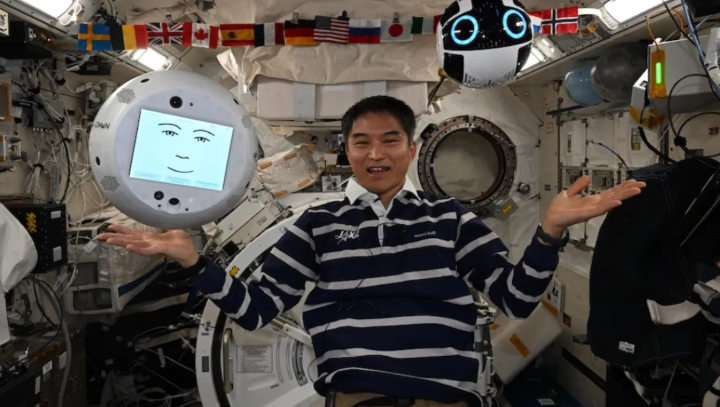
The two robots, deployed by the German Aerospace Center (DLR) and the Japan Aerospace Exploration Agency (JAXA), communicated with each other in space through two independent IT networks.
The two robots—JAXA’s Int-Ball2 and DLR’s CIMON—are equipped with a new conversational feature developed on the IBM Watson X platform. This feature connects the two robots and allows control through natural language voice commands.
As part of the mission, JAXA astronaut Takuya Onishi also used the robots to locate hidden items on the International Space Station.
To achieve this, Takuya Onishi remotely controlled Int-Ball2 using voice commands through CIMON, which then transmitted images back to CIMON’s display, allowing it to search for hidden objects.
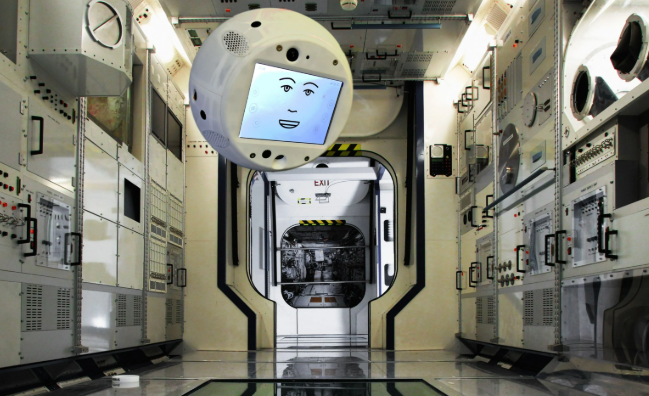
This is the first time that images from Int-Ball2 have been shared directly with other agency robots on the International Space Station, rather than just with the Japanese ground station. The hidden objects included a Rubik’s cube, a hammer, a screwdriver, and a retired early model of Int-Ball.
The ICHIBAN mission (meaning “the first” in Japanese) was recently completed, aiming to open doors for better collaboration between robots and humans in space.
Matthias Biniok, head of IBM Customer Engineering DACH, stated: “For decades, IBM has been a key technology partner in the aerospace industry, from the Apollo moon missions to innovations on the International Space Station. The ICHIBAN mission represents the next critical step: combining artificial intelligence with robotics to enhance astronaut skills and safety.”
Biniok added: “Based on IBM Watson X technology, robots from different space agencies can achieve secure cross-system communication and collaboration, opening up new possibilities for space travel.”
Partners indicated that projects for further developing new applications are in planning.
Christian Rogon from the German Aerospace Center stated: “The ICHIBAN demonstration conducted in collaboration with colleagues from JAXA on the International Space Station represents an important milestone in the field of space robotics technology. The first communication between the independently developed CIMON system and the Int-Ball-2 system paves the way for networking artificial intelligence and robotics in the exploration field. This achievement will significantly improve support for astronauts.”
Related Articles ·
▷ New Advances in Electronic Skin: Tactile Data Processing, Large-Scale Manufacturing, and Energy Autonomy Technologies
▷ Design and Development of Package Delivery Robots
▷ Types, Prototype Construction, and Steering Mechanisms of Wheeled Pipeline Inspection Robots
▷ 3D Printing Technology for Soft Robots
▷ Magnetically Controlled Soft Robot Technology
▷ Biomimetic Soft Robots: Material Selection, Actuation, and Design
▷ History of Quadruped Walking Robots and Various Design and Development Methods
▷ Robustness of Multimodal Fusion in Robotics
▷ Honda’s ASIMO and Humanoid Robot Research
▷ Hardware Design of Bipedal Humanoid Robots: A Technical Overview
▷ Mechanical Principles of Humanoid Robots