Click belowto follow our official account ↓ Get more excitingarticles
As the main battlefield in the field of industrial automation control, PLCs provide very reliable control applications for various automation control devices, suitable for the current industrial enterprises’ demand for automation. On the other hand, PLCs must rely on other new technologies to face the impact of gradually shrinking market share, especially industrial PCs.
In 2023, China’s PLC market is expected to reach 16.54 billion yuan.
Currently, PLC basic programming software can be summarized into four forms:
- Developing from self-developed PLC kernels based on international standards to a comprehensive integrated development environment (IDE), but not aiming for commercialization, only serving its own control systems or customized control systems.
- Developing from self-developed PLC kernels based on international standards to a comprehensive integrated development environment (IDE), with the main feature being that it has been commercialized and can provide commercial software suites for any unit in need.
- Collaborating with foreign companies to develop a comprehensive development environment suitable for domestic industrial control market needs based on their PLC kernels, including providing a complete software environment and development path for domestically produced embedded chips.
- Completely based on self-development and utilizing the latest technologies from the IT industry to form a software platform. Its characteristics are that it can meet various requirements of traditional PLC programming, adapt to modern PLC applications in industrial internet environments, and conveniently introduce artificial intelligence.
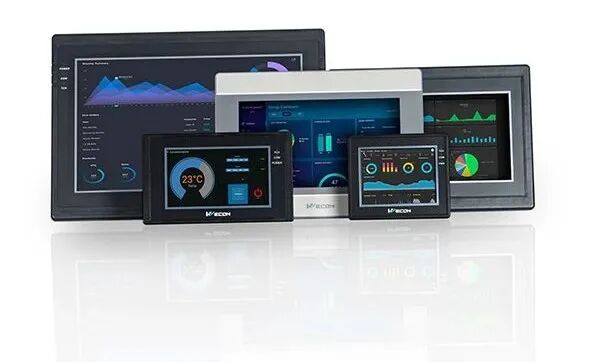
In terms of market level, currently, the domestic PLC market has formed a scale of hundreds of billions. Under the premise of policy guidance, technological breakthroughs, and continuous release of market demand, the market space for medium and large PLCs and the demand for import substitution will surely open up, and investment opportunities will increase.Industry authoritative assessments indicate that by 2023, China’s PLC market is expected to reach 16.54 billion yuan, with the market sizes for small PLCs and medium to large PLCs being 8.072 billion yuan and 8.468 billion yuan, respectively.
There is a shortage of high-end domestic products, and China needs to accelerate the process of PLC localization.
The current issues that PLCs need to address are still the adoption of new technologies, system openness, and pricing.
As the production scale of the industry expands, the automation level of general basic product production improves, and the cost-performance advantage becomes more significant, the competitiveness in the global mid-to-low-end market has significantly increased, with export volumes growing rapidly.It is worth noting that China’s PLC import volume has also maintained a relatively stable growth, mainly due to the insufficient supply of high-end domestic products, and the continuous development of downstream traditional and new industries has led to an increased demand for high-end PLC products, resulting in a continuous growth in industry imports.
From the global supply and demand market trend, in the past two years, affected by factors such as chip shortages and rising raw material prices, the price of PLCs has shown a significant upward trend.Since last year, global PLC giants have begun to raise prices.Among them, Rockwell’s PLC products have increased by 3% to 36%, with the CLX1756-L8SP series, which has a large market sales volume, seeing a price increase of up to 36%.Products from foreign companies such as Omron, Delta, and Emerson have also seen increases of over 6%.
Domestic PLC brands hold a very small market share in the domestic PLC market and have not yet formed an industrial scale, mainly concentrated in the small PLC field.In Q3 2022, the localization rate of small PLCs was about 20.2%, the localization rate of medium to large PLCs was below 10%, and the localization rate of large PLC systems was only about 1%.
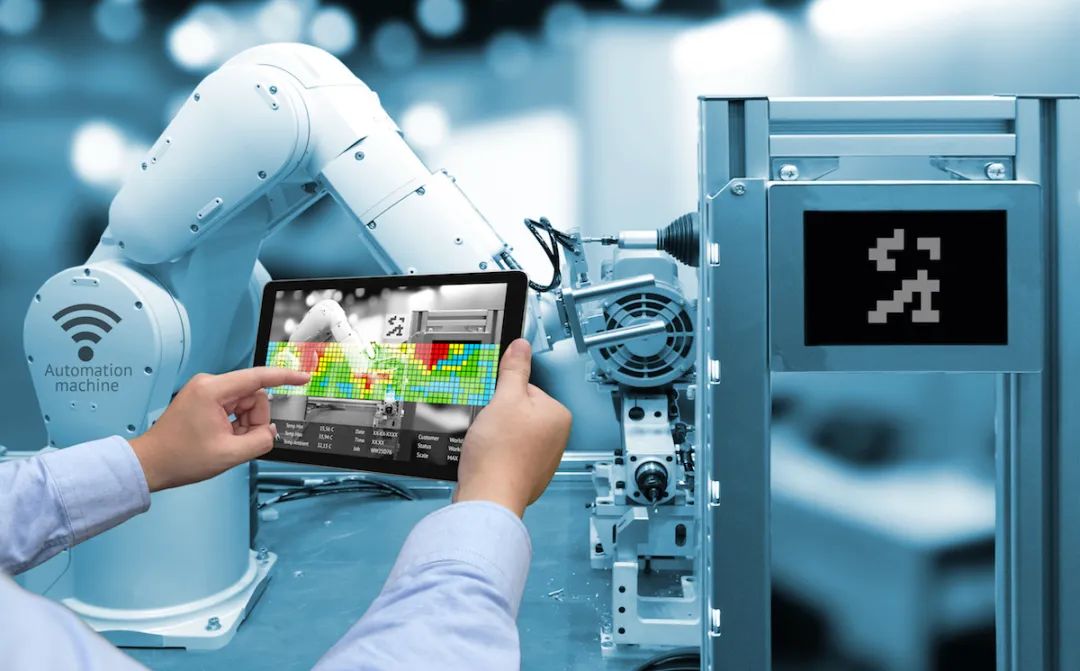
In recent years, China’s PLC technology has made significant progress, with few traces of imitation seen in both hardware and software directions; independent development and design have become mainstream.
There is an increasing call for the localization and intelligence of PLCs, especially medium and large PLCs, in the domestic industrial infrastructure field, which also brings opportunities for the local PLC industry to overtake in corners.In recent years, with domestic industrial control companies continuously strengthening their product technology research and market promotion, many local brands such as Huichuan, Delta, Zhongkong, Holley, Yonghong, Ancontrol, Taian, Fengwei, Aotuo, Xinjie, Kewi, and Zhenghang are actively exploring the market. According to the latest research report from Open Source Securities, domestic manufacturers are seizing the small PLC market share from Japanese and Taiwanese manufacturers by leveraging their advantages in product cost-performance, short delivery times, and rapid response to customer needs. Many leading domestic PLC companies have already been listed on the A-share market. With the continuous demand pull from emerging industries and traditional industries, the downstream application fields of the PLC industry are also showing a diversified development trend. In particular, domestic industries such as power batteries, automobiles, semiconductors, as well as traditional manufacturing industries like textiles and machinery, have become key markets for future PLC industry development.
In the era of intelligent manufacturing, PLC technology urgently needs innovation and optimization.
In addition, at the technical level, with the continuous advancement of intelligent manufacturing, the algorithms of PLC software need further optimization to meet the production requirements of Industry 4.0:Based on the integration of artificial intelligence and big data, the PLC industry should further optimize software, providing tools that better fit actual industry applications, enhancing the ability of industrial algorithms to solve problems while reducing algorithm complexity. Additionally, as a tool that assists industrial manufacturing, the underlying programs should be further encapsulated into simple and easy-to-use toolkits, providing simple interfaces for technical personnel to call, simplifying the operation of complex production processes.
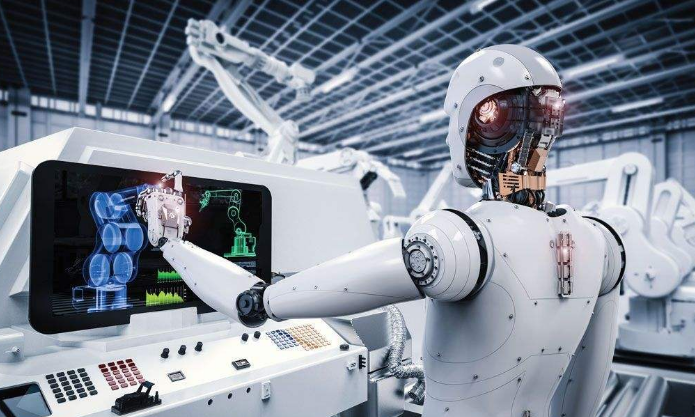 In recent years, with the continuous popularization of cloud computing in the industrial field, deploying cloud-based PLCs in 5G base stations has introduced new vitality into this traditional technology.The three major telecom operators are leveraging their technological advantages in 5G to strengthen cooperation with traditional industrial control companies, laying out “5G + cloud-based PLC” to strive for a foothold and seize the intelligent manufacturing market. In 2020, China Telecom carried out distributed deployment transformation for traditional factory PLCs in Midea’s microwave production line, adopting centralized deployment of PLCs based on 5G networks; in 2021, China Unicom, Dongtu, and Sany joined forces to launch the world’s first lighthouse factory 5G cloud-based PLC application; in June 2022, China Mobile Research Institute and China Mobile’s Government and Enterprise Division, in collaboration with Jingxin Network and Dongtu Technology, released the industry’s first 5G cloud-based industrial base station and completed end-to-end verification.
END