Image Source|Visual China
Last year, OPPO recruited 2000 people to work on chips and launched its first self-developed NPU chip. In May of this year, OPPO made further moves by introducing the imaging-specific chip Mariana X into the mid-range Reno8 series.
While it may seem like OPPO is over-engineering, industry insiders have a different perspective: the significant increase in the number of chips used will be more beneficial for OPPO to accumulate in-depth, practical experience with chips in the tens of millions. Just like training for war, without experiencing major battles, one cannot cultivate a true general on paper.
The push towards a commercial scale of tens of millions reflects OPPO’s greater ambition; its self-developed chips will not be limited to just some specialized functional chips.
Since 2012, domestic smartphones have been transitioning to smart technology, fully benchmarking against industry leaders like Apple in areas such as OS, screens, imaging, and charging. Now, a decade later, domestic smartphone manufacturers are targeting the very foundation—chips.
Entering 2022, the uncertainties brought by the pandemic have led the smartphone industry into a cyclical plateau, and the current prudent move for companies seems to be to reduce investments. For instance, some have commented that OPPO’s NPU chip development only requires a few people to scout chip companies and select the best option from several proposals, which may not yield significantly worse results, so why go through all the trouble? Spending over 100 million yuan on design and tape-out seems unwarranted.
However, these individuals clearly confuse two essential concepts. Acquiring an advanced chip and obtaining the systematic capability to develop advanced self-developed chips are entirely different matters. True long-term thinkers will certainly pursue the latter. They understand that borrowed strength will ultimately be lost, and the real competitive edge of a tech company cannot be entrusted to others. As the smartphone industry transitions from early guerrilla warfare to trench warfare, the chip strength aimed at enhancing user experience is becoming an indispensable capability.
The future depends on the choices made today, and it is once again a test of the management team’s vision, courage, and determination.
Chips Unlocking Trillion-Yuan Market Opportunities
Globally, self-developed chip companies can be roughly divided into two categories: one includes companies like Intel, Qualcomm, and MediaTek, which specialize in chip development and sell to various users; the other includes companies whose main business is not chip-related but develop chips vertically within their own systems for single products with sales exceeding 100 million units, such as Apple, Samsung, and Huawei.
Professional chip companies have a long history and strong capabilities, consistently leading industry development and are the mainstream of the industry. This situation was disrupted in 2010. After Apple released the groundbreaking iPhone in 2007, it obtained ARM architecture licensing and acquired a 150-person microprocessor design company, P.A.Semi, in Palo Alto, starting its journey of self-developed chips.
After three years of quiet research and debugging, Apple designed a system-on-chip (SoC) customized for its own phones, manufactured by Samsung. The chip was named A4 and successfully replaced the previous Intel chip.
This posed a significant challenge to traditional professional chip companies. After some twists and re-evaluations, it became clear that many favored the model of large companies vertically developing chips within their systems. “In the past, when I was planning a chip design at a chip design company, the most painful thing was that I couldn’t control the camera used in the chip. I had to face so many clients, and each client used a different camera,” said a former executive from a chip design company, Gong Yun.
The same situation occurred with components like displays and memory that require chip control. As traditional chip companies, they cannot solely customize a chip for a specific smartphone manufacturer. Additionally, due to mutual trust limitations, smartphone manufacturers cannot provide relevant product information to chip design companies in advance. “In-house chip development allows for vertical integration, which avoids these disadvantages. Cameras, displays, and memory are all customized, and the entire chain is considered together,” Gong Yun said.
This principle is not difficult to understand. Considering Apple’s unstoppable trend, the market gives different valuations to the two types of companies. For smartphone companies with self-developed chips, it is akin to finding a dragon in the chip world.
After Apple transitioned smoothly to the A4 chip, it freed itself from supplier dependency, enhanced its chip autonomy, and built a closed iOS system. The chip capabilities it accumulated are not limited to smartphone chips. In 2015, Apple developed the S series chips specifically for its watches, and in 2016, it developed the W series chips to enhance the performance of Apple Bluetooth headphones.
By 2020, Apple adopted a new architecture and developed the M series chips, with the first M1 chip serving as a main processor chip that can be used not only in smartphones but also in PCs and iPads. Notably, the 2022 M1 Ultra broke through the computing platform of two eras, adding many previously unimaginable features and achieving product differentiation; on the other hand, it increased user stickiness. The user base of Apple products has grown exponentially.
Huawei began developing processor-level chips in 2012, initially for video capture, later for smartphone processors. Early chips had power consumption issues, but Huawei quickly resolved these through research and achieved mass production. Ultimately, these chips were used in high-end Mate and P series smartphones in 2014.
Like Apple, Huawei also achieved differentiation through its chip products. After tasting success, Huawei continuously explored and enriched its chip capabilities through its HiSilicon division.
The difference from Apple is that while Apple focuses on enhancing product performance and seeks solutions at the chip level, Huawei has added a communication dimension, with its developed chips being applicable to base stations, servers, and other scenarios. This is an innovation from Huawei. In other words, Huawei’s HiSilicon chip design is used in smartphones, PCs, base stations, and smart wearable IoT devices (Balong communication chips).
Companies that have mastered chip capabilities through vertical integration have a greater imaginative space due to the seamless connection of upstream and downstream, leading to a higher valuation than traditional upstream chip companies.
In the first quarter of 2022, Qualcomm’s market value reached 1 trillion yuan, while Apple’s peaked at 3 trillion yuan. Huawei, not significantly impacted, had an annual profit of about 72 billion yuan, which, at a 30x PE ratio, could firmly stand at a valuation of 2 trillion yuan. If not for the setbacks, Huawei’s market value would have continued to rise with its smartphone, PC, and tablet businesses.
At this point in the analysis, if you were a decision-maker at a smartphone manufacturer, would you refrain from entering the chip industry? Companies like OPPO, which are determined to do the right thing, will naturally see the allure of vertically integrated self-developed chips.
“Without core technology at the foundational level, there can be no future; flagship products without core technology are mere castles in the air.” OPPO founder Chen Mingyong expressed this more bluntly at the end of 2021.
Overcoming Challenges, Starting from High-End
Smartphone manufacturers, seeing the competitive advantages of chips, are exploring paths based on their characteristics and different understandings of the commercial and chip industries.
For a smartphone company to invest in chips, it is crucial to understand its original intention and whether it can persist; this is key.
When Huawei initially invested in chips, it was very determined. The entire group focused on chips as a major product differentiation point to break through.
Xiaomi began its chip-related layout as early as 2014 and has continuously adjusted its direction and strategy based on practical feedback; it is still in the investment and exploration phase.
Vivo aims to gather a group of chip talent, attempting to carve out a deeply customized route between traditional chip companies and vertically integrated teams.
OPPO seems to have a clear understanding as well. Since 2019, OPPO has assembled a chip team of over 2000 people, and its path increasingly resembles Apple’s model—adding value by enhancing user experience through self-developed flagship smartphone chips.
In 2021, four smartphone companies surpassed the shipment threshold of 150 million units. General market research reports typically do not combine OPPO, OnePlus, and realme brands, but in reality, the combined sales of these three brands rank third globally. This scale itself is more conducive to entering the high-end chip market. From the different positioning of the three brands, OPPO urgently needs a self-controlled high-end chip to differentiate its brand.
At the very least, this scale can ensure an annual investment of over 2 billion yuan, which can cover the nearly 100 million yuan tape-out cost of a Mariana X chip. In short, only large-scale operations can afford the risks associated with chips.
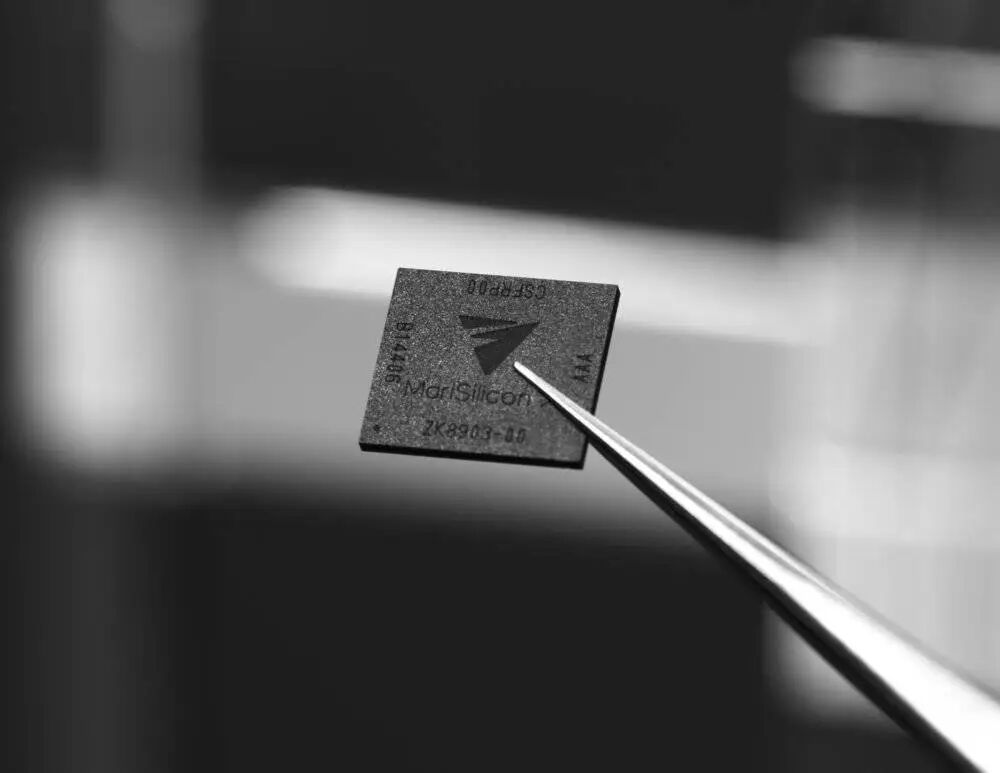
OPPO’s first self-developed chip, Mariana MariSilicon X
Looking at the long term, the various praises and controversies surrounding OPPO’s first Mariana X chip at the beginning of 2022 should be viewed as noise that arises during the drafting and training phase. Any self-doubt at this moment could hinder the chip team’s progress towards their goals.
Since the pandemic, the overall volume of the smartphone industry has been declining, testing all companies. For those investing in self-developed chips, the challenges are even greater. According to IDC data, global smartphone shipments in the first quarter of 2022 decreased by 8.9% compared to the same period last year, marking three consecutive quarters of decline, with shipments dropping to 314.1 million units. OPPO ranked fourth.
For OPPO, it must balance cash flow and market share, ensuring no significant fluctuations in the next five to six years. However, to take a step back, even in the most extreme scenarios, large companies’ risk resistance capabilities will become apparent. OPPO has always maintained financial stability, and scattered partners will support the “factory” when necessary (this has happened before); various forms of financing are also options.
Returning to User Experience
With Apple’s excellent performance in the forefront and Huawei’s case of being banned in the background, the threshold for self-developed chips has become increasingly high. For latecomers to stand out, the ultimate competition will be about who prioritizes the user and who can win user favor through intelligence and creativity.
The development process of OPPO’s first self-developed chip has been relatively smooth, but it is now facing a greater market test. After its debut on the Find X5, market reactions have been mixed. Some pointed out that while the night video quality has indeed improved with the Mariana X, it has not reached a level that would leave people in awe.
According to insiders, engineers are working overtime to debug in preparation for the launch of the new Reno 8. Many users in the Reno consumer group will use video for selfies, live streaming, and uploading to Douyin, and engineers are specifically developing portrait video blurring algorithms based on the self-developed chip. Additionally, considering the traffic limitations on WeChat and Douyin, the goal of the AI-powered chip solution is to make videos appear clearer.
As a mid-range series, adding a chip to the Reno series means increasing costs. Moreover, some challenges of vertical integration must also be overcome. How can the new chip team harmoniously coexist with the veteran hardware and software engineers who have worked for over a decade, and inspire innovative vitality? How can product designers and software-hardware engineers develop a chip awareness? Why should those recruited from Intel, Qualcomm, MediaTek, and Spreadtrum be able to surpass previous efforts when combined? What methods will they use to integrate OPPO’s past culture, and is it suitable for the chip industry?
Currently, Android smartphones and tablets are still not perfect, and no manufacturer has seamlessly integrated hardware and software from the ground up through various proprietary protocols, such as modifying WiFi and Bluetooth protocols to allow their smartphones, tablets, headphones, watches, and even cars to connect more smoothly. This can only be achieved if manufacturers delve into the foundational level and develop chips.
Addressing these issues is akin to a transformation for Chinese smartphone companies. Once they overcome this, they will transition from being mere technology integrators to achieving autonomy in key technologies. Previously, they used whatever was available; with chips, they can create whatever they envision, gaining greater freedom. At the very least, during flagship smartphone launch events, they will no longer have to consider rushing to release a specific chip.
Over the past 18 years, OPPO has relied on product design and fast charging technology as competitive weapons. In terms of design, it has introduced ultra-thin models like the Finder, the elevating camera Find X, the rollable screen concept phone, and the latest foldable Find N; fast charging has been OPPO’s charging solution for the industry.
Both of these characteristics trace back to the long-term influence of its founder, Chen Mingyong. Under the influence of cultural immersion and effective execution, it is believed that as long as the founder and a few core executives continue to focus on self-developed chips, the innovation capability of chips will be embedded into the cultural core like a genome.
This time, OPPO seems to have mustered the courage to genuinely pursue self-developed chips.
(The name Gong Yun is a pseudonym)
Business Barometer