In January 2024, the Ministry of Industry and Information Technology released the “Guidelines for the Construction of National Automotive Chip Standard System,” which stipulates that automotive chips for core components, including power and chassis control systems, intelligent driving assistance systems, and battery management systems, must use automotive-grade chips.
However, there are no strict regulations in the field of smart cockpit entertainment systems.

Recently, Li Fenggang, the Executive Deputy General Manager of FAW Audi Sales Co., Ltd., spoke on the official public account, explaining for the first time why Audi insists on using automotive-grade chips instead of consumer-grade chips that may seem “stronger.”

So, what are the differences between consumer chips and automotive-grade chips? Let’s discuss today.
First, let’s talk about what a chip is.
A chip (Chip), also known as an integrated circuit (Integrated Circuit, IC), is the “brain” and “heart” of modern electronic devices. It is a microelectronic device that integrates a large number of tiny electronic components (such as transistors, resistors, capacitors, etc.) on a small piece of semiconductor material (usually silicon) through semiconductor processes to achieve specific electrical functions. Its emergence has completely changed the electronics industry, driving technological revolutions in almost all fields from computers and mobile phones to aerospace and medical applications.
1. Core Components and Principles of Chips
1. Core Material
The substrate of a chip is usually silicon (Si)— a semiconductor material (with conductivity between that of a conductor and an insulator). This is because the semiconductor properties of silicon can be precisely controlled by “doping” (adding trace impurities, such as phosphorus and boron) to adjust its conductivity, laying the foundation for the switching function of transistors. Additionally, some high-end chips use more advanced semiconductor materials (such as silicon carbide SiC and gallium nitride GaN for high-frequency and high-temperature scenarios).
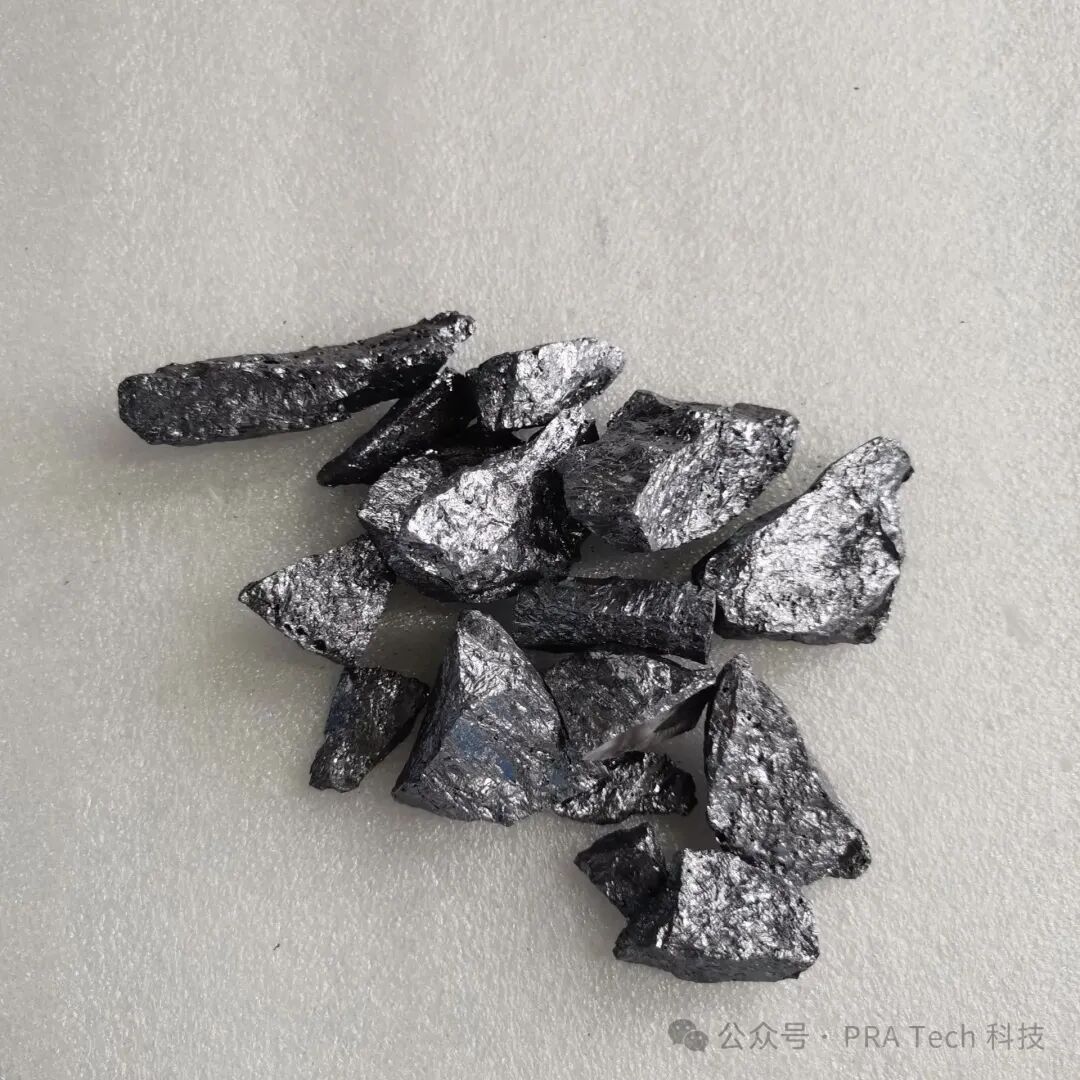
The Manufacturing Process of ChipSilicon (Si): From “Sand” to “Finished Product”
The production of chips is a pinnacle of human industrial civilization, with an extremely complex process involving thousands of steps. The core steps can be simplified into three major stages:
1. Design Stage
- Engineers design the chip’s circuit logic and layout using EDA (Electronic Design Automation) software based on requirements (such as computing power, power consumption, size), forming a “chip design diagram” (GDSII format file).
- Key aspects: architecture design (such as the CPU instruction set), logic simulation (to verify functional correctness), and timing analysis (to ensure signal transmission speed).
2. Manufacturing Stage (Wafer Fabrication)
- Raw Material Purification: Purifying silicon from quartz sand (main component SiO₂) to create high-purity silicon ingots (purity 99.9999999%, or 9 nines), which are then sliced into thin silicon wafers (commonly 12 inches / 300mm in diameter, with larger sizes yielding higher production capacity).
- Photolithography and Etching: Using photolithography machines (such as ASML’s EUV lithography machines) to “print” the design onto the photoresist on the wafer surface, followed by chemical etching to form microscopic structures such as transistors and wires (the core of the manufacturing process, e.g., a 3nm process indicates a transistor gate length of about 3 nanometers).
- Doping and Thin Film Deposition: Changing the conductivity of silicon through ion implantation (doping impurities) to form PN junctions (the core structure of transistors); forming metal wires (connecting transistors) and insulating layers through deposition techniques (such as CVD).
3. Packaging and Testing
- Packaging: Cutting the wafer into individual chips (dies), connecting them to external pins through wire bonding or flip chip methods, and then encapsulating them in plastic or ceramic to protect the chip from physical/chemical damage, forming the final chip shape (common packages include QFP, BGA).
- Testing: Using specialized equipment to test the chip’s electrical performance (such as power consumption, frequency) and functional integrity (to ensure it meets design requirements), filtering out qualified products (yield is a key indicator in the manufacturing process; the higher the yield, the lower the cost).
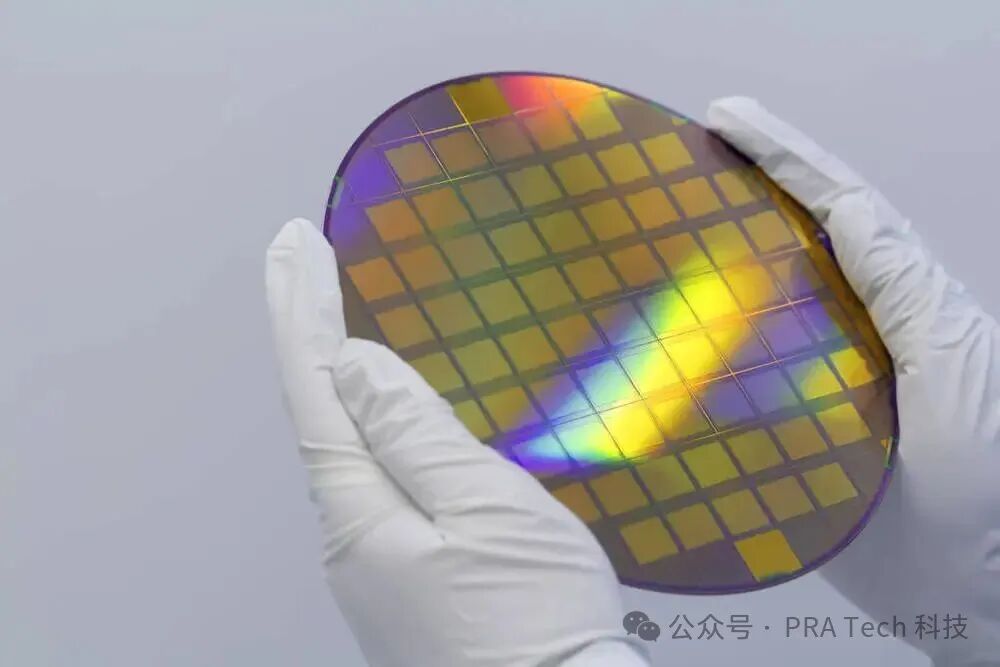
2. Core Component: Transistor
The transistor is the “basic unit” of a chip, equivalent to a controllable “electronic switch” that can control the flow of current through voltage signals, achieving binary logic operations of “0” and “1” (the foundation of digital circuits). A modern chip (such as a mobile phone SoC) can integrate billions or even hundreds of billions of transistors (for example, the Apple A17 Pro chip has over 35 billion transistors), which are connected by metal wires to form complex circuits (such as logic circuits, storage circuits, computational circuits, etc.).
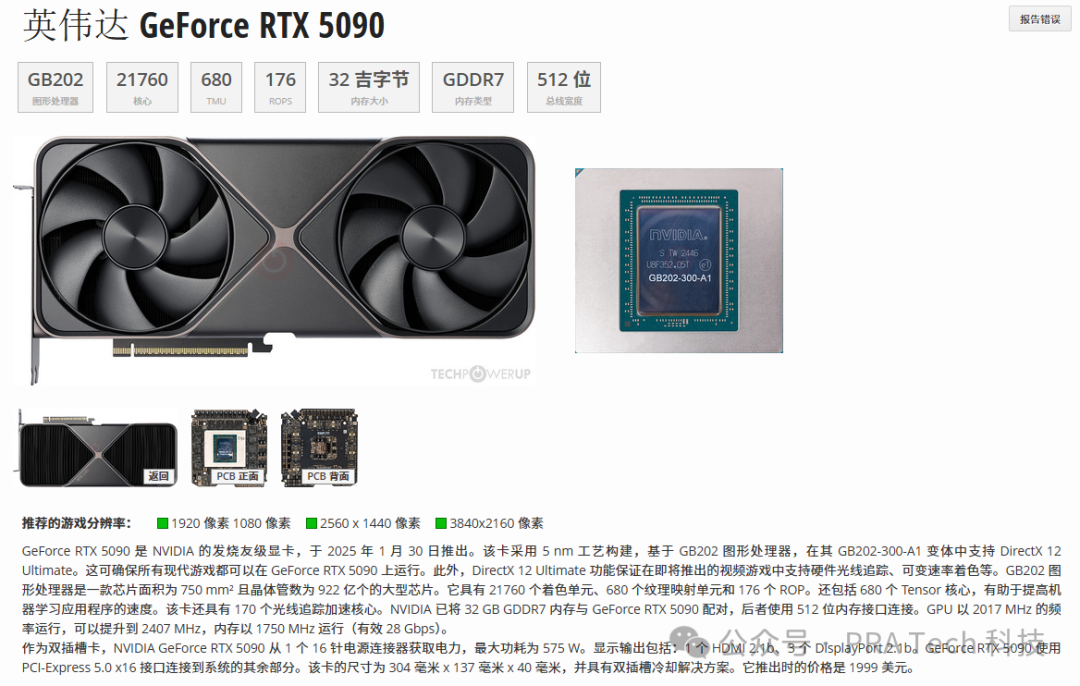
2. Classification of Chips: By Function and Application Scenario
There are many types of chips, which can be classified based on function, application scenarios, etc. Common classifications are as follows:
1. Classification by Function
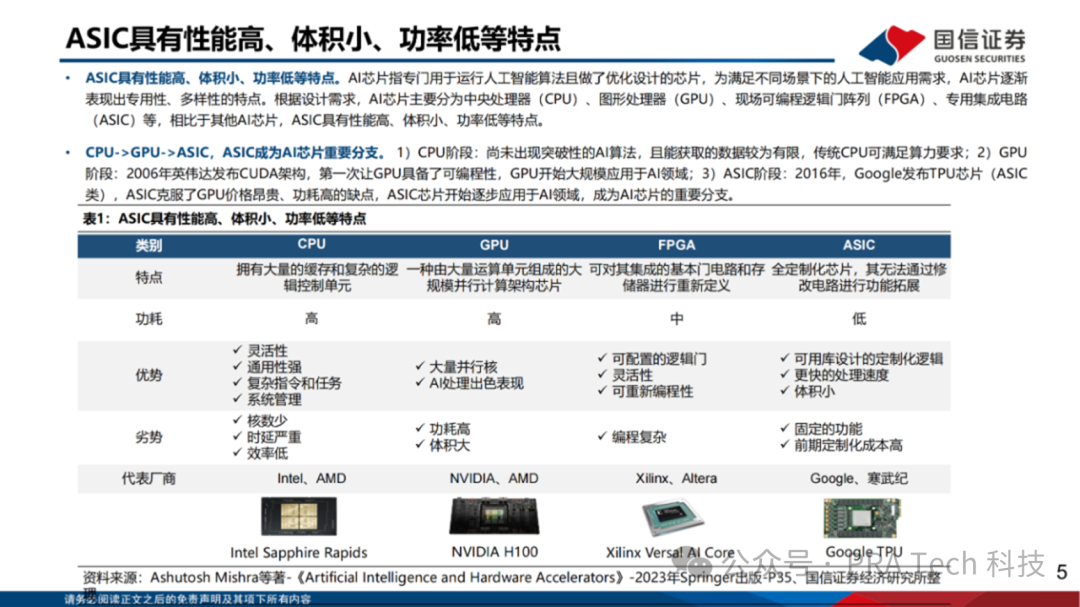
- Logic Chips: Responsible for data computation and logical judgment, serving as the “computational core” of electronic devices.
- Typical representatives: CPU (central processing unit, such as Intel Core for computers, Snapdragon chips for mobile phones), GPU (graphics processing unit, such as NVIDIA graphics card chips), MCU (microcontroller unit, such as control chips in automotive electronics).
- Storage Chips: Used for storing data and programs, equivalent to the “memory” of electronic devices.
- Typical representatives: DRAM (dynamic random-access memory, such as computer memory), NAND Flash (flash memory, such as mobile phone storage, USB drives), ROM (read-only memory, storing fixed programs).
- Analog Chips: Process continuously varying analog signals (such as sound, light, temperature, etc.), achieving signal conversion and amplification.
- Typical representatives: ADC (analog-to-digital converter, converting analog signals to digital), DAC (digital-to-analog converter, the reverse), operational amplifiers, power management chips (PMIC).
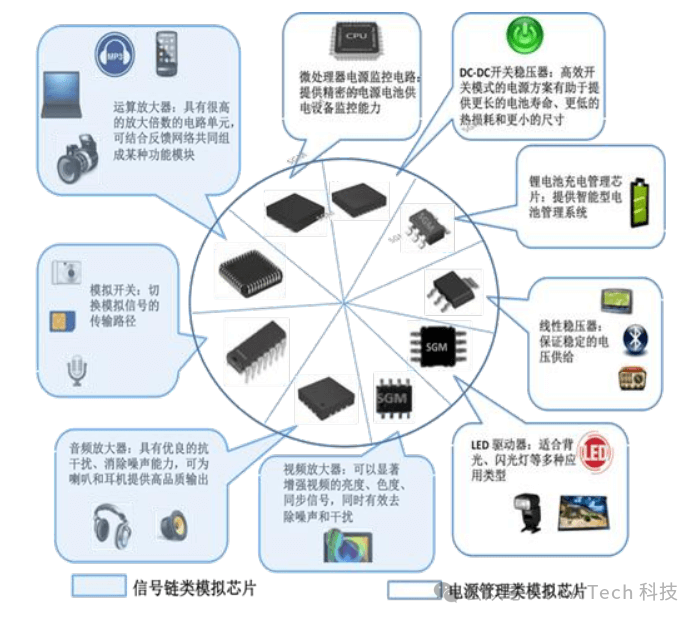
- Application-Specific Integrated Circuits (ASIC): Customized chips designed for specific scenarios, offering higher efficiency but lower flexibility.
- Typical representatives: Bitcoin mining chips, autonomous driving domain controller chips (such as Tesla FSD chips), 5G base station dedicated chips.
2. Classification by Application Scenario
- Consumer electronics chips: such as mobile phone SoCs, smart watch MCUs, TV driver chips, etc. (pursuing low cost and high cost-performance ratio);
- Automotive-grade chips: such as automotive MCUs, autonomous driving AI chips, vehicle networking communication chips, etc. (emphasizing reliability and safety, as explained earlier);
- Industrial-grade chips: used in industrial control, robotics, medical devices, etc. (adaptable to -40℃~85℃ temperature range, with reliability higher than consumer-grade);
- Military/Aerospace-grade chips: used in satellites, missiles, fighter jets, etc. (adaptable to extreme environments of -55℃~150℃, with strong anti-radiation and anti-interference capabilities).
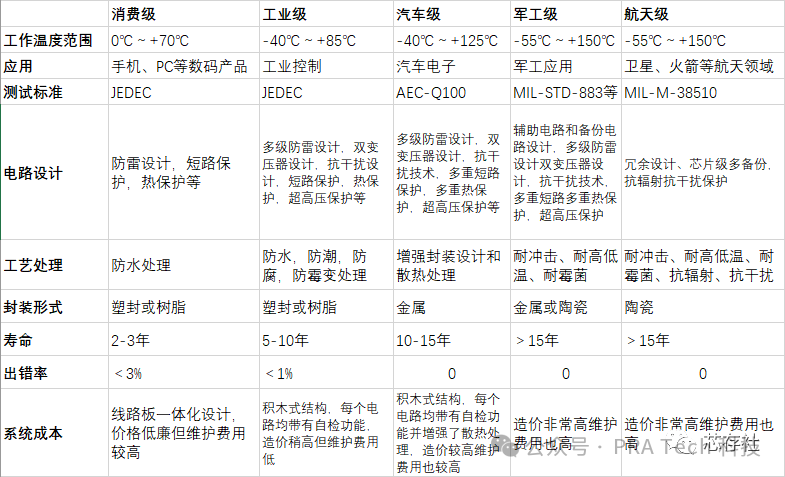 AEC stands for the Automotive Electronics Council, established in 1993 by three major American companies: Chrysler, Ford, and General Motors, as a standardization organization for reliable, high-quality electronic components. Its aim is to establish universal standards for reliable, high-quality electronic components. AEC members are divided into two types: permanent members, usually vehicle companies, and technical members, generally chip companies. AEC provides testing platforms, and chips must undergo AEC-Q series testing after wafer fabrication to pass automotive-grade verification. Therefore, AEC-Q testing is also known as the “basic threshold” for chips to be installed in vehicles.
4. The Importance of Chips: The Cornerstone of Modern Technology
Chips are the core driving force of the information technology revolution, from everyday devices like mobile phones, computers, and home appliances to industrial manufacturing robots and CNC machine tools, and even to high-end fields like aerospace, quantum computing, and artificial intelligence. Almost all electronic devices rely on chips to function. The level of a country’s chip industry directly reflects its technological strength and industrial competitiveness — for example, the design and manufacturing of high-end chips (such as CPUs and GPUs with processes below 7nm) represent a “strategic high ground” in global technological competition.
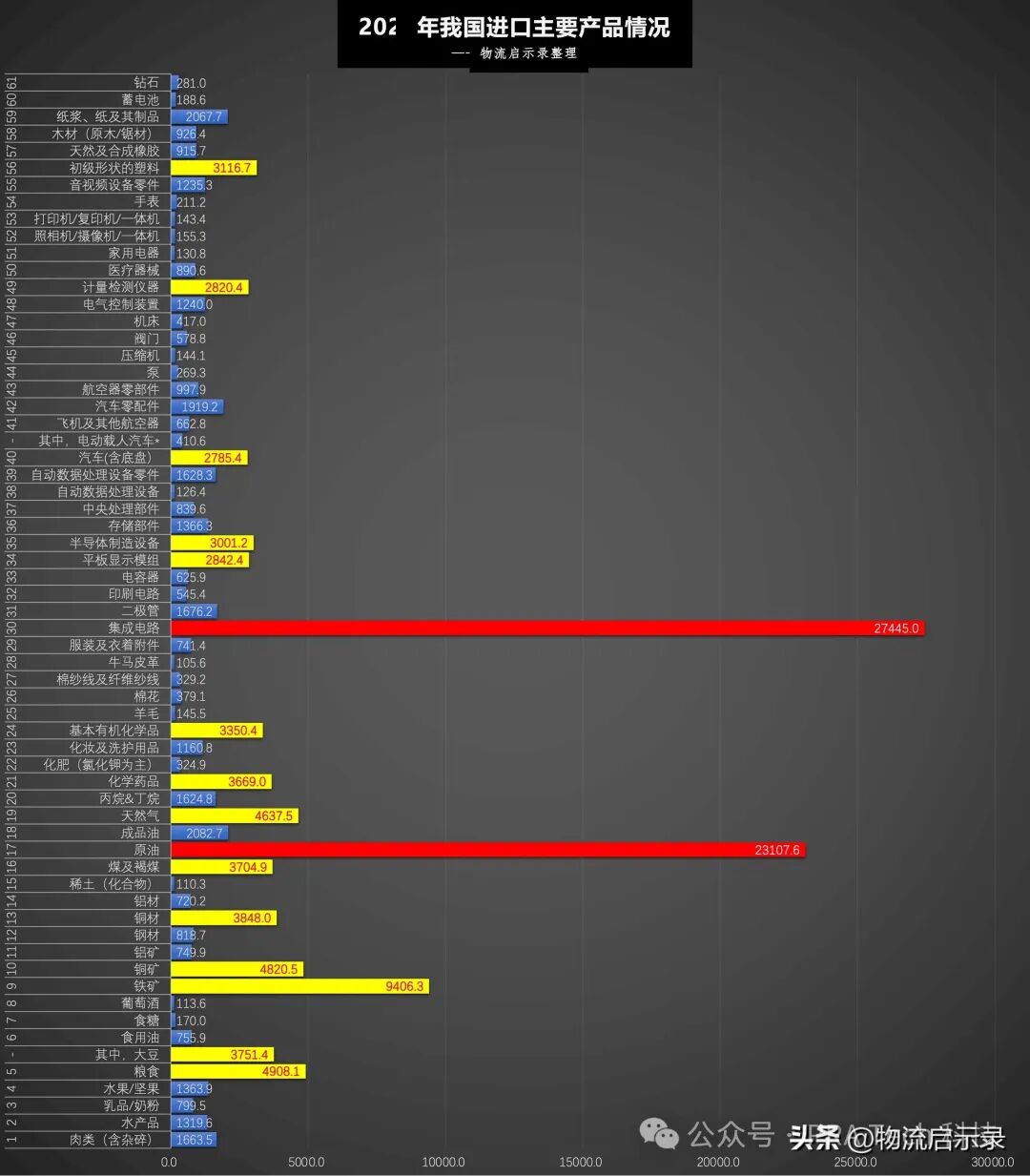
In 2024, China’s (referring to mainland China in this article) total import and export trade volume is 18.39 trillion yuan, a year-on-year increase of 2.3%. Among them:
Crude oil, import quantity of 553 million tons, import value of 2.31 trillion yuan, accounting for 12.56% of total import trade.
Integrated circuits, import quantity of 549.2 billion units, import value of 2.74 trillion yuan, accounting for 14.92% of total import trade.
This article contains some data and images sourced from the internet. The content and conclusions in this article do not represent any position or viewpoint, and are only for learning, discussion, and research purposes. If there are any deficiencies or errors, please feel free to message us for corrections. If you find this helpful after reading, please like and follow!