The road may be long, but we will reach it; the task may be difficult, but without action, nothing can be accomplished.

In March 2018, a small chip company was established in a makeshift office in Zhangjiang, Shanghai.
Prior to this, the two co-founders of the company were a vice president managing thousands of employees at Unisoc and the main person responsible for global chip R&D at AMD.
At that time, no one knew that the Chinese chip industry was about to undergo an unprecedented historical transformation.
In April 2018, the ZTE incident broke out. This sensational news event shocked the entire tech industry, exposing the painful reality of its “chip shortage” to the world.
However, at the same time, it also brought the semiconductor chip industry into the spotlight for the first time—previously, this core industry, considered a national treasure, had been continuously overlooked by capital and talent due to its long investment return cycle and high risks.
For the first time since the reform and opening up, everyone’s attention was focused on the chip industry, with money, talent, and policies rapidly pouring in, bringing unprecedented historical opportunities to countless semiconductor professionals who had nowhere to showcase their talents.
This small company in Zhangjiang, Shanghai is called “Suiyuan Technology”. Three years later, it would become the first startup in China to launch both cloud AI training and inference products, a star unicorn that received four consecutive rounds of investment from Tencent, and another traveler in this grand industrial transformation.
A spark can ignite a prairie fire.

Origin: The Prairie Fire Dream of a Spark
Suiyuan Technology was established in March 2018, at a time when AI chips were at their hottest point, with nearly a hundred AI chip companies emerging both domestically and internationally, and financing amounts often exceeding hundreds of millions, making the competition fierce.
“Isn’t it a bit late?” investors asked Suiyuan, and the industry also questioned Suiyuan.
“Not late,” Suiyuan replied.
On one hand, the semiconductor chip industry is extremely “difficult” to operate, not only due to its high technical difficulty but also because of its complex design process, tight product iteration cycles, and high trial-and-error costs.
Chip projects require operators to have large-scale technical team management capabilities, full-process experience from project initiation to tape-out to sales, and a clear understanding of chip design complexity, process difficulty, mass production quality control, and R&D path planning.
Therefore, after the “scientific research entrepreneurship wave” in AI chips had passed, capital and industry increasingly favored founders with strong industrial backgrounds. CEO Zhao Lidong and COO Zhang Yalin, with over ten years of industry experience and backgrounds in both Unisoc and AMD, are precisely the composite entrepreneurs that the industry urgently needs.
Zhao Lidong and Zhang Yalin are former colleagues from AMD. Before co-founding Suiyuan Technology, Zhao Lidong served as Senior Director of AMD’s Computing Division, Senior Director of Product Engineering, Vice President of Unisoc, President of Unisoc’s RDA Microelectronics, and Vice President of Unisoc Group.
Zhang Yalin, on the other hand, served as a Senior Chip Manager and Technical Director at AMD, and participated in the establishment, development, and management of AMD’s Shanghai R&D Center’s integrated chip department, AMD’s Beijing R&D Center, and AMD’s China Multimedia IP department.
On the other hand, and more importantly, Suiyuan aimed from the very beginning at the hardest “nut to crack”—the cloud AI training chip, a product that no domestic startup in the AI chip sector had ever produced.
Compared to terminal AI chips (such as IoT chips and smart voice chips), AI chips used in cloud data centers are inherently “discouraging” for many startups due to their highly complex chip design and high tape-out costs. Specialized AI training chips for algorithm training are even more challenging, with no one daring to take on the challenge.
This is precisely why Tencent is optimistic about Suiyuan.
At that time, major domestic tech giants like Huawei, Alibaba, and Baidu had successively announced their self-developed/investment plans for AI chips, while Tencent remained still, waiting for the best opportunity.
Less than a month after its establishment, Suiyuan Technology had already secured nearly 30 million yuan in seed round financing from Yihe Capital (a fund under Wuyuefeng Capital), Zhenge Fund, Datang Capital, Yunhe Capital, and Shanghai Science and Technology Innovation Investment.
From academia to industry, from investment to R&D, many figures in China’s semiconductor industry have Tsinghua alumni among them. Zhao Lidong graduated from the legendary class of 1985 in the Department of Radio Engineering (EE85), which includes notable alumni such as Zhao Weiguo, Chairman of Unisoc Group, Wei Renrong of Shanghai Weir, Shu Qingming, co-founder of GigaDevice, Feng Chenhui, co-founder of Chipone, and Zhao Lixin, founder of Goke Microelectronics.
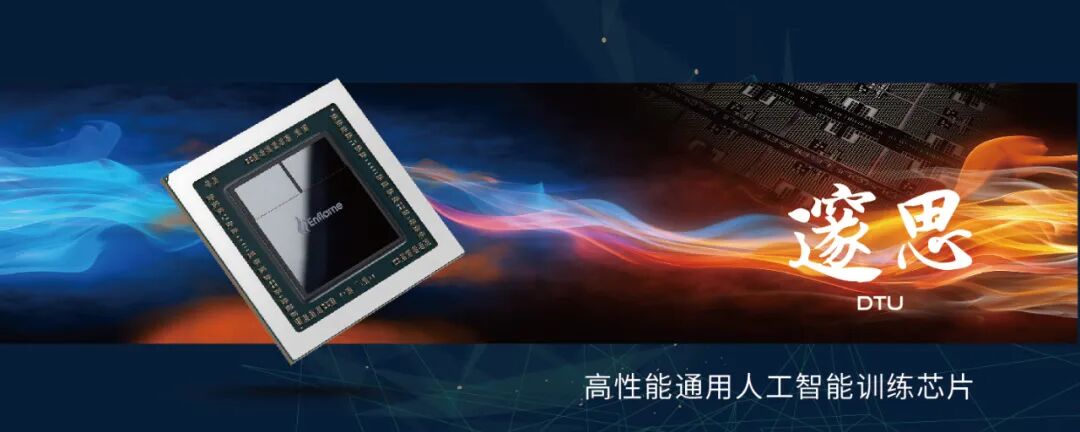
At the launch event for Suiyuan Technology’s first cloud AI training chip “Suisu” in 2019, Professor Wei Shaojun, Director of the Microelectronics Institute at Tsinghua University, also attended, stating that Suiyuan’s achievements were “remarkable” and “could attract significant global attention.”
However, all of this is in the future. In April 2018, Suiyuan’s entire team consisted of only 10 people, and the R&D work had just begun. The only tangible output was a PPT filled with the company’s product positioning, strategic direction, and technology development path, along with the years of industry accumulation from the two co-founders.
Coincidentally, what Tencent valued was precisely the strong industry accumulation of the Suiyuan team and their ambitious goal set at the beginning of their entrepreneurship—”to make big chips and compete in hard technology.” In July 2018, Suiyuan Technology announced the completion of a Pre-A round financing led by Tencent, amounting to 340 million yuan, with seed round investors participating.
Less than a year later, in May 2019, Suiyuan Technology announced the completion of a 300 million yuan A round financing, led by Sequoia Capital China Fund, with participation from Haisong Capital, Yunhe Capital, Tencent, and others.
Also in May, Suiyuan’s first cloud AI training chip began tape-out.

From 0 to 100
For the capital market, Suiyuan’s speed and amount of financing are impressive. However, for the industry, what impresses most is Suiyuan’s control over the rhythm of chip R&D and product landing.
More than one person has remarked, “The speed of Suiyuan’s R&D landing is simply too fast.”
Generally speaking, the R&D cycle in the semiconductor chip industry is long, typically ranging from 12 to 24 months. Therefore, the rhythm of chip R&D is very tight; before one generation of products is mass-produced, the R&D for the next generation must begin. Moreover, one generation cannot be delayed or fall behind; otherwise, the hard-won territory will be easily occupied by competitors closing in.
Zhang Yalin once mentioned in an interview, “In large companies, there is a ‘1+1’ model where it takes a year from project initiation to tape-out and another year from tape-out to mass production. Suiyuan executes this model precisely.”
However, those with entrepreneurial experience know that for a startup—especially a chip startup—too many variables and uncertainties make “on-time delivery” and “precise delivery” extremely challenging.
Throughout the chip design process, it is necessary to balance R&D progress, performance, power consumption, cost, and other factors; during the chip manufacturing and mass production process, there are numerous complex process links involving yield, heat dissipation, stability, reliability, cost control, and performance optimization that require continuous refinement.
For example, before the design freeze of Suiyuan’s first chip “Suisu”, several rounds of functional and PPA optimization iterations had been completed, and the chip had passed design verification, meeting the design freeze standards in terms of functionality and performance.
At this point, the chip design leader believed that there was still room for optimization in power consumption. However, exploring power consumption optimization again when the design was already stable meant needing more time, which would bring high risks and opportunity costs to a project that had already been under tight pressure for a long time.
The imminent freeze date made “accepting imperfection” seem like a rather helpless yet more reasonable and prudent choice.
“But how do we know if we don’t try?” R&D leader Feng Chuang recalled this experience to 36Kr, saying, “I believe we need to explore on the path of high risk and high reward to achieve the best delivery.”
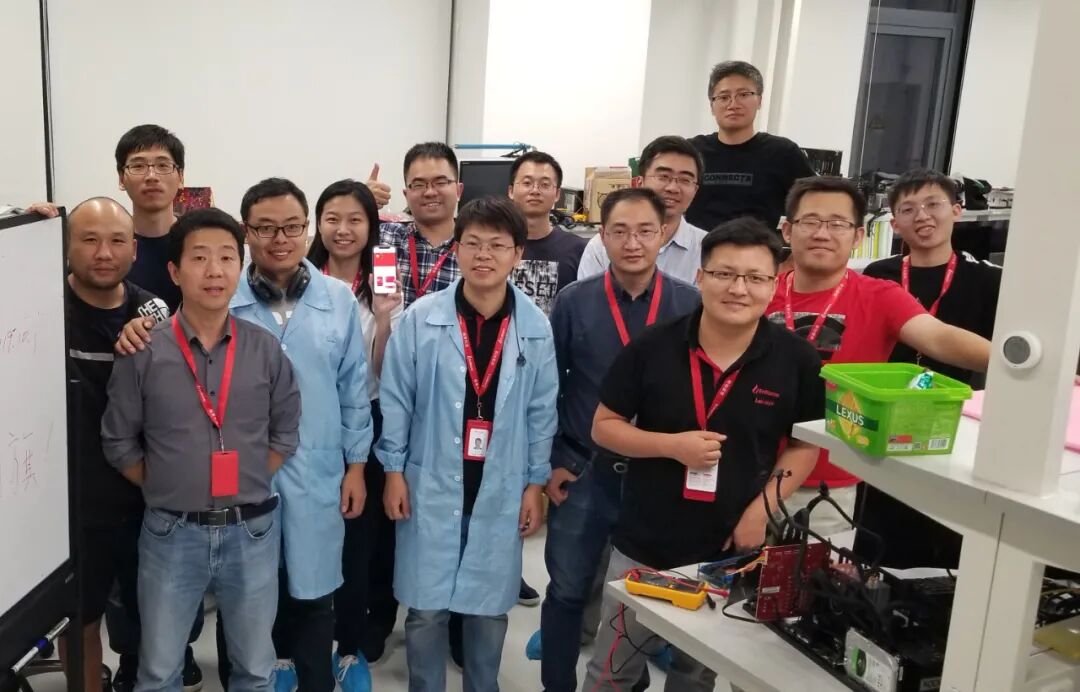
Within a day, different teams from various R&D departments quickly formed a task force, each responsible for different aspects such as design, power consumption analysis, and iterative optimization, working almost day and night.
Surprisingly, within two weeks, the task force quickly found an optimization plan, ultimately reducing the chip’s power consumption by 30%—far below the expected parameters—”perfectly” meeting the design freeze deadline.
“(We) do not give up, seizing every opportunity that can be realized, and we are not afraid of failure,” said Feng Chuang.
Hardware is like this, and software is even more so.
Artificial intelligence is an extremely emerging field, and AI-specific chips are even more so. During the development of Suiyuan’s AI chip software stack, there were no industry standards, no reference designs, and no clearly defined user scenarios, making the entire R&D process filled with enormous uncertainty, almost like crossing a river by feeling the stones.
However, software is precisely the “soft power” core of AI chips. For users, the performance of AI algorithms running on the chip is a more important reference indicator than the rated parameters.
Before the official tape-out of Suiyuan’s AI chip, customers wanted to understand the estimated performance of the chip under typical benchmarks. This was not a simple task; at that time, there were no performance models available for reference on the market. More than half of Suiyuan’s software team spent nearly two weeks manually calculating and analyzing various operators across 150 layers, verifying each one.
After the chip tape-out, the software team also gathered elite engineers from various groups to comprehensively optimize the estimated performance for benchmarks, taking 10 months of countless late-night debugging and optimization to ensure that Suiyuan’s AI chip could exceed expectations in actual measured performance.
Of course, relying solely on the “efforts” of the R&D team is not enough.
As mentioned above, a complex chip project requires operators to have large-scale technical team management capabilities, full-process experience from project initiation to tape-out to sales, and a clear understanding of project management and R&D path planning.
In its early days, Suiyuan Technology established multiple work locations in Shanghai, Beijing, and other places, thereby creating a complete remote R&D collaboration system, including front-end and back-end collaborative development across locations and departments, as well as secure areas and channels for employees to remotely access server resources.
This ensured that when the COVID-19 pandemic broke out in 2020, Suiyuan’s R&D progress was almost completely unaffected, allowing it to continue to develop rapidly along the established path.

The Unicorn’s Ecological Feedback
Many people know that there have been large areas of “bottlenecked” fields in China’s chip industry—such as domestic CPUs, GPUs, and cloud AI training acceleration chips.
However, in fact, what we lack is far more than just hardware; we also lack the underlying systems, software, and entire application ecosystems built on these domestic chips—without software, chips are like cooking without rice, unable to realize their maximum value.
Although every chip company now has its own software team, the power of individual points is still too small. This situation troubles Suiyuan and the entire high-tech industry.
To address this situation, in December last year, Suiyuan Technology and Shanghai Jiao Tong University jointly established the “Cloud AI Acceleration System Joint R&D Center”, dedicated to developing AI systems and applications based on domestic AI chips, creating a software ecosystem for domestic AI chips, with Professor Yao Jianguo, Vice Dean of the Software School at Shanghai Jiao Tong University, serving as the director of the R&D center.
Professor Yao told 36Kr that his academic team had previously focused on the software ecosystem of domestic CPUs and had achieved good results. However, there has always been a gap in the market for domestic AI training chips.
Through cooperation with Suiyuan, the R&D center will build a software R&D team focused on domestic AI chips, applying the results of university basic research to domestic AI computing systems.
In February this year, Suiyuan also established an Innovation Research Institute within the company, with Professor Yao Jianguo becoming the first scholar to join as Chief Scientist of System Software. The research results of the Innovation Research Institute will be more quickly applied to Suiyuan’s AI products, including providing advanced system software technology and architecture support for current products and conducting cutting-edge research for the company’s product roadmap.
In January of this year, Suiyuan Technology announced the completion of 1.8 billion yuan in C round financing, led by CITIC Industrial Fund, CICC Capital’s fund, and Springhill Capital, with participation from Tencent, Wuyuefeng Capital, Sequoia Capital China Fund, and many other new and old shareholders.
As of now, in just three years since its establishment, Suiyuan Technology has raised over 3 billion yuan, becoming one of the most prominent players among the new generation of AI chip startups, undoubtedly a unicorn.
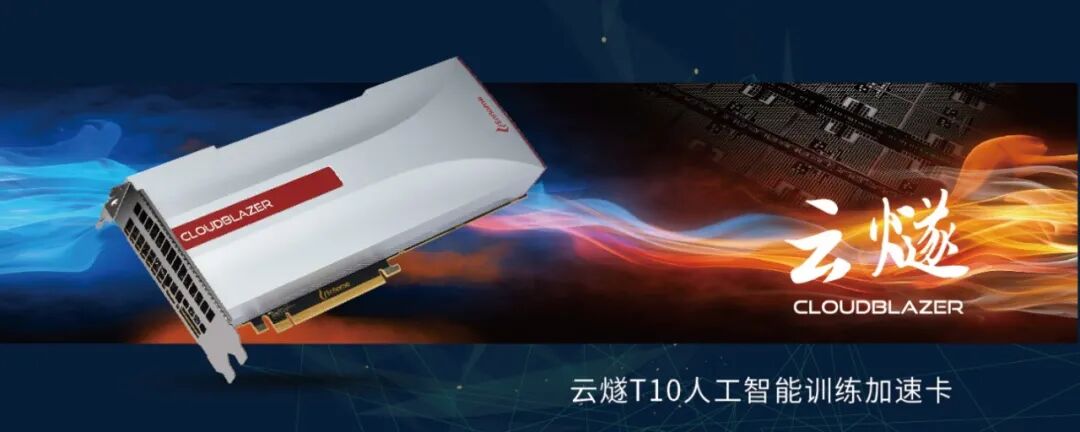
Meanwhile, starting from Q3 2020, Suiyuan’s first AI training acceleration card “Yunsui T10” has already been commercially deployed in cloud data centers for internet and financial clients.
Since 2016, AI chips have gone through the initial stage of user adoption and are gradually being implemented across various industries.
However, the aftershocks triggered by the ZTE incident are still reverberating in the industry, with countless startups like Suiyuan lighting the way and forging ahead, striving to continuously produce in various fields such as chips, algorithms, toolchains, and intelligent computing centers, filling in the gaps in China’s technology industry.
The road may be long, but we will reach it; the task may be difficult, but without action, nothing can be accomplished.

Investor Insights
· Wu Ping, Founding Partner of Wuyuefeng Capital and Founder of Spreadtrum Communications:“The core of artificial intelligence is chips, but they are the most difficult chips to make. Wuyuefeng Capital has been closely following the Suiyuan team and is most optimistic about them. The Suiyuan team has achieved a qualitative breakthrough by completing chips that meet international standards, significantly enhancing China’s voice in this field of the chip industry. We wish and look forward to the Suiyuan team continuing to work hard and achieve greater success.”
· Yuan Wenda, Founding and Managing Partner of Sequoia China:“The AI chip industry is developing rapidly, with many competitors. Suiyuan Technology has great ambition, aiming to make big chips and compete in hard technology, with both long-term planning and short-term layout. In the three years since its establishment, the team has steadily completed its goals, becoming the first domestic startup to launch both training and inference AI products, and has already landed in multiple business scenarios. As an A round lead investor, we are honored to witness the company’s milestone growth.” A spark can ignite a prairie fire. We look forward to continuing to experience the great development of artificial intelligence with Suiyuan!”
· Yao Leiwen, Managing Director of Tencent Investment:“Tencent is a Pre-A round investor in Suiyuan and has since invested in four consecutive rounds. Since supporting Suiyuan’s product ‘hot start’, the company’s development has consistently exceeded our expectations, and we have also engaged in in-depth cooperation and landing with Tencent’s business departments. The company has successfully launched the ‘Yunsui T10’ and ‘Yunsui T11’ for cloud training scenarios, as well as the ‘Yunsui i10’ for cloud inference scenarios, along with the accompanying ‘Yusuan’ software platform, entering the stage of real scene application. The development potential demonstrated by the company during the ‘from zero to one’ process is impressive, giving us stronger confidence in China’s original technology strength. At the same time, we believe Tencent can continue to play a role in promoting Suiyuan’s future growth, both as a deep cooperation partner to help with product iteration and acceleration, and to further deepen industrial cooperation, assisting the development of China’s chip industry and achieving universal computing power. We are honored to accompany such an excellent chip company as Suiyuan in its growth.”