Click the blue words
Follow us
Learning programming is more important than learning English. Because programming languages can impact 7 billion people globally.
—— Apple CEO Tim Cook
“Children who do not learn Python are equivalent to illiterates in the new era!”
Programming is the foundation and core of high-tech fields such as the Internet and artificial intelligence. Currently, we are at the forefront of the popularization of computer programming. Whoever can seize this opportunity will hold a dominant position in the future computer era. Programming education is gradually becoming widespread, and learning programming is of great significance for children’s growth.
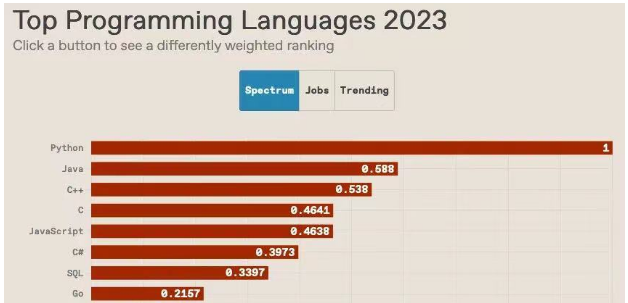
● Programming is the foundation of artificial intelligence The Finnish Minister of Education said: “In the future, if your child understands programming, he will be a creator of the future world; if he does not understand, he is just a user.” We do not wish for all children to become programmers, but we hope every child has the ability to change the world. In the foreseeable future, ‘programming’ will become a fundamental quality that every educated person must possess, just like today’s language, mathematics, and English. Programming is the foundation of the future artificial intelligence era.
●Both domestic and foreign countries are increasingly valuing programming education
Abroad, over 24 countries have made programming a fundamental subject—countries including Japan, South Korea, and several European nations have incorporated programming education into their K12 curriculum or teaching scenarios.
In 2017, Zhejiang Province released the “Pilot Plan for Deepening the Comprehensive Reform of Higher Education Admission System” which clearly stipulates that information technology subjects (including programming) are mandatory for high school students. The Zhejiang college entrance examination model consists of Chinese, Mathematics, English + three elective subjects, with information technology being one of them, each accounting for 50 points.
● Shortage of programming talent and good employment prospects
Futurist Cathy Davidson believes that over 65% of elementary school students will ultimately engage in jobs that do not yet exist. Computer programming is one of the fastest-growing industries today and one of the highest-paying professions. In the United States alone, salaries for computer positions are over 75% higher than the average. It is expected that by 2020, this industry will create over 100,000 new jobs, indicating a bright future for employment in computer programming.
● Programming can improve children’s academic performance
Programming can transform children from users of games into developers of games, allowing them to understand, analyze, and solve problems with data. It greatly aids in enhancing performance in other subjects, including mathematics and physics, while improving children’s logical thinking ability, learning ability, and attention, which are particularly beneficial for constructing thinking in other subjects, as well as aiding in academic performance.
● Programming teaches children how to think The most important aspect of learning programming is learning programming thinking, which is the ability to solve problems. Programming thinking may seem abstract, but it is embedded in our daily lives, learning, and communication. From arranging toys and writing homework to corporate decision-making and business discussions, programming thinking is an efficient way to solve problems. Cultivating this thought pattern from a young age will greatly help children in their future work and life. Undoubtedly, Python is a very popular programming language. It has a wide range of applications and, due to its low learning threshold, is suitable for primary and secondary school students and teenagers for advanced learning in programming.
What exactly is this hot Python programming language? Why is the whole world encouraging children to learn Python?
01 What is Python?
Python is a computer programming language designed by Guido van Rossum of the Dutch Mathematical and Computer Science Research Institute in the early 1990s.
Python is interesting, easy to learn, readable, portable, extensible, and embeddable, making it very suitable for rapid development and highly readable, so it is easier for children to understand. Python is an imperative programming language and a high-level language, offering greater flexibility. Python has a rich and powerful library. It is often referred to as a glue language, capable of easily connecting various modules created in other languages (especially C/C++).
Python’s functionality is very powerful; it is the most commonly used language in artificial intelligence/modern data science, applied in artificial intelligence, scientific computing, big data, finance, system operation and maintenance, graphic processing, text processing, hacking, and web scraping.
It is involved in desktop applications, web development, artificial intelligence, and big data processing.
02 How to learn Python, data science, and artificial intelligence?Learning programming now can enhance children’s competitiveness in future employment and help them adapt more quickly to future living and working environments.For example, fields such as artificial intelligence, informatics, and astronomical informatics all require the use of Python.For instance, when studying celestial bodies, it is often difficult to conduct actual experiments, so simulations must be done via computer, and the best language for simulating is Python, which is also the best tool for data and information processing in astronomy.Currently, artificial intelligence is booming, and most of the AI systems you can name are using Python, such as criminal investigation monitoring facial recognition systems, self-driving cars, intelligent devices beside hospital emergency beds, Baidu Translate, and AlphaGo Go systems, etc. Companies using Python are numerous, products are abundant, and applications are extensive, leading to an increasing demand for talent in the future. The information technology revolution has brought tremendous changes to the world, and the integration of emerging information technologies such as the Internet, big data, and artificial intelligence with education is driving a new educational transformation. The Ministry of Education has actively promoted the development of programming education in primary and secondary schools, indicating that the combination of programming and primary and secondary education is a trend. Let children learn Python, cultivating their programming literacy from a young age, enhancing their information literacy, giving them the wings of technology in the AI era, and nurturing the seeds of strength for the country’s development in artificial intelligence!
Taking writing Python code as an example, here are 9 good programming habits compiled for your reference.
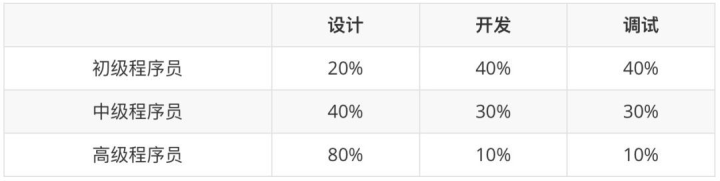
1. Design in Advance
Writing code is like writing an essay; it requires an outline, or it can easily become a “mountain of waste”.
Thinking through business logic and code flow is preparatory work before getting started, which can take more than half the time.
2. Code Comments
Code comments are equivalent to a product manual and are very important.
Code comments are meant for both yourself and others since code needs to be maintained.
When writing code comments, note the following principles:
-
Help others understand your intent in writing the code, rather than repeating what the code does.
-
Keep the wording concise and clear; do not add unnecessary entities unless necessary.
-
Comment on blocks of code rather than single lines of code.
-
Provide detailed comments on various main data structures, output functions, and variables shared by multiple functions.
Python code comment standards:
Python uses documentation strings for comments, using triple double quotes “”” “””.
Documentation strings are the first statement in a package, module, class, or function. These strings can be automatically extracted through the object’s __doc__ member and used by pydoc.
3. Standardized Naming
Naming is one of the most troublesome things for programmers, and many codes suffer from poor readability due to non-standard naming.
Python naming conventions need to consider the following points:
- Module Naming
(1) Modules are recommended to use lowercase naming,
(2) Unless there are many letters, avoid using underscores.
Since many module files contain classes with the same name as the module, modules use lowercase while classes use capitalized initials to distinguish between modules and classes.
- Class Naming
(1) Class names use CamelCase naming style, capitalizing the first letter;
(2) Private classes can start with a single underscore.
- Function Naming
(1) Function names are all lowercase, using underscores to separate multiple words.
(2) Internal function names within a class start with a single underscore (_) (these functions can be inherited).
- Variable Naming
(1) Variable names are recommended to be lowercase, using underscores to separate multiple words.
(2) Internal variable names within a class start with a single underscore (_) (these variables can be inherited).
(3) Class private variable names start with double underscores (__) (these variables cannot be inherited).
- Constants
Constant names are all uppercase, with underscores connecting each word, such as MAX_OVERFLOW, TOTAL.
- File Names
All lowercase, underscores can be used.
4. Keep Code Beautiful
Python enforces indentation, ensuring code cleanliness, but we should also pay attention to details.
❝
Beautiful is better than ugly (Python aims to write beautiful code).
Explicit is better than implicit (beautiful code should be explicit, with standardized naming and similar styles).
Simple is better than complex (beautiful code should be simple, without complex internal implementations).
Complex is better than messy (if complexity is unavoidable, there should be no difficult relationships between codes, and interfaces should remain simple).
Flat is better than nested (beautiful code should be flat, without too many nesting).
Spacing is better than tight (beautiful code has appropriate spacing; do not expect to solve problems with a single line of code).
Readability counts (beautiful code is readable).
Even if under the guise of practicality, do not violate these rules (these rules are supreme).
Do not tolerate all errors unless you are sure you need to (capture exceptions accurately; do not write code in the style of except: pass).
When multiple possibilities exist, do not try to guess; instead, find one, preferably the only obvious solution (if uncertain, use exhaustive methods).
Although this is not easy because you are not the father of Python (the Dutch here refers to Guido).
Doing is perhaps better than not doing, but acting without thinking is worse than not doing (think carefully before acting).
If you cannot describe your solution to someone, it is certainly not a good solution; vice versa.
Namespaces are a great idea; we should use them frequently (advocacy and call).
5. Pay Attention to Backups
Finally, backups go without saying; preventing unexpected situations is very important!
Source | Translated from Python Big Data Analysis
Declaration | Except for original articles from the Bojia Robot Club headquarters, articles shared and reprinted online are for promoting the spread of children’s programming education in China, used solely for learning and exchange, not for commercial purposes, and will be credited. If the original author of the article or photo has objections, please contact customer service for quick processing or deletion. Thank you for your support.
【Previous Highlighted Articles Guide】Please click the image below



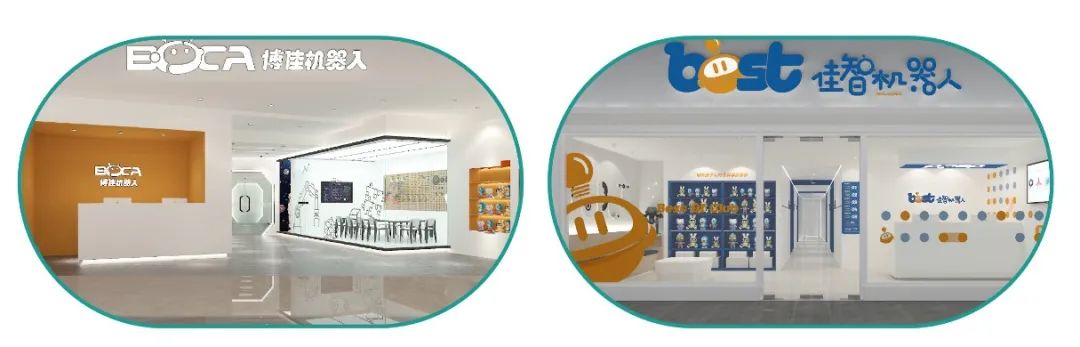
01Bojia EducationBojia Education was established in April 2009, dedicated to the research of robotics education for over a decade! It has been committed to the comprehensive quality education, intellectual development, and innovative robotics education for children aged 3-16. With a strong faculty, robust research and development capabilities, and standardized teaching management. Bojia Education has two major brands—Bojia Robotics and Jiazhi Robotics, which have opened nearly 200 professional robotics clubs in 400+ cities nationwide, providing educational services to over 400,000 students, bringing knowledge and joy to children’s growth!
— THE END —
Welcome everyone to like + “Looking at”
Let us be seen by more people! 👇