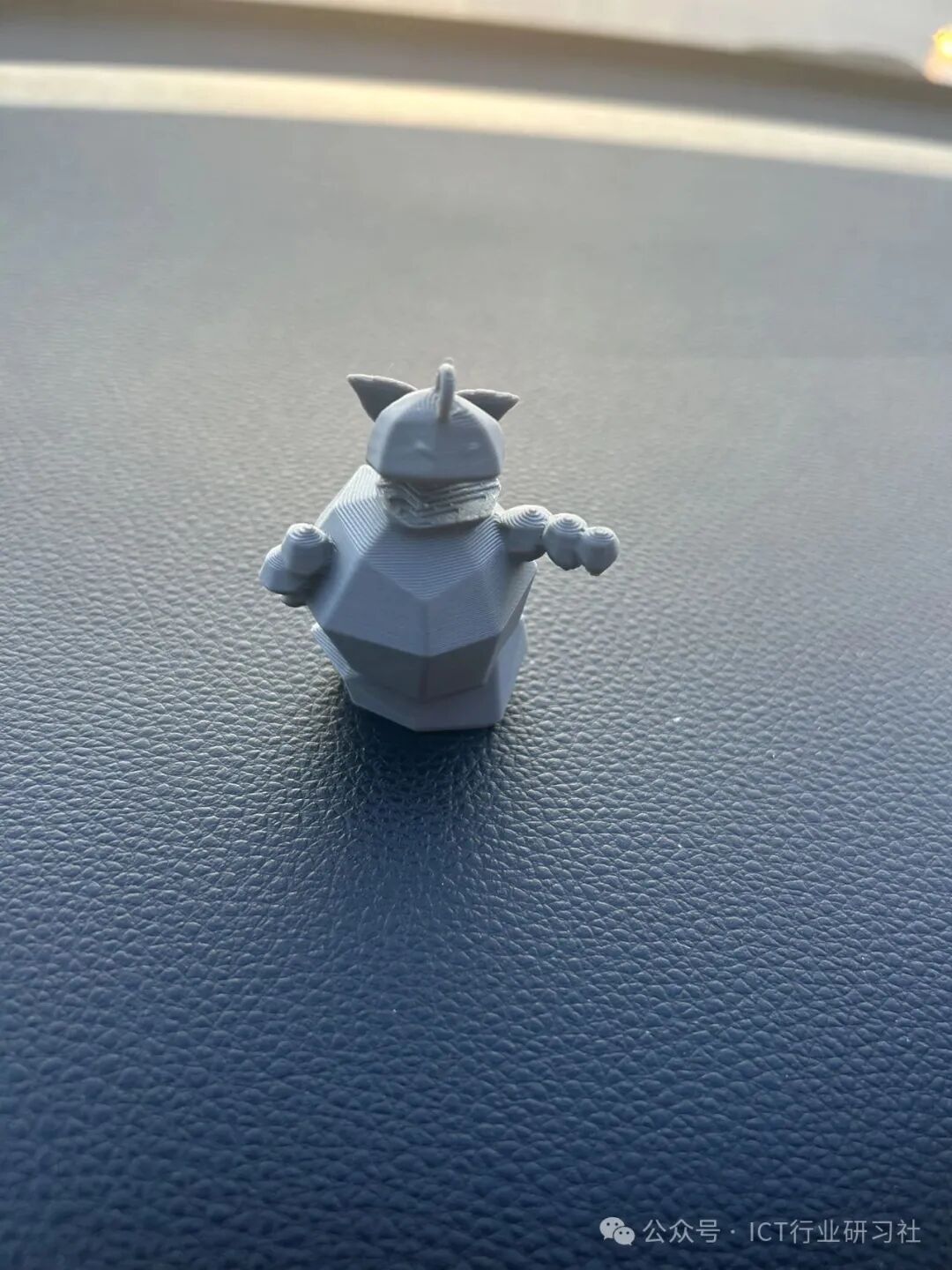
3D Printing: From ‘Blueprint’ to ‘Physical Object’, How Amazing is This Layered Stacking Technology? As more and more people use ‘3D printing’ to customize gifts, create models, and even print food and building components, have you ever wondered: how does this seemingly ‘hardcore’ technology transform virtual designs into tangible objects? Today, we will explain the ‘additive magic’ of 3D printing in the simplest way possible. What is 3D printing? In simple terms, 3D printing is a **’additive manufacturing technology’** — it does not ‘subtract’ material like traditional processing (such as cutting or grinding), but instead, it ‘stacks’ materials layer by layer, ultimately forming a three-dimensional object. From phone cases and toys to aerospace parts and human organ models, as long as there is a digital design, a 3D printer can ‘create’ it. The core steps of 3D printing: From design to finished product in just four steps. 1. Create a ‘digital blueprint’ First, you need to design a three-dimensional model of the object using 3D modeling software (such as Blender or Tinkercad), just like ‘drawing’ a three-dimensional toy, part, or sculpture on your computer. This model will be sliced into countless thin layers, with each layer typically ranging from 0.1 mm to 0.3 mm in thickness. 2. Choose the right ‘printing material’ The materials for 3D printing are diverse, commonly including plastics (PLA, ABS) (suitable for toys and everyday items), metals (used for industrial parts and medical devices), resins (for printing high-precision models, such as figurines), and even food materials (like chocolate and dough). The choice of material depends on the object’s intended use and strength requirements. 3. The machine begins ‘layer stacking’ After importing the design into the 3D printer, the machine will precisely control the nozzle or laser head according to the shape of each layer: ◦ For plastic printing, the nozzle heats and melts the plastic filament, extruding the material along a path like ‘squeezing cream’, which solidifies upon cooling; ◦ For metal printing, a laser melts metal powder, sintering it layer by layer. The entire process resembles a ‘3D puzzle’, stacking one layer on top of another until the object is fully formed. 4. Simple ‘refinement of details’ After printing, it may be necessary to remove support structures (auxiliary materials used to stabilize suspended parts during printing) or to polish the surface for a smoother finish. Why is 3D printing so popular? These advantages are too practical: • Personalized customization: From keychains engraved with names to custom prosthetics, 3D printing can easily achieve ‘one-of-a-kind’ designs without the need for molds, making small-batch production more cost-effective. • Complex structures can also be made: 3D printing can ‘form in one go’ intricate hollow and interlocking structures that are difficult to process with traditional methods, such as hollow mechanical parts and complex artworks. • Material savings + environmental friendliness: Additive manufacturing only uses the necessary materials, reducing waste compared to traditional processing, especially with biodegradable materials like PLA, which aligns with environmental principles. • Lower entry barriers: Home 3D printers are becoming increasingly affordable, allowing ordinary people to print toys and small tools at home, even designing creative projects with their children. How close is 3D printing to our lives? Today, 3D printing is no longer a ‘black technology’ confined to laboratories; it is right around us: • Parents use it to print exclusive toys and cartoon models for their children; • Designers quickly create product prototypes to test appearance and functionality; • The medical field uses it to print dental models, orthopedic implants, and even biological tissues; • The construction industry is experimenting with printing building components to shorten construction time… The magic of 3D printing lies in its ability to make ‘ideas come to life’ simple — as long as you can imagine it, you can turn your virtual ideas into tangible sensations through the ‘magic’ of layer stacking. The next time you see a unique little object, it might just be a ‘masterpiece’ of 3D printing! 🌟
Remember today’s learning outcomes!