In-Depth Analysis of C++ Containers: The Ultimate Comparison and Practical Guide for Vector and List

In-Depth Analysis of C++ Containers: The Ultimate Comparison and Practical Guide for Vector and List

1. Core Differences: Memory Structure Determines Performance CharacteristicsVector uses a contiguous memory layout, with elements arranged neatly like soldiers, supporting O(1) complexity for random access, but insertion and deletion require moving subsequent elements. List, on the other hand, resembles a pearl necklace, with each node connected by pointers, supporting O(1) complexity for insertion and deletion … Read more

High-Performance Logging System in C: Asynchronous and Zero-Copy

High-Performance Logging System in C: Asynchronous and Zero-Copy

Overview A high-throughput, low-latency logging system relies on two key aspects: deferring synchronous write delays to the background (asynchronous) and minimizing memory copies (zero-copy). This article provides engineering-level implementation ideas, reusable code snippets, and performance comparisons, suitable for direct adaptation in production systems. In Short • Decouple log collection (format) from disk writing: the main … Read more

Ctypes and SIMD Collaboration: A Breakthrough Path for High-Performance Computing in Python

Ctypes and SIMD Collaboration: A Breakthrough Path for High-Performance Computing in Python

In the field of high-performance computing, Python often faces performance bottlenecks due to its interpreted nature. However, the collaborative application of ctypes and SIMD instruction sets provides an effective path to overcome these limitations. 1. Basics of Performance Engineering with ctypes 1.1 Core Value of ctypes As part of the Python standard library, ctypes enables … Read more

Breaking Performance Limits: Accelerating Binary Search Algorithms with SIMD Instruction Sets

Breaking Performance Limits: Accelerating Binary Search Algorithms with SIMD Instruction Sets

In the programming world, the binary search algorithm has always been one of the most classic and efficient search algorithms. It can find the target element in O(log n) time complexity, making it the preferred solution for handling ordered data. However, in today’s era of big data, even O(log n) time complexity can become a … Read more

In-Depth Analysis of Network Protocols: The Evolution from HTTP to QUIC

In-Depth Analysis of Network Protocols: The Evolution from HTTP to QUIC

“ In previous articles, we discussed the OSI seven-layer model and proxy VPN technology. Today, we will explore the development of network protocols, particularly the evolution from HTTP/1.1 to HTTP/3, and how these changes impact our daily development and security analysis. The Development of Network Protocols Network protocols are akin to the evolution of human … Read more

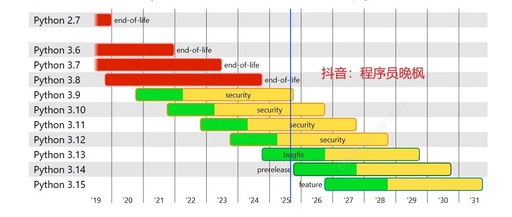
Python 3.14 Release Scheduled for October 1: Overview of Core Updates

Python 3.14 Release Scheduled for October 1: Overview of Core Updates

Hello everyone, I am Programmer Wan Feng. Learning website:www.python-office.com, focusing on AI and Python automation.[1] 1. Concepts and Principles Python 3.14 is the latest version of the Python programming language, scheduled for official release on October 1. This version brings multiple core updates aimed at enhancing development efficiency, optimizing performance, and introducing new language features. … Read more

What is the Use of C++ noexcept?

What is the Use of C++ noexcept?

<span>noexcept</span> is a keyword introduced in C++11, used to specify that a function will not throw exceptions. It serves as both a specifier and an operator, playing an important role in performance optimization, code safety, and compiler optimization. 1. <span><span>noexcept</span></span> Basic Usage 1. As a Function Specifier void my_function() noexcept { // This function promises … Read more

Essential C++ Performance Optimization: The 15-Byte Critical Point of std::string

Essential C++ Performance Optimization: The 15-Byte Critical Point of std::string

1. Introduction In C++ development, std::string is one of the most commonly used data structures. On the surface, it is merely a “string class,” but its underlying implementation contains hidden intricacies. Understanding these principles not only helps in writing more efficient code but also avoids some subtle performance pitfalls. In this article, we focus on … Read more

Achieving Sub-Microsecond System Response with WangHuo Real-Time Linux

Achieving Sub-Microsecond System Response with WangHuo Real-Time Linux

In the previous article《The Fastest Real-Time Linux with Maximum Response Latency of 480 Nanoseconds Released by Guoke Huanyu》, we showcased the actual performance of the system achieving sub-microsecond end-to-end response, which garnered significant attention. This article provides key implementation paths and engineering points to facilitate users in quickly reproducing and further optimizing the results. Linux … Read more

Tool Recommendation! This ccusage Can Analyze C/C++ Source Code Call Hotspots and Identify Performance Bottlenecks!

Tool Recommendation! This ccusage Can Analyze C/C++ Source Code Call Hotspots and Identify Performance Bottlenecks!

Today, I want to share a small tool I recently discovered — <span>ccusage</span>. Although the project is not large, its functionality is indeed impressive! I tried it out, and it **directly analyzed tens of thousands of lines of C code in a project, producing results in seconds, and the performance skyrocketed!** It is fantastic for … Read more