File Input and Output in C++

File Input and Output in C++

In C++, File Input and Output refers to the program’s operations for reading (input) and writing (output) data to and from files on disk. This is a crucial feature in many practical applications, such as: Reading configuration files Saving user data (e.g., game saves, score records) Importing/exporting text or data files Logging, etc. 🎯 1. … Read more

GESP Level 4 – (2) C++ File Redirection and File Read/Write Operations

GESP Level 4 - (2) C++ File Redirection and File Read/Write Operations

1. File Read/Write C++ provides two main methods for file read/write operations: the C-style FILE* method and the C++ stream-based fstream method. 1) FILE File Pointer <span>FILE</span> is a structure type defined in <stdio.h>, which includes information such as file descriptor, buffer information, current read/write position, and error and end-of-file flags. Common Modes: <span>"r"</span> – … Read more

Detailed Explanation of C++ File Input and Output Streams

Detailed Explanation of C++ File Input and Output Streams

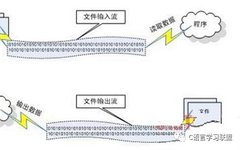
Preface/PREFACE The standard C++ file operations are mainly accomplished through the file stream fstream. File input/output streams are used to implement file reading and storage operations, as illustrated in the following diagram: How to read from a file input stream and write to a file output stream. This requires the use of another standard library … Read more

C++ Tutorial – Detailed Explanation of Files and Streams in C++

C++ Tutorial - Detailed Explanation of Files and Streams in C++

In C++ programming, we use the iostream standard library, which provides the methods cin and cout for reading from input and writing to output. To read from and write to files, we use a standard C++ library called fstream. Let’s take a look at the data types defined in the fstream library: Data Type Description … Read more