The Latest Guide to Embedded Development Directions in 2025: Insights from a DSP Engineer
The Latest Guide to Embedded Development Directions in 2025: Insights from a DSP Engineer

This is a tailored guide for you: “2025 Embedded Development Direction Selection Guide”. Whether you are a confused student or an engineer looking to transition, this article will help you: Get a comprehensive view of embedded technology and its subfields at once. Clearly assess the technical requirements and learning difficulties of each direction. Precisely identify … Read more

Packaging Keil Source Code into a Lib Library and Usage Instructions

Packaging Keil Source Code into a Lib Library and Usage Instructions

I remember when I first started in the industry, I received a company code that included a Lib library. Although there were not many places where it was called, it was very frustrating because I couldn’t step into the code during debugging and couldn’t see the source code. My supervisor said this was the company’s … Read more

How to Rewrite C++ Programs in C?

How to Rewrite C++ Programs in C?

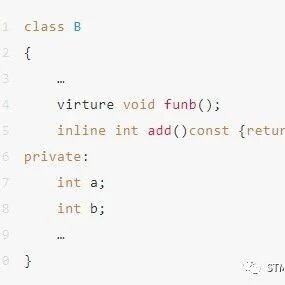
Due to the C++ interpreter occupying approximately 500k more storage space than the C language interpreter, it is necessary to rewrite source programs written in C++ into C to save limited storage space, reduce costs, and improve efficiency. The biggest difference between C++ and C is the concept and features of classes in C++. The … Read more

Transitioning from Non-Technical Background to C++ Embedded Development: From Mass Applications to 10 Job Offers, Earning 180K!

Transitioning from Non-Technical Background to C++ Embedded Development: From Mass Applications to 10 Job Offers, Earning 180K!

01 About the Author & Career Transition I graduated in 2022 from a non-prestigious university with a major in Transportation. After graduation, I joined a state-owned enterprise, working in site material management. After six months, I decided to resign and attempted to pursue a master’s degree, but I was unsuccessful for two consecutive years. At … Read more

Enabling Network ADBD Service in Buildroot

Enabling Network ADBD Service in Buildroot

When building the Linux system on chips such as RK3562/6/8, RK3576, and RK3588 using Buildroot, if you want to support the ADBD service for network access to the board, the following operations are required:1. When integrating the ADBD service in Buildroot, if the configuration optionBR2_PACKAGE_ANDROID_ADBD_TCP_PORT is not set, it defaults to 0, meaning that the … Read more

Common Variables and Data Types in Embedded C Programming

Common Variables and Data Types in Embedded C Programming

1. Common Variables in C Language 8-bit Unsigned Long Integer Range: [0-255] 16-bit Unsigned Long Integer Range: [0-65535] 32-bit Unsigned Long Integer Range: [0-4294967295] Refer to the following: Add image caption, no more than 140 characters (optional) Note: Variable definitions should be at the beginning of the function, and no other statements should precede the … Read more

Understanding Byte Alignment in Embedded C Language

Understanding Byte Alignment in Embedded C Language

Recently, a fan asked me: “Why is the size of the structure I defined always larger than the sum of the sizes of its member variables?” Don’t worry, this isn’t the compiler “stealing memory”; it hides an important concept—byte alignment. Today, we will explain this using the logic of “arranging books on a shelf” so … Read more

C Language in Embedded Development

C Language in Embedded Development

Abstract: This article first analyzes the traps and defects of the C language, summarizing the common mistakes; it discusses the shortcomings of compiler semantic checks and provides preventive measures. Using the Keil MDK compiler as an example, it introduces the features of this compiler, its handling of undefined behavior, and some advanced applications. Based on … Read more

Using Go Instead of C for Embedded Linux Development? Avoid These Pitfalls!

Using Go Instead of C for Embedded Linux Development? Avoid These Pitfalls!

Go is a new generation programming language that combines the rapid prototyping advantages of Python with the performance benefits of C/C++. This characteristic makes it suitable for the embedded field as well, but what factors need to be considered to achieve optimal usage? Generally speaking, the most important evaluation aspects for correct operation include the … Read more