Comprehensive Optimization of Python ctypes: A Practical Guide from Debugging Traps to Performance Peaks

Comprehensive Optimization of Python ctypes: A Practical Guide from Debugging Traps to Performance Peaks

1. Debugging Techniques for the ctypes Module 1. Cross-Platform Error Diagnosis Mechanism When calling dynamic link libraries on Windows, <span>ctypes.get_last_error()</span> is a core debugging tool. For example, when calling <span>CreateFileW</span> fails, the following code can be used to capture the error: from ctypes import windll, wintypes, get_last_error try: handle = windll.kernel32.CreateFileW( wintypes.LPCWSTR("nonexistent.txt"), wintypes.DWORD(0), wintypes.DWORD(0), None, … Read more

Understanding the Intensity Required for C++ Interviews

Understanding the Intensity Required for C++ Interviews

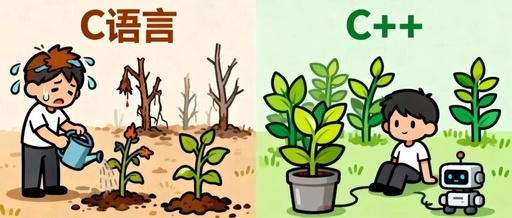
No one would really go to a C++ interview without any preparation, right? C++ Basics (30 Questions) Characteristics of C++ Discuss the differences between C and C++ Discuss the differences between struct and class in C++ The order of including header files and the difference between double quotes “” and angle brackets <> Discuss the … Read more

Understanding ‘Callback Hell’ in C Language

Understanding 'Callback Hell' in C Language

Content Hello everyone, I am Bug Jun~Recently, I came across a very interesting term “callback hell”, which refers to endless callback functions that ultimately lead to stack overflow and deadlock. The manifestation of this is multiple layers of nested function pointer callbacks, resulting in poor code readability and maintenance difficulties.Below is a simple example simulating … Read more

In-Depth Exploration of C Language: long and long long, and the “Unwritten Rules” of CPU Architecture!

In-Depth Exploration of C Language: long and long long, and the "Unwritten Rules" of CPU Architecture!

We have already learned aboutshort and int types. A short typically occupies 2 bytes, while an int usually occupies 4 bytes. The larger the byte size, the greater the range of data it can represent. For example, the int type can represent values around ±2 billion, as clearly stated in Microsoft’s documentation. Today, we will … Read more

Three Weeks and a Button-Sized Chip: The Birth of a C Language Interpreter (Open Source)

Three Weeks and a Button-Sized Chip: The Birth of a C Language Interpreter (Open Source)

Inspired by the legendary creation of UNIX, the miracle of a C language interpreter was recreated on a button-sized chip over three special weeks.During the three special weeks from late 2024 to early 2025, drawing inspiration from the legendary creation of UNIX as an ordinary programming enthusiast, I completed a challenging task on an ESP32 … Read more

Using Go Instead of C for Embedded Linux Development? Avoid These Pitfalls!

Using Go Instead of C for Embedded Linux Development? Avoid These Pitfalls!

Go is a new generation programming language that combines the rapid prototyping advantages of Python with the performance benefits of C/C++. This characteristic makes it suitable for the embedded field as well, but what factors need to be considered to achieve optimal usage? Generally speaking, the most important evaluation aspects for correct operation include the … Read more

Bid Farewell to C++ Memory Worries: Smart Pointers, Your Trusty Memory Manager

Bid Farewell to C++ Memory Worries: Smart Pointers, Your Trusty Memory Manager

In the journey of C++, manual memory management is like walking through a minefield. Have you ever experienced this? Using <span>new</span> to allocate memory, only to silently leak it because you forgot to call <span>delete</span>; or deleting a pointer that shouldn’t have been deleted, causing fatal errors from dangling pointers; or the same memory being … Read more

The 5 Most Dangerous Operations in C++: Lessons Learned from Years of Experience

The 5 Most Dangerous Operations in C++: Lessons Learned from Years of Experience

From WeChat Official Account: Program Cat Master This article summarizes what I believe to be the five most dangerous “self-destructive” operations in C++ development, each of which can cause your program to crash or exhibit hard-to-debug strange behaviors. These pitfalls are derived from painful lessons learned, and understanding and avoiding them will greatly enhance your … Read more

Essential Guide to Advanced C Programming: Variable Arguments and Dynamic Memory Management with Principles and Examples

Essential Guide to Advanced C Programming: Variable Arguments and Dynamic Memory Management with Principles and Examples

When writing in C, do you often encounter these challenges? Want to implement a function to calculate the average of an arbitrary number of values but get stuck on “the number of parameters is uncertain”; After defining an array, you find that the memory is insufficient and have to redo the code; Even though the … Read more

Understanding the Differences Between new/delete and malloc/free in C++

Understanding the Differences Between new/delete and malloc/free in C++

In memory management for C++ and C, new/delete and malloc/free are two core sets of tools, yet they have fundamental differences. malloc/free are library functions in C that are solely responsible for memory allocation and deallocation, without involving type information, returning a void * that requires manual casting. In contrast, new/delete are operators in C++ … Read more