Fundamentals of CAN Bus Communication: Binary, Decimal, and Hexadecimal
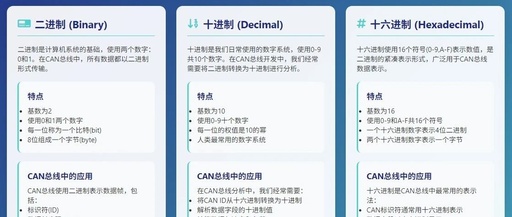
Fundamentals of CAN Bus Communication: Binary, Decimal, and Hexadecimal

☆Star this public account to not miss any updates☆ Whether it is the CAN bus or any computer system, data is ultimately stored and processed in binary. However, for the convenience of human reading and writing, we extensively use hexadecimal and decimal. Below, I will explain in detail binary, decimal, and hexadecimal, as well as … Read more

How Assembly Language Represents Data

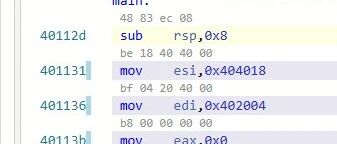
How Assembly Language Represents Data

In assembly language, programs are composed of a stream of instructions, which generally consist of operators and operands. The operator is the action that the CPU performs to accomplish a specific function, while the operand is the object that the operator processes. For example, in the instruction: add eax, 42, “add” is the operator that … Read more

Assembly Language Tutorial

Assembly Language Tutorial

Introduction to Basic Concepts of Assembly Language 1.1 What is Assembly Language? 1.2 Applications of Assembly Language 1.3 What is a Virtual Machine? 1.4 Data Representation in Assembly Language 1.5 Binary (bit) Integers 1.6 Binary Addition Operations 1.7 Introduction to Bytes 1.8 Hexadecimal Integers 1.9 Two’s Complement and Base Conversion 1.10 Binary Subtraction Operations 1.11 … Read more

Assembly Language Tutorial v20201025

Assembly Language Tutorial v20201025

Introduction to Basic Concepts of Assembly Language 1.1 What is Assembly Language? 1.2 Applications of Assembly Language 1.3 What is a Virtual Machine? 1.4 Data Representation in Assembly Language 1.5 Binary (bit) Integers 1.6 Binary Addition Operations 1.7 Introduction to Bytes 1.8 Hexadecimal Integers 1.9 Two’s Complement and Base Conversion 1.10 Binary Subtraction Operations 1.11 … Read more