CLion Tutorial – STM32CubeMX Project
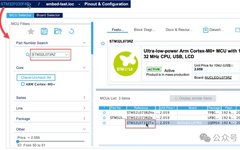
CLion Tutorial - STM32CubeMX Project

Operating System: Windows / Linux / macOS Required Tools: STM32CubeMX, GNU ARM Toolchain Project Format: CMake Compatible Configuration: OpenOCD Run and Debug / Embedded GDB Server For embedded projects targeting STM32 boards, CLion integrates with STM32CubeMX. You can open the .ioc file generated by CubeMX as a project, and CLion will automatically create the CMake … Read more
Getting Started with CMake: A Practical Guide

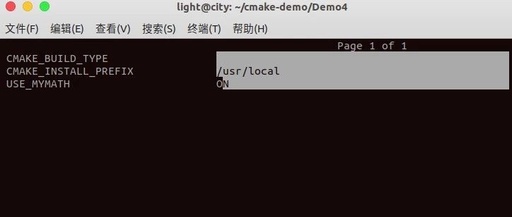
Getting Started with CMake: A Practical Guide

0. Introduction Recently, I worked on a project using CLION for building, which uses CMakeLists.txt for management. To enhance my learning, I found a comprehensive introductory article by an expert, which includes both text and code. This article summarizes the key points I learned from it. The original author’s GitHub address: https://github.com/wzpan/cmake-demo. 1. Single Source … Read more

A Step-by-Step Guide to CW32 Development Using CLion

A Step-by-Step Guide to CW32 Development Using CLion

The following article is provided by CW32 ecosystem community user End: https://gitee.com/xcet/embedded-cw32-board-template/tree/master/ref/CW32-GCC-Clion-Template Recently, CLion has become free for non-commercial use, so I immediately downloaded the latest CLion 2025. Now, I will set up the CLion + GCC + CMake development environment for the domestic Wuhan Xinyuan Semiconductor’s CW32 microcontroller. CLion is a cross-platform integrated development … Read more

CLion Tutorial – Google Sanitizers

CLion Tutorial - Google Sanitizers

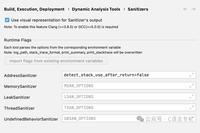
Operating System: Linux / Windows 10 (only supports AddressSanitizer) or WSL / macOS (supports AddressSanitizer, ThreadSanitizer, and UndefinedBehaviorSanitizer) Project Format: CMake (fully supported) / Makefile and compilation database (no output visualization) Toolchain: Local / Remote / WSL / Docker Sanitizers are open-source tools designed by Google for dynamic code analysis. CLion integrates the following Sanitizers: … Read more

Someone 3D Printed a Fluffy Little Lion? I Laughed Out Loud When the Shell Was Removed

Someone 3D Printed a Fluffy Little Lion? I Laughed Out Loud When the Shell Was Removed

Author: Gustavf Editor: Luo Jiang In people’s general impression, 3D printing seems to only be able to print large, angular structures. However, through some innovative methods, it is also possible to create some fluffy items that appear difficult to print directly with current conditions. These fluffy objects share a characteristic: the filament radiates from the … Read more

CLion Tutorial – Boost.Test

CLion Tutorial - Boost.Test

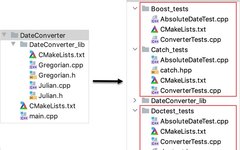
Boost unit testing framework (Boost.Test) is part of the Boost library. It is a fully-featured and extensible framework with various assertion macros, XML output, and more. Boost.Test itself does not include mocking capabilities but can be used in conjunction with standalone mocking frameworks (like gmock). If you are not familiar with Boost.Test, here is a … Read more

CLion Unit Testing Tutorial

CLion Unit Testing Tutorial

This tutorial provides an overview of unit testing methods and discusses the four testing frameworks supported by CLion: Google Test, Boost.Test, Catch2, and Doctest. Unit Testing Basics Unit tests are designed to check individual units of source code separately. Here, a "unit" refers to the smallest part of code that can be tested independently, such … Read more

CLion Tutorial – Hex View & Mute Variables

CLion Tutorial - Hex View & Mute Variables

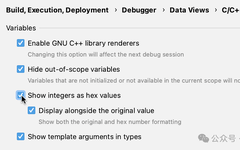
Hex View For integer type numeric variables, you can view the hexadecimal representation instead of or alongside the original format. The hexadecimal view for integer types is supported by GDB and LLDB debuggers on all platforms, including remote debugging and WSL scenarios. To enable the hexadecimal view, go to Settings | Build, Execution, Deployment | … Read more

CLion Tutorial – Peripheral View

CLion Tutorial - Peripheral View

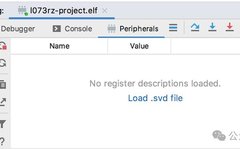
During a debugging session, you can monitor the registers and peripherals defined in the .svd file. The Peripheral View is applicable to two configuration types: Embedded GDB Server and OpenOCD Download & Run. Configure the Peripheral View by setting up the Embedded GDB Server or OpenOCD Download & Run configuration, and start the debugging session. … Read more