Common Syntax of CMake: If Statements
Common Syntax of CMake: If Statements

Previous Highlights:CMake Hello, WorldCMake VariablesCMake Official Tutorial (Basic Project Setup)CMake Official Tutorial (Creating Libraries)CMake Official Tutorial (Usage Requirements)CMake Official Tutorial (Installation and Testing) Through the official tutorials, we have gained a general understanding of using CMake. However, to write flexible project configurations and understand the CMakeLists.txt of third-party open-source libraries, we need to master the … Read more


Hello World in Assembly Language

Hello World in Assembly Language

x86 Architecture Assembly In assembly language, a simple “Hello, World!” program can be written like this (assuming we are using x86 architecture assembly language): section .data hello db 'Hello, World!',0 section .text global _start _start: ; write syscall mov eax, 4 mov ebx, 1 mov ecx, hello mov edx, 13 int 0x80 ; exit syscall … Read more

Differences Between C Language and Assembly Language

Differences Between C Language and Assembly Language

Previous Articles 👍 Five Stages to Assess Your Circuit Design Ability 👍 How to Learn Circuit Design from Scratch? 👍 Detailed Explanation of Four Schemes for Microcontroller Key Design 👍 17 Common Circuit Design Modules for Microcontrollers 👍 Analysis of the Minimum System of Microcontrollers (Power Supply, Crystal Oscillator, and Reset Circuit) 👍 Detailed Explanation … Read more

Programming in Assembly Language Without Main Function

Programming in Assembly Language Without Main Function

In most modern programming environments, the main function is the entry point of the program, as dictated by the operating system or runtime environment. However, in assembly language, the situation is different because it runs directly on the hardware without the support of an operating system or high-level runtime environment. Assembly language programs typically start … Read more

Advantages of Assembly Language and C Language, and Calling Assembly Functions in C

Advantages of Assembly Language and C Language, and Calling Assembly Functions in C

Assembly language and C language are both commonly used programming languages in microcontroller programming, and they are among the earliest and most widely used languages. Especially in embedded programming like microcontrollers, assembly language has the advantages of being simple, efficient, and quick to learn. However, it also has many disadvantages. Below is a comparison of … Read more

Assembly Language: First Assembly Code

Assembly Language: First Assembly Code

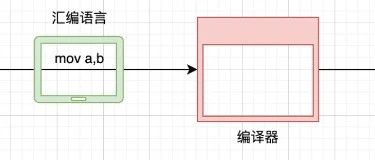
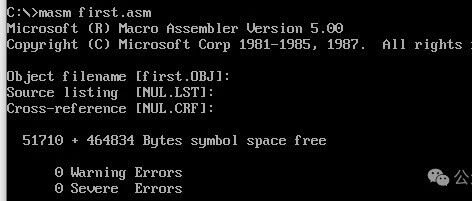
One-timePaymentTo Join,Long-termFree Access to Tutorials,NoPaid Tutorials. Tutorial ListSee WeChat Official Account Bottom Menu JoinWeChat GroupReply to the Official Account: WeChat Group;QQ Group:460500587 Assembly language is a low-level language used for electroniccomputers, microprocessors, microcontrollers, or other programmabledevices, also known as symbolic language. In assembly language, mnemonics replace the operation codes of machine instructions, and address symbols … Read more

Returning to the DOS Era with Assembly Language

Returning to the DOS Era with Assembly Language

Keywords:DOS Assembly Language INT 21H In the DOS era, we programmed using assembly language, and through the interrupt int 21H, we could perform almost all operations. That level of control over computer hardware was very fulfilling. In the WINDOWS era, assembly language has become increasingly distant from us. I have seen many introductions to assembly … Read more

100 Classic Python Programming Cases with Source Code

100 Classic Python Programming Cases with Source Code

👆Click toFollow and Reply『Newcomer Gift』Get Learning Package👆 The simplicity and power of Python make it the preferred language for many developers. This article will introduce 36 commonly used classic Python code examples. These examples cover basic syntax, common tasks, and some advanced features. 【TutorialGet Method at the End of the Article!!】 【TutorialGet Method at the … Read more

Complete Guide to Migrating from Python 2 to Python 3

Complete Guide to Migrating from Python 2 to Python 3

Complete Guide to Migrating from Python 2 to Python 3: Best Practices for a Smooth Transition As a developer who has experienced the migration from Python 2 to Python 3, I understand the various challenges that may arise during this process. Today, I want to share how to smoothly migrate your Python 2 code to … Read more

Master Python in One Month: A Comprehensive Guide

Master Python in One Month: A Comprehensive Guide

Master Python in One Month: A Comprehensive Guide In today’s digital age, Python has become the “universal language” in programming due to its concise syntax, powerful libraries, and wide range of applications. Many people wish to quickly master this skill, but with a plethora of learning resources available, they often don’t know where to start. … Read more