Introduction
ZigBee® and Bluetooth® are wireless communication protocols that provide a set of specifications for devices to transmit information wirelessly. The newer Bluetooth protocol, Bluetooth Low Energy (BLE) or Bluetooth Smart, was introduced as a low-power protocol, while the original Bluetooth is now referred to as Bluetooth Classic.
Launched in the 1990s, the older technologies ZigBee and Bluetooth Classic were designed with different purposes. Bluetooth Classic was intended to replace the RS232 wired connection used to connect keyboards to PCs. It can handle data, voice, and text, allowing headsets, headphones, and keyboards to communicate wirelessly with PCs and mobile phones. ZigBee, on the other hand, is designed for home and building automation, providing a method to control devices without relying on power lines. It is specifically designed for low-power operation and is not a rechargeable technology, as it uses coin cell batteries for years. Devices must provide at least two years of battery life to be certified by ZigBee.
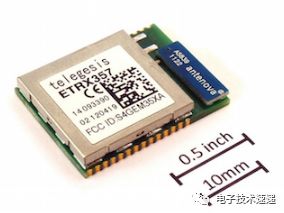
A ZigBee Module
Bluetooth Smart is the latest protocol in this group, originally developed by Nokia as a low-power communication protocol, which was merged with the Bluetooth standard in 2006. It handles short bursts of data, such as querying sensors and responding with data. Bluetooth Smart is not compatible with Bluetooth Classic; it does not handle voice. When a device is labeled as Bluetooth Smart Ready, it means that the device includes both standards, Bluetooth Classic and Bluetooth Smart.
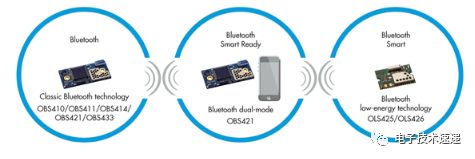
The Evolution of Bluetooth
Certification and Compliance
The ZigBee Alliance consists of approximately 400 members responsible for developing ZigBee standards and for testing and certifying devices in compliance with an open, non-profit association. Bluetooth/BLE is managed by the Bluetooth Special Interest Group (SIG), a non-profit, non-stock corporation. The SIG owns the Bluetooth trademark and oversees the development of Bluetooth standards.
Using these standards, any manufacturer’s compatible devices can be guaranteed to work with any other compatible devices. Devices that meet the standards must be submitted for testing and certification, which includes fees for joining and certification. Only certified devices can display the technology logo.
Topology and Protocols
The Open Systems Interconnection model (OSI model) standardizes communication systems and protocols into a seven-layer model, with the physical layer (related to hardware interfaces) at the bottom and the application layer (potentially human interfaces) at the top. Network topology describes the structure of the network, while network protocols describe the structure of individual messages. Figure 1 shows a simplified representation of the OSI model, with the application layer at the top, layers in between, and the physical layer connected to the radio transmitter. The standards for ZigBee and Bluetooth differ slightly: for ZigBee, the MAC and PHY layers, data formatting, packaging, and modulation and transmission of signals are defined by the IEEE standard 802.15.4. The upper layers are included in the ZigBee protocol, which deals with networking, security, and application software, which are part of the ZigBee standard. Other protocols can be designed using 802.15.4 that are not ZigBee. The Bluetooth standard specifies the lower layers well, providing core specifications as well as higher-level specifications to define each part of the protocol under the Bluetooth specification.
ZigBee uses a mesh topology, with the network growing as devices are discovered and connected. ZigBee adds nodes to a neighbor list for routing information, while Bluetooth devices pair and connect when they come into range. The routing table of each ZigBee node contains adjacent nodes, and if a node fails, messages are automatically rerouted. Many nodes can be added, forming a large network. Bluetooth Classic’s piconet can have up to 8 devices, configured in a master/slave arrangement. The master controls the timing of messages. Each node can connect to other piconets, forming a scatter net. Bluetooth Smart can also connect as a decentralized network, but current applications focus on device-to-device communication.
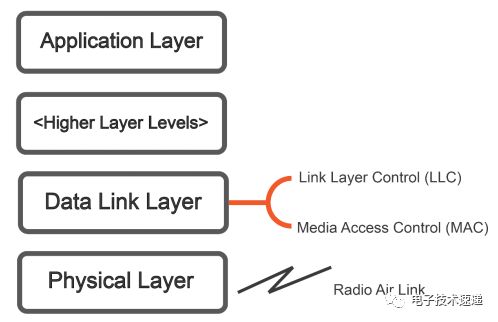
Figure 1. Communication Model
Table 1 lists some features of each protocol. Their similarities lie in their operation in the 2.4 GHz Industrial, Scientific, and Medical (ISM) unlicensed frequency band and their basis on the IEEE standard 802.15 for Wireless Personal Area Networks (WPAN). Bluetooth is based on standard 802.15.1, while ZigBee is based on standard 802.15.4, suitable for Low Rate Wireless Personal Area Networks (LR-WPAN). When devices are detected within range, they can automatically form ad hoc networks. They are only targeted at devices within their own network and are currently not connected to the Internet. They both modulate signals for radio transmission and package data.

For more information on the features of ZigBee, Bluetooth Classic, and Bluetooth Smart, please click to read the original article.