With the advancement of the “dual carbon” strategy, the energy storage industry has entered a phase of explosive growth. Whether it is centralized energy storage on the grid side or distributed energy storage on the industrial and commercial side, capabilities such as system stability, intelligence, and remote maintainability have become essential.
In the selection of controllers, more and more energy storage companies are abandoning traditional X86 architecture in favor of ARM architecture industrial computers as the main control system. The logic behind this is quite simple.
1
Energy storage systems require “low power consumption and high integration”—ARM is inherently suitable
Most energy storage battery cabinets do not have high-voltage AC power supply, only providing 12V/24V DC power. Compared to X86 devices, ARM industrial computers have lower power consumption, less heat generation, and can be powered directly by DC, making them very suitable for deployment in energy storage cabinets, photovoltaic cabinets, and other compact spaces.
2
Rich IO interfaces to meet the integration needs of various subsystems in energy storage
In a standard energy storage control system, it is usually necessary to control or collect data from the following devices:
| Device | Communication Method |
|---|---|
| BMS (Battery Management System) | RS485 |
| Liquid Cooling / Air Cooling Equipment | RS485 |
| High Voltage Box / Insulation Monitoring | CAN |
| Temperature and Humidity / Smoke Detection / Door Magnet Sensors | DI/DO |
| EMS or Backend Cloud Platform | LAN / 4G/5G |
ARM industrial computers can flexibly configure multiple RS485, CAN, LAN, DI/DO interfaces according to the scenario, truly achieving “one machine with multiple functions,” reducing external modules, simplifying wiring, and lowering failure rates.
3
Software and hardware decoupling, supporting Linux systems + local logic control
Compared to traditional PLC controllers, ARM industrial computers can not only achieve data collection and uploading but also support logic control, edge computing, protocol conversion, and remote OTA updates.
After being equipped with Linux or Ubuntu systems, users can deploy:
-
EMS edge strategy programs
-
Modbus/IEC104/MQTT protocol gateway
-
SCADA/Node-RED/Web configuration platform
-
Local Web services + HMI interface
Truly achieving software and hardware integration, allowing for rapid iteration in response to business changes.
4
Industrial-grade stability to cope with harsh outdoor environments
Energy storage systems are often deployed in harsh environments such as outdoors, plateaus, high temperatures, or coastal areas, requiring high anti-interference capabilities from the controllers.
High-quality ARM industrial computers adopt:
-
Fanless fully sealed design, dustproof and salt spray resistant
-
Wide temperature operating range (-45℃~80℃ or higher)
-
Industrial-grade power protection (reverse polarity protection, surge protection)
-
EMC anti-interference design, passing rigorous industrial testing
Even in unattended extreme environments, they can operate stably for a long time.
5
Strong cost-effectiveness, suitable for large-scale application deployment
In large-scale deployment scenarios (such as grid-side clusters, mass shipments from battery factories), the cost of controllers is particularly critical.
Compared to traditional X86, ARM industrial computers:
-
Have lower chip costs
-
Have simpler motherboard structures
-
Have low power consumption, eliminating the need for active cooling
-
Are open-source systems, free from licensing fees
The overall cost can be reduced by 30%~60%, making them particularly suitable for battery manufacturers and system integrators to create embedded control modules in bulk.
6
Bailey Technology BL410—The Control Hub Born for Energy Storage Systems
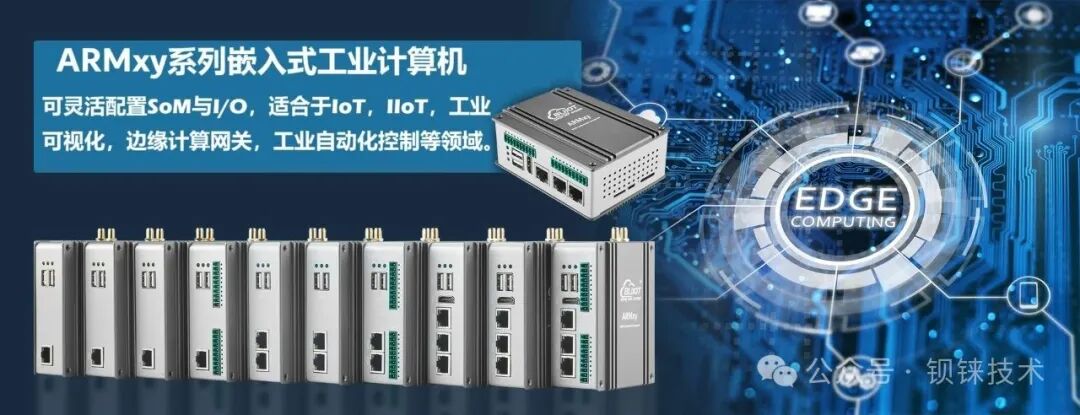
As a specially designed embedded industrial computer by Bailey Technology for energy storage, power, and industrial control scenarios, the ARMxy seriesBL410 has the following advantages:
🌟 Core Highlights:
-
ARM Cortex-A55 quad-core processor, low power consumption and high performance
-
Supports up to 8 RS485 + 2 CAN + 8 DI + 8 DO, directly interfacing with BMS, battery cooling, insulation detection, alarms, and other devices
-
3 Ethernet ports, optional 4G/5G, enabling EMS/PCS communication + cloud backend
-
Supports Linux/Ubuntu systems, running EMS control logic, local web pages, and protocol gateway programs
-
Wide temperature operation (-45℃~80℃), passing industrial-grade tests for EMC anti-interference and power surge protection
-
Built-in BLRMS remote maintenance platform support, facilitating remote debugging, parameter distribution, and system upgrades
🚀 Recommended Application Scenarios:
-
Industrial and commercial energy storage system main control
-
Battery cabinet controller
-
Energy storage EMS edge computing node
-
On-site data collection + local logic control + protocol forwarding integrated machine