When news broke that OpenAI quietly rented Google TPUs, the entire tech community sensed a powder keg. One of the largest buyers of NVIDIA GPUs suddenly turned its attention to the ASIC camp, as if a gunshot had announced that the countdown to a new era in AI chips had begun.
Google’s Bold Move: A Comeback from Behind the Scenes
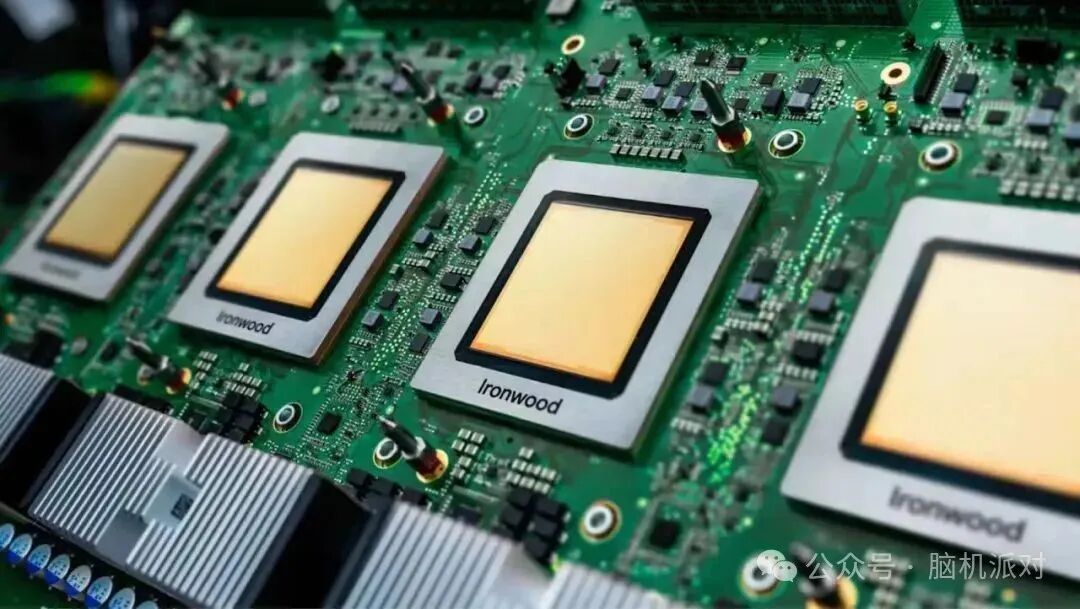
In April this year, Google launched its seventh-generation TPU chip, Ironwood, which can be considered a heavyweight bomb dropped into the AI computing market. This custom accelerator, designed specifically for inference, directly challenges NVIDIA’s latest Blackwell B200. Even more aggressively, Google tightly controls the top version for exclusive use with its own Gemini model.
This is not the first time Google has flexed its muscles. As a benchmark player in the ASIC chip arena, its TPU architecture has already proven its strength in AI training. Now, OpenAI’s ‘defection’ has revealed a truth to the industry: when business logic is fixed and demand surges, the advantages of ASICs cannot be hidden—higher performance, lower power consumption, and a price competitiveness that sends shivers down the spines of competitors.
NVIDIA is in a Rush: From Monopolist to ‘Collaborator’
On May 19, Jensen Huang rushed to respond with NVLink Fusion. This semi-custom solution is essentially NVIDIA bowing to ASICs: opening up its high-speed interconnect technology to allow ASIC chips from companies like MediaTek and Marvell to integrate into its ecosystem.
However, NVIDIA’s anxiety is evident. The establishment of the UALink alliance is like a dagger piercing its moat—giants like Amazon, Alibaba, AMD, Apple, Google, Meta, and Microsoft are banding together to create an open interconnect ecosystem. Once a dominant force in the GPU market, NVIDIA suddenly finds itself surrounded.
2026: The Critical Point of the ASIC Era
Nomura Securities’ forecast is becoming a hot topic in the tech community:
– Now: NVIDIA GPUs account for over 80% of the AI server market, while ASICs only account for 8%-11%
– By 2025: The shipment volume of Google + AWS’s ASICs is expected to reach 40%-60% of NVIDIA’s
– By 2026: With Meta and Microsoft joining, ASIC shipments are expected to surpass GPUs
Reports from Broadcom and Marvell further confirm this trend: the former’s AI business quarterly revenue reached $4.4 billion, a year-on-year increase of 46%; the latter’s data center business accounts for 76%, with custom chips becoming the core engine. As AI computing shifts from investment-driven to application-driven, the golden age of ASICs is not far off.
Behind the Chaos: Opportunities and Hidden Reefs
This chip war is by no means a smooth path. The design cycle for ASICs is long, and the upfront investment is significant, as evidenced by reports of delays in Microsoft’s self-developed chips. But the giants have no choice—when AI inference demand surges and edge computing scenarios explode, the cost-performance bottleneck of general-purpose GPUs becomes increasingly apparent.
The current landscape is already clear: North America leads with technological barriers, Chinese companies are accelerating their catch-up, and emerging markets are exploding. For tech giants, betting on ASICs is not a choice but a matter of survival.
The bell for 2026 has not yet rung, but the power transfer of AI chips has already begun amidst the smoke of battle.