This week, while studying in Chengdu, the schedule was tight, and we often had dinners in the evenings, leaving little time for fitness, causing our public account to fall silent. Regardless of how late it is today, I still want to share something; otherwise, I would feel guilty.
Today, I saw a report stating that after virtualization, most enterprises encounter I/O issues. To solve these I/O problems, administrators have tried various methods. Let’s take a look at what they have adopted.
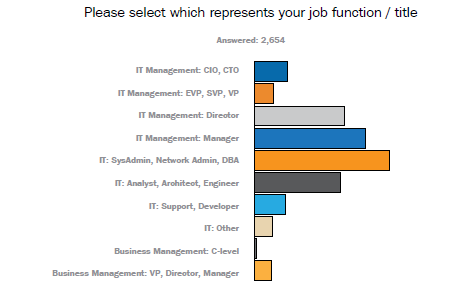
The majority of the over 2,000 respondents surveyed are IT professionals, and here is their job distribution.
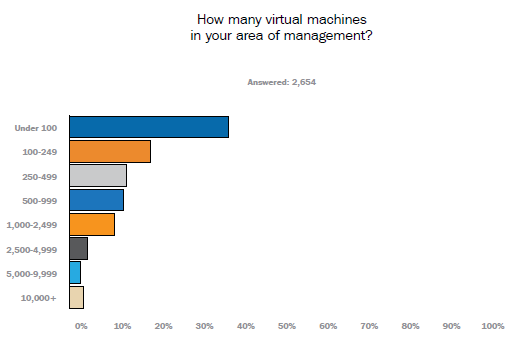
This shows the number of virtual machines they manage.
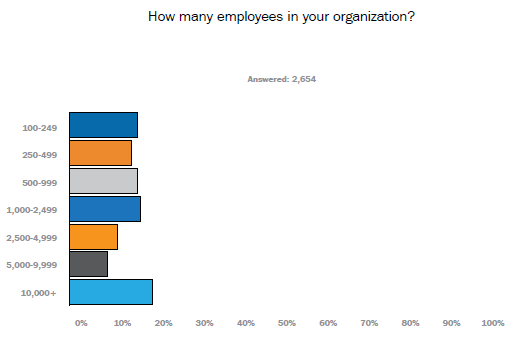
All respondents work in companies with more than 100 employees, which means they are medium to large enterprises.
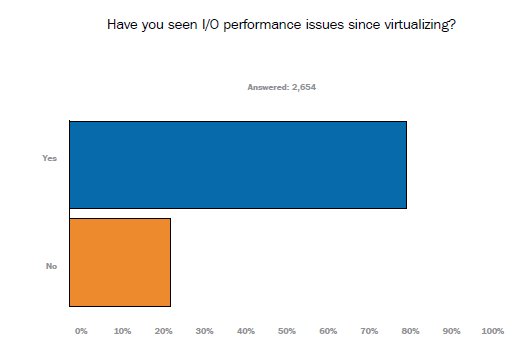
More than 70% of users experience I/O performance issues after virtualization.
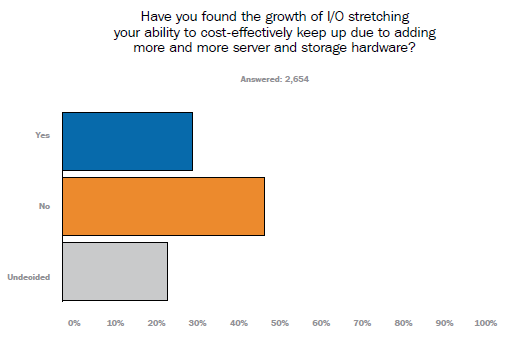
30% of respondents believe that after encountering I/O issues, it is necessary to add more servers and storage, which is not cost-effective.
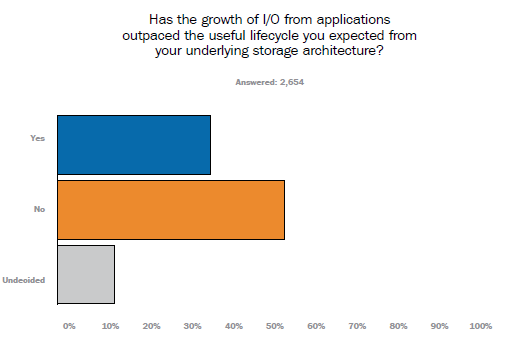
30% of respondents think that the increase in application performance quickly outgrows the existing storage.
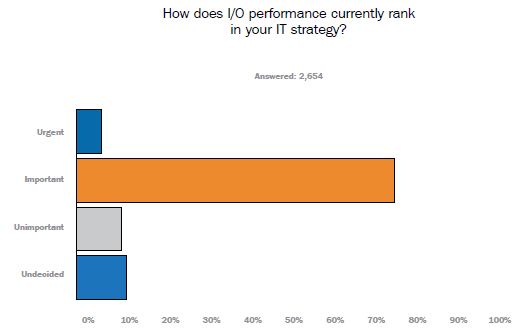
Therefore, most respondents believe that I/O performance issues are very important.
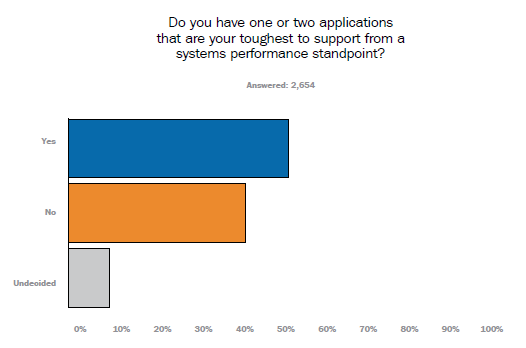
More than half of the respondents believe that there are always 1-2 applications with performance issues that are quite tricky.
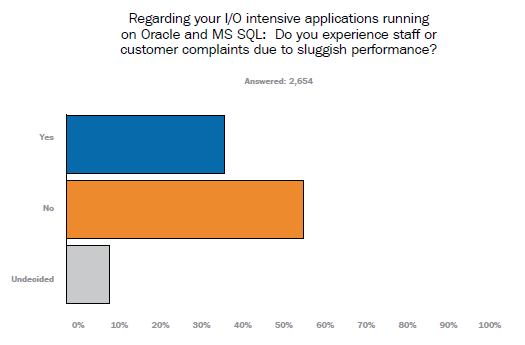
Typical cases are Oracle and MS SQL database applications, with 1/3 of the respondents encountering user complaints about poor database performance.
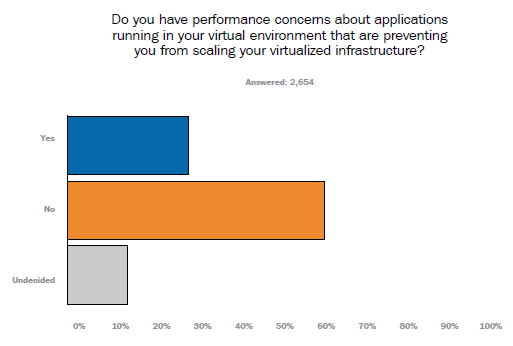
Nearly 30% of respondents believe that the performance of the virtual environment affects the growth of virtualization scale.
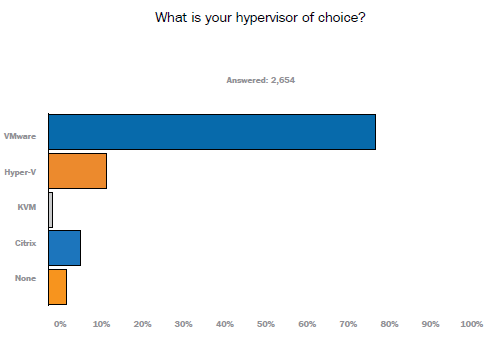
This shows their choice of hypervisors.
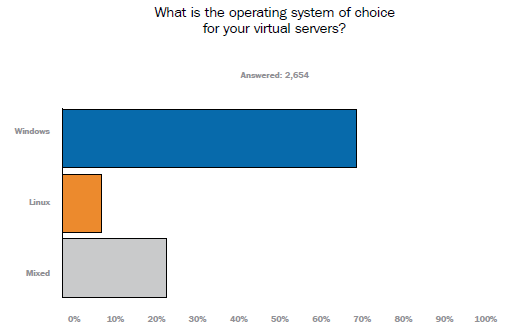
This shows their choice of OS for virtual servers.
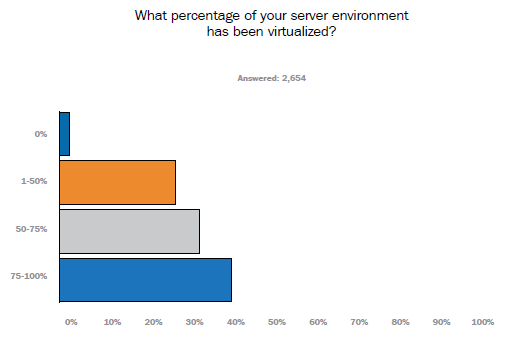
This shows the distribution of their virtualization levels. Most respondents have a high level of virtualization.
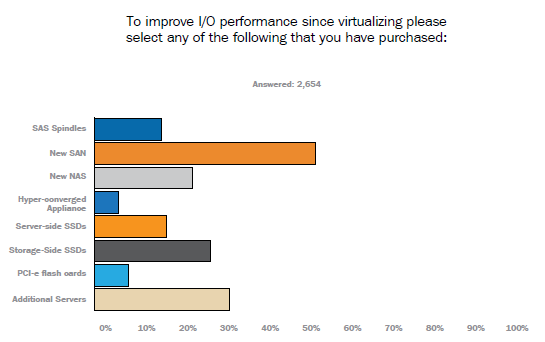
To improve the I/O of virtual machines, respondents have adopted various measures, the most common being purchasing new arrays, adding servers, and using flash storage.
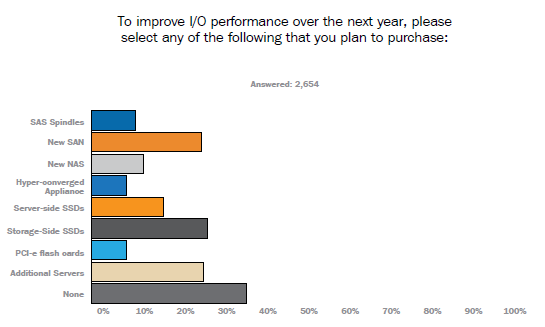
This shows the measures that respondents will continue to adopt next year; they are still these methods.
In fact, there is another idea. No matter how well virtualization is done, there will generally be some performance loss. Some high-performance database servers deployed on physical machines will definitely perform better. For example, ORACLE and SAP HANA. Therefore, hybrid deployment is currently a relatively good approach; there is no need to pursue higher virtualization at the expense of database performance.
Can physical machines enjoy the convenience of the cloud? Can physical machines go to the cloud? There are indeed such solutions. Huawei’s ManageOne cloud management platform supports managing this hybrid deployment of virtual and physical machines. Physical machines can also be provided as a service.
In addition, Huawei’s all-in-one machine FusionCube series also supports hybrid deployment of virtual and physical machines. For example, the FusionCube 6000 released by Huawei at the 2015 Shanghai HCC is distinguished from many other hyper-converged systems by its support for hybrid deployment of virtual and physical machines, allowing a small number of database servers to continue to use physical machine deployment while ensuring the I/O performance of critical business, and maintaining the fast deployment and simple management and operation characteristics of the all-in-one machine (the image below is extracted from Huawei’s official promotional material).

This method, although not very high-end, is economical and effective, providing a new idea for enterprises transitioning to cloud computing.