“A full container of children’s toys was detained at the Port of Los Angeles due to ‘lack of GCC certification!’” Mr. Wang, a toy factory owner in Yiwu, shouted over the long-distance call. This batch of goods, prepared for the Christmas peak season, cost 180,000 for shipping alone. Now, not only does he have to pay a daily detention fee of 2,000 dollars, but he may also miss the biggest sales opportunity of the year. In the U.S., GCC certification is like a ‘birth certificate’ for children’s products. Without it, no matter how cute the toys or how beautiful the children’s clothing, they will be left to ‘gather dust’ at customs. Today, we will thoroughly analyze this certification, from its essence of being ‘not a third-party certification but more important than certification’ to the compliance points for toys and children’s clothing, so you understand: if you want to do business with U.S. children’s products, GCC certification is a ‘must-answer question’, not a ‘multiple-choice question’.
1. First, understand: GCC certification is not a ‘certification’ in the traditional sense
When it comes to GCC, many people mistakenly think it is a third-party certification like CE or UL, but that is a big misunderstanding—GCC stands for ‘General Conformity Certificate’, which is a ‘self-declaration’ issued by the manufacturer or importer. In simple terms, it is the company’s assurance to the U.S. government: ‘My product meets all relevant safety standards in the U.S., and I take responsibility if something goes wrong.’
This is like running a restaurant; the health department will not issue you a ‘guarantee of absolute cleanliness’, but you must declare ‘compliance with health standards’ and keep inspection records for review. The U.S. Consumer Product Safety Commission (CPSC) clearly states: all products intended for children aged 12 and under must have a GCC certificate before import or sale; otherwise, it is considered ‘illegal sales’.
According to the CPSC recall data for 2024, 43% of recalled Chinese children’s products were due to ‘lack of GCC certification’ or ‘incomplete certificate information’. A certain children’s scooter brand was penalized for omitting ‘applicable age’ on the GCC certificate, resulting in the product being destroyed and a fine of 120,000 dollars.
Why is GCC certification so ‘special’? Because children’s products directly relate to the safety of minors, the U.S. regulation is considered ‘the strictest in history’. The GCC certificate is a ‘commitment of responsibility’—once a product has issues, the manufacturer or importer listed on the certificate must bear full responsibility, facing fines or even imprisonment. A certain children’s pajama company was sued because its product did not meet flammability standards, and the CEO was ultimately ordered to pay 8 million dollars.
2. Which products must have GCC? From toys to clothing, it covers almost all ‘children’s products’
The jurisdiction of GCC certification is surprisingly broad; any product ‘primarily intended for use by children aged 12 and under’ must have a certificate. The CPSC’s ‘Children’s Product Safety Rules’ specifically name these categories:
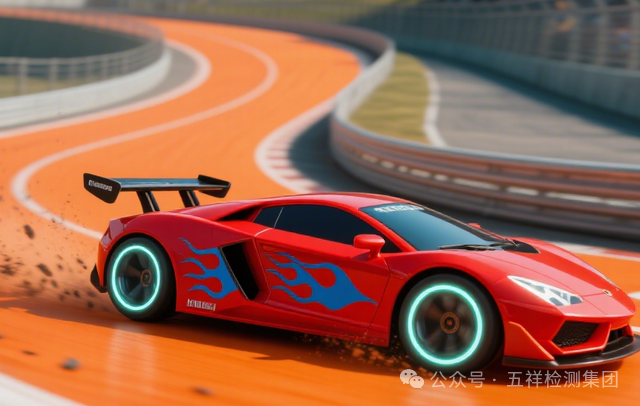
Toys: From building blocks to remote-controlled cars, none can escape
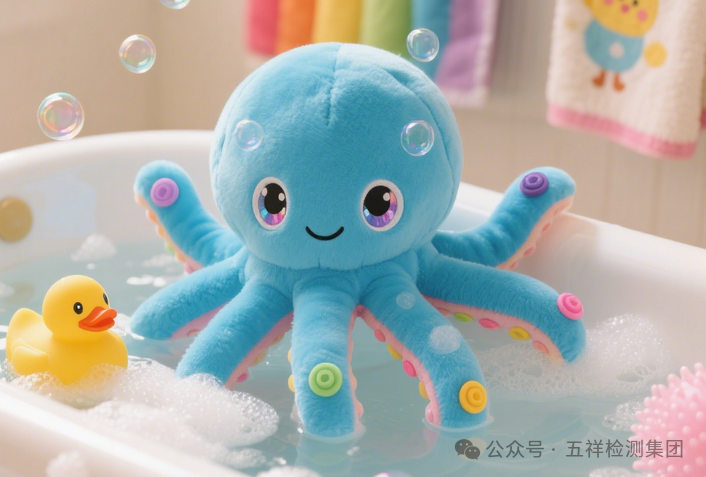
Building blocks, puzzles, remote-controlled cars, plush toys… as long as they are for children under 12, they must have a GCC certificate. A certain popular magnetic toy was removed from Amazon U.S. after just 3 days for lacking a GCC certificate, and the store rating dropped from 4.8 to 3.2.
Key compliance standards:
ASTM F963: The ‘bible’ of U.S. toy safety, including small parts testing (to prevent choking hazards for children under 3) and tensile testing (to avoid injuries from strings). A certain plush toy’s button eyes failed the tensile test, yet the GCC certificate claimed ‘compliance with ASTM F963’, leading to a recall of 100,000 units when discovered by the CPSC.
16 CFR 1500: Prohibits the sale of toys ‘with potential choking or cutting hazards’, such as sharp-edged plastic toys or pull toys with strings longer than 18 cm (to prevent entanglement around children’s necks).
Children’s Clothing: From pajamas to shoes, safety is more important than style
Children’s pajamas, T-shirts, shoes, hats… the GCC certificate for these close-fitting items focuses on ‘safety performance’ rather than ‘fashion’. In 2024, 60% of the issues found in CPSC’s random checks of children’s clothing were due to ‘failure to declare flammability as required by GCC’.

Core standards:
16 CFR 1615/1616: Flammability requirements for children’s pajamas, where the burn rate for pajamas for children aged 0-6 must not exceed 0.1 inches per second (equivalent to burning 10 cm of fabric in at least 100 seconds). A certain children’s flannel pajama was recalled due to non-compliance with flammability standards, despite the GCC certificate stating ‘compliance with standards’, resulting in losses exceeding 5 million.
Lead content limits: The lead content in children’s clothing fabrics, zippers, and buttons must not exceed 100 ppm (equivalent to no more than 0.1 kg of lead per ton of material). A certain pair of jeans had metal buttons with lead levels exceeding 3 times the limit, and due to the GCC certificate not declaring relevant testing, a fine of 250,000 dollars was imposed.
Other children’s products: From car seats to pacifiers, all are included
Infant car seats, strollers, pacifiers, children’s cups… these ‘children-exclusive’ items require a GCC certificate as a ‘standard configuration’. A certain children’s cup was removed from all online platforms due to exceeding BPA (bisphenol A) limits, and the GCC certificate did not mention ‘material safety testing’, leading to 10 related Amazon stores being restricted.
3. How to obtain a GCC certificate? Three steps to complete, but ‘a small mistake in details can lead to total failure’
Although GCC certification is a ‘self-declaration’, the process of issuing it is more meticulous than third-party certification—every word on the certificate can become evidence for the CPSC to penalize you. A certain children’s backpack company had a GCC certificate with a typo in the ‘manufacturer’s address’, which was deemed ‘invalid information’, resulting in the entire shipment being returned and a loss of 400,000.
Step 1: Clarify ‘which standards must be met’, do not miss any items
Before issuing a GCC certificate, it is essential to identify all relevant U.S. safety standards for the product; missing even one is considered ‘non-compliant’. For example, children’s toys must at least comply with:
ASTM F963 (General Toy Safety Standard);
16 CFR 1303 (Lead content limits);
If battery-operated, it must also comply with 16 CFR 1500.86 (Battery safety).
A certain electric toy car company’s GCC certificate only stated ‘compliance with ASTM F963’, omitting the battery safety standard, which led to the CPSC discovering the oversight and necessitating a recall of 5,000 units, with an additional rework cost of 30 dollars per unit.
Step 2: Conduct tests and keep records; ’empty claims’ won’t work
GCC is a ‘self-declaration’, but not a ‘random declaration’—it must be supported by testing reports from third-party laboratories; otherwise, it is considered ‘false declaration’. The CPSC stipulates that testing reports must be issued by ISO 17025 accredited laboratories, and the testing date must not exceed one year (if it does, retesting is required).
A certain children’s T-shirt company made a ‘misstep’: using a 2-year-old fabric testing report to support the GCC certificate, which was discovered during a CPSC inspection when it was found that ‘the batch was different, and the fabric composition had changed’, leading to a determination of ‘fraud’ and a fine of 150,000 dollars.
Key contents to retain in the testing report:
Product name, model (must match the GCC certificate exactly);
Testing items, results (e.g., ‘lead content 20 ppm, compliant with 100 ppm limit’);
Laboratory name, accreditation number (can be checked on the CPSC website for recognition).
Step 3: Issue the certificate; information must be complete enough to ‘trace back to each product’
The GCC certificate does not have a fixed template, but the CPSC clearly requires it to include 8 core pieces of information; missing any one makes it invalid:
Product name, model (e.g., ‘Children’s Building Block Set, Model KT-2024’);
Manufacturer or importer name, address (must be a U.S. local address, not just the Chinese factory);
All safety standards the product complies with (e.g., ‘ASTM F963-17, 16 CFR 1303’);
Testing report number, testing date;
Laboratory name, address;
Date of certificate issuance;
Signature of the responsible person (can be an electronic signature, but must be traceable to an individual);
Applicable age range for the product (e.g., ‘3-6 years’).
A certain infant pacifier company’s certificate omitted ‘applicable age’, which was deemed ‘incomplete information’ by customs, resulting in the goods being detained at the port for 15 days. By the time the certificate was completed, they had already missed the U.S. baby products exhibition.

4. Industry case studies: These ‘clever tricks’ turned into ‘big troubles’
Case 1: Treating ‘self-declaration’ as a ‘formality’, fines exceeding the value of goods
A certain children’s toy factory in Guangzhou thought ‘GCC is just writing a piece of paper’, casually filled out a template without even conducting tests. As a result, when the goods arrived at the port, they were inspected by the CPSC, which found that small parts did not meet the tensile standards (risk of choking for children under 3). Not only were the products destroyed, but they were also fined 80,000 dollars—considering the value of this batch was only 60,000.
Case 2: Certificate information ‘misapplied’, leading to all related products being removed
A certain children’s clothing company used the ‘T-shirt’s GCC certificate’ to declare ‘pants’, thinking ‘they are all children’s clothing, similar enough’. When the CPSC system compared the data, it found a mismatch in the model, resulting in the pants being detained and the already listed T-shirts being removed from all platforms due to ‘doubt about the company’s integrity’, leading to losses exceeding 2 million.
Case 3: Testing report ‘expired’, seasonal orders ruined
A certain children’s stroller company in Zhejiang used a testing report from 14 months ago to issue a GCC certificate, which was deemed ‘report expired’ by the CPSC. By the time they retested and reissued the certificate, they had already missed the U.S. ‘Black Friday’, and 1,000 strollers were left piled in the warehouse, nearly breaking their cash flow.
5. Personal opinion: GCC certification is a ‘commitment of responsibility’, not ‘formalism’
Having exported children’s products for 12 years, I have seen too many companies misunderstand GCC certification: ‘Isn’t it just issuing a piece of paper? What’s so hard about it?’ But the truth is: the GCC certificate is a ‘commitment of responsibility’; once a product has issues, the signer on the certificate must bear all legal responsibilities.
How strict is U.S. regulation on children’s products? In 2024, a certain children’s toy company faced a lawsuit when a small part of their product caused a child to choke. Although they had a GCC certificate, the testing report was fraudulent, and the CEO was ultimately sentenced to 18 months in prison, leading to the company’s bankruptcy. This is not an isolated case—80% of the children’s product cases prosecuted by the CPSC each year involve ‘discrepancies between GCC certificates and actual conditions’.
In fact, GCC certification helps companies ‘clarify responsibilities’: through formal testing and truthful declarations, they can avoid penalties and build trust with consumers. A certain children’s brand that strictly issued GCC certificates was rated as the ‘most trusted brand’ on U.S. mom forums, with sales surpassing those of companies that ‘played tricks’ by 30%.
6. Pitfall guide: ‘Life-saving operations’ for GCC certification
Do not confuse ‘children’s products’ with ‘general products’: Products for ages 12 and above (such as youth bicycles) do not require GCC, but as long as they are ‘primarily intended for use by children aged 12 and under’, even if adults can use them (such as children’s-sized backpacks), they must be processed. A certain company’s ‘parent-child backpack’ was penalized because the children’s version lacked GCC.
Testing reports ‘more is better’: In addition to mandatory standards, it is recommended to conduct several voluntary tests (such as formaldehyde content in children’s clothing); although not required, it can reflect ‘superior compliance’ in the GCC certificate, increasing competitiveness.
Certificate ‘dedicated management’: It is recommended that companies appoint a ‘GCC specialist’ responsible for verifying the consistency of certificate information with testing reports and product models, and rechecking before customs declaration for each batch of goods. A specialist from a large factory discovered a ‘typo in the model letter’, correcting it in time to avoid the entire shipment being detained.
Keep records for ‘at least 5 years’: The CPSC requires GCC certificates, testing reports, and production records to be kept for at least 5 years. A certain company was deemed ‘non-compliant’ when it could not provide evidence after destroying records 3 years later.
Stay updated on standards: U.S. children’s product standards may change every year (for example, in 2025, ASTM F963 will add ‘phthalate restrictions’), so it is recommended to subscribe to updates from the CPSC website to avoid issuing certificates based on outdated standards.
7. GCC vs. third-party certification: Do not confuse these two ‘concepts’
Many people confuse GCC with ASTM and CPSC certifications; in fact, their relationship is:
ASTM F963, 16 CFR: are ‘safety standards’ (for example, ‘small parts must not detach’);
Third-party testing: is ‘verification of compliance with standards’ (for example, testing the tensile strength of small parts);
GCC certificate: is ‘a declaration that the product meets these standards and has supporting testing reports’.
To put it simply: ASTM is the ‘exam syllabus’, third-party testing is the ‘mock exam results’, and the GCC certificate is ‘you telling the teacher, ‘I meet the syllabus requirements’. Missing any link is considered ‘non-compliant’.
8. Conclusion: If you want to profit from U.S. children’s products, first learn to ‘be responsible for children’
The essence of GCC certification is that the U.S. government has entrusted the ‘responsibility for children’s safety’ to companies. It does not require third-party certification, but the responsibility is heavier than any certification—because this is the company’s ‘direct commitment’ to the safety of American children.
Those companies that stumble over GCC certification do not fail due to complex processes but due to a ‘complacent mindset’. Spending a few thousand dollars on testing and carefully filling out a certificate can avoid hundreds of thousands in fines and brand damage; the math is not hard to calculate.
#GCC Certification #U.S. GCC Certification
Wuxiang Testing mainly provides the following services:
European Market:
CE, ROHS, GS, UKCA, REACH, ERP, WEEE, TUV certifications, etc.
American Market:
FCC, UL, ETL, Energy Star, CEC, DOE, CPC, IC certifications, etc.
Contact us:
Batteries, electronic products: 18038017547
Children’s, cosmetic products: 13268886117
Consumer electronics: 18588285760
Mechanical, accessory products: 15112587053
Other miscellaneous products: 18033440012
|
Previous Highlights |
Cross-border e-commerce alert! New regulations for lightweight electric vehicle lithium batteries in the European market, do you understand? |
|
What certification requirements are there for lithium battery products sold on Amazon? |
|
|
FDA certification analysis: Which products need FDA certification? How long does FDA certification take? |
|
| What are the differences between EU CE certification and China’s 3C certification? | |
|
What UL standards must battery products comply with to enter the U.S.? |
|
|
What certifications are required for button batteries exported to the U.S.? Safety first, compliance first |
|
|
How to apply for CE certification for lithium batteries? How to apply for CE certification for lithium batteries? |
|
|
What directives are there for CE certification of smart curtain motors? Wireless functions must also meet these additional requirements |