AI has indeed had a significant impact on India’s software outsourcing industry (IT and BPO), while the rise of Global Capability Centers (GCCs) is also creating new job opportunities. Below is an analysis of these two aspects:
The Impact of AI on India’s Software Outsourcing Industry and Unemployment Risks
- Automation and Replacement of Low-End Positions:
- AI technologies, especially generative AI (like ChatGPT) and Robotic Process Automation (RPA), are rapidly replacing repetitive, low-skill software development and BPO tasks. For example, chatbots in customer service centers can handle routine inquiries 24/7, and tasks such as data entry, basic coding, and quality assurance are increasingly being automated by AI. McKinsey estimates that 60-70% of repetitive tasks could be replaced by AI.
- The Indian outsourcing industry is valued at $280 billion, employing about 5.4 million people, accounting for approximately 8% of the economy. Low-end positions (such as junior programmers and call center employees) face significant unemployment risks. Emad Mostaque, CEO of Stability AI, predicts that in the coming years, Indian outsourcing programmers (especially junior-level programmers) will face a substantial reduction in employment.
- For instance, companies like TCS and Infosys laid off 75,000 employees last year, partly due to over-hiring post-pandemic and a slowdown in the tech industry, but the adoption of AI has undoubtedly intensified the pressure. Posts on X reflect similar concerns, suggesting that AI could lead to the disappearance of 1 million jobs in the IT services industry within the next five years.
- Global clients are demanding outsourcing companies to reduce prices by 20%, forcing companies like TCS and Wipro to reduce manpower through AI to maintain profit margins. Contract models are shifting from per-head billing (FTE) to outcome-based consumption models (Services-as-Software).
- The Indian IT industry is facing a shortage of digital talent, with a projected talent gap of 28%-29% by 2028, meaning that low-skill workers will find it increasingly difficult to adapt to AI-driven high-skill demands.
- Cities like Bangalore, Hyderabad, and Chennai, which rely on IT outsourcing, may face economic contraction risks due to AI automation. Users on X have pointed out that junior coding and mid-level management positions may see significant reductions.
Job Opportunities Created by Global Capability Centers (GCCs)
- The Rise of GCCs:
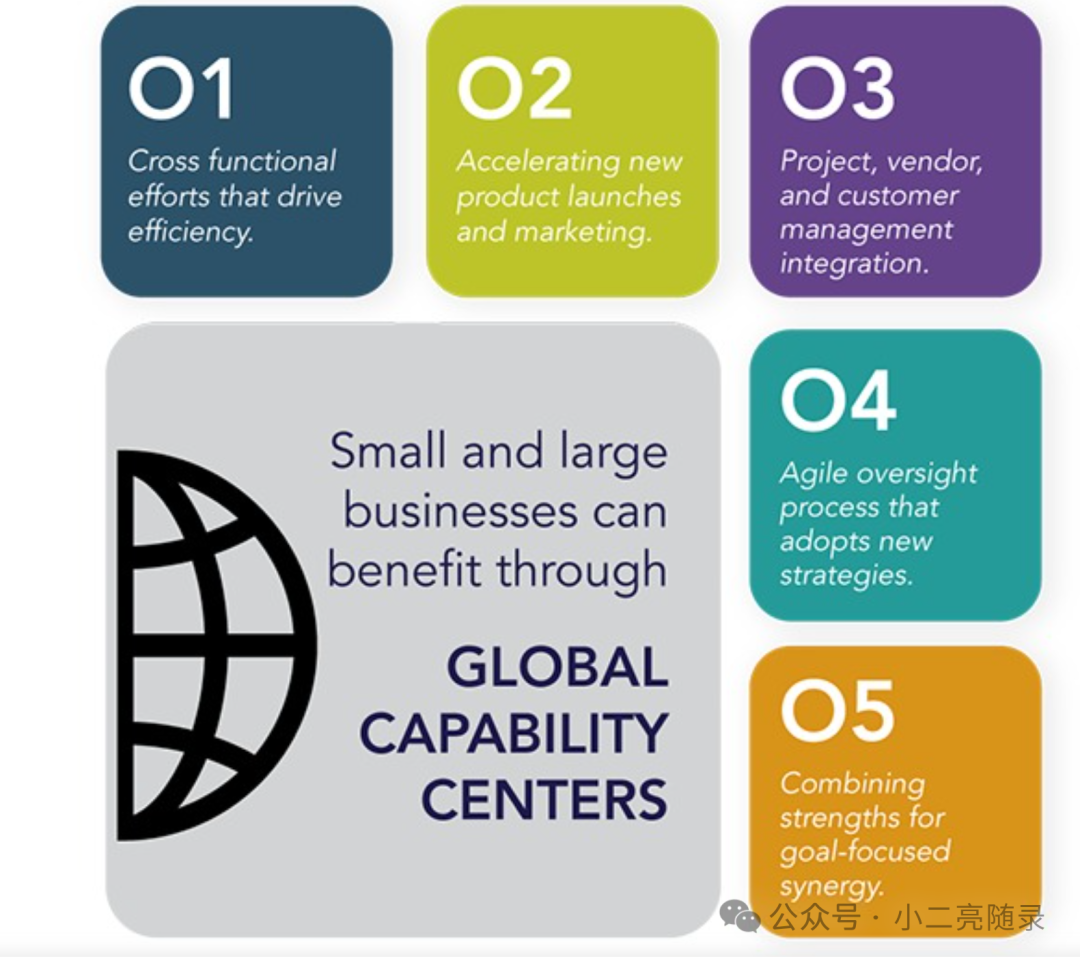
- GCCs are internal technology centers established by multinational companies in India for software development, data analysis, AI research, etc. As of 2023, there are over 1,800 GCCs in India, expected to create 4-5 million job opportunities by 2030.
- These centers attract 60% of Fortune 2000 companies to establish technology bases in India, covering industries such as finance, healthcare, and retail. For example, Qualcomm’s design center in Chennai focuses on chip development.
- GCCs offer greater control and data security, attracting clients to shift from traditional outsourcing to in-house teams. Infosys has even adapted to this trend by acquiring Danske Bank’s IT center in India.
- The high-skill positions demanded by GCCs (such as AI specialists, data scientists, and blockchain developers) differ from the low-end positions of traditional outsourcing. These positions typically require higher educational backgrounds (graduate degrees) and creative thinking, with higher salaries.
- For example, India’s generative AI market is expected to grow 15 times by 2030, reaching $11 billion, driving demand for AI-related skills. Research by the International Monetary Fund (IMF) shows that since 2016, the demand for AI skills in India’s service industry has shown near-exponential growth, especially in Bangalore.
- GCCs compete with traditional outsourcing companies (like TCS and Infosys) for the same talent pool, but due to comparable costs and greater control, clients are more inclined towards GCCs. This poses a long-term threat to the traditional outsourcing model.
- However, Indian IT companies are also actively transforming, seizing new opportunities by providing AI training for employees (such as TCS training thousands of engineers to use generative AI).sudify.tech
Overall Impact and Response
- Net Effect:AI’s impact on India’s outsourcing industry is a double-edged sword. While low-end positions face unemployment risks, AI also creates demand for high-skill positions. The World Economic Forum predicts that AI could net 13-15 million IT-related jobs in the next five years, and Indian IT companies have the capability to seize opportunities by rapidly adapting to new technologies. The Indian government is promoting AI skills training through initiatives like the Skill India Mission and Atal Innovation Mission to mitigate employment impacts.
- Regional Differences:Cities like Bangalore may benefit from GCCs and AI-related positions due to their technological ecosystem, while smaller cities reliant on low-end BPO may face greater challenges.
- Recommendations:Outsourcing companies and employees need to invest in retraining, focusing on skills in AI, machine learning, and data analysis. The government should strengthen digital infrastructure and labor regulations to balance the opportunities and challenges brought by AI.
Conclusion
AI is reshaping India’s software outsourcing industry, with low-end positions facing significant unemployment risks, especially for junior programmers and call center employees. However, the rise of GCCs provides ample job opportunities for high-skill talent, driving innovation in fields like AI and blockchain. India needs to address this transformation through skill enhancement and policy support to ensure its position as a global technology hub.
Job Opportunities Created by Capability Centers (Similar to GCCs)
- The Rise of China’s Version of GCCs:
- China does not have a direct equivalent to India’s GCCs, but multinational companies have established R&D centers and technology centers in China (such as Microsoft Research Asia, Google China R&D Center, Tesla Shanghai R&D Center) that serve similar functions. These centers focus on AI, cloud computing, autonomous driving, etc., with over 2,000 multinational R&D centers in operation as of 2023, employing hundreds of thousands.
- For example, Microsoft’s and Amazon’s R&D centers in Shanghai and Beijing focus on AI and cloud computing, creating high-skill positions. Domestic tech giants (like Alibaba, Baidu, Huawei) have also established similar internal capability centers to develop AI technologies and solutions.
- According to data from China’s Ministry of Commerce, foreign-funded R&D centers in China continue to see investment growth, with approximately $30 billion in new investments in 2023, expected to create 1-1.5 million high-skill jobs in the next five years.
- Similar to India’s GCCs, China’s capability centers focus on high-demand areas such as AI, data science, blockchain, and 5G. These positions require master’s or doctoral degrees, with salaries significantly higher than traditional outsourcing positions. For example, Baidu’s Apollo autonomous driving project and Alibaba Cloud’s AI team attract a large number of high-end talents.
- China’s AI market is expected to reach 570 billion yuan (approximately $80 billion) in 2023, projected to exceed 2 trillion yuan by 2030, driving demand for AI-related employment. Posts on X mention that the average annual salary for AI engineers in China has reached 500,000-800,000 yuan, far exceeding the 150,000-300,000 yuan of traditional outsourcing positions.
- Similar to India, capability centers compete with traditional outsourcing companies for high-end talent. Chinese companies like Chinasoft International and Neusoft are transforming through AI (such as developing AI platforms and providing AI consulting) to respond to competition.
- The difference is that domestic tech giants in China (like Tencent and ByteDance) have reduced reliance on traditional outsourcing due to demand-driven AI R&D. For example, ByteDance’s AI recommendation algorithms are primarily developed by internal teams rather than outsourced.
Similarities and Differences Between China and India
- Similarities:
- AI Impact on Low-End Positions:Both countries’ low-skill outsourcing positions (such as junior coding and customer service) face unemployment risks due to AI automation.
- High-End Job Opportunities:R&D centers of multinational companies and domestic tech enterprises (China) / GCCs (India) create numerous job opportunities in high-skill fields like AI and data analysis.
- Pressure for Skill Transformation:Both countries require large-scale retraining to adapt to AI-driven employment demands, with low-skill workers facing significant challenges in transitioning.
- Industry Scale and Globalization Level:India’s outsourcing industry is the largest globally, heavily reliant on the US and European markets, making the impact of AI more direct and widespread. China’s outsourcing industry is smaller, serving more of the Japanese, Korean, and domestic markets, with a relatively milder impact from AI, as its diversified economy provides more buffer.
- Policy and Educational Support:The Chinese government is vigorously promoting AI and digital transformation through policies like “New Infrastructure” and “East Data West Computing,” while the education system is rapidly increasing AI-related courses (with 500 new universities offering AI majors in 2023). Although India has initiatives like Skill India, its English advantage makes it easier to integrate into the global AI ecosystem, and its training speed is slightly slower than that of China.
- Technological Self-Sufficiency:China has strong self-research capabilities in AI and 5G (such as Huawei’s Ascend AI chip and Baidu’s Wenxin Yiyan), reducing reliance on external technologies. India relies more on foreign-driven GCCs, with slightly weaker self-developed AI technology.
- Regional Impact:Chinese outsourcing cities (like Shenzhen) experience less localized impact from AI due to their diversified economies, while Indian cities like Bangalore, which heavily rely on IT outsourcing, face higher economic risks.
Overall Impact and Response
- Net Effect:The impact of AI on China’s outsourcing industry is similar to that of India, but China’s diversified economy (manufacturing, internet, AI R&D) makes it more resilient. AI is expected to net high-skill jobs, but the reduction of low-end positions may lead to short-term unemployment pressure.
- Response Measures:The Chinese government and enterprises are promoting skill transformation through vocational education (like Alibaba Cloud Academy and Huawei ICT Academy) and policy support (such as AI industrial parks). In contrast, India’s retraining programs rely more on the private sector (like internal training from TCS and Infosys).
- Future Trends:China may lead in AI self-research and high-skill positions, while India, leveraging its English and globalization advantages, may excel in GCCs and the global AI services market.