 Click the above [ Blue Text ] to follow us
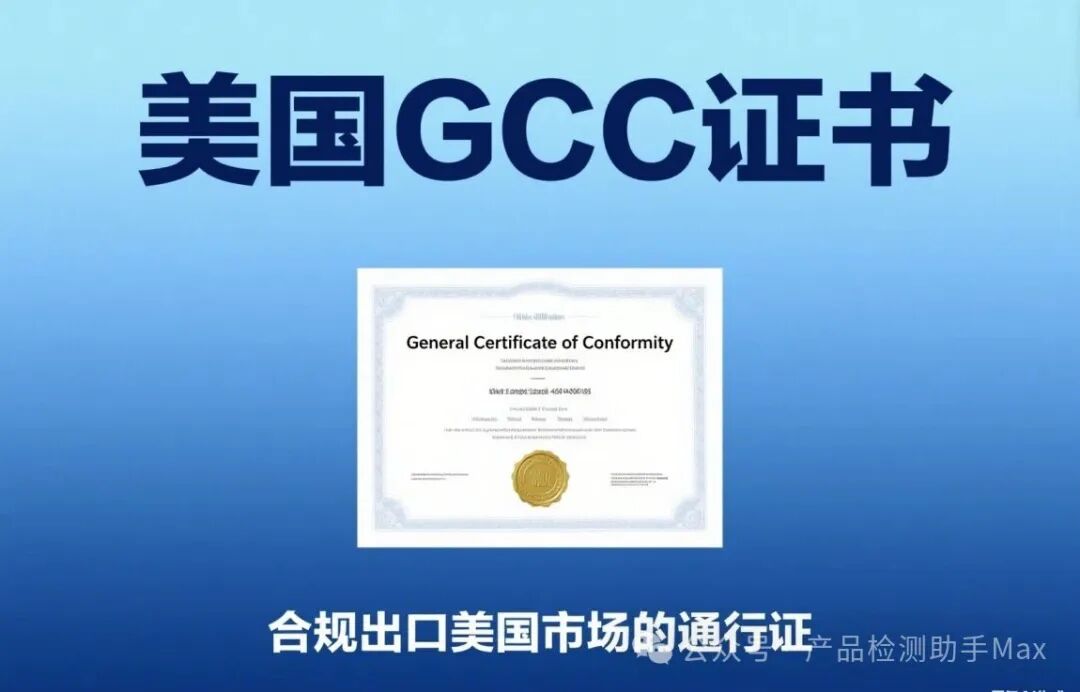
GCC (General Certificate of Conformity) is a mandatory requirement by the CPSC for non-children’s products. For soft furniture sold on the Amazon/Temu platform, the GCC certificate acts as the product’s “identity card,” proving its compliance with relevant U.S. safety regulations. Products that do not provide a GCC certificate or have non-compliant certificates will not be allowed to be listed for sale on the U.S. e-commerce platform and may even face the risk of delisting already listed products.

1.What products are applicable for GCC certification?
1. Transportation tools: Bicycles, electric bicycles, etc. In the pursuit of convenient travel, the safety of these products is crucial.
2. Safety protection: Adult helmets, whether for cycling or other specific scenarios, must undergo GCC certification to ensure effective protection of the user’s head during impact.
3. Daily apparel: Adult clothing is also within the scope of GCC certification. From the safety of fabrics to the compliance of manufacturing processes, every aspect must meet U.S. consumer product safety regulations to ensure consumer confidence.
4. Household items: Mattresses, bunk beds, wardrobes, etc., as important furniture for rest, directly affect sleep experience and health. GCC certification ensures that there are no safety hazards in terms of materials and structure;
5. Gardening tools: Power lawn mowers can cause accidents if operated improperly or if the product has safety defects. GCC certification can standardize their design and manufacturing, reducing usage risks.
6. Leisure and entertainment: Swimming pool slides bring joy but must ensure structural safety and non-slip surfaces; lighters, as common ignition tools, must meet standards for safety and prevention of child access to avoid fire hazards.
7. Storage containers: Portable gas containers for storing various gases must meet strict standards for sealing and pressure resistance to prevent gas leaks and associated dangers.
8. Decorative lighting: Metal candle wicks must not produce harmful substances during combustion and must ensure stable burning.
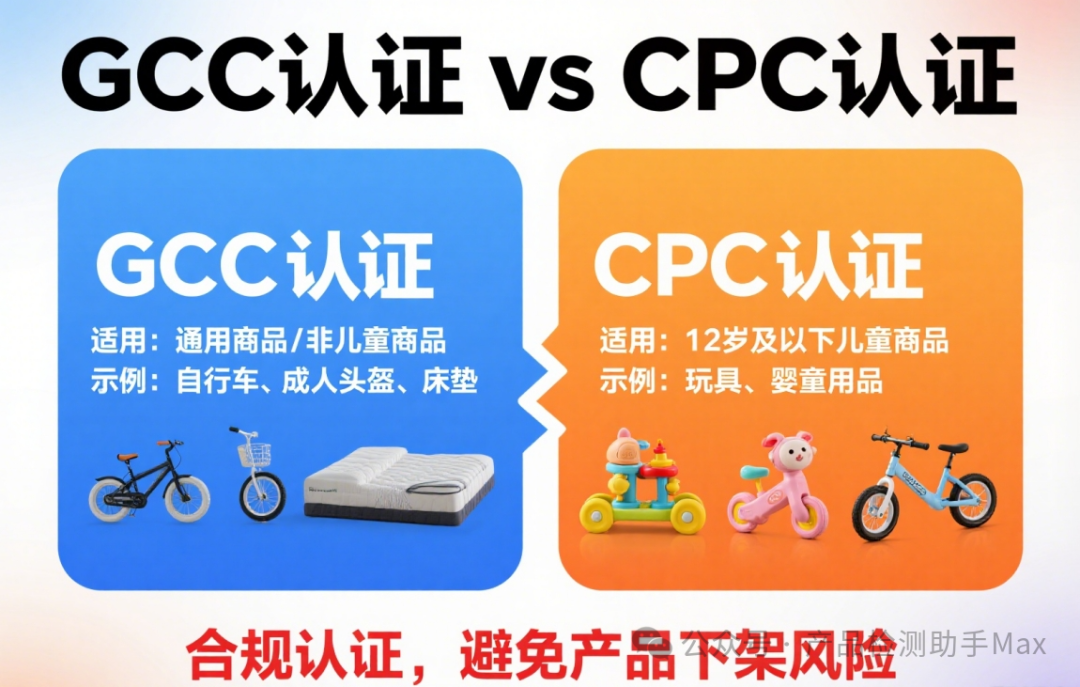
9. Special categories: Fireworks, carpets, vinyl plastic films, etc., may face risks such as ignition due to friction during use; certification can ensure compliance with flame retardant performance; toxic substance prevention packaging for products that may contain toxic substances must prevent accidental ingestion or contact by children;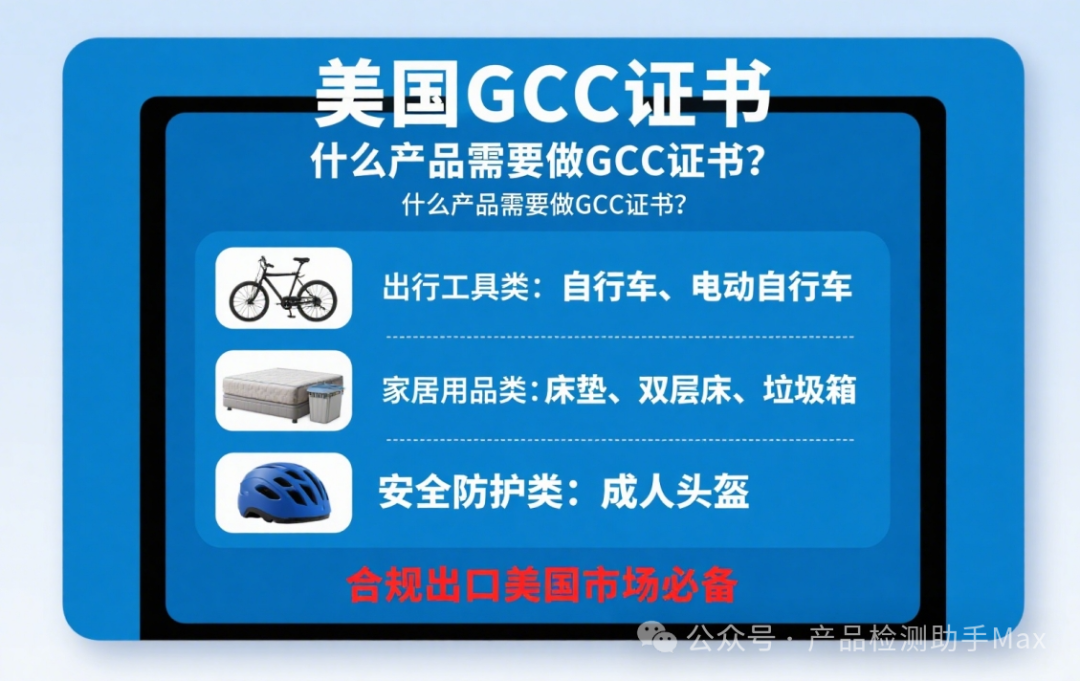 2.Differences Between GCC Certification and CPC CertificationCPC and GCC are both certifications required by the U.S. Consumer Product Safety Improvement Act (CPSIA) that manufacturers or importers must obtain for their products, but there are significant differences between the two.
1. Different applicable product categories: CPC certification is specifically for children’s products, i.e., products designed for or used by children aged 12 and under, such as toys and infant products. Children, due to their incomplete physical and cognitive development, have higher safety requirements for products. GCC certification, on the other hand, applies to general or non-children’s products, covering various products for adult use and general products not specifically designed for children.
2. Different levels of certification stringency: Since children’s products directly relate to children’s health and safety, the U.S. Consumer Product Safety Commission (CPSC) has stricter oversight of CPC certification. For example, CPC certification must be issued by a CPSC-recognized third-party laboratory, and must additionally comply with specific standards for children’s products, such as strict limits on harmful substances like lead and phthalates as outlined in CPSIA, as well as testing for physical properties that may harm children.
In contrast, the testing requirements for GCC certification are determined based on applicable regulations, with specific testing standards corresponding to different product categories. In terms of certificate content, the CPC certificate must include detailed information such as the product’s manufacturing date and location, the name and address of the testing laboratory, and the specific CPSC applicable regulations and standards that the product complies with; while the GCC certificate includes product description, all applicable consumer product safety rules the product complies with, and the name and address of the manufacturer or importer. If no third-party laboratory was involved in testing, this can be marked as “N/A”
(2) Certificate content and application process
Certificate content
Product information: including name, description, color, etc., to ensure the accuracy and completeness of product information.
Manufacturer and importer information: must provide name, address, contact information, etc., for traceability and communication when needed.
Production date, origin, and testing agency information: clearly state the product’s production time, source of origin, and the name, address, and report time of the responsible testing agency to ensure product traceability and the authority of the testing.
Testing standards: clearly list the regulations the product complies with, as well as any other relevant standards and regulations.
Application process
Select a laboratory: must choose a third-party laboratory recognized by the CPSC for testing to ensure the validity and authority of the test results.
Sample testing: provide 1-2 representative samples to the selected laboratory; the testing period is usually 5-7 working days, but the specific time may vary depending on the laboratory’s workload and the complexity of the product.
Obtain report and certificate: after the laboratory completes testing and issues a qualified test report, a GCC certificate will be generated and signed. Sellers must carefully verify the report and certificate content to ensure accuracy.
Platform upload: submit the GCC certificate and test report to the platform seller backend for review; products can only be listed for sale after passing the review.
(3) Certificate validity and precautions
Although the GCC certificate has no fixed validity period, if there are significant changes in the product’s materials, manufacturing processes, or design, sellers must retest and update the GCC certificate to ensure ongoing compliance with regulatory requirements. Additionally, the Temu platform does not assume responsibility for importers; sellers must clearly indicate importer/distributor information in the certificate to avoid compliance issues due to missing or incorrect information.
3. Other important compliance requirements for the platform
1. Core points of the “Product Compliance Declaration”
Certification checklist must be explicit
United States: Children’s products must have a CPC certificate, which must be signed by a U.S. company or authorized representative, declaring that the product complies with CPSC standards to ensure the safety of children using the product.
European Union: CE certification covers market access for 27 EU countries, involving product safety, health, environmental protection, etc., serving as a “passport” for products entering the EU market.
2. Full category coverage
New categories: Textile products now require azo dye testing reports; azo dyes that contain carcinogenic aromatic amines can pose serious health risks to humans, and testing reports are an important means of ensuring consumer safety.
3. Transfer of legal responsibility: Sellers must commit to bearing all legal responsibilities in the “Product Compliance Declaration,” and the Amazon/Temu platform reserves the right to pursue compensation. This means that sellers must take primary responsibility for the compliance of their products, and will face legal risks and financial compensation if issues arise.