In today’s article, let’s talk about 5G LAN.If you have a little understanding of communication technologies, you’ll find that 5G LAN is actually a very interesting concept.Everyone should be familiar with 5G; it is the evolution of 4G and is currently our latest mobile communication technology.As for LAN, everyone should be even more familiar with it. Its full name is Local Area Network, which is a network for a limited area. The networks in our homes and offices are basically LANs. If it has wireless Wi-Fi, it’s called Wireless LAN (WLAN).So, why do I say that 5G LAN is interesting?Because 5G is a widely covered cellular communication network, while LAN is a small-scale area data communication network. The two technologies seem unrelated. In other words, everyone knows the terms 5G and LAN separately. But when combined, it can be a bit confusing, right?█ So, what exactly is 5G LAN?In simple terms, 5G LAN is about using 5G technology to “group” terminals together to form a LAN network.Everyone has a 5G phone. When using a 5G phone, have you noticed that even if you and your friend are very close (even face-to-face), your phone cannot search for each other? The reason you can communicate is that the data flows to the carrier or internet service provider’s server and makes a round trip.For the base station, all mobile terminals are “isolated” from each other. This is based on security considerations, where each phone uses its own channel and does not interfere with one another.
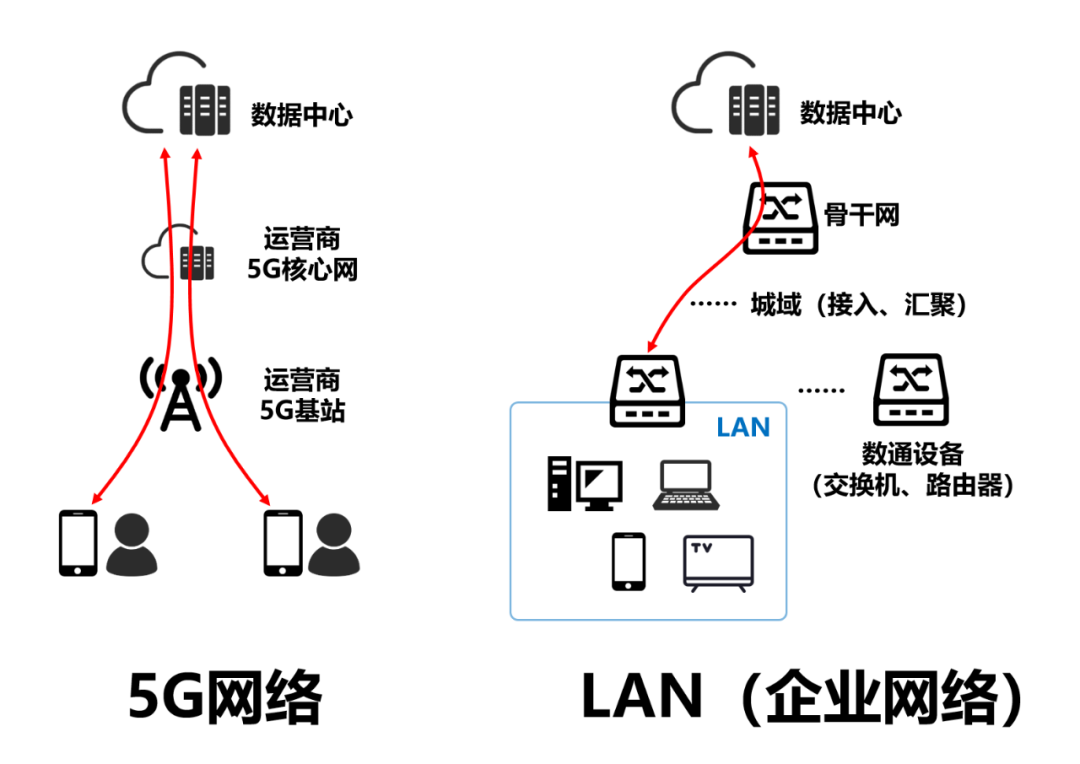 On the other hand, LAN connects terminals (such as phones and computers) within a specific area to form a “group.” This facilitates data transfer between them and saves external network bandwidth.In a LAN, terminals can locate each other through MAC addresses (Layer 2 communication). To access external networks, a router is set up for IP addressing, enabling routing in and out (Layer 3 communication).We all know that “4G changes lives, while 5G changes society.” As the most mainstream mobile communication technology, 5G carries the mission of “connecting all things and aiding the digital transformation of various industries,” helping users in vertical industries establish connections.Thus, 5G must not only connect each terminal to the cloud but also achieve “proximity connections” between terminals.Therefore, in the 3GPP R16 standard, the new feature of 5G LAN was introduced.█ Principles and Features of 5G LANIn a 5G network, administrators can modify data in the User Database (UDM network element) to sign contracts for specific terminal (UE) numbers, thereby grouping them into the same or different VN Groups (Virtual Network Groups).The user database provides the 5G core network (5GC) management elements (SMF, AMF, PCF, etc.) with VN group information and access policies for terminal numbers. Based on this information and policy rules, management elements form different LANs. This is 5G LAN.
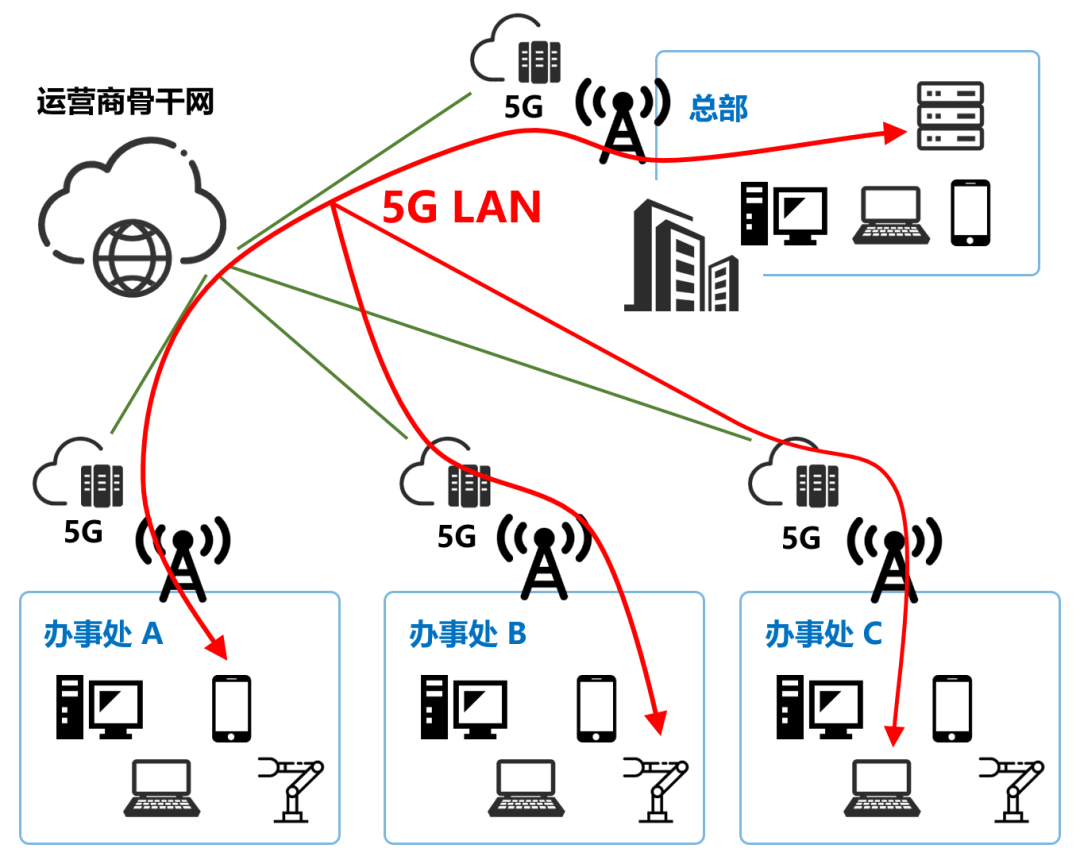
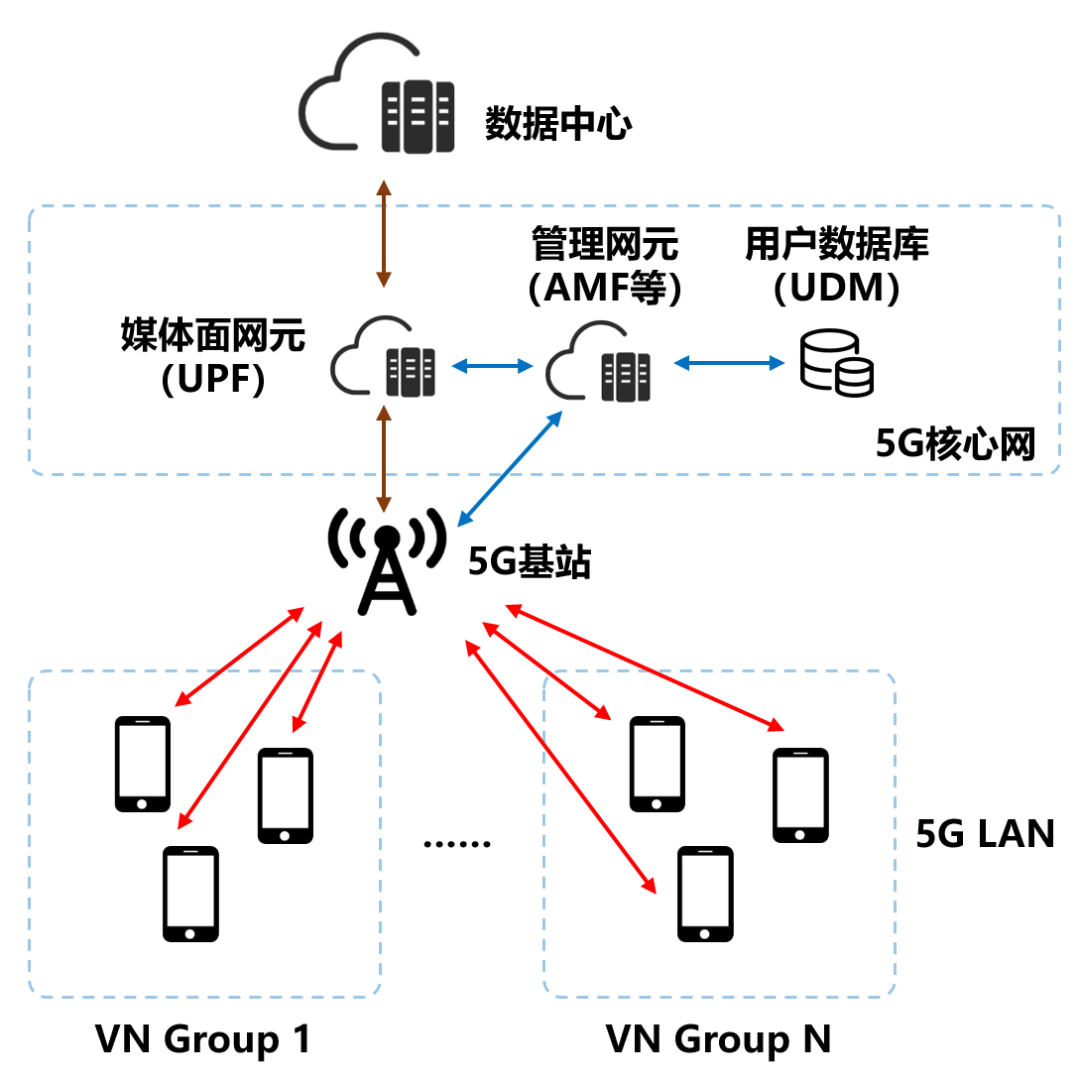 Schematic diagram of 5G LAN network architecture5G LAN supports Layer 2 communication (same network segment, direct access) and Layer 3 communication (cross-network segment, via routing). It supports unicast, multicast, and broadcast. In simple terms, the access methods are very flexible, and the network can be easily set up.In terms of scope, 5G LAN supports communication within the same UPF (5G core network media plane element) as well as communication across different UPFs. This effectively breaks the physical distance limitation between terminals (even communication between Beijing and Shanghai is possible).
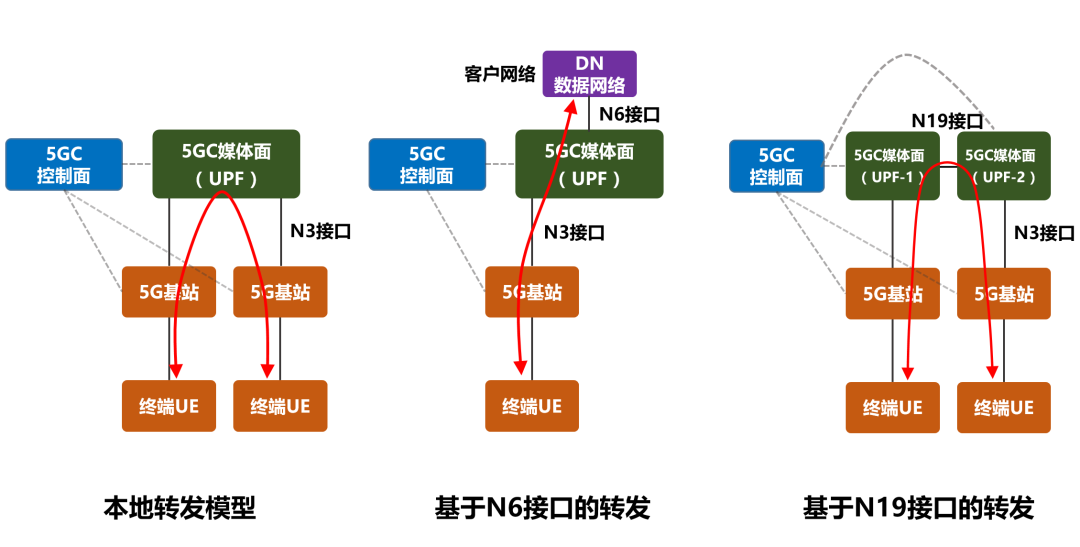 Importantly, the network established by 5G LAN can connect with the user’s existing data network, enabling plug-and-play and mutual access.█ Application Scenarios and Advantages of 5G LAN5G LAN enables the grouping and connection of designated 5G terminals, greatly facilitating enterprises in building more mobile LAN networks. Many readers may ask, isn’t existing Wi-Fi technology capable of achieving mobility? Why do we still need 5G LAN?Don’t worry; let’s continue.The local networking achieved by 5G LAN can help enterprises, schools, governments, families, and other users better interconnect terminals within a specified area. It can be used for office networks, but its greater value lies in transforming production environments in industrial manufacturing, ports, and mining enterprises.
 We are now promoting the industrial internet, believing that 5G can empower the digitalization of industry scenarios because it features high bandwidth and low latency, making it an excellent wireless communication technology capable of achieving wireless connections for various production factors in industrial scenarios.For example, in industrial manufacturing, previously, to better automate and control equipment, the “Industrial Bus” technology was used. This technology has many types, making it quite varied.Later, with the emergence of Ethernet and IP technologies, the industrial sector reached a consensus to evolve towards Ethernet, leading to “Industrial Ethernet”. Now, regardless of whose industrial interconnection protocol it is, it is basically based on Ethernet.Later on, industrial enterprises found that wired connections had too many limitations on mobility—devices always had to leave a “tail” behind, hindering free movement.Moreover, wired connections are complicated to deploy, taking a long time and incurring high costs. If a device or cable has a problem, it takes a lot of time to replace it. Thus, the industrial sector began to consider introducing wireless communication technologies.As a result, Wi-Fi, Bluetooth, and other technologies entered the industrial field.So, returning to the earlier question, since there is Wi-Fi, why do we need 5G LAN?The reasons are as follows:1. Wi-Fi networks (especially Wi-Fi 4 and Wi-Fi 5) do not perform as well as 5G.In terms of transmission rates and latency, 5G better meets the needs of industrial robots (robotic arm control), intelligent quality inspection (high-speed image recognition), AGVs (automated guided vehicles), and other scenarios.In terms of coverage, 5G has a wider coverage area than Wi-Fi, which can better cover industrial parks. The handover capability of 5G is also stronger than Wi-Fi, providing users with a better network experience.2. The maintenance costs of Wi-Fi networks are high.Enterprises constructing park Wi-Fi networks need to wire themselves and purchase equipment. Equipment depreciates, gets damaged, and requires updates, and dedicated personnel are needed for maintenance. A large number of Wi-Fi devices also complicate configuration.5G is different. It is constructed and maintained by carriers, and enterprises essentially rent it (comparing Wi-Fi to 5G is like comparing self-built server rooms to cloud computing).Overall, 5G will be more cost-effective.3. The functions of 5G LAN are more powerful.As mentioned earlier, 5G LAN’s VN grouping not only isolates communication but also plays a crucial role in achieving differentiated QoS (Quality of Service) across different networks.For instance, within an enterprise, there may be office networks, IT system networks, and OT networks.OT stands for Operational Technology, which connects industrial environments and equipment, such as lathes, robotic arms, sensors, instruments, AGVs, monitoring systems, MES, PLCs, etc.
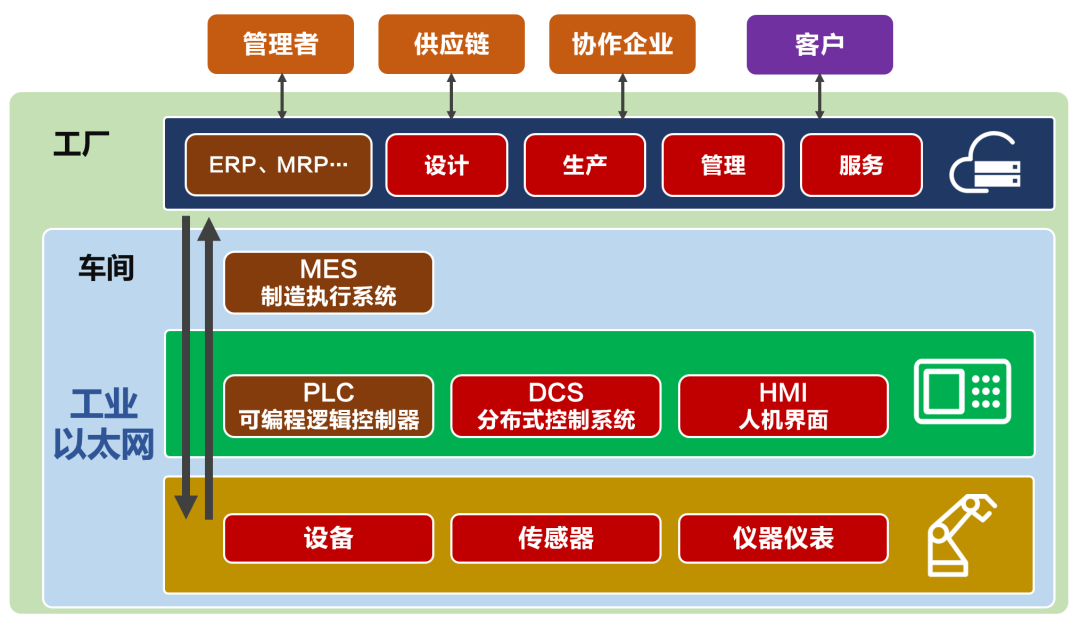 Different networks have different performance requirements; some require low latency, some require high bandwidth, and some have fewer demands.5G LAN can define different network performance based on different VN groupings. Some enterprises refer to this as “micro-slicing.”4. 5G LAN is easier to manage and has stronger security.As previously mentioned, we can modify user signing data in the carrier’s 5G UDM network element and group users into VN groups. So, do we need to contact carrier customer service every time we need to change a terminal’s grouping information (add, delete, or modify)?Of course not.The carrier’s 5G network can open modification permissions to enterprise network administrators through API development, enabling self-service modifications.Enterprises can also set their own private network policies based on their needs.When establishing data connections, enterprises can set authorization and authentication mechanisms to manage VN groupings strictly. This security is much stronger than Wi-Fi and is also much more convenient.█ Case Analysis of 5G LANNext, let’s look at a specific networking case to see the benefits of 5G LAN.First, a manufacturing enterprise has its own workshop and production lines (or lathes) that need to connect PLCs and PLC control terminals through a network.Each production line has many devices, which are independent. Installing a 5G module on each device is the ideal state, but currently, the costs may be a bit high.Therefore, we introduce a 5G industrial gateway or 5G CPE to improve cost-effectiveness. For wired connections, it connects to wired ports (Ethernet ports or PLC ports). For wireless connections, it connects to 5G or Wi-Fi.
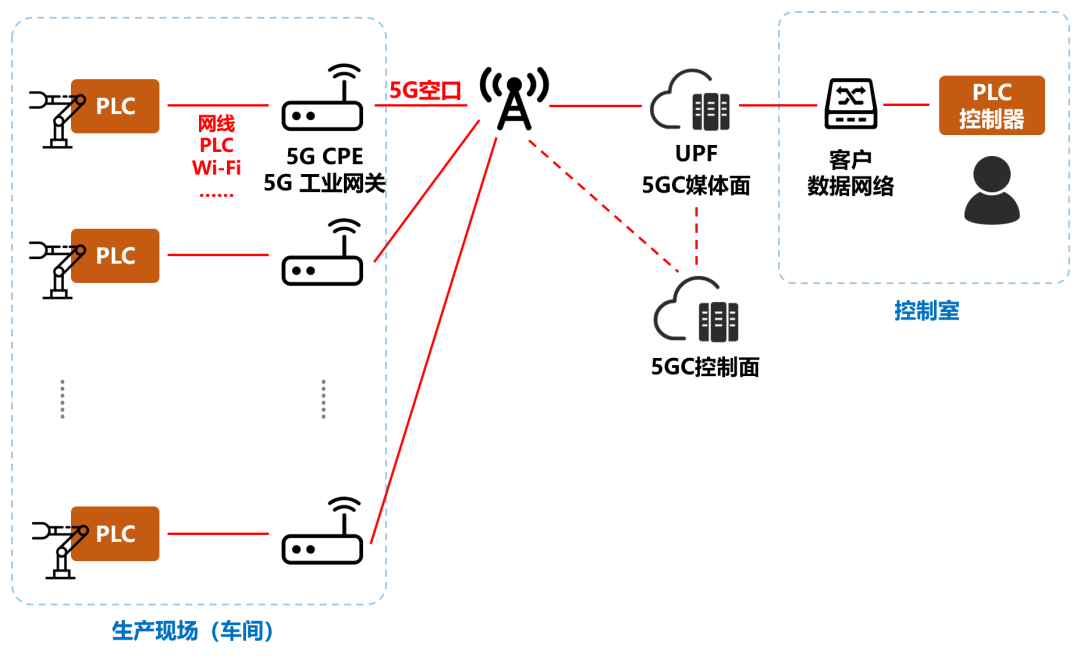 If 5G does not support 5G LAN (before R16), connecting PLCs and PLC controllers is still possible. However, the entire 5G network relies on IP addressing using a three-layer protocol, where terminal addresses are also IP addresses, and it does not support Layer 2 data forwarding. To achieve end-to-end communication, an Access Router (AR) must be added at both ends to establish a tunnel that encapsulates the industrial Layer 2 protocol and carries it to the other end.
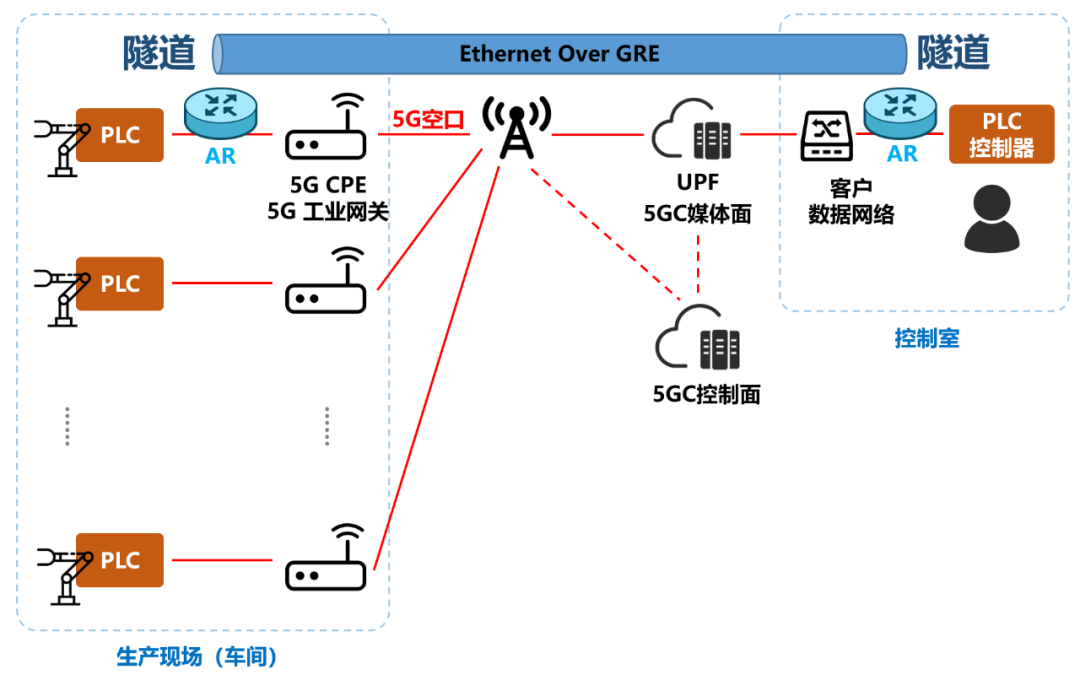 This approach not only increases complexity but also raises costs (costs for purchasing AR routers, as well as labor and time costs for configuring AR routers). Imagine if a workshop has thousands of production lines; the costs would be staggering.With the introduction of 5G LAN, the 5G network can directly transmit Layer 2 protocols, eliminating the need for AR routers. Additionally, the 5G network can provide routing for terminals without IP addresses; the UPF can recognize the MAC addresses of terminals, transforming the entire network into a simplified single-layer network that allows Layer 2 communication between them.The plug-and-play capability of 5G LAN can seamlessly integrate with the customer’s existing network, reducing the impact on the customer’s current network, and eliminating the need for complicated upgrades, saving substantial costs.From a macro perspective, 5G LAN represents the collaboration between 5G and Ethernet technologies. In the future, TSN (Time-Sensitive Networking) technology, developed based on Ethernet technology, will also rely on the support of 5G LAN.It is worth mentioning that 5G LAN not only benefits the construction of internal networks in industrial parks but can also supplement traditional dedicated line networks for connecting branch offices in different locations.
█ 5G LAN ModulesAs you can see, 5G LAN is an important innovative technology for the implementation of 5G in vertical industries. It can build more powerful 5G private network communications, helping customers accelerate their digital transformation and upgrades.To better deploy 5G LAN, in addition to network-side upgrades, support from 5G modules is also necessary.In the process of commercializing 5G LAN technology, ZTE launched the industry’s first 5G R16 Ready baseband chip platform—V516.Based on this platform, the leading domestic module manufacturer—Quectel, has successfully developed multiple 5G modules supporting 5G LAN technology, which have been commercialized, including RG500U, RG200U, RM500U, and other LGA, M.2, Mini PCIe packaged modules.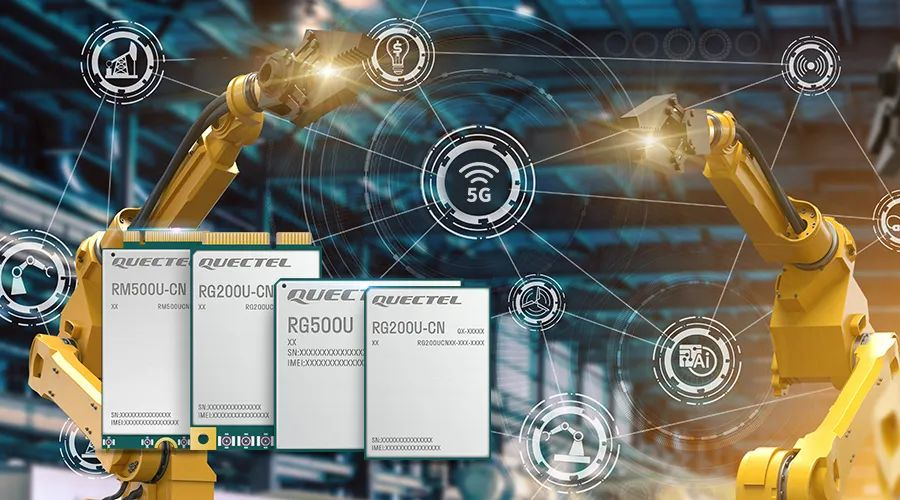 These modules are characterized by high reliability, achieving millisecond-level air latency and precision timing of 1us in 5G networks, which can better meet the needs of industrial manufacturing for high-precision machine collaboration, multi-vehicle coordination in warehousing and logistics, and differential protection in smart grids.In Ningbo, Zhejiang, a well-known enterprise adopted Quectel’s 5G LAN modules to establish a fully connected 5G factory, completing the country’s first commercial pilot of 5G LAN.As a manufacturer of aluminum alloy precision die-casting parts for automobiles, this enterprise focuses on the field of automotive parts manufacturing and is a typical discrete manufacturing enterprise.Its six factories are located in different positions within an industrial park in Ningbo. The 5G LAN technology helps these factories achieve more flexible connections, increasing the efficiency of production line adjustments by 70% (from 7 days to 2 days), doubling the efficiency of MES network delivery (from 6 months to 3 months), and saving approximately 750 person-days of tunnel configuration maintenance work annually.
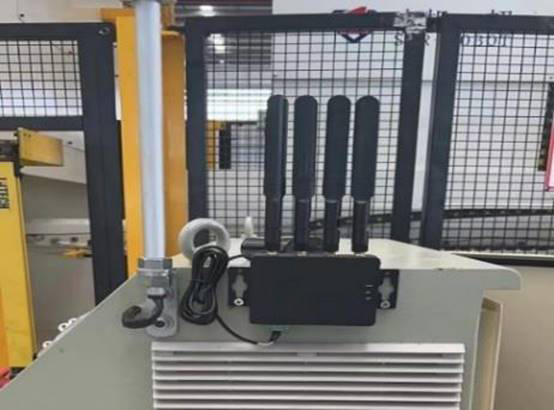 5G equipment installed in a well-known enterprise’s factoryHere, “5G + industrial internet” truly realizes the empowerment of “flexible production”.In projects involving certain automobile brands, smart buildings in universities, and flexible factories in industrial enterprises, 5G LAN has also been successfully implemented. In the future, 5G LAN will appear more frequently in our field of vision, empowering the digital transformation of hundreds of thousands of parks across the country.█ ConclusionThe industrial internet is the cornerstone of the Fourth Industrial Revolution. Innovations in 5G private network technologies, such as 5G LAN, are of great significance for the comprehensive digitalization, networking, and intelligence of the industrial sector.With the freezing of the 5G R17 version, we are gradually entering the 5G-Advanced era. New exciting developments continue, and new technological innovations are constantly emerging.Accumulated innovations will ultimately lead humanity towards the “intelligent interconnection of all things.” Let’s wait and see!