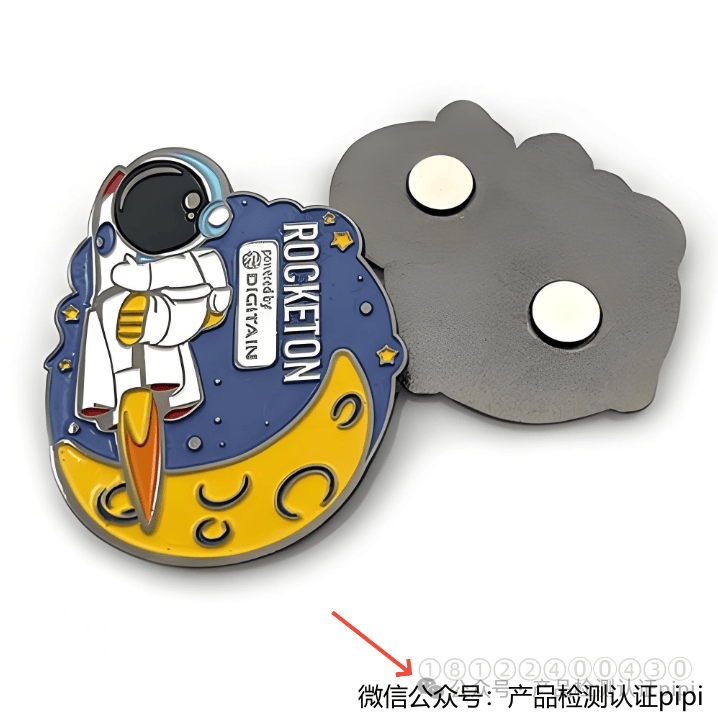
Regarding the GCC (U.S. Customs and Border Protection) testing items for refrigerator magnets, the main testing standards and items are as follows:
1. Core Testing Items
1. Magnet Safety Standards (16 CFR Part 1262)
This assesses the magnetic strength of magnets to prevent interference with sensitive devices such as medical equipment (e.g., pacemakers).
2. ASTM F963-23-4.38 (Magnets)
This includes mechanical performance testing of magnets, such as impact resistance and shock resistance, to ensure safe usage.
3. Phthalates (16 CFR 1307)
This tests for the content of substances such as polybrominated biphenyls (PBBs), polybrominated diphenyl ethers (PBDEs), and diisobutyl phthalate (DIBP) to comply with environmental protection requirements.
4. Lead (Pb)
This involves testing metal content to ensure it is below safety standards, preventing the risk of lead poisoning.
2. Other Related Tests
- RoHS Testing (RoHS 2.0) tests for harmful substances such as cadmium (Cd), mercury (Hg), hexavalent chromium (Cr6+), and polybrominated biphenyls to comply with international environmental protection requirements.
3. Additional Notes
Energy Efficiency Labeling: Some products need to display energy efficiency ratings (Chinese standards are divided into five levels). Labels and Instructions: Must include warnings about magnet hazards and safety usage instructions.
4. GCC Certification Process
1. Consult for a quote and fill out the application form;
2. Send samples (1-2 complete samples, samples and packaging must have traceability labels and warnings);
3. Sign the contract and arrange payment for testing;
4. Laboratory testing is completed, and a test report is issued;
5. Confirm the report and issue the official document.
Processing time: 5-7 working days, expedited service is available.
Before listing refrigerator magnets, it is recommended to understand the requirements and certification standards of platforms such as Amazon and TEMU, and ensure that the products comply with relevant standards to avoid non-compliance issues.