Last week, Mr. Chen, who makes Bluetooth speakers in Shenzhen, came to me looking distressed: “Engineer Zhang, I hired an ‘agent’ to handle the FCC ID certification, not only did I spend 18,000 yuan, but the documents were revised three times, and the samples failed testing twice. Now, 200,000 worth of goods have been stuck at the Los Angeles port for a month, incurring a demurrage fee of 800 dollars a day. If this drags on, the goods will turn into ‘scrap metal’!” This is not an isolated case—data from the FCC in 2024 shows that 21% of delays in Bluetooth speaker FCC ID certification are due to improper handling, with 70% caused by “choosing the wrong agency” or “incomplete documentation.” Many manufacturers think that “FCC ID is just a process, any agency will do,” resulting in a “worry-free process” turning into a “headache project.” Today, I will use my over ten years of certification experience to clearly outline the “time-saving and worry-free secrets” of obtaining FCC ID certification for Bluetooth speakers, including a 5-step process and 3 major pitfalls to avoid, so you can save unnecessary expenses and avoid unnecessary detours.
First, let’s clarify: the FCC ID for Bluetooth speakers is not just a “random label”; it is the “wireless ID card” for the U.S. market.
Many people think that “FCC ID certification for Bluetooth speakers” is no different from regular FCC DoC certification, but this understanding is completely “off the mark”! The core difference is this: Bluetooth speakers, which have wireless RF functionality (Bluetooth module), are classified as “devices intentionally radiating RF energy” and must obtain FCC ID certification; whereas regular wired speakers only need to make an FCC DoC self-declaration—simply put, the FCC ID is the “U.S. wireless ID card” for Bluetooth speakers. Without this certificate, you cannot enter the U.S. market, let alone pass through customs.
It is crucial to emphasize: FCC ID certification cannot be done independently; it must be reviewed by a TCB (Telecommunication Certification Body) authorized by the FCC. Why is the U.S. so strict about FCC ID for Bluetooth speakers? Because if the 2.4GHz signal from Bluetooth speakers “drifts,” it may interfere with mobile phones, routers, and even aviation communications (in 2023, a certain brand of Bluetooth speaker was reported by the FCC for frequency drift and required rectification). The core function of the FCC ID is “traceability”: if a device has RF interference issues, the FCC ID can quickly identify the manufacturer, model, and technical parameters, facilitating accountability for regulatory authorities. According to data from the FCC’s official website in 2024, Bluetooth speakers with compliant FCC IDs have sales in the U.S. market that are 3.8 times higher than non-certified products, with a premium of 12%-18%—this is the market dividend brought by “compliance certification.”

The 5-Step Process for FCC ID Certification for Bluetooth Speakers: Each Step Includes “Time-Saving Tips + Pitfall Points”
Many manufacturers feel that the “FCC ID certification process is complex and time-consuming,” but this is often due to not finding the right method. I have broken down the latest 2025 certification process into 5 steps, clearly marking the “key actions,” “time-saving tips,” and “pitfall points” for each step.
Step 1: Choose the Right Professional Agency—This is the Core of “Time-Saving and Worry-Free”
Choosing an agency is not about “who offers the lowest price,” but rather “who has complete qualifications and sufficient experience.” If you get this step wrong, everything else will be in vain.
They must have experience in Bluetooth speaker certification: Different products have different FCC ID testing focuses. Bluetooth speakers need to test for “RF emissions, frequency stability, and spurious emissions.” Agencies without experience may miss testing items, leading to reports being rejected. It is advisable to choose an agency that has done “over 100 Bluetooth speaker certifications”; they know which parameters are likely to exceed standards and can provide technical advice in advance (for example, how to shield the Bluetooth module).
They should provide “one-stop service”: It is best to choose an agency that can handle “testing + review + filing” simultaneously to avoid wasting time on back-and-forth communication between different agencies for testing and review.
Pitfall Point: Don’t believe the hype of “1-week certification.” The FCC ID certification has a fixed process; testing takes 1-2 weeks, and review takes 1 week. The fastest it can be done is 3 weeks. If someone promises a certificate in 1 week, it is either a fake certificate or they have missed testing items. Last year, a manufacturer believed the “1-week certification” promise and ended up with an ID that could not be found on the FCC website, resulting in their goods being seized and a loss of 120,000 yuan—slow work produces fine products; don’t rush.
Time-Saving Tip: When selecting an agency, ask them to provide “Bluetooth speaker certification case studies,” such as whether they have certified models similar to yours (like outdoor portable speakers or desktop speakers). Agencies with case studies can help you avoid many detours, and the testing pass rate is also higher.
Step 2: Prepare All Required Documentation—Complete Documentation = Less Rework, Avoid the “Incomplete Documentation” Pitfall
Document preparation is the “easiest step to waste time.” Many manufacturers waste 1-2 weeks going back and forth due to missing documentation. The core documents to prepare include 5 categories, each with “preparation points”:
1. Circuit schematic + PCB layout: Must indicate the Bluetooth chip model (e.g., BCM43455), RF module location, and antenna parameters; it cannot be vague. For example, the capacitor and resistor parameters in the schematic must match the sample exactly; otherwise, discrepancies will be found during testing, leading to rejection.
2. Product technical specifications: Clearly state the Bluetooth version (e.g., 5.3), frequency range (2.402-2.480GHz), transmission power (recommended ≤10mW to avoid additional testing for exceeding power), input voltage (e.g., 5V/2A), and other key parameters; do not forget to include “RF-related parameters.”
3. User manual: Must include an “FCC compliance statement,” such as “This device complies with FCC Part 15 Subpart C regulations, and operation is subject to the following conditions: 1. This device will not cause harmful interference; 2. This device must accept any interference received, including interference that may cause undesired operation,” and must indicate the reserved location for the FCC ID.
4. Sample label image: Indicate the format and location of the FCC ID. The FCC ID format is “Manufacturer Code + Product Code” (e.g., “ABC-SPK001”). The manufacturer code must be applied for in advance on the FCC website (the agency can assist with this application).
5. BOM (Bill of Materials): List all component models and suppliers, especially for the Bluetooth module, antenna, and battery, and indicate whether they meet FCC requirements (e.g., whether the Bluetooth module has an FCC-recognized number).
Pitfall Point: Don’t wait until the last minute to gather documentation. It is advisable to prepare documentation one week before sample submission and have the agency’s engineers review it first. If there are issues, they can be corrected in advance to avoid discovering incomplete documentation after submission, which leads to back-and-forth delays. Last year, a manufacturer discovered after submission that their user manual did not include the compliance statement, necessitating a reprint of the manual, which delayed them by 10 days.
Time-Saving Tip: Request “documentation templates” from the agency, such as user manual templates and schematic templates. Filling these out is three times faster than writing from scratch and helps avoid formatting errors.
Step 3: Sample Submission for Testing—Correct Samples = Pass on First Try, Avoid the “Sample Discrepancy” Pitfall
Submitting samples is not just about “grabbing two units.” Whether the samples are compliant directly determines whether testing can pass on the first try. Pay attention to 3 points:
1. Samples must be in “mass production state”: The casing, chips, and antennas must be identical to the mass production version, not “lab prototypes.” I had a client who submitted samples using an imported Bluetooth chip but switched to a cheaper chip for mass production. The testing passed, but the mass-produced product was found to exceed standards during an FCC spot check, resulting in the FCC ID being revoked and a product recall.
2. Sufficient sample quantity: Typically, 2-3 complete samples need to be submitted. If it involves “destructive testing” (e.g., RF power testing may damage samples), send an extra unit. Before submission, label the samples with a “unique number” to avoid confusion with other manufacturers’ samples.
3. Conduct “pre-testing” in advance: If you are unsure about the samples, you can have the agency conduct a “pre-test” (for an additional cost of 1,000-2,000 yuan) to identify issues early. For example, if the Bluetooth module radiation exceeds standards, a shielding cover can be added in advance; if frequency drift occurs, the antenna matching circuit can be adjusted—spending on pre-testing is much less than the cost of retesting after a formal failure.
Key testing focuses on 3 items (high-risk points for Bluetooth speakers):
1. Radiated emissions testing: Measures the RF radiation intensity of the speaker during operation, which must not exceed the limits set by FCC Part 15C (30MHz-1GHz band ≤40dBμV/m). Previously, a sample failed because the antenna was not properly tuned, resulting in radiation exceeding the limit by 2.5 times; it passed only after the antenna position was adjusted.
2. Frequency stability testing: Measures whether the frequency of the Bluetooth signal is stable and must not drift outside the 2.402-2.480GHz range. Frequency drift is considered a “risk of interference,” and the FCC is particularly strict about this requirement.
3. Spurious emissions testing: Measures excess noise outside the main frequency, such as noise generated by chargers, which must be below the limit; otherwise, it will interfere with other electronic devices.
Pitfall Point: Don’t rush the laboratory for “accelerated testing.” Proper laboratories require 10-15 working days for full testing. Rushing can lead to missed tests, which will delay the process. It is advisable to plan sample submission time in advance and not to submit samples right before shipping deadlines.
Time-Saving Tip: Include a “sample description” with the submission, such as debugging methods for the Bluetooth module and testing precautions, to help engineers quickly get up to speed with testing, saving time.
Step 4: Review and Issuance—Monitor Progress = Fewer Delays, Avoid the “Report Incompleteness” Pitfall
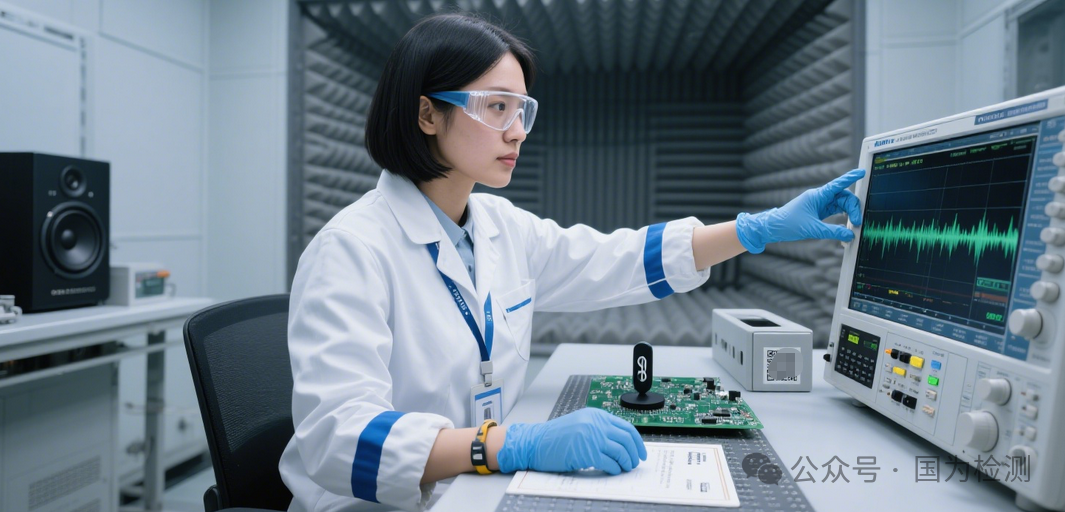
After testing passes, the agency will issue a test report and submit it to the TCB for review. This step requires close monitoring of progress to avoid the review being rejected. Pay attention to 2 points:
1. Review focuses on “report completeness”: The TCB will check whether all testing items are included, whether data meets standards, and whether documentation is consistent. For example, the product model in the report must match the schematic and user manual, and testing data must indicate “units, limits, and measured values” without ambiguity. Last year, a manufacturer’s report was rejected because it lacked “spurious emissions testing data,” requiring a re-test that took 1 week.
2. Respond promptly to review inquiries: If the TCB has questions (e.g., about abnormal test data), the agency will notify you, and you must respond within 2-3 days; do not delay. For example, if the TCB asks about “shielding measures for the Bluetooth module,” provide details about the material and thickness of the shielding cover and cooperate with the agency to explain.
After passing the review, the TCB will generate the FCC ID in the “Equipment Authorization System” on the FCC website, and the agency will send you the FCC ID certificate and filing link—this link is very important, as Amazon U.S. and customs will check it, so keep it safe.
Pitfall Point: Don’t think “getting the certificate is the end of the process”: Check the FCC website to see if the FCC ID can be found (go to the FCC ID Search page and enter the ID number); only IDs that can be found are compliant. If it cannot be found, it may mean the review was not passed, so don’t be misled by the agency.
Time-Saving Tip: Request the agency to send you “weekly updates on review progress,” such as “report submitted to TCB” or “TCB has no questions, waiting for ID generation” to keep track of progress and resolve issues early.
Step 5: Affix the FCC ID Label—Correct Placement = Compliance, Avoid the “Label Error” Pitfall
The final step of affixing the label seems simple, but many manufacturers stumble here. The FCC has clear requirements for labeling, and incorrect placement is also considered non-compliant:
1. Placement must be conspicuous: It should be affixed to the bottom, back, or front of the Bluetooth speaker in a visible location, not inside the battery compartment or on the inside of the packaging (places not visible to consumers). Previously, a manufacturer affixed the label to a removable dust cover, which was lost, resulting in the speaker being unmarked and complaints from consumers. The FCC required re-labeling, costing 20,000 yuan.
2. Format must be correct: The FCC ID format is “FCC ID: XXXXX-XXXX” (the first part is the manufacturer code, and the second part is the product code), for example, “FCC ID: ZTE-SPK002”. The font height must not be less than 3mm and must not be distorted (e.g., writing “X” as “×”).
3. Additional information must be complete: It must also indicate “Complies with Part 15 of the FCC Rules”; if the product has wireless charging capabilities, it must add “FCC ID for wireless charging module: XXXXX-XXXX.”
Pitfall Point: Don’t “affix labels in bulk only to discover errors later”: Before labeling, first affix labels to 1-2 sample units and have the agency’s engineers confirm compliance. Only proceed with bulk labeling if there are no issues to avoid rework due to errors.
Time-Saving Tip: Design the FCC ID label into the product casing mold (e.g., silk screen) to make it more durable than affixing stickers later, and avoid issues with stickers peeling off.

Conclusion: FCC ID Certification is Not a “Cost”; It is a “Time-Saving Pass” for Bluetooth Speakers Entering the U.S.
Ultimately, in 2025, if you want to bring Bluetooth speakers into the U.S. market, obtaining FCC ID certification is a “must-answer question,” and “choosing the right agency, preparing complete documentation, and submitting compliant samples” are the keys to being “time-saving and worry-free.” The 15,000 to 30,000 yuan you spend on certification is essentially “insurance for your product in the U.S. market,” which is well worth it compared to the losses from seized goods, fines, and recalls.
Finally, here’s a practical suggestion: Get involved in FCC ID certification during the Bluetooth speaker development phase, such as having agency engineers confirm in advance whether the Bluetooth chip and antenna meet FCC requirements to avoid discovering non-compliance after design completion, which would lead to rework. When obtaining certification, prioritize agencies that have local laboratories for easier sample submission and communication, which can also save logistics time.
If you have specific questions about Bluetooth speaker FCC ID certification, such as “whether a certain Bluetooth chip meets requirements” or “details of testing costs,” feel free to contact us!
#BluetoothSpeakerFCC #BluetoothSpeakerFCCID #FCCIDCertification
Contact Us:
CCC Certification: 13528859239 (WeChat same number)
CCC Certification: 15989875556 (WeChat same number)
CCC Certification: 18666175760 (WeChat same number)
Entrusted Testing: 18938884094 (WeChat same number)
Network Access Certification: 18033447184 (WeChat same number)
Address: No. 107, North Building, Jinwen Digital Valley, Dongwangyang Industrial Zone, Huangtian Community, Hangcheng Street, Baoan District, Shenzhen
|
Previous Highlights |
Mandatory CCC certification for charging piles, hurry up and apply! Starting March 1, 2025, new energy vehicle charging piles will officially start 3C mandatory certification. |
|
【Industry Shock】 Major changes in 3C certification rules for lithium batteries and mobile power supplies! The era of “pre-review and post-certification + on-site sampling” has arrived! |
|
|
The EU has made a big move! The RED cybersecurity standard EN 18031-1, the “life and death test” for radio equipment! |
|
| The deadline of August 1 is approaching! How to handle EU wireless product cybersecurity certification? Understand EN18031 certification in one article. | |
|
How to obtain CCC certification for lithium-ion batteries? A step-by-step guide! Complete guide to obtaining CCC certification for lithium-ion batteries. |
|
|
Must-read! Is V0 flame retardant enough? The new national standard 960℃ test is coming! Strategies for breaking through are revealed. |
|
|
New regulations coming in July! Flame-retardant wires and cables CCC certification become a “hard threshold”; these points you must know! |
|
|
Do power banks and battery products need 3C certification? New civil aviation regulations in 2025: power banks without 3C markings are prohibited! Complete guide to certification for battery products; avoid these pitfalls. |