How does the mbed platform truly appear in the eyes of real product developers? This article invites Huang Zhuo, CEO of Smart Cloud, to share his insights.
ARM has made a high-profile release of its mbed OS development platform, which has caused quite a stir in the smart hardware community. Many people know that Smart Cloud was one of the first cloud platforms in China to provide technical services for smart hardware, so many friends have asked me, how is mbed? Is it really as powerful as advertised?
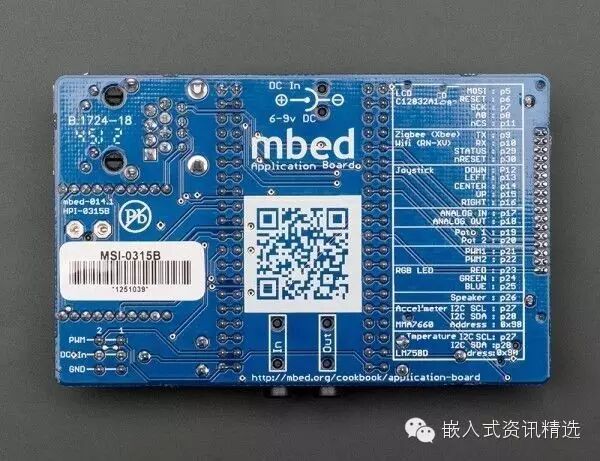
First of all, compared to past development tools and operating systems, mbed indeed provides a relatively more systematic and comprehensive development environment for smart hardware. mbed not only standardizes the peripherals (such as infrared, motors, buzzers, gyroscopes, etc.) that may be involved in current smart hardware but also provides principles, key knowledge, example code, etc. for these peripherals, which is a tremendous help for many who are not very familiar with smart hardware.
Secondly, mbed encapsulates many hardware-related programs using middleware, which means developers no longer need to specifically concern themselves with the underlying drivers; they can simply call friendly interfaces. This is similar to how Java encapsulation allows for quicker onboarding compared to development in C language. Therefore, development work using mbed becomes much simpler, and due to the effective shielding of the driver layer, cross-platform development with mbed becomes more convenient, allowing developers to easily switch from ST to Freescale platforms.
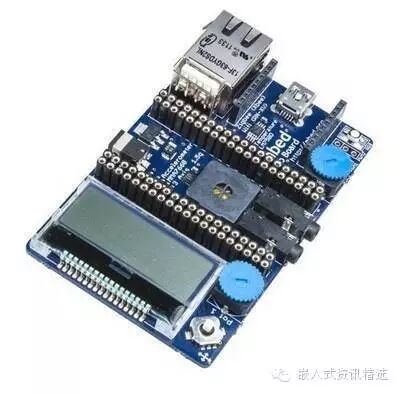
Another very important point is that compared to existing development tools, mbed not only allows development using well-interactive interfaces like TurnOnMyLed but also supports both offline and online development environments, meaning developers can work offline or edit on the web. This not only allows developers to conveniently download binaries to run on devices but also provides a local IDE compilation environment and supports Arduino and Contiki projects, making development based on mbed more open and flexible.
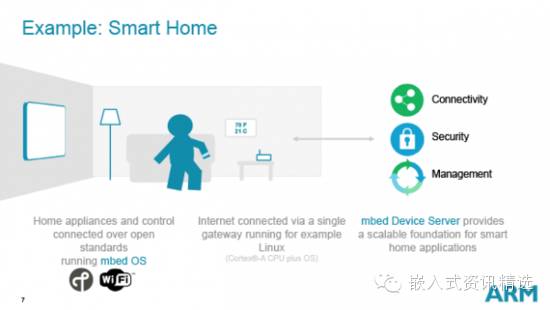 Therefore, compared to the ability to carry more functions and data processing capabilities, I believe the greater significance of mbed’s launch is to further reduce and lower the development threshold for smart hardware. This can help more developers who are not familiar with the Internet of Things (IoT) and smart hardware to participate and also reduce many foundational troubles, allowing everyone to focus more on the core ideas of smart hardware itself.
However, the mbed OS ecosystem is still in its early stages. In addition to technical issues such as price and energy consumption, its stability, cost, and security need further validation. A very critical point is whether mbed can quickly attract a large number of developers and partners; these are all challenges that mbed will face and need to solve next.
Moreover, the scope of the Internet of Things (IoT) is vast, covering all aspects of our lives, and various demands exhibit very obvious fragmentation characteristics, which means different customers need different solutions. Customer needs determine that it is unrealistic for any development tool or system to dominate the market.
For example, compared to mbed, Arduino appears to be simpler and easier to use. In addition to being able to easily connect various sensors, its advantages in price, energy consumption, and stability are also areas where mbed cannot currently compete. Therefore, while we all hope for a more unified standard and operating system in the IoT field, especially as we have been working in the smart hardware and IoT field for four years, this will be difficult to achieve in the short term because the diversity, richness, and future growth potential of the IoT will far exceed our current imagination.
You will find that ARM has created its own OS on the mbed platform, which seems to leave little room for Google. This changes the ARM+Google model that was very successful during the rapid proliferation of smartphones in the past few years. However, at present, the value of mbed is more reflected in it being a more powerful and flexible development environment and tool. mbed not only makes the development of smart hardware simpler but also provides sufficient future space due to its strong processing capabilities.
As an operating system, mbed’s advantage lies in more fundamental system processing, while Android excels in upper-layer applications and human-computer interaction. Therefore, in the future IoT field, while there will certainly be direct competition between ARM and Google, there is actually greater room for cooperation.
As it stands, the greatest significance of mbed is to further simplify the development of smart hardware.
The emergence of various smart hardware and technologies like mbed has made many of us feel real changes. One day, when the entire IoT ecosystem becomes complete, people will fully enjoy the tremendous improvements brought by IoT technology in all aspects of life and work, and many of humanity’s production and lifestyle will undergo revolutionary changes. I believe that day is not far off.

The “Learning Universe” column has officially launched and is continuously updated. Come and follow us! Just reply with “Microcontroller”, “Embedded Systems”, “Internet of Things”, “Smart Hardware”,“Embedded Engineers”, “CPU”, “GPU”, “FPGA”, “Linux”, “Android”, “ARM” keywords to read past related exciting content at any time!