As the topic of “some factories in China relocating to Vietnam” gains attention, a recent investment announced by South Korea’s Samsung has added fuel to the fire in the semiconductor industry.
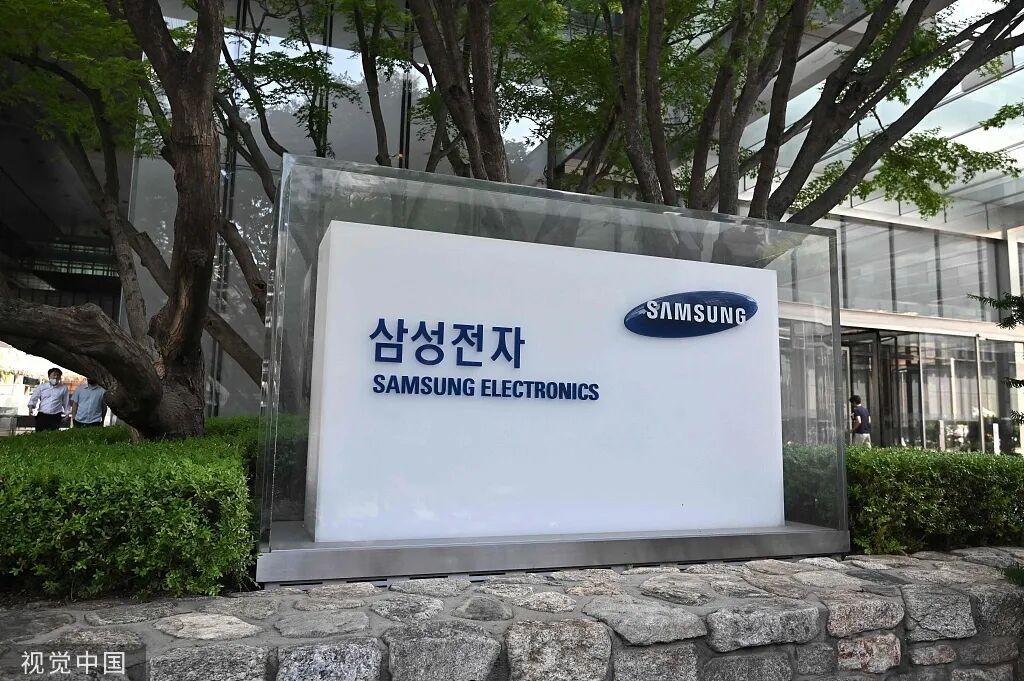
According to Vietnamese media reports, Samsung revealed on the 5th local time that it plans to begin mass production of semiconductor packaging components at its factory in Vietnam next year. The Nikkei Asia reported that this marks Samsung’s third business venture in Vietnam, following home appliances and smartphones. Industry insiders told the Global Times that Southeast Asia, including Vietnam, has become an important part of the global semiconductor supply chain, but the industry is still concentrated in the low-profit packaging and testing segments, which may be areas of competition with China. However, countries like Vietnam hope to move upstream in the supply chain, which currently poses significant challenges.
What other semiconductor giants are in Vietnam?
According to the Vietnamese newspaper “Kuaibao,” Samsung Electronics CEO Lee Jae-Yong stated on the 5th in Vietnam that the company is testing the production of FC-BGA high-performance semiconductor packaging substrates in Thai Nguyen Province, northern Vietnam, and plans to officially start mass production in July 2023. Public information shows that this product is primarily used to connect semiconductor chips such as CPUs (central processing units) and GPUs (graphics processing units) with printed circuit board electronic components, rather than the core wafer manufacturing of semiconductors.
Lee also revealed that Samsung expects to establish a research and development center in Hanoi by the end of 2022 or early 2023 to support Samsung’s development in Vietnam and other Southeast Asian countries. According to Vietnam News Agency, South Korea currently has two large factories in Thai Nguyen and Bac Ninh provinces, and also has factories in Ho Chi Minh City, primarily focused on electronic product manufacturing. Samsung phones produced in Vietnam account for over 50% of Samsung’s global output, and Samsung phones made in Vietnam have been exported to 128 countries and regions worldwide.
Data released by Samsung shows that its export revenue in Vietnam in the first half of 2022 was $34.3 billion, an 18% increase year-on-year. The company has set an export target of $69 billion for this year and plans to reinvest $3.3 billion in Vietnam.
As a leading enterprise in the industry, Samsung’s latest actions in Vietnam will undoubtedly promote the development of the semiconductor industry in this Southeast Asian country. Previously, the American company Intel had already established a packaging and testing factory in Ho Chi Minh City, which, according to Intel’s official website, employs over 2,700 people, making it the largest in the company’s packaging and testing network and the largest high-tech investment by the U.S. in Vietnam. Additionally, Taiwan’s ASE Group and Japan’s Renesas Electronics also have operations in Vietnam.
Gu Wenjun, chief analyst at ICwise Research, told the Global Times on the 9th that there is global competition in the semiconductor industry, and Southeast Asian countries also hope to attract related industries. Although semiconductor manufacturing plants are difficult to establish in countries like Vietnam, they can become “hotspots for semiconductor packaging and testing industries.”
“The lowest added value in the value chain”
A report released by market research firm Technavio in May of this year predicts that Vietnam’s semiconductor market will grow by $1.65 billion from 2020 to 2025, with an annual growth rate of 6.52%. The Hanoi Times reported that despite the impact of the COVID-19 pandemic, Vietnam’s semiconductor industry is expected to attract foreign investment, driven by its potential for growth.
So far, Vietnam’s semiconductor industry is still primarily focused on packaging and testing, which generally have lower profit margins. The gradual shift of the low-profit packaging and testing industry out of China has provided opportunities for them. The semiconductor industry is mainly divided into four processes: design, manufacturing, packaging, and testing, with R&D and manufacturing being the most technology and capital-intensive segments, accounting for most of the profits in the supply chain. Gu Wenjun told the Global Times that semiconductor manufacturing is different from semiconductor packaging and testing; the technical requirements for packaging and testing are relatively low, and the demand for senior engineers is lower than in semiconductor manufacturing, making it possible to establish a foothold locally with sufficient funding and government support.
Filippo Bortoletti, senior manager at the Hanoi office of Synergy Management Consulting, previously told foreign media that Vietnam lacks local semiconductor design capabilities, and major components like electronic chips rely on imports from other countries. Only a few companies conduct R&D activities within Vietnam. The midstream is the only segment where Vietnam has an advantage and is developing, with local companies focusing on assembling finished products and exporting components, which have the lowest added value in the value chain. Due to the lack of marketing capabilities and funding, downstream sales activities mainly occur outside of Vietnam.
The current state of Vietnam’s semiconductor industry also reflects the overall situation in Southeast Asia in this field. The main semiconductor base in the region is Malaysia, where well-known companies like Intel, Infineon, STMicroelectronics, and Osram have factories. Statistics show that Malaysia accounts for 13% of the global packaging and testing market and is also one of the seven major semiconductor export centers worldwide. However, Malaysia’s semiconductor industry is still striving to transition from low-cost contract manufacturing to design and manufacturing.
Regarding the prospects of Vietnam’s semiconductor industry, Gu Wenjun believes that Vietnam’s advantages lie in its abundant cheap labor and land. Steve Long, general manager of Intel’s Asia-Pacific and Japan regions, previously mentioned in an interview with the Vietnamese newspaper “Kuaibao” that a stable socio-political environment, increasingly liberalized trade and investment policies, and a young, capable workforce are reasons why foreign investors, especially large technology companies, find Vietnam attractive. However, he also noted that Vietnam still needs to have the necessary infrastructure and policies to support advanced manufacturing in the semiconductor industry.
“Soft power” and “hard punches”
Vietnam also faces significant disadvantages in the semiconductor supply chain. Gu Wenjun analyzed that the local government’s policy efficiency “soft power” and its leading infrastructure construction “hard punches” are important factors for the development of the local semiconductor industry. In terms of policy efficiency “soft power,” establishing semiconductor manufacturing plants involves infrastructure construction, land acquisition, and factory construction, which require efficient government work for better implementation; in terms of infrastructure construction “hard punches,” Vietnam’s shortcomings in transportation, water, electricity, and gas infrastructure restrict the development of the semiconductor manufacturing industry. Additionally, countries are increasingly focusing on cultivating local semiconductor manufacturing capabilities, which will limit semiconductor manufacturers’ ability to relocate manufacturing capabilities to other countries. Vietnam’s subsidies for the semiconductor manufacturing industry are less than those of the U.S. and South Korea, and semiconductor manufacturers have no need to seek distant opportunities.
A Vietnamese insider told the Global Times on the 8th that although Vietnam has seen strong economic growth in recent years, its overall resources and capabilities remain insufficient, which is the fundamental issue restricting the development of its semiconductor and other electronic industries. The semiconductor industry consumes a large amount of electricity, and Vietnam currently does not have sufficient power supply, relying to some extent on foreign “power transmission.”
Moreover, Vietnam lacks sufficient local semiconductor talent and does not have enough capital to attract global talent to Vietnam. There is a cultural gap in high-level semiconductor manufacturing engineers, as semiconductor manufacturing requires high precision and technological content, necessitating interdisciplinary talent. According to data from the training center in Ho Chi Minh City’s high-tech park, Vietnam currently has over 2,000 relevant technical personnel, but the market’s demand for high-level talent needs to increase by at least 20% annually, which Vietnam is unlikely to meet in the short term.
Global Times reporters Zhao Juecheng and Global Times special correspondent Yun Xu in Vietnam

Understand the values of the Global Times
Please long press the QR code below to follow us or return to the top of the article and click on the Global Times (WeChat public account ID: hqsbwx)