In the vast world of PLC (Programmable Logic Controller), three major schools stand tall, each showcasing its distinct characteristics, technical advantages, and application expertise, collectively driving technological progress and development in the field of industrial automation.
These three schools—the American school, the European school, and the Japanese school—each have their unique features and strengths.
American School:
Represented by Rockwell Automation (under the Allen-Bradley brand) and General Electric (GE), American PLCs are renowned for their exceptional processing capabilities, high openness, and outstanding system integration capabilities. They dominate the North American market, especially in the discrete manufacturing sector. American PLCs excel at building complex systems and achieving highly integrated and open solutions.
European School:
European companies such as Siemens, Schneider Electric, and B&R (now part of ABB) are known for their high reliability, advanced technology, and innovative spirit. European PLCs are popular worldwide, particularly in the European and Asian markets, where they have gained the trust of many users due to their excellent performance and stability.
Japanese School:
Japanese companies like Mitsubishi Electric, Omron, and Fuji have won market favor with their high cost-performance ratio, compact designs, and meticulous attention to detail. In the Asia-Pacific region, especially among small and medium-sized enterprises, Japanese PLCs hold a significant position. Notably, Japanese small PLCs, with their unique advantages, excel in the small machine sector, capable of handling complex control tasks that typically require medium or large machines in Europe and America.
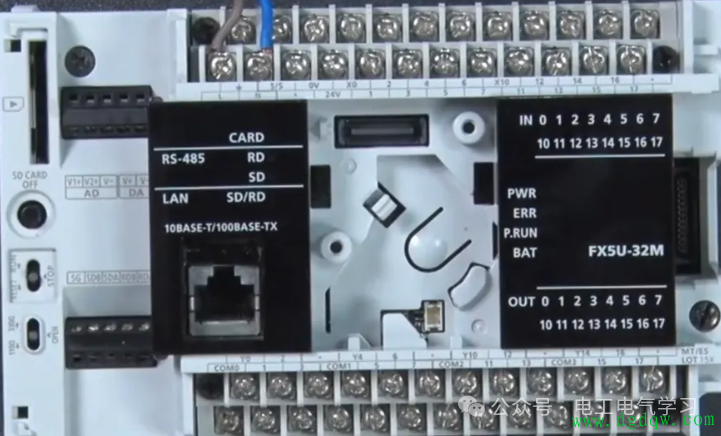
Each of these three schools has its strengths, suitable for different application scenarios and user needs. American PLCs are more suitable for complex systems requiring highly integrated and open solutions; European PLCs are better suited for applications with strict reliability and performance requirements; while Japanese PLCs are ideal for projects with limited budgets that need compact solutions.
In the small PLC sector, Japanese products are particularly outstanding, holding about 70% of the global market share. Many Japanese manufacturers, such as Mitsubishi and Omron, have deep roots and rich experience in this field.
Users have varying opinions on these three schools. Some believe that Keyence’s high-end machines with monitoring functions are unique; others praise GE’s PLCs for their usability, though they have a smaller market; some rave about Siemens’ TIA Portal software; while others express that they are only familiar with Siemens and find it hard to accept Japanese PLCs; and some think that Japanese light industrial electronics are relatively strong, while both Japanese and European PLCs have their merits, making it difficult to generalize.
In summary, the three major schools of PLC each have their characteristics, collectively advancing the development of industrial automation technology. In practical applications, users should choose the most suitable PLC products and solutions based on their own needs and scenarios.
(If you have different insights, feel free to share your views in the comments section)That’s the end of the article, don’t forget to click the bottom right toshare ReadLike👍👇Click to follow and set asstarred, to receive updates immediately.